Medication Rash Treatment: A Complete Guide to Identifying and Managing Drug-Induced Rashes
Discover how to identify and manage drug-induced rashes effectively. Learn about medication rash treatment strategies to prevent severe allergic reactions.
Estimated reading time: 10 minutes
Key Takeaways
- Medication rashes are cutaneous reactions to drugs that range from mild redness to life-threatening blistering.
- Common presentations include morbilliform eruptions, urticaria, fixed drug eruptions, and Stevens–Johnson syndrome/TEN.
- Early identification relies on timing, symptom tracking, and ruling out other causes.
- Treatment spans discontinuation of the culprit drug, OTC self-care, prescription therapies, and specialist referral.
- Preventive measures include thorough documentation, patient education, and cautious rechallenge.
- AI tools such as Rash Detector can support rapid, accurate rash analysis.
Table of Contents
- Introduction
- Section 1: Understanding Medication Rashes and Mechanisms
- Section 2: Identifying Medication Rashes
- Section 3: Approaches to Treatment
- Section 4: Managing and Preventing Future Rashes
- Rash Detector in Action
- Section 5: Additional Considerations
- Conclusion
- FAQ
- Additional Resources
Medication rash treatment starts with knowing what a medication rash is and why fast action matters. A medication rash is a skin reaction triggered by a specific drug, often manifesting as redness, hives, bumps, or blisters. Early recognition and prompt management can prevent escalation into severe allergic responses such as anaphylaxis or Stevens–Johnson syndrome.
Section 1: Understanding Medication Rashes and Medication Rash Treatment
Drug-induced cutaneous reactions arise through immune and non-immune mechanisms. Recognizing these pathways guides effective treatment.
Mechanisms of Drug Rashes
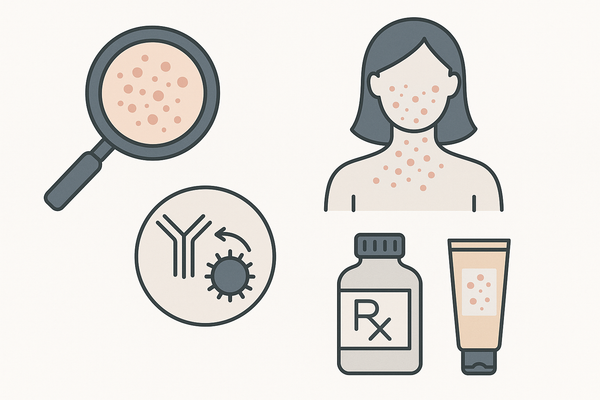
- IgE-mediated hypersensitivity: Drug acts as a hapten, binds to proteins, triggers IgE antibodies and histamine release.
- Non-allergic reactions: Direct cytotoxicity, T-cell mediated (Type IV delayed), and cytokine-driven inflammation.
Types of Medication-Induced Rashes
- Morbilliform eruptions: Measles-like macules/papules 1–2 weeks after starting therapy.
- Urticaria (hives): Itchy wheals minutes to days after exposure; may herald anaphylaxis.
- Fixed drug eruptions: Recurrent round, dark patches at the same site upon re-exposure.
- Stevens–Johnson syndrome/TEN: Severe blistering, mucosal involvement; requires hospitalization.
Common Signs and Symptoms: Redness, intense itching, swelling, bumps/blisters, target lesions, and peeling in severe cases.
Section 2: Identifying a Medication Rash for Medication Rash Treatment
Spotting a drug rash early is key to safe treatment. Consult the Identifying and Managing Drug-Induced Rash Symptoms guide for detailed criteria.
Key Indicators
- Onset days to weeks after starting or adjusting a medication
- Improvement upon discontinuing the suspect drug
- Absence of other obvious causes (viral, environmental)
Step-by-Step Identification Guide
- List all new or adjusted medications, including OTCs and supplements.
- Consult your prescriber before stopping any drug.
- Keep a log of:
- Rash appearance (type, color, pattern)
- Location and spread
- Onset date/time and evolution
- Systemic symptoms (fever, joint pain)
Red-Flag Signs Requiring Immediate Care
- Difficulty breathing or swallowing (anaphylaxis)
- Rapidly spreading blisters or skin peeling
- High fever, joint pain, swollen lymph nodes
Section 3: Approaches to Medication Rash Treatment
Immediate Priority: Discontinue the offending drug under medical supervision to halt immune or irritant responses. For allergic rashes, see Managing Drug Allergy Rash. For a deeper dive into comprehensive management, see our Comprehensive Guide to Identifying and Managing Drug-Induced Rashes. For those seeking a complete overview, our complete guide to identifying and managing drug-induced rashes covers all the essentials. You can also refer to our comprehensive guide to identifying and managing drug-induced skin reactions for additional strategies. For a detailed breakdown on how to identify, manage, and prevent drug-induced skin reactions, see our Medication Rash Treatment: Identify, Manage, and Prevent Drug-Induced Skin Reactions. For a comprehensive overview, see our Comprehensive Guide to Identifying and Managing Reactions for medication rash treatment.
Self-Care & OTC Remedies
- Oral antihistamines: Cetirizine or diphenhydramine to reduce itch and swelling.
- Topical corticosteroids: Hydrocortisone 1% for mild cases; triamcinolone 0.1% for moderate.
- Skin soothing measures: Cool showers, fragrance-free soap, moisturizers, loose cotton clothing.
Prescription Treatments
- Oral corticosteroid taper (e.g., prednisone)
- Immunomodulators (e.g., cyclosporine) for severe syndromes
- Epinephrine autoinjector for anaphylaxis
- Burn-unit care, pain management, skin grafts for SJS/TEN
Switching Medications Safely
- Consult your provider for alternatives
- Avoid cross-reactive classes (e.g., sulfa drugs)
- Verify substitutes via allergy records and specialists
Section 4: Managing and Preventing Future Rashes with Medication Rash Treatment
Prevention Strategies: Inform every provider about past drug reactions. Start new medications at the lowest effective dose and monitor your skin closely during the first 2–4 weeks. Educate on early rash signs (redness, itching).
Documentation & Medication Diary: Maintain a diary with fields for drug name, dose, start date, rash onset and description, symptoms, interventions, and outcome. For photo logs, see Track Rash Progress Pictures. For a complete guide to identifying, managing, and preventing drug-induced rashes, refer to our Medication Rash Treatment Guide. You can also explore our comprehensive guide to identifying, managing, and preventing drug-induced skin reactions for further details. For additional prevention and management tips, see our complete guide to identifying, managing, and preventing drug-induced rashes. For a comprehensive resource, see our Complete Guide to Medication Rash Treatment: Identifying, Managing & Preventing Drug-Induced Rashes. For more on how to identify, diagnose, and manage skin reactions, see our Medication Rash Treatment: Identify, Diagnose, and Manage Skin Reactions.
Allergy Testing & Specialist Referrals: Skin prick or patch testing can identify specific sensitivities. Refer complex or recurrent cases to a dermatologist or allergist.
Rash Detector in Action
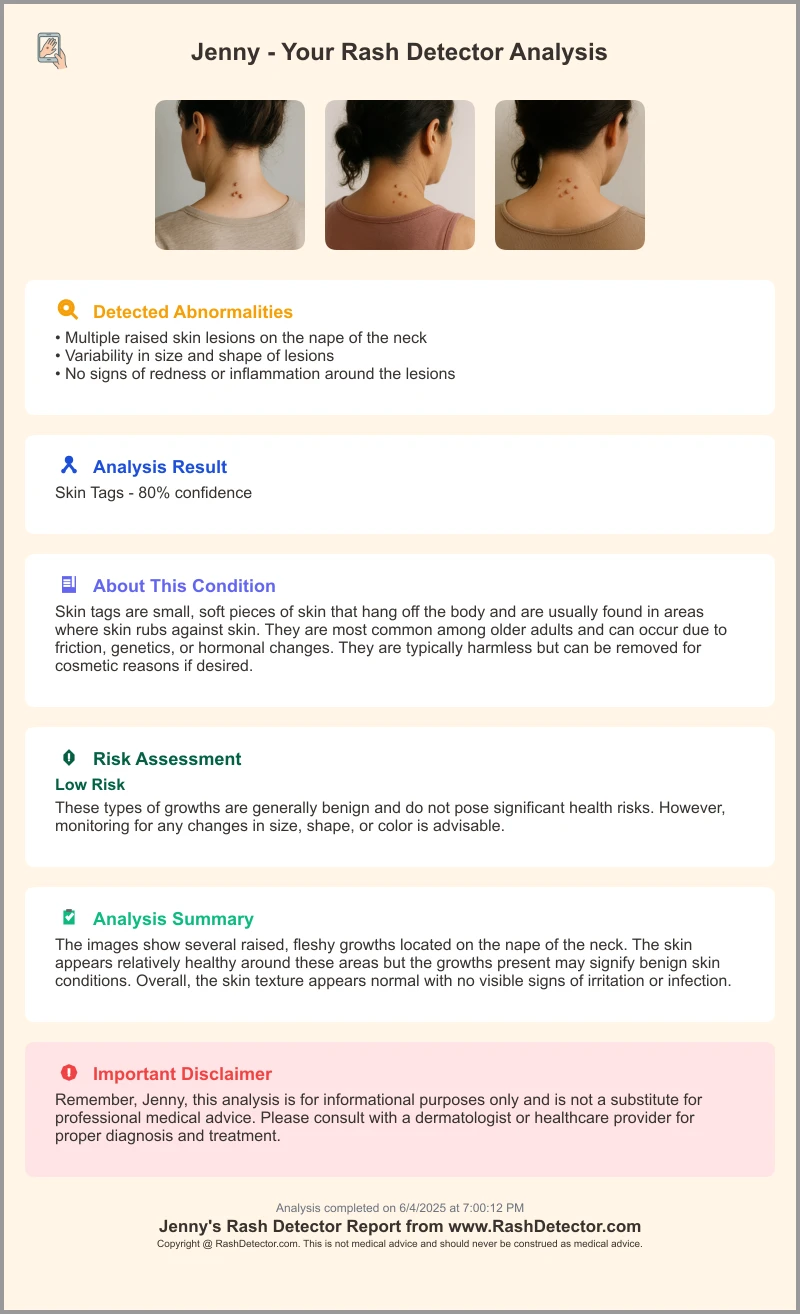
For personalized, AI-driven analysis of your drug-induced rash, try Rash Detector—an AI Skin Analysis App that lets you upload images of your rash for an instant, detailed sample report:
Section 5: Additional Considerations in Medication Rash Treatment
Even mild rashes can signal deeper issues. Stay alert for systemic involvement (hepatitis, nephritis), anaphylaxis risk with urticaria, or escalation to SJS/TEN if unrecognized. Early intervention and clear communication with timeline and photos are vital. For a practical guide to identifying and managing drug-induced rashes, see our Medication Rash Treatment Practical Guide. For expert advice on identifying, managing, and preventing drug-related skin reactions, see our Expert Guide to Medication Rash Treatment: Identifying, Managing, and Preventing Drug-Related Skin Reactions. For a comprehensive guide to identifying and managing drug-induced skin reactions, see our Medication Rash Treatment: A Comprehensive Guide to Identifying and Managing Drug-Induced Skin Reactions.
Conclusion
Prompt identification, accurate documentation, and targeted interventions are the pillars of successful medication rash treatment. By recognizing early signs, discontinuing the culprit drug under medical guidance, and applying self-care, OTC or prescription therapies, patients can prevent complications. Keep detailed records, communicate clearly with providers, and seek specialist care when needed. If you suspect a medication-induced rash, track your symptoms, contact your healthcare provider, and follow their guidance for safe and effective treatment.
初めて準備する場合は、使用日から逆算して注文、確認、調整の時間を確保すると安心です。複数の候補を比較する際は、葬送のフリーレン コスプレで仕様の違いを確認できます。利用条件や交換条件は店舗ごとに異なるため、注文前に最新内容を確認すると安心です。
Additional Resources for Medication Rash Treatment
- Merck Manual: Drug Rashes
- Cleveland Clinic: Medication Allergies
- Harvard Health: When Is a Drug Rash More Than a Rash?
- IU Health: Drug Rashes
- Becker ENT & Allergy: Managing Drug Allergy Rashes
FAQ
- Are all medication rashes true allergies?
No—many are non-immunologic or T-cell–mediated processes rather than IgE-mediated allergies. - Is stopping medication abruptly safe?
Always consult a professional—abrupt cessation can worsen your condition or cause withdrawal. - How rare is Stevens–Johnson syndrome?
It occurs in <0.1% of patients on most medications but requires immediate hospitalization. - Can I reuse a drug if my rash resolves?
No—re-exposure carries a high risk of faster, more severe reactions.