Itchy Lesions on Hands: Causes, Diagnosis, and Treatment
Itchy lesions on hands? Learn causes, diagnosis tips, and effective treatments including eczema, scabies, and psoriasis. Check your rash with AI now.


Estimated reading time: 20 min
Key Takeaways
- Itchy lesions on hands often arise from hand eczema, contact dermatitis, or infections like scabies.
- Triggers include frequent handwashing, allergens like nickel, and irritants such as detergents.
- Diagnosis requires detailed history, physical exam, and sometimes patch testing or allergy screening.
- Treatment focuses on moisturizers, avoiding triggers, topical steroids, and protective measures.
- Seek medical care for spreading rashes, severe symptoms, or infections to prevent complications.
Table of Contents
- Section 1: Common Causes of Itchy Lesions on Hands
- Section 2: Irritant and Allergic Contact Dermatitis Triggers
- Section 3: Dyshidrotic Eczema and Other Inflammatory Conditions
- Section 4: Infectious Causes: Scabies and Other Infestations
- Section 5: Diagnostic Approaches and When to Seek Testing
- Section 6: Treatment and Prevention Strategies for Hand Lesions
- Conclusion
- FAQ
Section 1: Common Causes of Itchy Lesions on Hands
Hand Eczema / Hand Dermatitis Overview
Itchy lesions on the hands are commonly caused by hand eczema, also known as hand dermatitis. This condition involves inflammation of the skin, leading to redness, dryness, scaling, and itchiness. Hand eczema affects many people worldwide, especially those whose occupations or daily activities expose their skin to irritants or allergens. It is estimated that a notable portion of the general population will experience hand eczema at some point in their lives, with higher rates in certain professions such as healthcare workers, hairdressers, and food handlers.
The skin on the hands is particularly vulnerable due to frequent exposure to environmental factors, chemicals, and physical stressors. The chronic nature of hand eczema can impact quality of life, causing discomfort, pain, and sometimes limitations in daily activities or work.
Types of Hand Eczema
- Irritant contact dermatitis: The most frequent form, caused by repeated exposure to substances that damage the skin barrier. This often results from frequent handwashing, exposure to detergents, solvents, or mechanical friction. The damage leads to dryness, fissures, and burning sensations.
- Allergic contact dermatitis: Occurs when the skin develops an allergic reaction to specific substances, usually after sensitization. Common allergens include nickel, fragrances, preservatives, and rubber components. Symptoms may develop hours to days after exposure.
- Atopic hand eczema: Linked to a personal or family history of atopic dermatitis, asthma, or allergic rhinitis. This type tends to involve dry, sensitive skin prone to inflammation and often coexists with eczema elsewhere on the body.
- Occupational hand eczema: Related to workplace exposures, combining irritant and allergic factors. Certain jobs expose individuals to wet work, chemicals, or allergens, increasing risk. Occupational eczema may require workplace adjustments for management.
- Hyperkeratotic hand eczema: Characterized by thickened, scaly plaques predominantly on palms, often resistant to treatment and associated with chronic irritation or genetic predisposition.
- Pompholyx (Dyshidrotic eczema): Although discussed in Section 3, this is also considered a form of hand eczema with distinct features.
Background Risk Factors
Several background factors increase susceptibility to itchy hand lesions. Individuals with inherently dry or sensitive skin have a weakened skin barrier, making them more prone to irritation and eczema. A personal or family history of atopy (such as eczema, asthma, or hay fever) is a known predisposing factor.
Occupational and lifestyle factors also play a significant role. Frequent wet work, defined as having hands wet for extended periods daily or washing hands frequently, is a risk factor. This constant moisture can damage the protective lipid layer of the skin, leading to increased permeability and susceptibility to irritants. Additionally, exposure to harsh chemicals or allergens at work or home may increase risk.
Age and gender may influence prevalence; hand eczema is more common in adults than children and tends to be more frequent and severe in women, possibly due to occupational exposures and cosmetic product use.
Section 2: Irritant and Allergic Contact Dermatitis Triggers
Irritant Contact Dermatitis Triggers
Irritant contact dermatitis (ICD) results from direct damage to the skin by chemical or physical agents that disrupt the skin barrier. Unlike allergic contact dermatitis, ICD does not involve an immune-mediated allergic response but rather a toxic or irritant effect on skin cells.
The most common irritants that cause ICD on the hands include:
- Frequent handwashing and prolonged water exposure: Repeated washing removes natural skin oils and disrupts the stratum corneum. Washing hands frequently can increase risk. Water hardness and temperature also influence irritation severity.
- Soaps, detergents, and solvents: These substances contain surfactants that strip lipids and proteins from the skin barrier. Detergents such as sodium lauryl sulfate are particularly harsh. Solvents used in industry, like acetone or alcohols, can exacerbate skin dryness and irritation.
- Acids and alkalis: Exposure to cleaning agents, industrial chemicals, or household products containing strong acids or alkalis can cause chemical burns or chronic dermatitis.
- Friction and mechanical trauma: Repetitive rubbing, use of abrasive materials, or pressure can damage the skin and initiate dermatitis.
- Wet work: Occupations involving frequent immersion of hands in water or moist environments (e.g., healthcare, food preparation, cleaning) increase susceptibility.
The irritant effect is cumulative; even mild irritants can cause dermatitis if exposure is frequent and prolonged. Symptoms typically include redness, dryness, itching, and sometimes painful fissures or cracks.
Allergic Contact Dermatitis Triggers
Allergic contact dermatitis (ACD) is a delayed hypersensitivity reaction where the immune system reacts to small molecules (haptens) that bind to skin proteins. Sensitization occurs over days to weeks of exposure, and subsequent contact triggers inflammation.
Common allergens responsible for itchy hand lesions include:
- Nickel: Found in jewelry, belt buckles, coins, metal tools, and some electronic devices. Nickel allergy is a common cause of ACD worldwide.
- Rubber chemicals: Accelerators and antioxidants in latex and synthetic rubber gloves can cause allergic reactions. Healthcare workers and laboratory staff are at increased risk.
- Fragrances and preservatives: Ingredients in cosmetics, lotions, soaps, and detergents are frequent allergens. Fragrance mixes and preservatives like methylisothiazolinone are known culprits.
- Hair dyes and adhesives: Para-phenylenediamine (PPD) in hair dyes and certain adhesives in medical or occupational settings can provoke allergic dermatitis.
- Other metals: Cobalt and chromium exposure from tools, leather, or cement can also trigger reactions.
Symptoms include redness, swelling, vesicles, and intense itching at the contact site. ACD typically spares areas not in direct contact with the allergen.
Preventing Contact Dermatitis
Prevention of both irritant and allergic contact dermatitis centers on understanding and minimizing exposure to known triggers. Practical measures include:
- Use protective gloves: Wear appropriate gloves (nitrile, vinyl, or cotton-lined) when handling irritants or allergens. Avoid latex if allergic.
- Choose gentle cleansers: Use fragrance-free, pH-balanced soaps or syndets to reduce irritation.
- Limit wet work: When possible, reduce frequency and duration of handwashing or immersion. Substitute with alcohol-based hand sanitizers, which may be less damaging to skin barrier when used properly.
- Apply moisturizers regularly: Emollients restore lipid barrier and protect skin from irritants. Apply immediately after handwashing and throughout the day.
- Avoid known allergens: If allergy testing identifies specific allergens, avoid products or items containing those substances.
Educating patients on workplace modifications and skin care routines is important in preventing recurrences.
For additional support, see our guide on moisturizers and anti-itch creams to maintain healthy skin.
Section 3: Dyshidrotic Eczema and Other Inflammatory Conditions
Dyshidrotic Eczema (Pompholyx)
Dyshidrotic eczema, also called pompholyx, is a chronic, relapsing inflammatory skin condition that primarily affects the hands and sometimes the feet. It is characterized by the sudden onset of intensely itchy, small, deep-seated blisters (vesicles) on the sides of the fingers, palms, and occasionally soles. These vesicles are filled with clear fluid and may coalesce into larger blisters. The blisters typically last for 2-3 weeks and then resolve, often leaving scaling and fissuring.
The exact cause of dyshidrotic eczema is not fully understood, but it is thought to be multifactorial, involving genetic predisposition, immune dysregulation, and environmental triggers. It affects males and females equally and can occur at any age, though it is most common in young adults.
Common Triggers of Dyshidrotic Eczema
- Excessive sweating and moisture buildup: Hyperhidrosis or exposure to wet conditions can exacerbate symptoms by macerating skin and disrupting the barrier.
- Emotional stress and anxiety: Psychological factors are believed to play a role in triggering flare-ups; stress management can be helpful.
- Exposure to metals: Allergic reactions to metals like nickel or cobalt may contribute. Patch testing can help identify relevant allergens.
- Frequent handwashing or irritants: Similar to irritant contact dermatitis, repeated exposure to soaps, detergents, or chemicals can worsen dyshidrotic eczema.
- Atopic history: Individuals with atopic dermatitis or other allergic diseases may have a higher risk.
Clinically, dyshidrotic eczema must be differentiated from other blistering diseases such as bullous pemphigoid or fungal infections. Secondary infection of vesicles with bacteria can occur, leading to pain and crusting.
Other Inflammatory Skin Diseases Mimicking Hand Eczema
Several other inflammatory conditions can present with itchy hand lesions resembling eczema, making clinical diagnosis challenging:
- Psoriasis: Characterized by well-demarcated, thick, silvery-scaled plaques often on the dorsal hands and extensor surfaces. Nail changes such as pitting, onycholysis, or subungual hyperkeratosis may be present. Psoriasis may coexist with joint symptoms (psoriatic arthritis).
- Lichen planus: Presents with shiny, flat-topped, violaceous papules that can affect the hands. Wickham’s striae (fine white lines) may be seen. Itching varies in intensity.
- Atopic dermatitis: Typically involves flexural areas but can affect hands, especially in children. The skin is dry, scaly, and prone to secondary infection.
- Other rare conditions: Such as granuloma annulare or cutaneous T-cell lymphoma, which require biopsy for diagnosis.
Accurate diagnosis often requires a combination of clinical evaluation, history, and sometimes skin biopsy or laboratory tests. Early identification allows for targeted treatment and improved outcomes.
Section 4: Infectious Causes: Scabies and Other Infestations
Scabies: A Key Infectious Cause
Scabies is a contagious skin infestation caused by the mite Sarcoptes scabiei var. hominis. The female mite burrows into the superficial layers of the skin to lay eggs, causing intense itching and inflammation. The hands, particularly the interdigital spaces (between fingers), wrists, and flexural areas, are common sites of involvement.
Scabies is highly contagious and spreads through prolonged skin-to-skin contact. Outbreaks often occur in households, institutions, and crowded living conditions.
Features Distinguishing Scabies
- Itchy papules, burrows, and nodules: The hallmark burrows are thin, wavy, grayish lines on the skin surface, often found between fingers, wrists, elbows, and genital areas.
- Intense nocturnal itching: The itch is often worse at night, interfering with sleep.
- Spread to close contacts: Family members or close contacts frequently develop similar symptoms, sometimes with a shorter incubation period.
- Secondary bacterial infection: Due to scratching, bacterial superinfection with Staphylococcus aureus or Streptococcus pyogenes can develop, causing impetigo or cellulitis.
Diagnosis is primarily clinical but can be supported by identifying mites, eggs, or fecal pellets on skin scraping under a microscope. Dermoscopy can also aid diagnosis.
Other Infectious and Parasitic Causes
Other infectious agents that may cause itchy hand lesions include:
- Bacterial infections: Impetigo caused by Staphylococcus or Streptococcus presents with honey-colored crusts and erosions, often around nail folds or cracks.
- Fungal infections (Tinea manuum): Dermatophyte infections of the hands cause scaling, redness, and sometimes itching. Unlike eczema, fungal infections may have more defined borders and can be confirmed by KOH microscopy or culture.
- Parasitic infestations: While less common, other parasites like cutaneous larva migrans or lice infestations can cause pruritic lesions.
Prompt recognition and treatment of infectious causes are important to prevent transmission and complications.
Section 5: Diagnostic Approaches and When to Seek Testing
History and Exposure Review
A thorough history is the cornerstone of diagnosis for itchy hand lesions. Key aspects to explore include:
- Onset and duration: Acute versus chronic symptoms can suggest different diagnoses.
- Occupation and hobbies: Exposure to wet work, chemicals, metals, or allergens.
- Personal and family history: Atopic conditions, previous eczema, psoriasis, or allergies.
- Recent product use: New soaps, detergents, gloves, or cosmetics.
- Contact with affected individuals: Possible exposure to scabies or infectious agents.
- Symptom pattern: Itching intensity, nocturnal worsening, presence of blisters or scaling.
Clinical Examination
Careful physical examination evaluates the morphology, distribution, and characteristics of lesions:
- Lesion type: Presence of vesicles, scaling, erythema, lichenification, or fissures.
- Distribution: Involvement of interdigital spaces, palms, dorsal hands, or other body parts.
- Signs of infection: Pustules, crusting, warmth, or lymphadenopathy.
- Nail changes: Pitting or onycholysis may suggest psoriasis.
These findings guide differential diagnosis and management decisions.
Patch Testing and Allergy Tests
When allergic contact dermatitis is suspected, patch testing is the standard method to identify specific allergens. During testing, small amounts of potential allergens are applied to the skin under occlusion for 48 hours, and reactions are read after 48 and 72-96 hours. Positive reactions confirm sensitization, allowing tailored avoidance strategies.
Allergy testing, including serum IgE measurement or skin prick testing, may be used to evaluate atopic dermatitis or other immediate hypersensitivity reactions, although these are less directly related to hand lesions.
When to Consult a Dermatologist
Referral to a dermatologist is advised when:
- Diagnosis is uncertain or lesions are atypical.
- Rashes are chronic, severe, or refractory to treatment.
- Patch testing is needed to identify allergens.
- There are signs of secondary infection or systemic involvement.
- Biopsy is required to exclude other dermatoses.
Advanced diagnostic tools and expert evaluation improve outcomes and prevent chronicity.
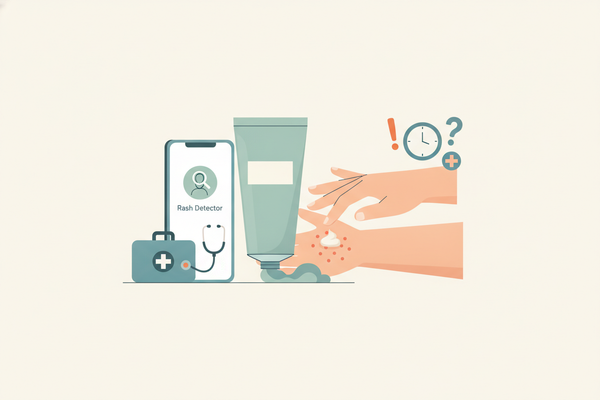
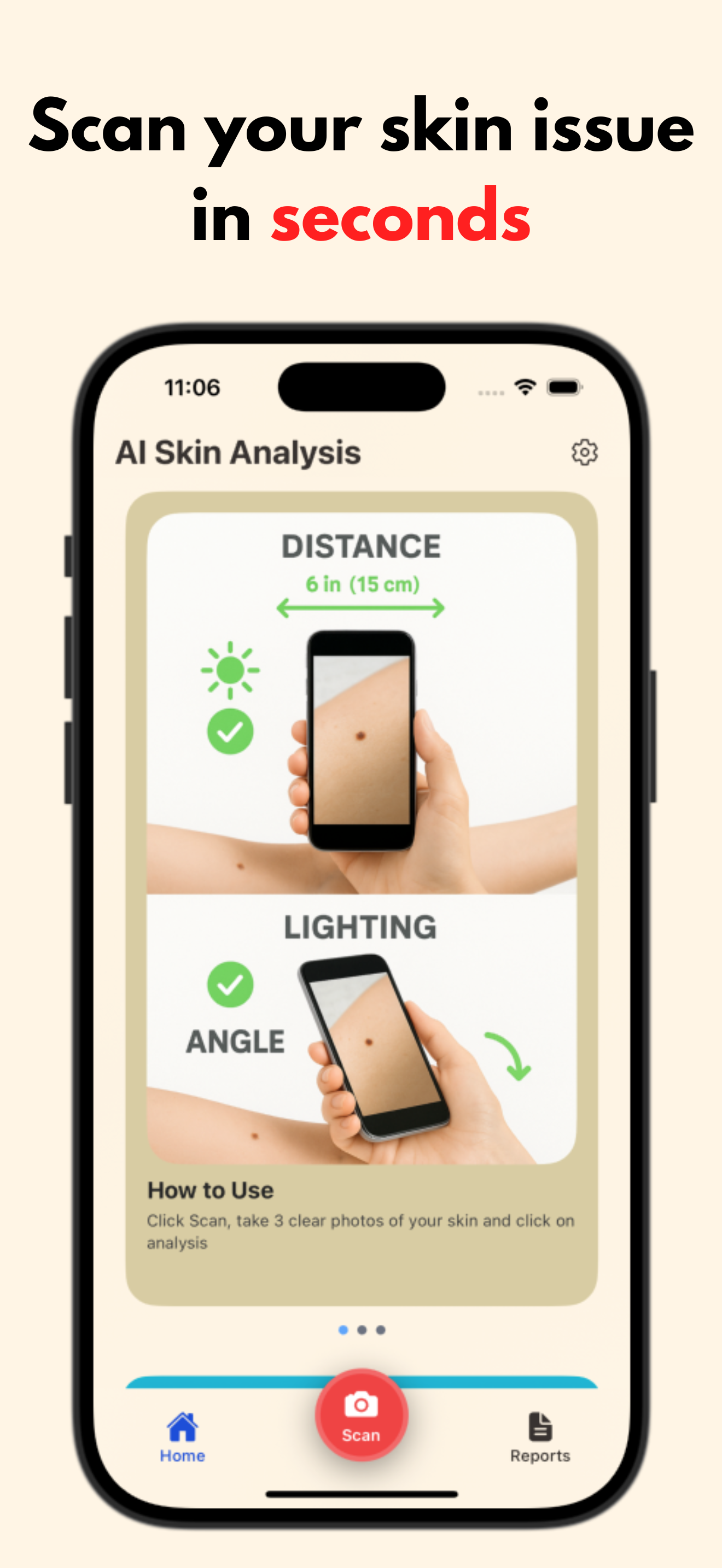
Using tools like the Rash Detector app can provide AI analysis of your hand rash from photos, offering possible causes and guidance before seeing a doctor. This can be helpful for initial assessment and triage but does not replace professional medical evaluation.
Section 6: Treatment and Prevention Strategies for Hand Lesions
Moisturizers and Emollients
Maintaining skin hydration is fundamental in managing itchy hand lesions. Moisturizers and emollients repair and reinforce the skin barrier, reducing dryness, scaling, and itching.
Thick ointments and creams containing ingredients like petrolatum, ceramides, glycerin, or urea are effective. Ointments provide better occlusion and longer-lasting hydration but may feel greasy. Creams are more cosmetically acceptable for daytime use.
Best practice includes applying moisturizers immediately after handwashing while skin is still damp to trap moisture. Frequent reapplication throughout the day, especially before bedtime, enhances skin repair.
In individuals with hyperkeratotic eczema, keratolytic agents such as salicylic acid may be useful to reduce scaling, but should be used under medical guidance.
Avoiding Triggers and Protective Measures
- Limit irritant exposure: Use mild, fragrance-free cleansers and avoid harsh detergents or chemicals.
- Wear protective gloves: Use nitrile or vinyl gloves for wet work or chemical handling. Cotton liners reduce sweating and irritation.
- Minimize wet work: Substitute handwashing with alcohol-based sanitizers where appropriate, as they may be less damaging to skin barrier.
- Implement workplace modifications: Adjust tasks or schedules to reduce exposure duration.
- Stress management: For dyshidrotic eczema, relaxation techniques and psychological support may reduce flare frequency.
Topical Corticosteroids and Other Medications
Topical corticosteroids are commonly used to control inflammation and pruritus in hand eczema and allergic contact dermatitis. The choice of potency depends on the severity and location of lesions:
- Low potency steroids: Suitable for mild lesions or delicate areas.
- Medium to high potency steroids: Used for moderate to severe eczema on thick skin areas like palms.
Prolonged use should be avoided due to potential side effects such as skin atrophy. Intermittent or pulse therapy is often recommended.
Calcineurin inhibitors (e.g., tacrolimus, pimecrolimus) may be used as steroid-sparing agents for long-term management, especially in steroid-sensitive areas or when steroids are contraindicated.
In refractory cases, systemic treatments like immunosuppressants (methotrexate, cyclosporine) or phototherapy may be considered under specialist care.
Treatment of Infectious Causes
Scabies requires treatment with prescription scabicidal agents such as permethrin cream 5% applied over the entire body from neck down and repeated after 7 days. Oral ivermectin is an alternative in some cases. All close contacts should be treated simultaneously to prevent reinfestation.
Secondary bacterial infections necessitate appropriate antibiotics, either topical (mupirocin) or systemic, depending on severity.
Fungal infections are treated with topical or oral antifungals based on extent and severity.
When to Seek Medical Care
It is important to seek prompt medical attention if hand lesions:
- Spread rapidly or involve large areas beyond the hands.
- Are associated with severe pain, swelling, blistering, or bleeding.
- Show signs of infection such as pus, warmth, red streaks, or fever.
- Do not improve with home care after 1-2 weeks or worsen over time.
- Cause significant functional impairment or interfere with work.
Early intervention reduces complications, prevents chronicity, and improves quality of life.
For more detailed treatment options, see our posts on skin rash treatment and best anti-itch creams.
Conclusion
Itchy lesions on hands are a common and often distressing skin problem with multiple possible causes ranging from hand eczema and contact dermatitis to scabies and psoriasis. Identifying the precise cause requires a comprehensive understanding of clinical features, triggers, and patient history.
Effective management depends on accurate diagnosis, appropriate treatment, and preventive measures. Moisturizing regularly, avoiding irritants and allergens, and using prescribed medications can help improve symptoms and prevent recurrence. Infectious causes such as scabies need prompt and specific treatment to avoid spread.
Technological innovations like the Rash Detector app offer convenient, AI-powered analysis of hand rashes using photographs, facilitating early assessment and guiding users to seek medical care when necessary. However, these tools do not replace professional medical evaluation.
If you experience severe, spreading, painful, or persistent itchy hand lesions, it is important to see a doctor or dermatologist for diagnosis and tailored treatment to ensure the best outcomes.
FAQ
Q: What causes itchy lesions on the hands?
A: Itchy lesions on the hands can be caused by hand eczema (including irritant and allergic contact dermatitis), dyshidrotic eczema, infections like scabies, psoriasis, or dry skin. Exposure to irritants and allergens plays a major role.
Q: How do I tell if itchy hand bumps are eczema, dyshidrotic eczema, or scabies?
A: Eczema usually shows dry, scaly patches; dyshidrotic eczema causes small itchy blisters on fingers and palms; scabies presents with intense itching and burrows, especially between fingers. A doctor or dermatologist can confirm diagnosis.
Q: Can frequent handwashing or sanitizer cause itchy lesions on my hands?
A: Yes. Frequent handwashing, especially with harsh soaps, and excessive use of hand sanitizers can irritate and dry the skin, leading to irritant contact dermatitis and itchy lesions.
Q: What is the best treatment for itchy hand rash or hand eczema?
A: Treatment includes regular moisturizing, avoiding irritants and allergens, using gentle skin care products, protective gloves, and applying topical corticosteroids or other prescribed medications as needed.
Q: When should I get an itchy hand rash checked by a doctor?
A: See a doctor if your rash spreads, is painful, blistered, shows signs of infection, does not improve with home care, or is associated with fever or other systemic symptoms.
Q: Are itchy lesions on the hands contagious?
A: Most hand eczema and contact dermatitis are not contagious. However, infectious causes like scabies are contagious and require treatment to prevent spread.