Complete Guide to Medication Rash Treatment: Identifying, Managing & Preventing Drug-Induced Rashes
Discover how to identify, manage, and prevent medication-induced rashes with our complete guide. Learn treatment options and when to seek urgent care.

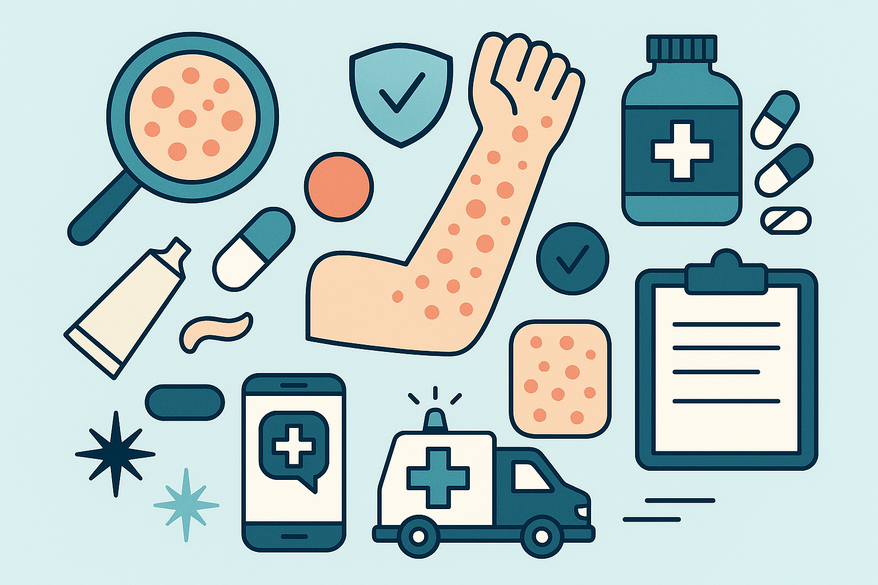
Estimated reading time: 12 minutes
Key Takeaways
- Drug rashes range from mild itching to severe SCARs requiring emergency care.
- Identification involves timing of onset, rash patterns, and symptom diaries.
- Treatment options span antihistamines, topical steroids, and medical interventions for severe cases.
- Prevention relies on documentation, avoidance, allergy testing, and ongoing follow-up.
Table of Contents
- Introduction
- Understanding Medication-Induced Rashes
- Identifying a Medication Rash
- Medication Rash Treatment Options
- Home Remedies & Supportive Measures
- Prevention & Long-Term Management
- Conclusion
- Further Reading
Introduction
Medication rash treatment is an essential topic for anyone experiencing a skin reaction after starting a new drug. A medication-induced rash is a skin reaction ranging from mild redness and itching to severe blistering or life-threatening eruptions that occurs as a side effect of a medication. This guide will explain how to identify drug rashes, explore evidence-based medication rash treatment options (both medical and home remedies), and advise on prevention and when to seek urgent care.
Understanding Medication-Induced Rashes
Definition of a Medication Rash
A medication rash (also called a drug eruption) is a hypersensitivity reaction of the skin triggered by a medication or its metabolites. Common features include:
- Redness (flat or raised)
- Small bumps or spots (morbilliform)
- Intense itching
- Urticaria (hives)
- In severe cases, blistering or mucosal sores
Types of Drug Rashes
- Morbilliform (exanthematous) rash: Small red spots that merge, often starting on the trunk 1–2 weeks after drug initiation.
- Urticaria (hives): Transient, itchy welts that may migrate; can accompany anaphylaxis.
- Fixed drug eruption: Round, sharply demarcated patches that recur at the same site with re-exposure.
- Severe Cutaneous Adverse Reactions (SCARs): Stevens–Johnson syndrome (SJS) / toxic epidermal necrolysis (TEN) – widespread blistering, skin loss, mucosal involvement. DRESS syndrome: Drug Reaction with Eosinophilia and Systemic Symptoms—rash plus fever, lymphadenopathy, organ involvement. SCARs are medical emergencies requiring hospital care.
Why Drug Rashes Occur (Immune Mechanisms)
- IgE-mediated (immediate) reactions involve antibody release causing hives or anaphylaxis.
- T-cell–mediated (delayed) reactions lead to morbilliform rashes or SCARs days to weeks later.
- Non-allergic hypersensitivity can mimic allergy through direct mast cell activation.
- Triggers include genetics, concurrent viral infections, and drug interactions.
Identifying a Medication Rash
Warning Signs
- New rash days–weeks after starting or increasing dose of a medication.
- Symmetric, widespread eruptions on trunk and limbs.
- Associated systemic signs: itching, fever, facial swelling, joint pain.
- Red-flag symptoms requiring emergency care:
• Difficulty breathing or wheezing
• Rapid facial, lip, tongue, or throat swelling
• Extensive blistering or peeling skin
• Mucosal sores (mouth, eyes, genitals)
• High fever and lymphadenopathy
Differentiating from Other Skin Conditions
Consider timing (rash onset linked to new drugs like antibiotics or anticonvulsants), distribution (sudden symmetric rash without alternate cause), and resolution after discontinuation. For uncertain cases, a skin biopsy or allergy testing may help.
Using a Symptom Diary
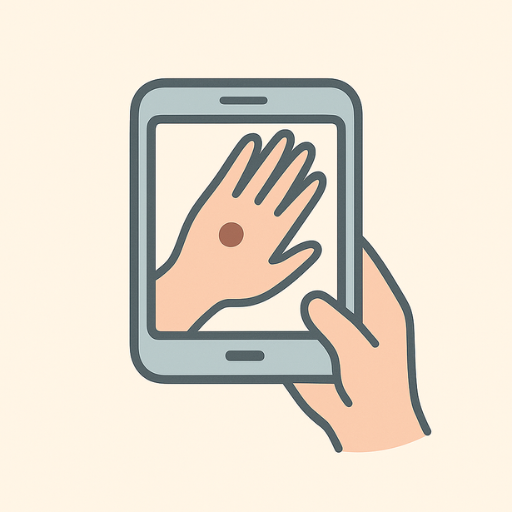
List all medications (prescription, OTC, herbal) with start/stop dates; record rash onset, location, progression, and systemic symptoms. This diary can be invaluable during medical evaluation. For tips on organizing photos and notes, see our step-by-step guide How to Track Rash Progress Pictures.
Medication Rash Treatment Options
Stopping or Adjusting the Drug
- Discontinue offending medication when possible under medical supervision.
- Never stop critical drugs (antiplatelets, antiepileptics, heart medications) without professional guidance.
- Prompt withdrawal limits rash progression and complications. For a more detailed look at how to identify, manage, and prevent drug-induced rashes, see our comprehensive guide to medication rash treatment.
Conventional Treatments for Mild–Moderate Rashes
- Oral antihistamines (cetirizine, loratadine) relieve itching in histamine-mediated reactions — see our OTC relief overview: Best Anti-Itch Cream: Top OTC Solutions for Instant Relief.
- Topical corticosteroids (low- to mid-potency) reduce inflammation and redness in delayed-type rashes.
- Supportive skin care: fragrance-free moisturizers and gentle cleansers to restore the skin barrier.
Managing Severe Reactions
- Anaphylaxis: epinephrine injection, high-dose antihistamines, steroids in ED/ICU.
- SJS/TEN (SCARs): hospital admission (burn/ICU), systemic immunosuppressants, wound care, fluid/electrolyte management.
- DRESS syndrome: early, prolonged systemic corticosteroids to control systemic symptoms.
Importance of Professional Evaluation
Consult a healthcare professional to confirm the medication-related cause, identify the culprit drug, assess cross-reactivity, and determine a safe treatment plan based on severity and patient history. For a thorough overview of identifying, managing, and preventing drug-induced rashes, see our complete guide to medication rash treatment and our comprehensive guide to identifying, managing, and preventing drug-induced rashes. You can also refer to our complete guide to identifying, managing, and preventing drug-induced rashes for additional details. For another comprehensive resource, see our guide to identifying, managing, and preventing drug-induced skin reactions. For a complete guide to identifying, managing, and preventing drug-induced rashes, see our Medication Rash Treatment: Complete Guide to Identifying, Managing, and Preventing Drug-Induced Rashes. For a comprehensive guide to managing and preventing drug-induced rashes, see our comprehensive guide to managing and preventing drug-induced rashes.
Home Remedies & Supportive Measures
- Cool compresses or lukewarm baths to relieve itching and reduce inflammation — learn about plant-based relief in our Oatmeal Bath for Rash guide.
- Fragrance-free moisturizers for barrier repair and soothing dry skin.
- Gentle skin-care routine: mild non-soap cleansers; avoid scrubs/exfoliants.
- Prevent scratching: keep nails short; use cotton gloves at night if needed.
- Loose, breathable clothing to reduce friction and heat.
- Broad-spectrum sunscreen and protective clothing if photosensitivity is a concern.
- Discontinue home remedies if the rash worsens or systemic symptoms develop.
Prevention & Long-Term Management
Avoidance and Documentation
- Avoid re-exposure to the culprit drug and related agents.
- Record reaction details (drug name, reaction type) in medical records.
- Alert all providers (dentists, specialists) to your drug allergy.
- Consider a medical alert bracelet for serious allergies.
Role of History Review & Allergy Testing
- Detailed medication history review for culprit identification. For a more thorough understanding of long-term management and prevention strategies, refer to our complete guide to identifying, managing, and preventing drug-induced rashes.
- IgE allergy testing or supervised drug challenges for selected immediate reactions.
- SJS/TEN/DRESS survivors require lifelong avoidance without re-exposure testing.
Ongoing Follow-Up
- Regularly review all medications (including OTC/herbals) at each healthcare visit.
- Discuss prior drug rashes/allergies before new prescriptions.
- Schedule follow-up with dermatology/allergy specialists for severe reaction histories.
Conclusion
Medication rash treatment depends on recognizing timing and patterns of drug-induced skin reactions and seeking timely medical advice. Mild cases often resolve by stopping the offending drug safely, combined with antihistamines, topical steroids, and supportive care. Red-flag symptoms—difficulty breathing, facial/throat swelling, extensive blistering, mucosal sores—require emergency care. Long-term safety hinges on accurate diagnosis, clear allergy documentation, and collaboration with healthcare professionals for future prescribing. For a comprehensive overview, see our Medication Rash Treatment: Identifying, Managing, and Preventing Drug-Induced Rashes. For a comprehensive guide to managing drug-induced reactions, see our Medication Rash Treatment: A Guide to Managing Drug-Induced Reactions. For a comprehensive guide to identifying, managing, and preventing drug-induced rashes, see our guide to identifying, managing, and preventing drug-induced rashes.
For more on identifying drug reactions, see Identifying and Managing Drug-Induced Rash Symptoms.
Further Reading
- Merck Manual Consumer Version
- When Is a Drug Rash More than Just a Rash?
- Hopkins Medicine
- Mayo Clinic
FAQ
- How do I know if my rash is caused by medication?
Consider the timing of onset after starting a new drug, symmetric distribution, systemic symptoms, and improvement after discontinuation. A symptom diary can help pinpoint the cause. - When should I seek emergency care for a drug rash?
Seek immediate help if you experience breathing difficulties, facial or throat swelling, extensive blistering, peeling skin, mucosal sores, or high fever. - Can home remedies help relieve drug-induced rashes?
Yes, cool compresses, fragrance-free moisturizers, oatmeal baths, and gentle cleansers can soothe mild rashes, but discontinue if symptoms worsen. - How can I prevent drug rashes in the future?
Avoid known culprit drugs, document reactions in medical records, consider allergy testing, and inform all healthcare providers of your drug sensitivities.