Medication Rash Treatment: Identify, Manage, and Prevent Drug-Induced Skin Reactions
Discover how to identify, manage, and prevent medication rash treatment effectively. Learn signs, self-care tips, and when to seek professional help.

Estimated reading time: 8 minutes
Key Takeaways
- Identify drug rashes by timing, distribution, and symptom type (maculopapular, urticaria, blistering).
- Start self-care promptly: pause noncritical meds, use antihistamines, topical creams.
- Recognize red flags—blisters, mucosal involvement, systemic signs—warranting urgent care.
- Follow medical treatments: discontinue culprit drug, escalate from OTC to corticosteroids or hospitalization.
- Adopt prevention: track medication history, perform allergy testing, maintain skin-friendly routines.
Table of Contents
- Section 1: Understanding Medication-Induced Rashes
- Section 2: Identifying a Medication Rash
- Section 3: Immediate Steps and Self-Care
- Section 4: When and How to Seek Professional Medical Help
- Section 5: Treatment Options for Medication Rashes
- Section 6: Prevention and Management Strategies
- Conclusion
- FAQ
Section 1: Understanding Medication-Induced Rashes
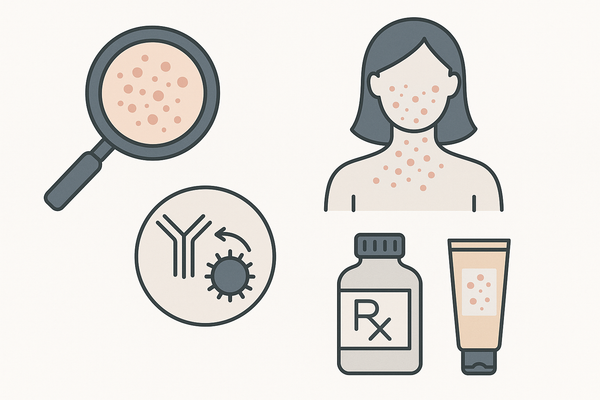
A medication rash is any cutaneous reaction to a drug, driven by immune hypersensitivity or non-immune side effects. These eruptions may present as red spots, hives, blisters, or widespread peeling.
- Common causes: antibiotics (penicillins, sulfonamides), NSAIDs (ibuprofen, naproxen), anticonvulsants (carbamazepine, phenytoin), allopurinol, chemotherapy/immunotherapy agents.
Risk factors:
- Prior drug allergy or multiple sensitivities
- High doses or rapid dose escalation
- Concurrent viral infections
- Older age, polypharmacy, compromised immunity
Symptom types:
- Maculopapular rash: flat red spots with small bumps
- Urticaria (hives): itchy, migrating wheals
- Blistering/peeling: warning of Stevens–Johnson syndrome/toxic epidermal necrolysis
- Systemic signs: fever, swollen lymph nodes, organ involvement
Early recognition guides prompt medication rash treatment and helps prevent severe reactions. For detailed symptom patterns and photos, see detailed symptom patterns and photos.
Section 2: Identifying a Medication Rash
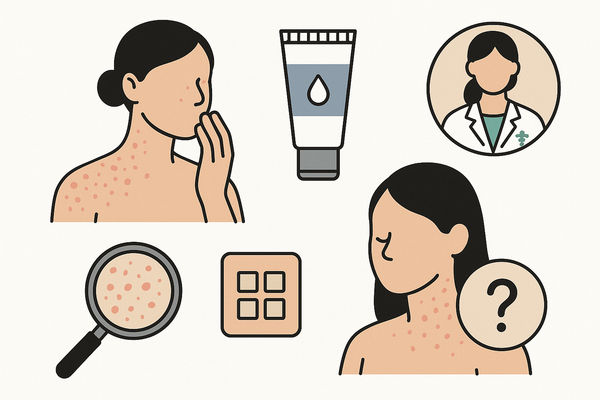
Distinguishing a drug rash from eczema, contact dermatitis, or viral exanthems relies on timing, distribution, and absence of other triggers.
- New medication start or dose change within days–weeks
- Symmetric, widespread rash distribution
- No recent changes in soaps, foods, or environment
Maintain a timeline: typical onset is 5–14 days after initiation; hives can appear within hours; severe reactions occur 1–8 weeks post-start. Record medication start date, dose, and rash appearance. Accurate identification streamlines treatment and avoids misdiagnosis. For strategies on managing drug allergy reactions, see managing drug allergy reactions.
Section 3: Immediate Steps and Self-Care
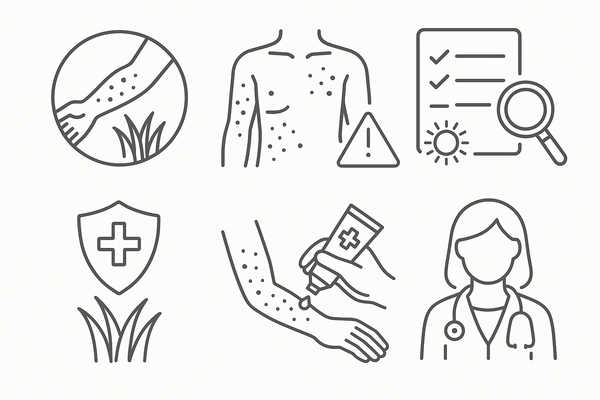
When a rash appears after a drug change, swift action can reduce symptoms:
- Pause and assess appearance, distribution, and any fever or swelling.
- Do not stop critical medications (e.g., seizure or cardiac drugs) without professional advice.
- Contact your provider or pharmacist to discuss safe stopping or switching.
OTC symptomatic relief:
- Oral antihistamines (cetirizine, diphenhydramine)
- Topical 1% hydrocortisone cream
- Cool compresses or showers
- Colloidal oatmeal baths
- Fragrance-free moisturizers
For a side-by-side look at OTC vs. prescription options, visit OTC vs. prescription guide.
Home-care cautions:
- Avoid scratching; keep nails short
- Skip hot baths, scented soaps, tight clothing
- If rash worsens or spreads, seek professional care
Section 4: When and How to Seek Professional Medical Help
Certain red-flag signs demand urgent or emergency evaluation:
- Respiratory distress, wheezing, throat tightness
- Facial, lip, or tongue swelling
- High fever or flu-like symptoms with rash
- Rapidly spreading purplish rash; blisters/peeling skin
- Mucosal involvement (mouth, eyes, genitals)
- Signs of hypotension: dizziness, fainting
Contact urgent care if the rash persists or worsens after 48–72 hours of home care, or if you develop systemic symptoms.
Questions to ask your clinician include:
- Could this be a drug reaction? Should I stop or taper?
- Are there safer medication alternatives?
- Do I need labs, allergy testing, or biopsy?
- Which red flags demand ER evaluation?
- How will we document this to prevent future exposure?
Section 5: Treatment Options for Medication Rashes
Effective management varies by severity:
- Discontinue offending drug under supervision.
- Oral antihistamines for mild hives.
- Topical corticosteroids for localized inflammation.
- Short-course oral corticosteroids for moderate eruptions.
- Hospitalization with IV fluids and wound care for SJS/TEN.
- Epinephrine for anaphylaxis.
Alternative/adjunctive measures:
- Gentle skin care: oatmeal baths, emollients
- Stress reduction and good sleep hygiene
- Discuss herbal or supplement use with clinician
For a comprehensive overview of how to identify, manage, and prevent drug-induced skin reactions, see our Medication Rash Treatment: Identify, Manage, and Prevent Drug-Induced Skin Reactions guide. You can also explore our guide to recognizing, managing, and preventing drug-induced skin reactions for additional strategies. For a more detailed step-by-step resource, see our guide on how to identify, manage, and prevent drug-induced skin reactions. For a complete guide to managing drug-induced skin reactions, refer to Medication Rash Treatment: A Complete Guide to Managing Drug-Induced Skin Reactions.
Section 6: Prevention and Management Strategies
Reducing future risk:
- Maintain complete medication and allergy history across providers.
- Avoid re-exposure to known culprits.
- Consider allergy testing or supervised drug challenges.
- Perform patch testing under specialist supervision.
Managing chronic or recurrent rashes:
- Keep a detailed symptom diary of meds, doses, and rash features.
- Consult dermatologist or allergist for desensitization protocols. For a comprehensive approach, see our comprehensive guide to identifying, managing, and preventing drug-induced skin reactions.
Lifestyle and dietary tips:
- Use fragrance-free, gentle skin products.
- Stay hydrated and avoid overheating.
- Follow clinician-recommended diet changes if organs were involved.
For more on comprehensive management, our comprehensive guide to drug-induced skin reactions offers in-depth prevention strategies.
Conclusion
Early recognition, accurate documentation, and appropriate medication rash treatment can prevent progression from mild irritation to life-threatening reactions. Timely self-care, vigilant monitoring for red flags, and professional evaluation ensure safe outcomes. Always seek personalized medical advice for your specific medications and conditions.
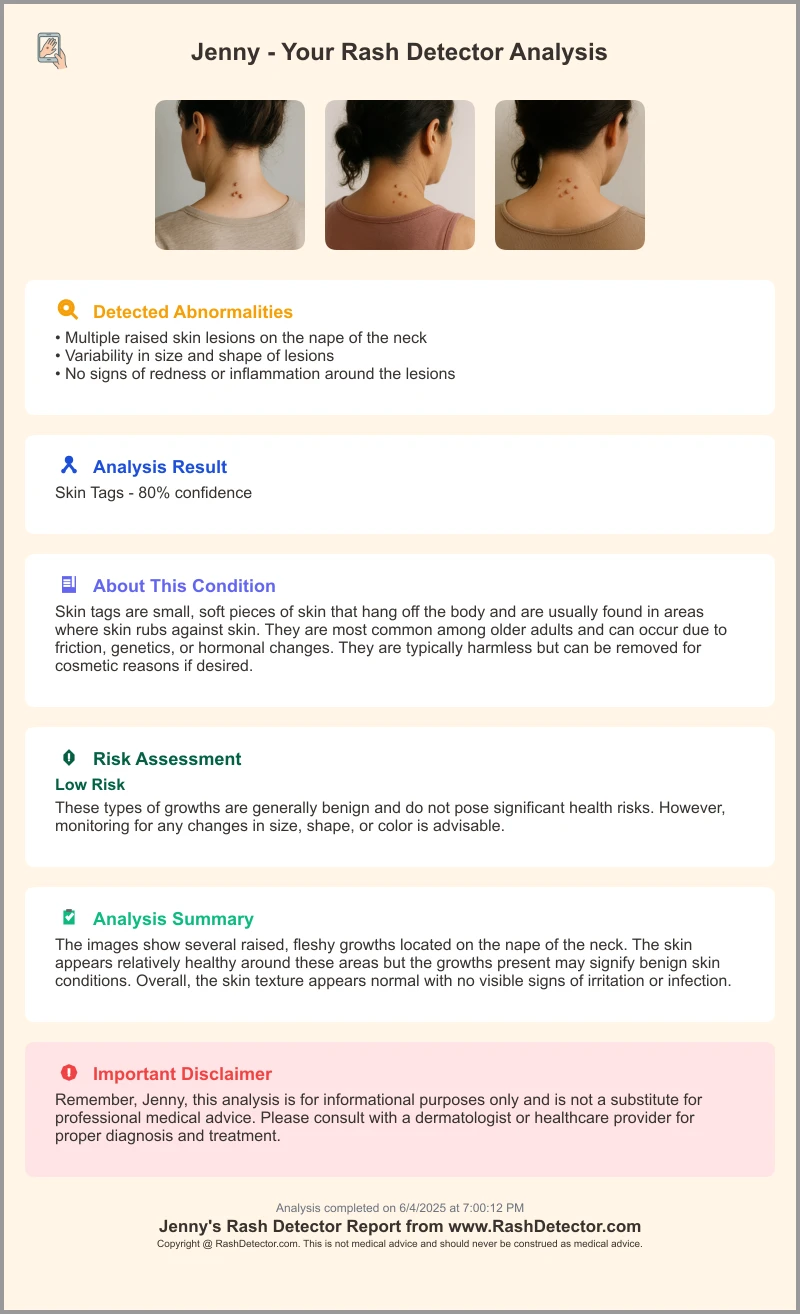
For streamlined rash analysis, the AI-powered Skin Analysis App Rash Detector lets you upload images and receive an instant sample report.
FAQ
What are the most common types of medication-induced rashes?
The most frequent presentations include maculopapular rashes (flat red spots with small bumps), urticaria (itchy welts), and, less commonly, blistering reactions that may signal Stevens–Johnson syndrome or toxic epidermal necrolysis.
How quickly do drug rashes typically appear?
Onset varies by reaction type: hives can appear within hours of ingestion, while maculopapular eruptions often emerge 5–14 days after starting a new drug. Severe cutaneous adverse reactions may take 1–8 weeks to manifest.
Can I treat a mild drug rash at home?
Yes, for mild redness or itchiness you can pause the suspect medication (if noncritical), use oral antihistamines, apply 1% hydrocortisone cream, and take cool showers. However, if symptoms worsen, seek professional advice.
When should I seek medical help for a drug rash?
Immediate evaluation is needed if you experience blisters, peeling skin, mucosal involvement, systemic symptoms like fever, or any signs of anaphylaxis (respiratory distress, swelling, dizziness).
How can I prevent medication-induced rashes in the future?
Maintain a detailed medication and allergy history, avoid known culprits, consider allergy testing or supervised challenges, and keep a symptom diary to inform future care.
コスプレ衣装を選ぶ際は、サイズ表、素材、付属品、発送予定日を確認すると比較しやすくなります。商品仕様や選び方を比べたい場合は、警察 コスプレ 衣装 通販から関連情報を確認できます。使用後は素材に合う方法で手入れし、装飾を傷めない形で保管することが大切です。