Skin Rashes Caused by Autoimmune Diseases: Complete Guide
Learn about skin rashes caused by autoimmune diseases, how to identify them, and how they differ from other rashes. See symptoms, causes, and treatment options.

Estimated reading time: 14 min
Key Takeaways
- Skin rashes caused by autoimmune diseases often have distinct patterns and symptoms compared to heat rash, contact dermatitis, or fungal skin rash.
- Common autoimmune conditions that can cause skin rashes include lupus, psoriasis, dermatomyositis, Sjögren’s, scleroderma, celiac disease, and vasculitis.
- Autoimmune rashes may be associated with other health issues—such as joint pain, fatigue, or organ involvement—beyond the skin.
- Diagnosis may involve dermatology exams, lab tests for autoantibodies, sometimes skin biopsies, and often rheumatology referral.
- If you notice severe, spreading, painful, or persistent rashes, seek prompt medical care; never self-diagnose or delay evaluation.
Table of Contents
- Section 1: What Causes Skin Rashes? An Overview
- Section 2: Autoimmune Diseases and Their Skin Rashes
- Section 3: How to Recognize Autoimmune Rashes by Appearance
- Section 4: Symptoms and Triggers: Clues to an Autoimmune Cause
- Section 5: Diagnosis and Testing for Autoimmune Skin Rashes
- Section 6: Treatment Options for Autoimmune Skin Rashes
- Conclusion
- FAQ
Section 1: What Causes Skin Rashes? An Overview
Common Categories of Skin Rashes
Skin rashes are a visible reaction of your skin to a variety of triggers. Understanding what causes skin rashes is crucial—some are harmless and short-lived, while others can signal underlying health issues. The most frequent causes of rashes fall into several broad categories:
- Autoimmune diseases: The immune system mistakenly attacks the skin, leading to persistent or recurring rashes (e.g., lupus, psoriasis).
- Heat rash: Blocked sweat ducts cause tiny red bumps, often in hot, humid environments. Learn more in our heat rash guide.
- Contact dermatitis: Skin irritation after contact with allergens or irritants (e.g., soaps, plants, metals).
- Fungal skin rash: Caused by fungi like ringworm or athlete’s foot, often itchy and with a defined border.
- Allergic reaction rash: Hives or welts triggered by foods, medications, or environmental allergens.
- Drug rash: Side effect of a medication, presenting as widespread redness, hives, or blisters. See our in-depth post on drug rash causes and symptoms.
- Viral or bacterial rashes: Infections like measles, chickenpox, or impetigo.
- Diabetes skin rash: Certain rashes can be related to diabetes and its complications.
- Stress rash: Emotional stress can trigger or worsen hives or eczema-like rashes.
How Autoimmune Rashes Fit In
Unlike heat rash or contact dermatitis, skin rashes caused by autoimmune diseases are a result of the immune system attacking healthy skin. These rashes are often chronic, may flare unpredictably, and frequently accompany other symptoms.
When to Suspect an Autoimmune Rash
- Rash is persistent or recurring despite basic treatments
- Accompanied by joint pain, fatigue, fever, or weight changes
- Appears in distinctive patterns (e.g., butterfly rash, scaly plaques)
- Does not respond to standard anti-itch or moisturizing creams
It's important to distinguish autoimmune rashes from more common causes. If in doubt, consult a dermatologist or use tools like Rash Detector for initial guidance.
Section 2: Autoimmune Diseases and Their Skin Rashes
Major Autoimmune Conditions That Cause Skin Rashes
Many autoimmune diseases can cause skin rashes as a primary or secondary symptom. Below are some of the more commonly recognized conditions:
- Lupus (Systemic Lupus Erythematosus): Known for the "butterfly" malar rash across the cheeks and nose.
- Psoriasis: Thick, scaly, red or silvery plaques, often on elbows, knees, and scalp.
- Dermatomyositis: Violet or heliotrope rash on eyelids, Gottron papules on knuckles.
- Sjögren’s Syndrome: Dry, itchy, sometimes purplish rashes, especially with dry mouth and eyes.
- Scleroderma: Skin thickening, shiny or tight patches, sometimes with pigment changes.
- Celiac Disease (Dermatitis Herpetiformis): Intensely itchy, blistering rash, often on elbows, knees, and buttocks.
- Pemphigus and Pemphigoid: Blistering disorders with fragile skin, erosions, and sometimes ulcers.
- Vasculitis: Inflamed blood vessels cause purplish spots (purpura), ulcers, or nodules.
Rarer and Overlapping Autoimmune Disorders
- Mixed connective tissue disease and overlap syndromes can show features of several autoimmune rashes.
- Autoimmune thyroid disease: Sometimes associated with urticaria (hives) or vitiligo-like patches.
How These Differ from Other Rash Causes
Autoimmune rashes tend to:
- Last longer or recur chronically
- Resist simple over-the-counter treatments
- Appear with other systemic symptoms (joint/muscle pain, fever, dry mouth/eyes)
- Occur in specific patterns (e.g., symmetrical plaques, sun-exposed areas)
If you notice these patterns, especially with other health changes, prompt evaluation is recommended. For a quick, AI-powered analysis, you can try Rash Detector—just upload three photos for instant insights.
Section 3: How to Recognize Autoimmune Rashes by Appearance
Visual Patterns of Autoimmune Rashes
Each autoimmune disease has characteristic rash patterns, but individual appearance can vary widely, especially across skin tones. Here’s how to identify some of the more common ones:
- Lupus (Malar/Butterfly Rash): Flat or raised red rash across the cheeks and bridge of the nose, sparing the nasolabial folds. Can be subtle in darker skin tones, appearing as purple or darker patches.
- Psoriasis: Well-defined, thick, silvery or red plaques on extensor surfaces (elbows, knees, scalp). Sometimes involves nails (pitting, separation).
- Dermatomyositis:
- Heliotrope rash: Violet discoloration around the eyes, often with swelling.
- Gottron papules: Raised, scaly bumps on knuckles, elbows, or knees.
- Sjögren’s Syndrome: Dry, itchy, sometimes purplish rashes, often on the lower legs or as annular (ring-shaped) lesions.
- Scleroderma: Skin becomes shiny, tight, or thickened, sometimes with pigment changes (lighter or darker patches).
- Celiac Disease (Dermatitis Herpetiformis): Intensely itchy clusters of small blisters, most common on elbows, knees, scalp, and buttocks.
- Pemphigus/Pemphigoid: Fragile blisters that rupture easily, leaving raw areas; may be widespread and affect mucous membranes.
- Vasculitis: Red or purple spots (purpura), sometimes with ulceration or painful nodules, usually on the legs.
Skin Changes in Darker Skin Tones
Autoimmune rashes can be harder to recognize on brown or black skin. Instead of bright red, lesions may appear:
- Dark brown, purple, or gray
- More subtle or less inflamed in appearance
- Followed by areas of lighter (hypopigmentation) or darker (hyperpigmentation) skin after healing
Photo Guides and Visual Tools
For help with visual identification, AI apps like Rash Detector provide sample images and pattern recognition. Here’s a sample report from the app that illustrates how it analyzes rash patterns:
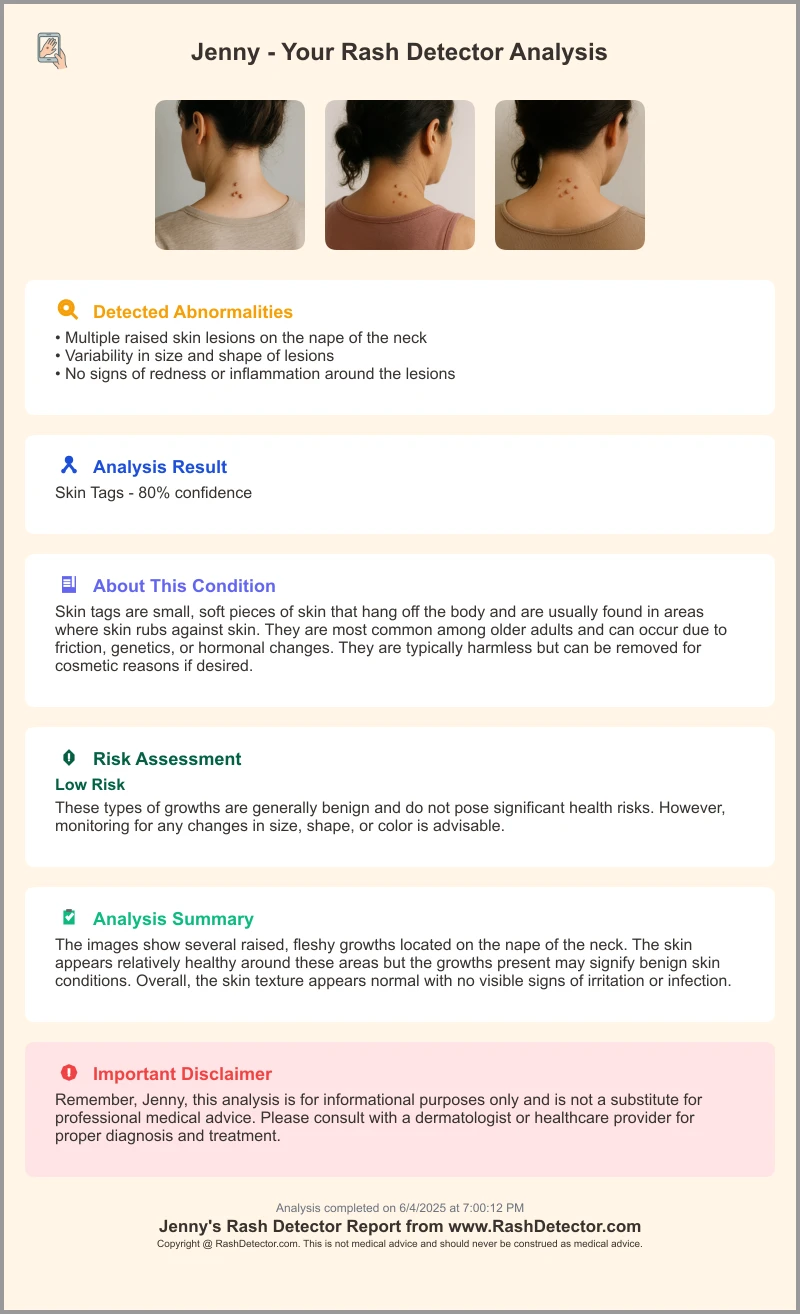
Always remember, photographs are only a starting point. A dermatologist’s evaluation is essential for diagnosis, especially for autoimmune skin diseases.
Section 4: Symptoms and Triggers: Clues to an Autoimmune Cause
Common Symptoms Beyond the Skin
Unlike heat rash or contact dermatitis, autoimmune skin rashes often come with other systemic symptoms that can provide important diagnostic clues:
- Joint pain and swelling: Especially in lupus, dermatomyositis, and rheumatoid arthritis.
- Muscle weakness: Notable in dermatomyositis—difficulty climbing stairs or lifting objects.
- Fatigue and malaise: Persistent tiredness not explained by poor sleep or stress.
- Fever or weight loss: Unexplained fevers, night sweats, or weight changes.
- Dry eyes and mouth: Classic for Sjögren’s syndrome.
- Photosensitivity: Rashes worsen after sun exposure, especially in lupus and dermatomyositis.
- Hair loss: Patchy or diffuse hair loss can accompany skin symptoms.
Triggers and Flare Patterns
- Sun/UV exposure: Triggers or worsens rashes in lupus, dermatomyositis, and some forms of vasculitis.
- Infections: Viral or bacterial illnesses can set off immune flares.
- Stress: Emotional or physical stress can precipitate flares, including a stress rash.
- Medications: Some drugs can trigger autoimmune flares or mimic autoimmune rashes. Read more in our guide to drug allergy rash causes.
- Dietary triggers: Gluten exposure in celiac disease can lead to dermatitis herpetiformis.
When to Seek Urgent Care
- Widespread blistering or peeling skin
- Rapidly worsening rash with fever or pain
- Ulceration, open sores, or signs of infection
- Difficulty breathing or swallowing (possible severe allergic or autoimmune reaction)
See a doctor promptly for any severe, spreading, or persistent rash—especially if accompanied by systemic symptoms. Self-diagnosis is never recommended.
Section 5: Diagnosis and Testing for Autoimmune Skin Rashes
Step-by-Step Diagnostic Process
Diagnosing skin rashes caused by autoimmune diseases requires a careful combination of clinical evaluation, laboratory tests, and sometimes skin biopsy. Here’s how doctors may approach the process:
- Clinical history: Onset, duration, triggers, and associated symptoms (joint pain, fever, fatigue, etc.).
- Physical exam: Close inspection of the rash’s pattern, distribution, and characteristics. Comparison to classic patterns of autoimmune rashes.
- Laboratory testing:
- Blood tests for autoantibodies (ANA, anti-dsDNA, anti-CCP, etc.)
- Markers of inflammation (ESR, CRP)
- Organ function panels (kidney, liver, muscle enzymes)
- Skin biopsy: Small sample of skin sent to pathology. Helps distinguish autoimmune rashes from infections, drug reactions, or cancer.
- Referral to specialists: Dermatology for complex rashes; rheumatology if systemic autoimmune disease is suspected.
How Autoimmune Rashes Differ from Other Rash Types
- Eczema: More likely in childhood, flexural surfaces, often very itchy; usually lacks systemic symptoms.
- Contact dermatitis: Clear link to a new product or exposure; improves when irritant is removed.
- Fungal skin rash: Defined, ring-like border; may respond to antifungals.
- Allergic reaction rash: Sudden, widespread hives or welts; often improves with antihistamines.
- Drug rash: Linked to new medication; see our resource on rash from medication.
Using Technology for Early Assessment
AI apps like Rash Detector can help you compare your rash images to known cases, providing instant suggestions. However, these tools are for educational use only. Always follow up with a healthcare provider for diagnosis and treatment.
Section 6: Treatment Options for Autoimmune Skin Rashes
Managing the Rash—Topical and Systemic Therapies
Treatment for skin rashes caused by autoimmune diseases should address both the skin and the underlying immune disorder. Approaches may include:
- Topical steroids: Reduce inflammation and itching in localized plaques or lesions. Potency and duration depend on rash severity and location.
- Topical calcineurin inhibitors: Alternatives to steroids for sensitive areas (face, eyelids).
- Moisturizers and barrier creams: Support healing and reduce skin irritation.
- Anti-itch creams: See our picks for the best anti-itch creams to help with symptom relief.
Systemic Treatments for Underlying Disease
- Oral or injected corticosteroids: Sometimes used for severe or widespread rashes and systemic symptoms.
- Immunosuppressants: Medications such as methotrexate, azathioprine, mycophenolate, and others may be prescribed to control overactive immune response.
- Biologic agents: Targeted therapies (e.g., TNF inhibitors, IL-17 blockers) for psoriasis and some other autoimmune diseases.
- Specific therapies: Dapsone for dermatitis herpetiformis; gluten-free diet for celiac disease.
Lifestyle and Sun Protection
- Sun avoidance and protection: Important in lupus, dermatomyositis, and scleroderma—use broad-spectrum SPF and protective clothing.
- Dietary modifications: Gluten-free diet for dermatitis herpetiformis; otherwise, consult your doctor before major dietary changes.
- Stress management: Mindfulness, sleep, and exercise may help reduce flares in some autoimmune conditions.
Remember: Many autoimmune rashes need long-term specialist care. Never stop medications abruptly and always discuss changes with your healthcare team.
Conclusion
Skin rashes caused by autoimmune diseases are complex, diverse, and may signal health issues beyond the skin. Recognizing the patterns—like a butterfly rash in lupus or the scaly plaques of psoriasis—can prompt timely diagnosis and treatment, improving outcomes and quality of life. While AI tools like Rash Detector can help with initial visual analysis, they’re not a substitute for professional medical care.
If your rash is severe, spreading, painful, persistent, or accompanied by symptoms like joint pain, fever, or fatigue, see a doctor or dermatologist promptly. Getting the right diagnosis is critical—for both your skin and your overall health.
FAQ
Q: What autoimmune diseases cause skin rashes?
A: Conditions that can cause autoimmune skin rashes include lupus (malar rash), psoriasis (scaly plaques), dermatomyositis (heliotrope rash, Gottron papules), Sjögren’s syndrome (purplish or dry rashes), scleroderma (shiny or thickened skin), celiac disease (dermatitis herpetiformis), pemphigus/pemphigoid (blistering), and vasculitis (purpura, ulcers).
Q: What does an autoimmune rash look like?
A: Appearance varies by disease: lupus may cause a butterfly rash, psoriasis presents as thick, scaly plaques, dermatomyositis can show violet eyelid rash or Gottron papules, and celiac disease can cause itchy blisters. In darker skin, rashes may appear purple, gray, or less inflamed.
Q: How do I know if my rash is autoimmune or just eczema or an allergic rash?
A: Autoimmune rashes are often persistent, resistant to basic treatments, and accompanied by symptoms like joint pain, fever, or fatigue. Eczema and allergic rashes typically respond to moisturizers or antihistamines and lack systemic signs. A doctor can help distinguish the cause.
Q: Can lupus cause a rash on the face?
A: Yes, lupus can cause a malar (butterfly) rash over the cheeks and nose, especially after sun exposure. It may be red or purplish and can be subtle in darker skin tones.
Q: What is the treatment for autoimmune skin rashes?
A: Treatment may include topical steroids, moisturizers, oral immunosuppressants, biologic agents, sun protection, and disease-specific therapies (like a gluten-free diet for dermatitis herpetiformis). Management should be supervised by a doctor.
Q: When should I see a doctor for a rash that might be autoimmune?
A: Seek medical care if your rash is widespread, blistering, painful, persistent, or comes with symptoms like fever, joint pain, or fatigue. Prompt evaluation by a dermatologist or rheumatologist is important for the right diagnosis and treatment.