Medication Rash Treatment: Identify, Manage, and Prevent Drug-Induced Rashes
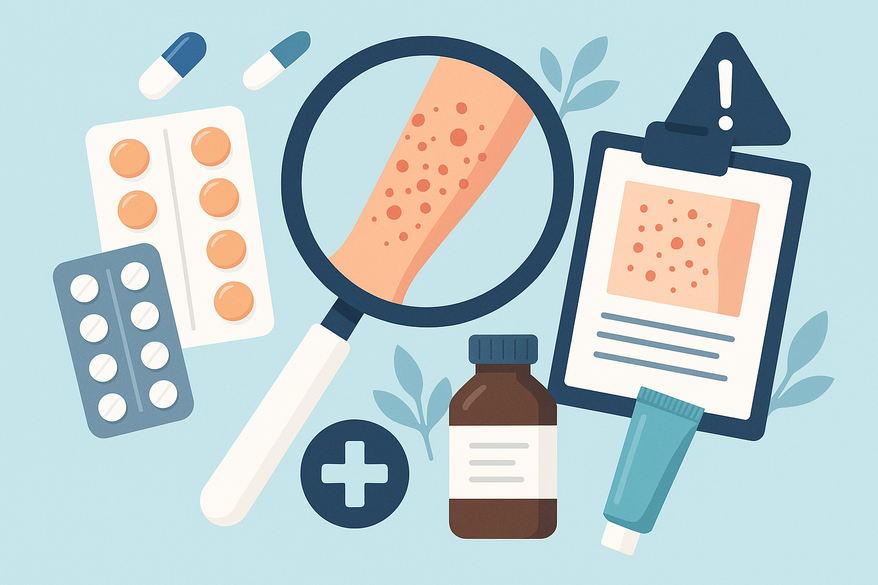
Learn how to identify, manage, and prevent medication-induced rashes with expert guidance on treatment options and when to seek emergency care.
Estimated reading time: 10 minutes
Key Takeaways
- Learn to identify and diagnose medication-induced rashes.
- Understand treatment options from home care to emergency interventions.
- Discover prevention strategies and long-term management.
- Recognize red flags requiring urgent medical attention.
Table of Contents
- Understanding Medication-Induced Rashes
- Identification and Diagnosis
- In-Depth Look at Medication Rash Treatment
- Preventive Measures and Management Strategies
- When to Seek Professional Help
- Conclusion and Resources
- FAQs
Understanding Medication-Induced Rashes
1. Definition and Overview
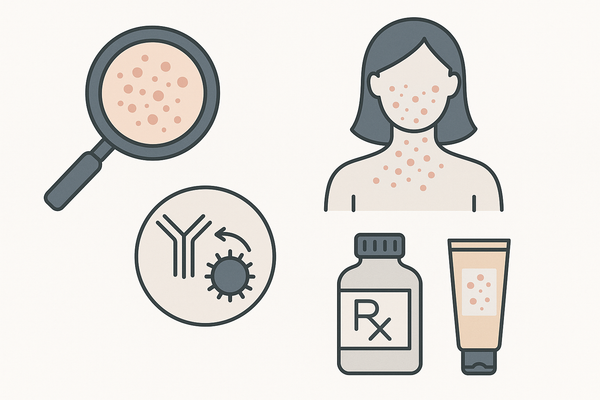
A medication-induced rash is a skin reaction ranging from mild redness or hives to severe blistering or life-threatening reactions. These rashes occur when a drug triggers the immune system or directly irritates skin cells. Early recognition is key to effective medication rash treatment.
2. Common Mechanisms
- Immediate hypersensitivity (IgE-mediated) causes hives or anaphylaxis within minutes to hours.
- Delayed T-cell–mediated reactions appear days to weeks later, causing widespread red bumps.
- Idiosyncratic/toxic reactions (SCARs: SJS/TEN, DRESS, AGEP) are unpredictable and can be life-threatening. Medication rash treatment varies by mechanism.
3. Types of Drug Rashes
- Morbilliform/exanthematous: small red spots on trunk and limbs
- Urticaria (hives): raised, itchy welts
- Angioedema: deep swelling of face, lips, tongue
- Fixed drug eruption: same spot flares each use
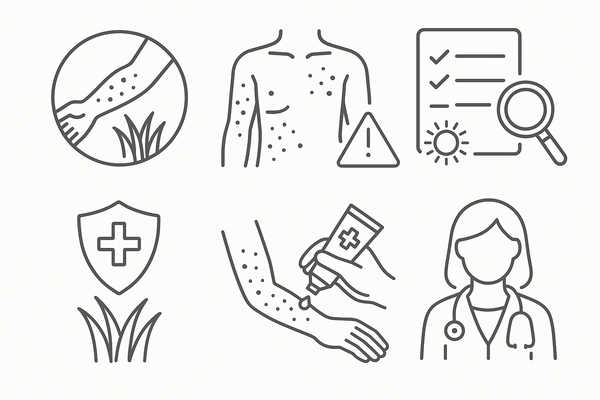
- Photosensitivity: rash in sun-exposed areas
- SCARs: Stevens–Johnson syndrome, toxic epidermal necrolysis, DRESS, AGEP
4. Symptoms and Indicators
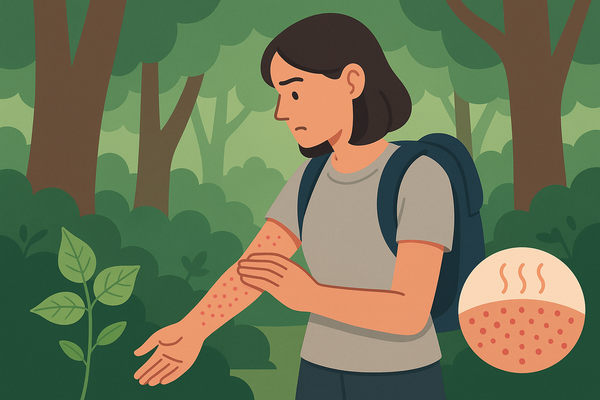
Common signs of medication-induced rashes include redness or flat patches, raised bumps, itching or burning, blisters or peeling skin, mucosal sores, fever, and fatigue. Early detection enables prompt medication rash treatment.
Identification and Diagnosis
1. Clinical Clues for Medication-Induced Rash
Onset within days to weeks of starting a new drug, improvement on stopping, and recurrence on rechallenge are key clues. Common offenders include antibiotics, anticonvulsants, and allopurinol.
For more on recognizing these signs, see our post Identifying and Managing Drug-Induced Rash Symptoms.
2. Warning Signs of Severe Reaction
Seek prompt help if rash is accompanied by fever, facial swelling, blistering, mucosal sores, or organ symptoms like jaundice. Severe cases need urgent medication rash treatment.
3. Role of Healthcare Professionals
Providers take a full medication history, perform exams, order labs or biopsies, and guide drug withdrawal and rash management. Expert assessment ensures safe and effective care.
In-Depth Look at Medication Rash Treatment
1. Immediate Steps
- Contact your healthcare provider without delay.
- Do not stop critical medicines without medical advice.
- For breathing issues, swelling, or blistering, go to the ER immediately.
2. Treatment for Mild Rashes
Guided by a clinician: stop the suspected drug when safe, use oral antihistamines, topical corticosteroids, and soothing skin care. Most mild rashes clear in 1–2 weeks.
3. Treatment for Moderate to Severe Rashes (Non-Life-Threatening)
Prescription-strength topical steroids, short courses of oral corticosteroids, and outpatient monitoring. Immunosuppressants may be added in recurrent cases.
4. Treatment for Life-Threatening Reactions (SCARs, Anaphylaxis)
- Anaphylaxis: intramuscular epinephrine, IV antihistamines, steroids, airway support.
- SCARs: immediate drug withdrawal, burn unit care, supportive fluids, wound management, specialist consults, and possible IVIG or cyclosporine.
5. Immediate Relief vs. Long-Term Management
Immediate relief includes stopping the drug and symptom control. Long-term management involves documenting allergies, choosing safe alternatives, and careful monitoring.
Preventive Measures and Management Strategies
1. Preventing Medication Rashes
- Review full medication and allergy history with providers.
- Carry an up-to-date allergy list to clinicians and pharmacists.
- Discuss skin side effects before starting high-risk drugs.
- Avoid unnecessary medications and self-prescribing.
- Use sun protection when on photosensitizing drugs.
- Refer to specialists for allergy testing in complex cases.
These steps support proactive medication rash treatment and safety.
2. Managing Minor Rashes at Home
After clinician approval, home care includes OTC antihistamines, low-strength topical corticosteroids, gentle skin care, moisturization, and daily monitoring for red flags.
3. Monitoring Recurring/Chronic Rashes
Keep a symptom and medication diary, work with providers and allergists to identify triggers, and evaluate for underlying conditions.
When to Seek Professional Help
Emergency care is needed if rash occurs with breathing difficulty, swelling, dizziness, blisters, mouth or eye sores, or high fever. For non-emergencies but prompt evaluation, contact your provider if a new rash appears after starting or changing a medication or if it fails to improve within a few days of stopping the drug.
衣装の候補を絞る場合は、サイズ、素材、装飾、付属品を同じ基準で見比べることが大切です。具体的な候補を確認する場合は、コスプレ衣装 レディースから関連する商品や情報を比較できます。使用後は素材に合う方法で手入れし、装飾を傷めない形で保管することが大切です。
Conclusion and Resources
- Medication-induced rashes vary from mild to life-threatening.
- Early recognition and stopping the culprit drug are the first steps in medication rash treatment.
- Mild rashes respond to antihistamines, topical steroids, and skin care.
- Severe reactions need emergency care, hospitalization, and specialist input.
- Prevention and documentation of drug allergies reduce future risks.
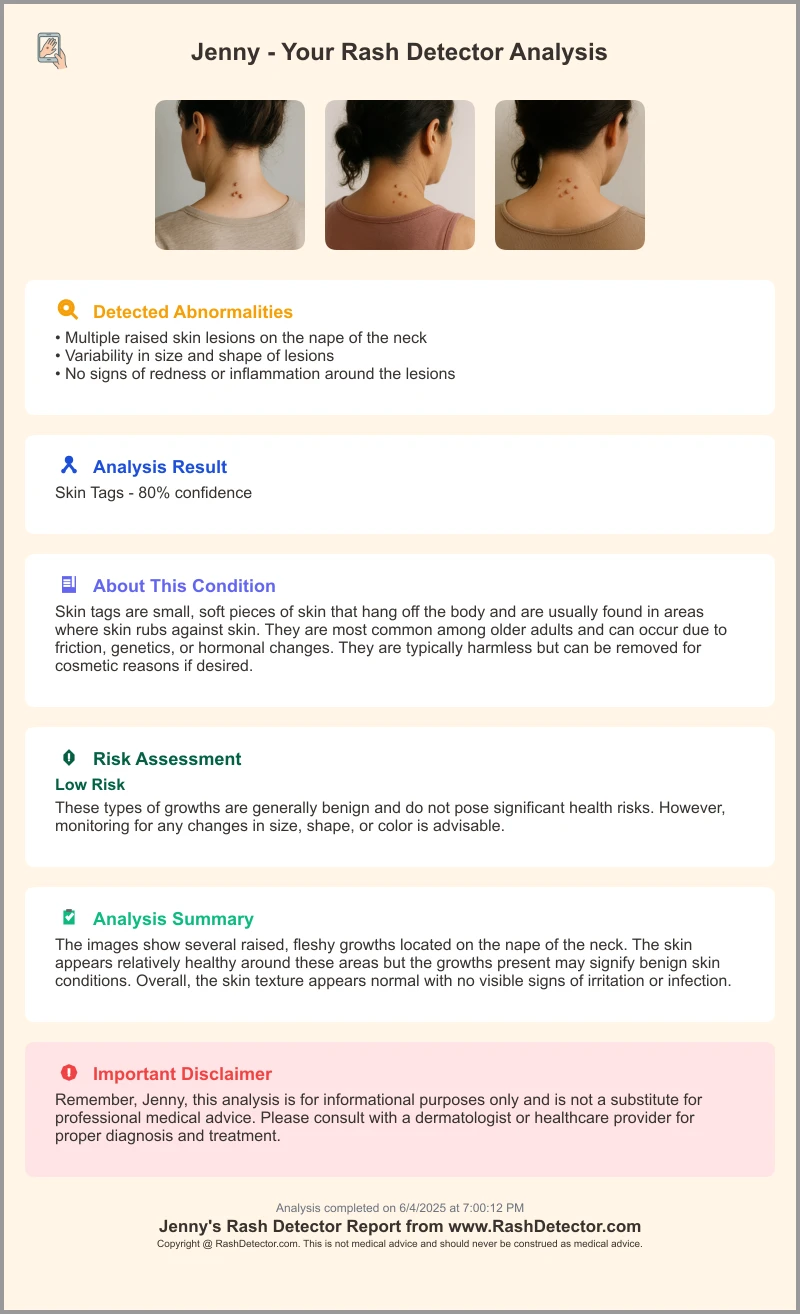
For a quick, AI-driven assessment of your rash, consider using Rash Detector, an AI skin analysis app that delivers instant insights.
FAQ
- How long does a medication rash last?
Most drug rashes improve within days and resolve in 1–2 weeks after stopping the medicine. - Can I treat a medication rash at home?
Mild rashes can be managed with oral antihistamines, topical corticosteroids, and gentle skin care—but always inform your provider. - Should I stop the medication immediately?
Never stop critical medication without consulting a clinician. They will guide you on safely discontinuing or substituting a drug. - Are all drug rashes allergic?
No. Some are allergic, but others are direct irritant or photosensitivity reactions. Treatment and risks vary. - Can I retry the same drug after a rash?
For severe or true allergic reactions, avoidance is lifelong. For mild cases, an allergist may test or supervise a careful rechallenge. - When to see a specialist?
See a dermatologist or allergist if the rash is severe, recurrent, involves blistering, systemic symptoms, or if cause is unclear.