Rash in Ear Canal: Causes, Symptoms, and Why Rash Location Matters
Learn why rashes appear in specific areas like the ear canal, face, arms, and more. Explore causes, symptoms, and home care tips in this comprehensive guide.

Estimated reading time: 15 min
Key Takeaways
- The location of a rash—such as a rash in the ear canal—can provide clues about its possible cause and potential treatment options.
- Ear canal rashes may result from eczema, contact dermatitis, infections, or allergies, each with different symptoms.
- Triggers for rashes in the ear canal include earrings (nickel), hearing aids, hair products, and earbuds.
- Proper care, prevention, and knowing when to see a doctor are important for managing skin rashes safely.
- Rash Detector can help you analyze rashes on different body parts and guide your next steps. Try Rash Detector here.
Table of Contents
- Section 1: Why Rash Location Matters
- Section 2: Rash in Ear Canal—Causes and Symptoms
- Section 3: Rashes by Body Part—Face, Arms, Legs, Chest, and More
- Section 4: Triggers and Common Skin Conditions Linked to Rashes
- Section 5: Home Care and Prevention for Ear and Other Rashes
- Section 6: Medical Treatments and When to See a Doctor
- Conclusion
- FAQ
Section 1: Why Rash Location Matters
Understanding Rash Distribution
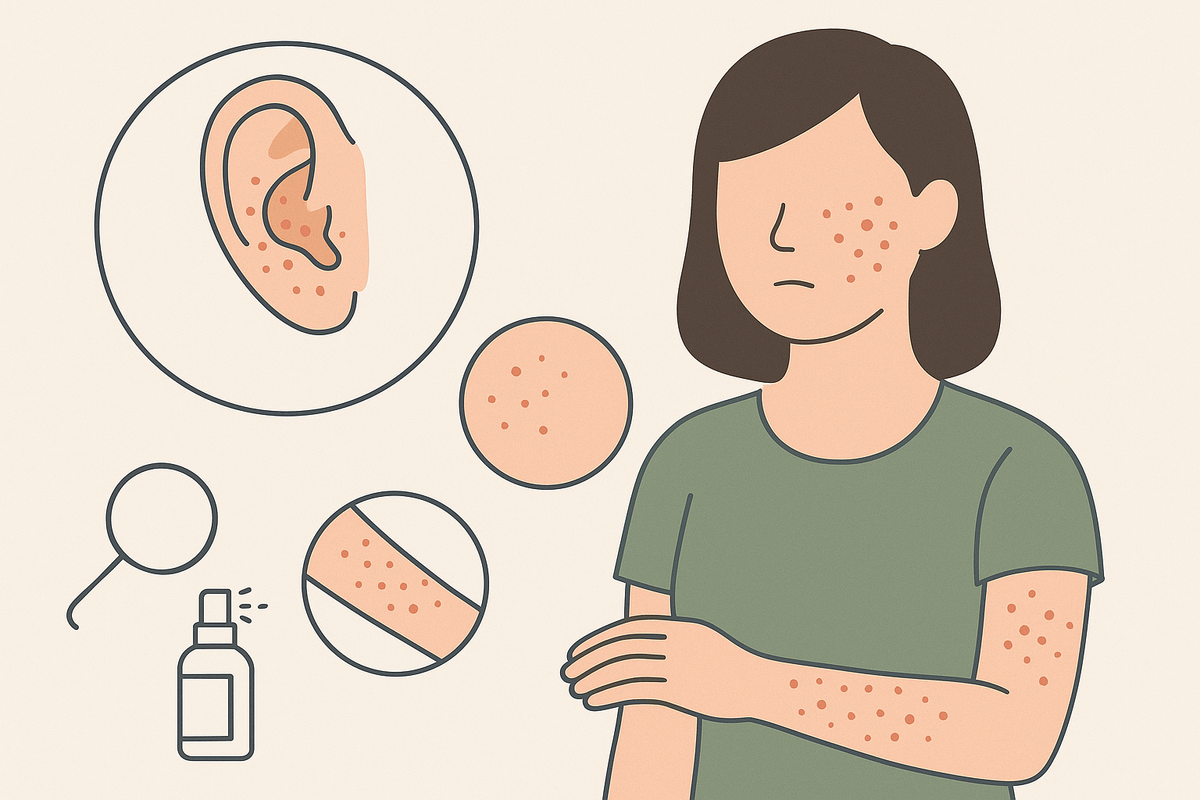
Skin rashes can appear anywhere on the body. The location of a rash—whether it's a rash in the ear canal, on the face, arms, legs, or chest—can provide important clues about its cause. Some skin conditions tend to affect specific areas due to anatomy, skin thickness, exposure to allergens, or moisture levels.
- Ear canal rashes often involve contact with jewelry, hearing devices, or moisture.
- A rash on the face may reflect allergies, rosacea, or viral infections.
- Rash on arms or legs can result from eczema, psoriasis, or environmental exposures.
- Groin, back, or buttocks rashes may be related to fungal infections or intertrigo.
Why Do Rashes Appear in Certain Areas?
Factors influencing rash location include:
- Skin contact with allergens/irritants (e.g., nickel in earrings for ear canal or wristwatches for wrists).
- Moisture and sweat (e.g., behind ears, between buttocks, under breasts).
- Friction and pressure (e.g., from hearing aids, tight clothing, or shoes).
- Underlying conditions (e.g., atopic dermatitis commonly affects flexural areas).
Why the Site of a Rash Affects Diagnosis
Many skin diseases have typical patterns or commonly affected body parts. For example:
- Seborrheic dermatitis often affects the scalp, eyebrows, and sometimes the ear canal.
- Atopic eczema often appears in skin folds and around the ears.
- Psoriasis may affect elbows, knees, scalp, and outer ear.
- Contact dermatitis is often limited to areas exposed to an offending substance.
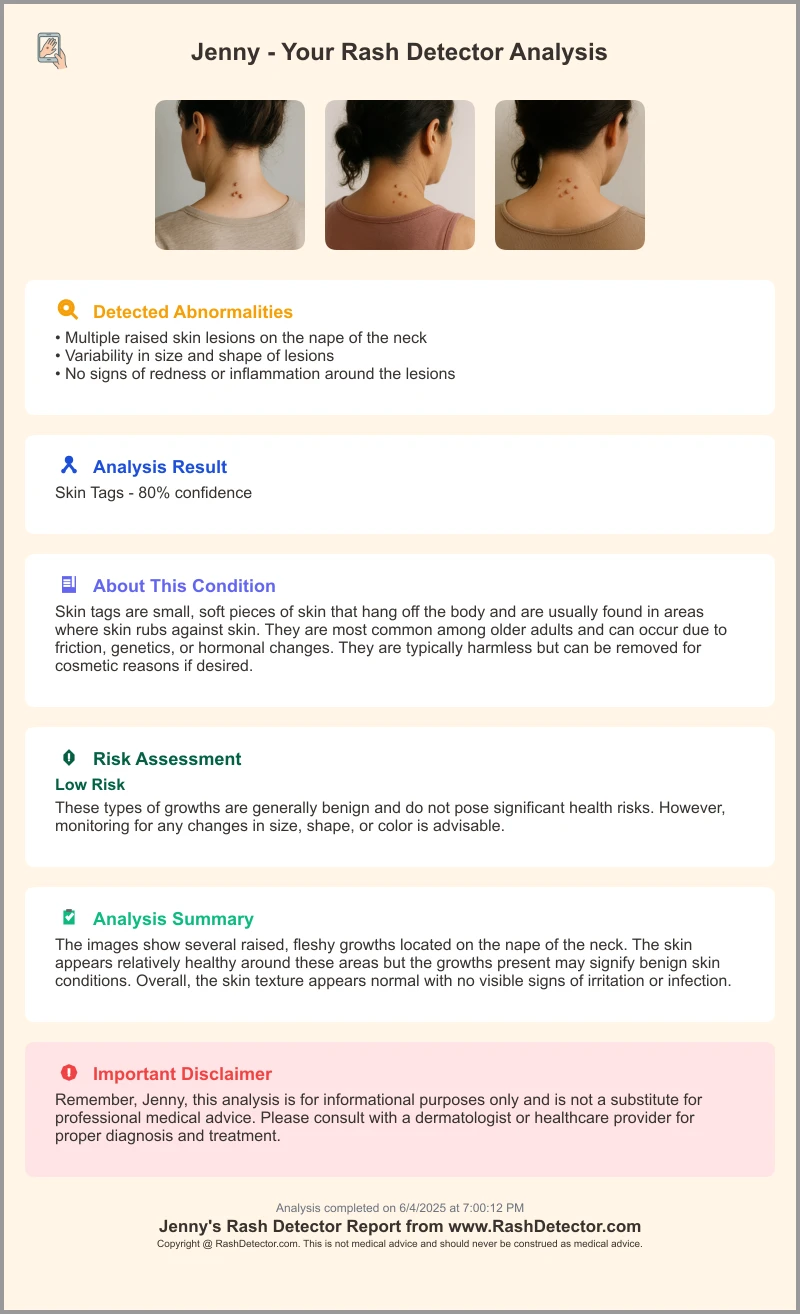
This is why tools like Rash Detector ask for photos of specific body areas to help narrow down possible causes.
Section 2: Rash in Ear Canal—Causes and Symptoms
Main Causes of Rash in Ear Canal
A rash in the ear canal—sometimes called ear canal dermatitis or ear eczema—can be distressing and uncomfortable. Possible causes include:
- Ear canal dermatitis or eczema. Chronic skin inflammation, sometimes due to atopic dermatitis or seborrheic dermatitis.
- Contact dermatitis. Allergic or irritant reactions to earrings (especially nickel), hearing aids, earbuds, shampoos, or hair dye.
- Otitis externa (swimmer’s ear). Infection of the outer ear canal, often after swimming or exposure to moisture.
- Fungal infections. More likely in humid climates or after antibiotic/steroid use.
Symptoms: How to Recognize an Ear Canal Rash
- Itching—a common symptom of eczema and allergic reactions.
- Scaling or flaking skin inside the ear canal.
- Redness and swelling.
- Crusting or discharge (yellowish or clear fluid).
- Pain or tenderness—especially if infection is present.
- Hearing changes (fullness or muffled hearing if swelling is severe).
Ear Canal Rash vs. Infection
Differentiating between eczema and infection is important. Otitis externa often causes pain, swelling, and sometimes fever, while eczema and contact dermatitis are more likely to cause itching, dryness, and less severe discomfort. If there is significant pain, pus, or hearing loss, it may be an infection and requires medical attention.
Section 3: Rashes by Body Part—Face, Arms, Legs, Chest, and More
Rash on Face
The face is frequently exposed to environmental triggers and cosmetics. Possible causes include:
- Atopic dermatitis (eczema), especially in children and adults with allergies.
- Seborrheic dermatitis—often in oily areas, such as around the nose, eyebrows, and ears.
- Allergic reactions to skincare products, makeup, or sunscreen.
- Viral exanthems or other infections.
Rash on Arms and Legs
Rashes on the arms and legs can result from:
- Contact with plants (poison ivy, oak), or household chemicals.
- Atopic eczema—especially in flexural areas (elbow/knee creases).
- Psoriasis—well-defined, silvery plaques on elbows and knees.
- Drug rashes—which may be widespread and require prompt attention. See our guide on drug rash treatment for more details.
Rash on Chest, Back, and Between Buttocks
- Heat rash (miliaria), especially in hot climates or under tight clothing. Learn more in our post on how to prevent heat rash.
- Fungal infections (tinea, candidiasis), especially in skin folds like between the buttocks or under the breasts.
- Intertrigo—irritation where skin rubs together.
- Drug reactions—may cause widespread rash or target the trunk. See more at drug rash: causes and symptoms.
Rash on Hands
- Hand eczema—due to frequent washing, soaps, or allergens.
- Psoriasis—well-defined, scaly plaques.
- Contact dermatitis from cleaning products, latex, or nickel.
Each body area has its more common rashes, and knowing these patterns may help guide care and prevention. If you're unsure, Rash Detector lets you upload images from any area to get personalized suggestions.
Section 4: Triggers and Common Skin Conditions Linked to Rashes
Common Triggers for Ear Canal and Other Rashes
- Jewelry (nickel allergy): Common in earrings, can cause rashes in and around the ear canal.
- Hearing aids and earbuds: Materials or trapped moisture may trigger irritation or allergy.
- Hair products and dyes: Can seep into the ear during washing or coloring.
- Soaps, shampoos, and cleansers: Fragrances and harsh chemicals can irritate skin.
- Environmental allergens: Pollen, dust, and pet dander can contribute to eczema flares.
- Medications: Some rashes, including those inside the ear, may be triggered by drug reactions. Learn more about medication-related skin issues in our post on rashes from medication.
Skin Conditions That Target the Ear Canal
- Atopic dermatitis (eczema): May affect the ear canal in people with a history of allergies or asthma.
- Seborrheic dermatitis: Typically causes flaky, greasy scales inside and around the ears.
- Asteatotic eczema (eczema craquelé): Dry, cracked skin that may extend into the ear canal, especially in winter.
- Psoriasis: Thick, silvery scales that can affect the outer or sometimes the inner ear.
- Fungal infections (otomycosis): More common in humid climates and after antibiotic or steroid use.
Less Common Causes and Mimickers
- Bacterial infections: Staphylococcus and Pseudomonas species are common, especially in swimmer’s ear.
- Autoimmune diseases: Rare, but lupus or vasculitis can sometimes affect the ear canal.
- Foreign bodies: Small objects or insects can cause irritation and secondary rash.
Section 5: Home Care and Prevention for Ear and Other Rashes
Ear Canal Rash: Home Care Tips
- Keep the ear dry: Avoid swimming or immersing ears in water during flares.
- Do not insert cotton swabs or objects: These can worsen irritation and push debris deeper.
- Avoid scratching: Scratching damages the delicate lining and worsens inflammation.
- Use gentle cleansers: Wash around the ear gently with mild, fragrance-free soap.
- Moisturize appropriately: If skin is dry, a small amount of hypoallergenic emollient around (not deep inside) the ear may help. Never apply creams deep into the ear canal without medical advice.
General Rash Prevention by Body Area
- For rash on face: Use non-comedogenic, fragrance-free products; avoid sharing towels or makeup.
- For rash on arms/legs: Rinse off after outdoor activities; wear protective clothing.
- For rash on chest/back: Shower after sweating; keep skin folds dry.
- For rash on hands: Moisturize after washing; wear gloves for cleaning or dishwashing.
Smart Tools for Rash Analysis
Apps like Rash Detector let you upload images of a rash in the ear canal or any other area to get instant analysis and guidance. This may help you decide if home care is likely to be enough or if you should see a dermatologist for further evaluation.
Section 6: Medical Treatments and When to See a Doctor
Medical Treatments for Ear Canal Rash
- Topical corticosteroids: Mild steroid drops or creams (prescribed by a doctor) may reduce inflammation in eczema or allergic contact dermatitis. Never use without medical advice, especially inside the ear.
- Acidifying or astringent ear drops: These may help restore the normal pH and dry out the canal in cases of otitis externa. Some are available over-the-counter, but best used under supervision.
- Antibiotic or antifungal ear drops: For bacterial or fungal infections, prescription medications are necessary.
- Oral steroids or antibiotics: Reserved for severe, spreading, or deep infections, always under doctor supervision.
When Should You See a Doctor?
- Persistent symptoms that do not improve with home care.
- Swelling, redness, or pain that worsens or spreads.
- Discharge, pus, or bleeding from the ear canal.
- Hearing loss, fever, or signs of systemic illness.
- If you suspect an infection or cannot identify the cause of the rash.
Never insert creams, ointments, or cotton swabs deep into the ear canal unless directed by a doctor. For severe, spreading, or persistent rashes, always consult a dermatologist or your healthcare provider for diagnosis and safe treatment.
Related Resources
- For more on general rash management, see effective skin rash treatments.
Conclusion
Rashes can appear in almost any area of the body, from the ear canal to the face, arms, legs, chest, and hands. The location of a rash is an important clue—helping you and your doctor narrow down possible causes and choose the best treatment. Ear canal rashes are often due to eczema, contact dermatitis, or infection, each with different triggers and symptoms. Always avoid self-diagnosing serious or persistent skin issues. If you’re unsure about your symptoms, consider using an app like Rash Detector to get instant analysis and guidance—or see a dermatologist for a professional evaluation. For severe, spreading, or painful rashes, or if you have hearing changes or discharge, seek medical attention promptly.
FAQ
Q: What causes a rash in the ear canal?
A: Possible causes include ear canal dermatitis (eczema), contact dermatitis (from earrings, hearing aids, or hair products), infections like otitis externa (swimmer’s ear), and fungal infections. Allergies and irritants are frequent triggers.
Q: Is an itchy ear canal eczema or an ear infection?
A: Itching can be a sign of eczema or contact dermatitis. If there is severe pain, swelling, pus, or hearing loss, it may be an infection like otitis externa. See a doctor for an accurate diagnosis.
Q: How do you treat ear canal dermatitis or ear eczema?
A: Keep the ear dry, avoid irritants, and do not scratch. Doctors may prescribe mild topical steroids or ear drops. Never put creams deep in the ear canal without advice from a healthcare provider.
Q: Can allergies or earrings cause a rash inside the ear?
A: Yes, nickel in earrings and materials in hearing aids or earbuds can cause contact dermatitis, leading to rash and itching inside the ear canal.
Q: When should I see a doctor for a rash or itching in my ear canal?
A: See a doctor if symptoms persist, worsen, or are accompanied by pain, swelling, discharge, hearing loss, or fever. Medical evaluation is important for proper treatment.
Q: Should you use cotton swabs or put cream inside the ear canal?
A: Do not use cotton swabs or put creams deep inside the ear canal unless instructed by a doctor. This can worsen irritation or cause injury.