Rash on Palms and Soles: Causes, Symptoms, and What to Do
Learn about rash on palms and soles, common causes, symptoms, and when to seek urgent care. In-depth guide for diagnosis and management.
Estimated reading time: 13 min
Key Takeaways
- Rash location—such as on palms and soles—gives key clues to its cause and urgency.
- Common palm/sole rashes include eczema, psoriasis, contact dermatitis, and infections.
- Some systemic illnesses can cause serious rashes in these areas; know when to seek urgent care.
- History, symptoms, and triggers help narrow down diagnosis—seeing a doctor is essential for persistent or concerning rashes.
- Apps like Rash Detector can help analyze rashes, but are not a substitute for medical advice.
Table of Contents
- Section 1: Why Rash Location Matters – Palms, Soles, and Beyond
- Section 2: Common Causes of Rash on Palms and Soles
- Section 3: Infectious and Serious Causes – What to Watch For
- Section 4: Symptoms and Patterns – How to Tell Rashes Apart
- Section 5: Diagnosis, Evaluation, and When to See a Doctor
- Section 6: Treatment, Home Care, and Chronic Rash Management
- Conclusion
- FAQ
Section 1: Why Rash Location Matters – Palms, Soles, and Beyond
The Importance of Rash Location
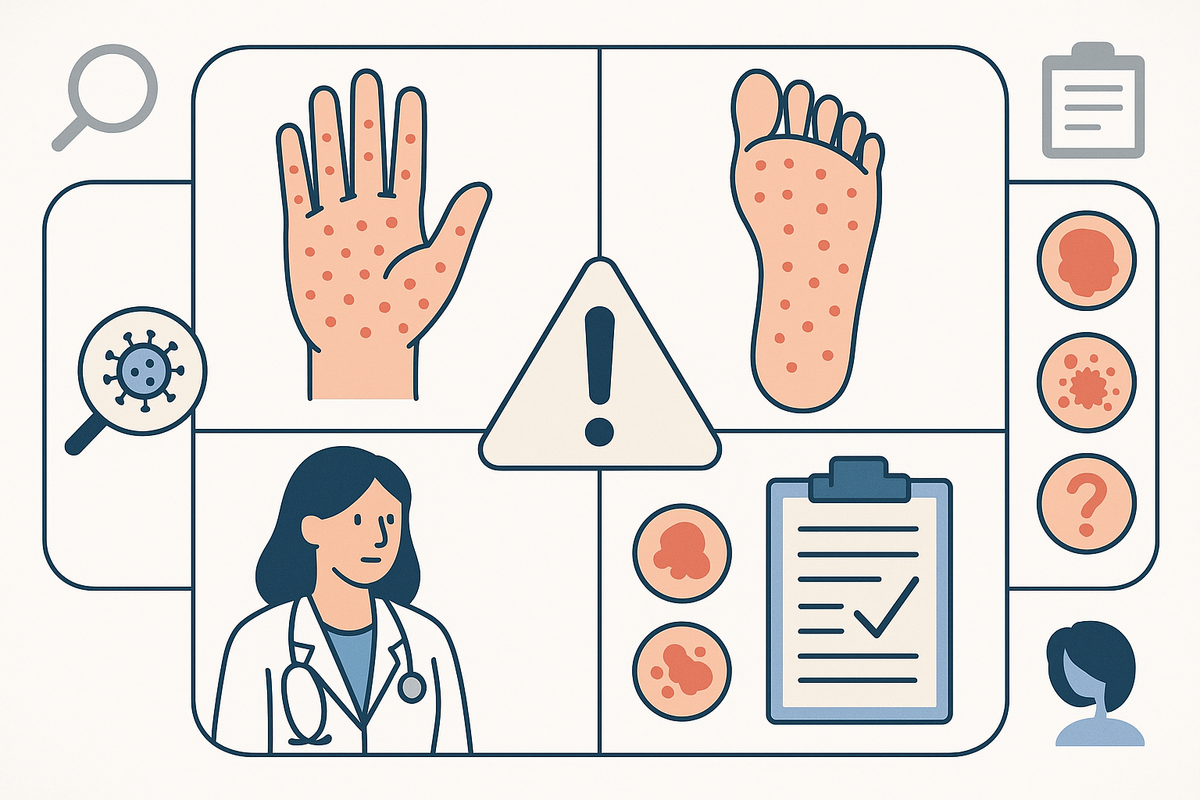
When a rash appears, its location gives essential clues for diagnosis and management. A rash on palms and soles can indicate a variety of conditions, some benign and some potentially serious. Understanding why rashes appear in certain areas is important: the skin on the palms and soles is thicker, more exposed to friction, and less oily than other body parts, influencing which conditions arise there.
Why Do Rashes Appear in Certain Areas?
- Skin structure: Thicker skin means some rashes (like eczema) behave differently on palms/soles than on the face or chest.
- Exposure: Hands and feet are in contact with irritants, allergens, and environmental triggers more often than other areas.
- Blood supply: Some systemic illnesses may involve palms/soles due to unique blood vessel patterns.
Comparing Rash Locations
Rashes also commonly appear on the face, arms, legs, chest, back, groin, and between the buttocks. Each area has its own common causes:
- Rash on face: Often due to acne, rosacea, seborrheic dermatitis, or viral infections.
- Rash on arms/legs: Eczema, psoriasis, contact dermatitis, and insect bites are frequent culprits.
- Rash on chest/back: Heat rash, drug rashes, or viral exanthems.
- Rash between buttocks/groin: Fungal infections, intertrigo, and irritant dermatitis.
For more about treating itchy skin, see our guide to the best anti-itch creams.
Why Focus on Palms and Soles?
Conditions affecting palms and soles can be clues to systemic diseases or unique skin disorders. Because these areas are less commonly affected, a rash here may be more significant than in other locations.
Section 2: Common Causes of Rash on Palms and Soles
Eczema and Dyshidrotic Eczema
Dyshidrotic eczema is a possible cause of itchy, blistering rashes on palms and soles. It presents as small, deep vesicles (blisters) that can be intensely itchy and may peel over time.
- Often triggered by stress, sweating, or exposure to irritants.
- Can become chronic, with recurrent flare-ups.
- May also appear on the sides of fingers and toes.
Palmoplantar Psoriasis
This variant of psoriasis can produce thick, scaly plaques on the palms and soles, sometimes with painful fissures. It may be mistaken for chronic eczema but tends to be less itchy and more painful.
- Silvery-white scales and well-demarcated edges are clues.
- May coexist with psoriasis elsewhere (scalp, elbows, knees).
Contact Dermatitis
Direct contact with an allergen (like nickel, fragrances, rubber) or irritant (soap, detergents) can cause redness, swelling, and blistering on the hands or feet. For rashes that involve other areas—like the arms or legs—consider whether a new product or material recently touched your skin.
- Patchy redness, itching, and sometimes oozing or crusting.
- Improves with avoidance of the trigger and topical treatments.
Palmoplantar Pustulosis
This chronic condition can cause crops of sterile pustules (white/yellow bumps) on the palms and soles, often in middle-aged women. It is related to psoriasis and may be triggered by smoking.
- Painful, may crack or peel, and often persists for weeks.
Other Considerations
- Rash on hands may also be caused by friction, excessive washing, or glove use.
- Children may develop hand-foot-and-mouth disease (see Section 3).
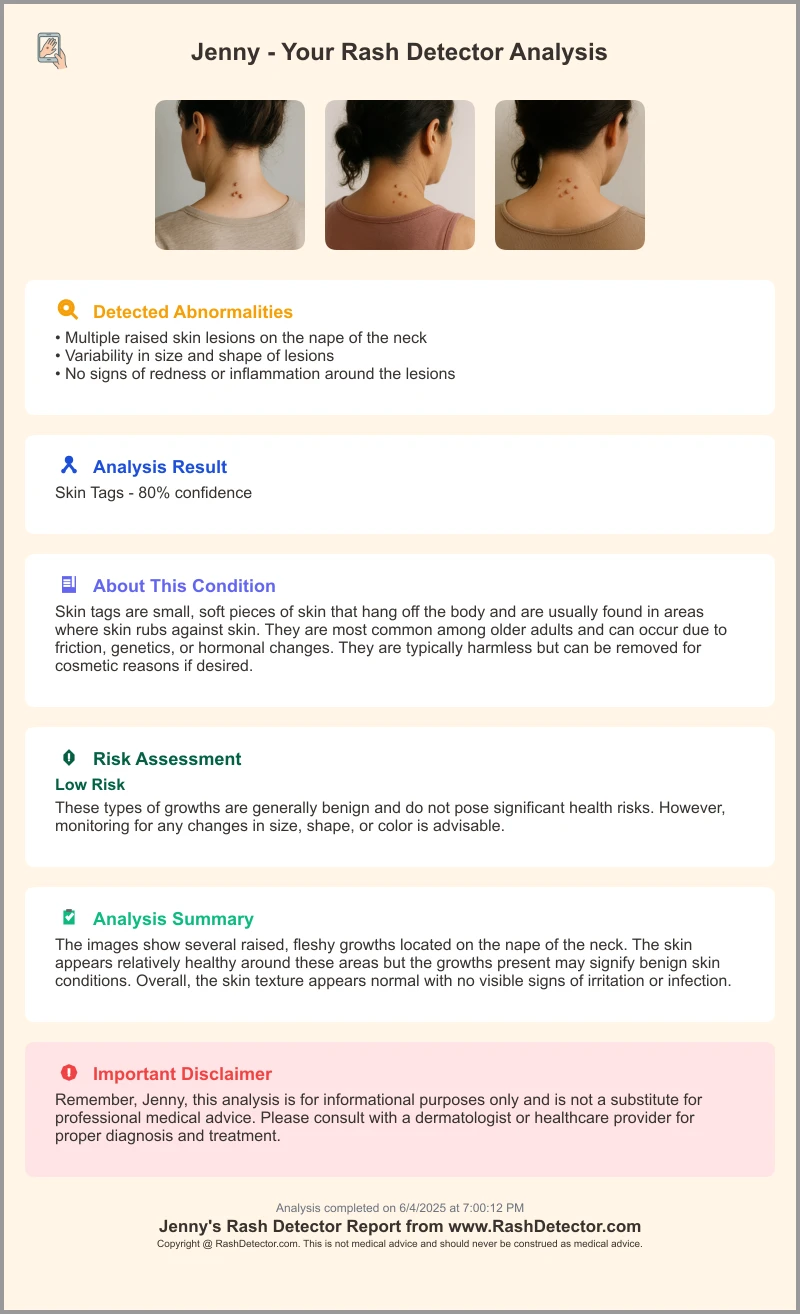
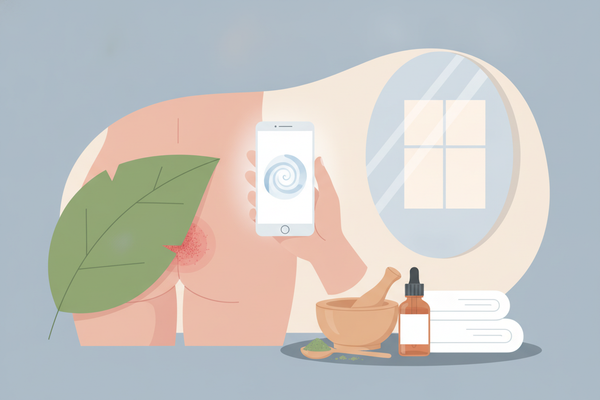
Apps like Rash Detector let you upload images of your rash for instant AI analysis—helpful for tracking changes, but always consult a doctor for severe or spreading symptoms.
Section 3: Infectious and Serious Causes – What to Watch For
Hand-Foot-and-Mouth Disease (HFMD)
This viral infection (usually by coxsackievirus) is a common cause of rash on palms and soles in children. It features:
- Red spots, sometimes with small blisters, on palms, soles, and often the buttocks.
- Mouth sores and low-grade fever.
- Highly contagious, but usually mild and self-limited.
Secondary Syphilis
Syphilis—a sexually transmitted infection—can produce a characteristic non-itchy, copper-colored rash that often involves the palms and soles. Other symptoms can include fever, swollen lymph nodes, and mucous membrane lesions.
- Important to diagnose early, as it signals systemic disease.
- History of unprotected sex or known exposure increases suspicion.
Rocky Mountain Spotted Fever (RMSF)
This tick-borne infection can cause a rapidly spreading rash, often starting on wrists/ankles and moving to palms/soles. Associated symptoms include:
- High fever, severe headache, muscle aches.
- Small red or purple spots (petechiae) that may become widespread.
- Potentially life-threatening—immediate medical care required.
Other Serious Infectious Causes
- Meningococcemia: Rapidly spreading purple or red patches, fever, severe illness—medical emergency.
- Measles: May involve palms/soles late in illness, usually with cough, conjunctivitis, and Koplik spots in the mouth.
- Toxic shock syndrome: Diffuse red rash including palms/soles, plus fever, low blood pressure, and multi-organ symptoms.
Drug Reactions
Some medication allergies and drug rashes can involve the palms and soles, sometimes with blisters or peeling. These reactions may require prompt cessation of the offending drug and medical evaluation. For more, see our article on drug rash causes and symptoms.
Section 4: Symptoms and Patterns – How to Tell Rashes Apart
Key Symptom Patterns
To help identify the cause of a rash on palms and soles, pay attention to the following:
- Itching: Suggests eczema, contact dermatitis, or allergic reactions.
- Pain: Often seen with deep fissures (psoriasis) or infectious causes.
- Blisters: Dyshidrotic eczema, hand-foot-and-mouth disease, or drug reactions.
- Pustules: Palmoplantar pustulosis (sterile bumps), some bacterial infections.
- Scaling/thickening: Psoriasis, chronic eczema.
- Fever/systemic symptoms: Infections (HFMD, RMSF, meningococcemia), drug reactions.
- Petechiae/purpura: Small red/purple, non-blanching spots—always urgent.
Rash Patterns by Age Group
- Children: Hand-foot-and-mouth disease, scabies, eczema, viral exanthems.
- Adults: Eczema, psoriasis, contact dermatitis, drug reactions, syphilis, autoimmune diseases.
Other Body Areas
Note if the rash also involves the face, arms, legs, chest, or between the buttocks. Widespread involvement may suggest a systemic cause, drug reaction, or viral illness. For more on drug-induced rashes, see rashes from medication.
When to Worry
- Fever, headache, neck stiffness, or rapid spread: get urgent medical care.
- Painful, purple, or blistering rashes: may need emergency evaluation.
- Rash with shortness of breath, confusion, or low blood pressure: call emergency services.
Section 5: Diagnosis, Evaluation, and When to See a Doctor
History and Exam
Doctors rely on a detailed history and skin exam to narrow down the cause of a palm/sole rash. Important questions include:
- When did the rash appear, and how has it changed?
- Recent illnesses, fevers, or systemic symptoms?
- Any new medications, supplements, or vaccines?
- Recent travel (tick exposure, infections), outdoor activities, or sexual history?
- Contact with irritants, new soaps, gloves, or chemicals?
- Personal or family history of eczema, psoriasis, or allergies?
Physical Exam Clues
- Rash pattern (blisters, scales, pustules, color changes)
- Distribution (just palms/soles or also arms, legs, trunk, face)
- Associated findings (mouth sores, lymph node swelling, fever)
Diagnostic Tools
- Skin scraping (for fungus or scabies)
- Blood tests (if infection, autoimmune, or drug reaction is suspected)
- Biopsy (rare, for unclear or chronic cases)
- Photographic analysis: Apps like Rash Detector can help document and compare rashes over time, but cannot replace clinical evaluation.
When to See a Doctor
- Rash is painful, spreading, blistering, or involves mucous membranes
- Presence of fever, headache, or other systemic symptoms
- Non-blanching red or purple spots (petechiae or purpura)
- Rash does not improve with basic care within a few days
Always consult a physician or dermatologist for diagnosis and treatment of any persistent, severe, or concerning rash.
Section 6: Treatment, Home Care, and Chronic Rash Management
Treatment by Cause
- Eczema/Dyshidrotic eczema: Moisturizers, topical corticosteroids, trigger avoidance, gentle cleansers.
- Palmoplantar psoriasis: Strong topical steroids, vitamin D analogs, sometimes systemic medications.
- Contact dermatitis: Remove/avoid trigger, topical steroids, barrier creams.
- Palmoplantar pustulosis: Similar to psoriasis; may need phototherapy or systemic drugs.
- Hand-foot-and-mouth disease: Supportive care (hydration, fever control), generally resolves in about a week.
- Infectious causes (RMSF, meningococcemia, syphilis): Require urgent antibiotics and hospital care.
- Drug reactions: Stop the offending drug, supportive care, possible steroids—see skin rash treatment for more.
Home Care Strategies
- Keep affected skin moisturized; avoid harsh soaps/detergents.
- Protect hands/feet with gloves or socks when exposed to irritants.
- Cool compresses can relieve itching or discomfort.
- Track triggers in a diary—note exposures, foods, stress, and new products.
- For minor itching, non-prescription anti-itch creams may provide relief (always follow package directions).
Managing Chronic or Recurrent Rashes
- Regular skin care routines—gentle cleansing, moisturizing, trigger avoidance.
- Work with a dermatologist for persistent, recurrent, or severe cases—may need patch testing or advanced therapies.
- Use apps like Rash Detector to monitor rash changes and share images with your healthcare provider.
For more tips on prevention and skin health, check out our guide on how to prevent heat rash.
Conclusion
A rash on the palms and soles is a key diagnostic clue that can point to a wide range of causes—from eczema and psoriasis to serious infections or drug reactions. Recognizing patterns, tracking triggers, and noting associated symptoms (like fever or pain) are essential first steps. However, the best course is always to consult a doctor or dermatologist, especially for rashes that are severe, spreading, persistent, or associated with systemic symptoms.
Apps like Rash Detector can support your skin health journey by helping you document and analyze rashes, but they are not a substitute for professional evaluation. For more comprehensive skin self-care, see our guide on how to do a skin self-exam at home.
FAQ
Q: What causes a rash on the palms and soles?
A: Common causes include eczema (especially dyshidrotic eczema), psoriasis, contact dermatitis, palmoplantar pustulosis, hand-foot-and-mouth disease, secondary syphilis, and reactions to drugs or infections. The location helps narrow down the likely cause—always seek a medical evaluation for a definitive diagnosis.
Q: When is a rash on the palms and soles an emergency?
A: Urgent care is needed if the rash is accompanied by fever, severe pain, purple/red spots that don’t blanch (petechiae/purpura), headache, confusion, or rapid spreading. These may signal serious infections like meningococcemia or Rocky Mountain spotted fever.
Q: Is a rash on the palms and soles a sign of hand-foot-and-mouth disease?
A: In children, a rash on the palms and soles with mouth sores and low fever is often due to hand-foot-and-mouth disease. It is usually mild, but see a doctor if symptoms are severe, persistent, or if the child cannot stay hydrated.
Q: Can syphilis cause a rash on the palms and soles?
A: Yes. Secondary syphilis can cause a non-itchy rash on the palms and soles, along with other symptoms like mucous membrane lesions and swollen lymph nodes. Early diagnosis and treatment are important.
Q: What does dyshidrotic eczema on the hands and feet look like?
A: Dyshidrotic eczema appears as clusters of small, deep blisters on the sides of the fingers, palms, or soles. The blisters are very itchy and may peel or crack over time.
Q: How do doctors diagnose a rash on the palms and soles?
A: Diagnosis relies on a detailed history, physical examination, and sometimes additional tests (skin scraping, blood tests, or biopsy). Photographs can help track changes, but a health professional’s assessment is essential for an accurate diagnosis and safe treatment.
See a doctor or dermatologist for diagnosis and treatment of any rash that is severe, spreading, painful, or persistent.