Rash on Face: Causes, Symptoms, Pictures, and Effective Treatments
Discover causes, symptoms, and treatments for a rash on face. Learn how to identify facial rashes in adults, home remedies, and when to see a doctor.
Estimated reading time: 12 min
Key Takeaways
- A rash on the face can have many causes, including allergies, infections, irritants, and autoimmune diseases.
- Common facial rashes in adults include rosacea, eczema, contact dermatitis, and lupus.
- Symptoms can vary: redness, bumps, itching, blisters, scaling, or pigmentation changes—presentation may differ on darker skin.
- Home remedies (gentle cleansers, moisturizers, antihistamines) may help mild cases, but persistent or severe rashes require medical evaluation.
- Prevention involves avoiding known triggers, using fragrance-free products, and practicing good skin care habits.
Table of Contents
- Section 1: Common Causes of Rash on Face in Adults
- Section 2: Specific Types of Facial Rashes with Pictures
- Section 3: Recognizing Symptoms and Patterns
- Section 4: Home Remedies and Over-the-Counter Treatments
- Section 5: When to Seek Medical Attention
- Section 6: Prevention Strategies for Facial Rashes
- Section 7: Diagnosis and Professional Treatment Options
- Section 8: Lifestyle Factors, Triggers, and Special Considerations
- Conclusion
- FAQ
Section 1: Common Causes of Rash on Face in Adults
Allergic Reactions
One of the possible reasons for a rash on the face is an allergic reaction. This can happen due to:
- New skincare or cosmetic products
- Pollen, pet dander, or dust mites
- Certain foods or drinks
- Medications (drug-induced facial rashes can occur—learn more about drug allergy rash)
Symptoms may include itching, redness, and swelling, and the rash may appear suddenly after contact with the allergen.
Infections
Both viral and bacterial infections can present as a facial rash. For example:
- Herpes simplex virus (cold sores, grouped blisters)
- Impetigo (yellowish crusts, especially around mouth and nose)
- Fifth disease (parvovirus B19, causes a bright red rash on cheeks)
Fungal infections, such as tinea faciei (ringworm), can also create scaly, red patches on the face.
Irritant and Contact Dermatitis
Direct irritation from harsh cleansers, soaps, or chemicals may trigger an itchy face rash or rash around mouth. This is often due to:
- Fragrances or preservatives in skincare
- Overwashing or exfoliating
- Contact with plants (poison ivy, etc.)
Autoimmune Conditions
Certain autoimmune diseases can also present as a facial rash in adults. For example, lupus can cause a classic butterfly-shaped red rash on the cheeks and nose. Rosacea and eczema are also linked to immune system dysfunction.
Section 2: Specific Types of Facial Rashes with Pictures
Rosacea
Rosacea is a chronic skin condition that causes persistent redness, visible blood vessels, and sometimes acne-like bumps, mostly on the cheeks, nose, chin, and forehead. Flare-ups can be triggered by heat, alcohol, spicy food, or stress.
Eczema (Atopic Dermatitis)
Eczema can cause dry, itchy, and inflamed patches on the face. It is common in children but can affect adults, especially those with allergies or asthma. The rash may appear red on lighter skin or darker brown, purple, or gray on darker skin tones.
Perioral Dermatitis
This is a rash that forms around the mouth, nose, or eyes, often as small red bumps or pus-filled spots. It is more commonly seen in women and can be triggered by topical steroids or toothpaste with fluoride.
Lupus Butterfly Rash
Systemic lupus erythematosus (SLE) can cause a distinctive red, butterfly-shaped rash across the cheeks and bridge of the nose. It usually does not cross the nasolabial folds and may be accompanied by other symptoms like joint pain or fever.
Seborrheic Dermatitis
This type of facial rash presents as greasy, yellowish scales and redness, commonly around the nose, eyebrows, and hairline. It is often chronic and associated with dandruff.
Contact Dermatitis
Contact dermatitis is triggered by direct exposure to an irritant or allergen. The rash is typically red, itchy, and may blister. Common triggers include new skincare products, certain metals (nickel), or fragrances.
Fifth Disease (Slapped Cheek Syndrome)
Caused by parvovirus B19, fifth disease leads to bright red cheeks that look as if they've been slapped. It’s more common in children but can affect adults, sometimes with joint pain or mild fever.
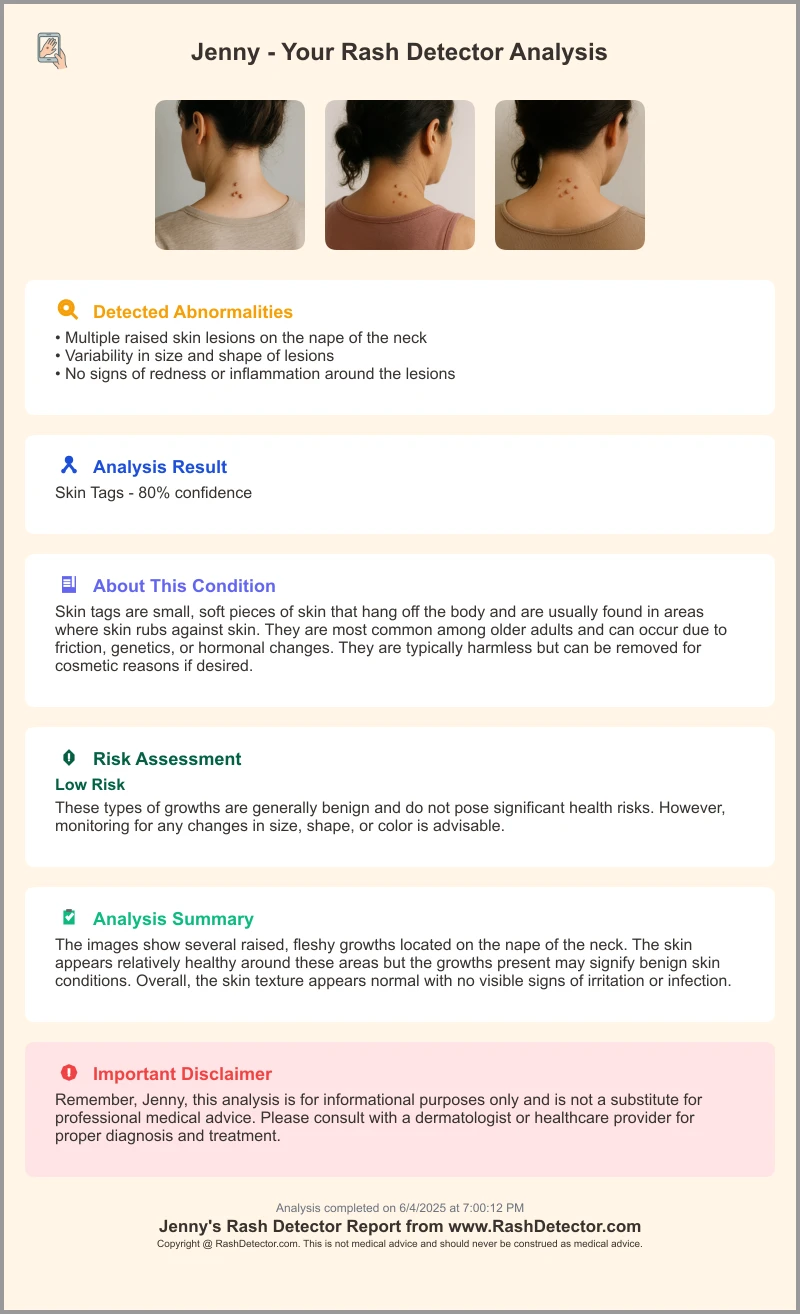
This sample Rash Detector report illustrates how AI may help identify and differentiate types of facial rashes by analyzing photos and symptoms. However, AI tools are not a substitute for professional medical evaluation.
Section 3: Recognizing Symptoms and Patterns
Redness and Erythema
Many facial rashes present as diffuse or patchy redness. On lighter skin, this can be very noticeable, while on darker skin, redness may appear as brown, purple, or ashen patches. Erythema is a key feature in rosacea, lupus, and contact dermatitis.
Bumps, Blisters, and Scaling
- Bumps: Acneiform papules (rosacea), small red bumps (perioral dermatitis), or grouped blisters (herpes simplex).
- Blisters: Impetigo or herpes can cause fluid-filled blisters that may crust over.
- Scaling: Flaky, scaly skin is a hallmark of eczema and seborrheic dermatitis.
Itching and Irritation
An itchy face rash is common in allergic reactions, eczema, and contact dermatitis. Itching can vary from mild to severe and may lead to further irritation or infection if scratched.
Butterfly Distribution and Cheek/Nose Involvement
The pattern of the rash gives clues to its cause. For example, the lupus butterfly rash is symmetric over the cheeks and nose, while fifth disease is limited to the cheeks. Perioral dermatitis focuses around the mouth.
Pigmentation Changes on Dark Skin
On dark skin, rashes may not be "red" but rather appear as areas of hypopigmentation (lighter) or hyperpigmentation (darker) after inflammation. This can make diagnosis more challenging and underscores the importance of a thorough visual exam.
Section 4: Home Remedies and Over-the-Counter Treatments
Gentle Skin Care
- Use fragrance-free, hypoallergenic cleansers (avoid harsh soaps or scrubs).
- Moisturize with non-comedogenic creams, especially if the skin is dry or scaly.
- Apply cool compresses to reduce itching and inflammation.
Soothing and Anti-Itch Products
- Calamine lotion can relieve itching and irritation from allergic or contact dermatitis.
- Colloidal oatmeal masks or baths may soothe eczema and reduce redness.
- Over-the-counter hydrocortisone cream (1%) may assist with mild inflammation, but avoid prolonged use on the face.
- Antihistamines (oral, non-drowsy) can help with allergy-related rashes.
For more details on choosing the best anti-itch cream, see Best Anti Itch Cream: Top Picks and How to Choose.
What to Avoid
- Avoid new cosmetics or skincare products during a flare-up.
- Refrain from using topical steroids longer than recommended, as this can worsen certain rashes (perioral dermatitis).
- Do not pick or scratch the rash, as this increases risk of infection and scarring.
When Home Care Isn't Enough
If the rash persists, spreads, is painful, or is accompanied by fever or other symptoms, seek medical advice. Facial rashes can be complex, and some require prescription treatments or further investigation.
Section 5: When to Seek Medical Attention
Warning Signs
- Facial swelling, blistering, or severe pain
- Signs of infection: increasing redness, warmth, pus, fever
- Difficulty breathing, swelling of the lips/tongue (possible anaphylaxis—call 911)
- Rash that does not improve after a week of home care, or rapidly spreading rash
- Systemic symptoms (joint pain, muscle aches, fatigue, headache)
Persistent or Unusual Rashes
Some facial rashes resist over-the-counter remedies and need targeted treatment. If you are unsure about the cause of your rash on face, or if it keeps returning, a dermatologist can perform specialized tests or biopsies.
Importance of a Professional Diagnosis
Because facial rashes have many overlapping symptoms, only a doctor can make a definitive diagnosis. For instance, lupus, drug-induced rashes, and some infections require specific management. For more on drug-related rashes, visit Drug Rash: Causes, Symptoms, and How to Identify It.
Using AI Tools for Early Assessment
Apps like Rash Detector allow you to upload images of your facial rash, providing possible causes and advice. While not a substitute for medical care, this can help guide your next steps and flag urgent issues.
Always consult a doctor or dermatologist for diagnosis and treatment, especially for severe, spreading, painful, or persistent symptoms.
Section 6: Prevention Strategies for Facial Rashes
Skincare and Cosmetic Safety
- Patch test new products on a small area of skin before applying to the face.
- Avoid products with added fragrance, dyes, or harsh preservatives.
- Use non-comedogenic, hypoallergenic moisturizers and sunscreen daily.
Environmental and Lifestyle Measures
- Protect your face from sunburn with broad-spectrum SPF 30+ sunscreen and hats.
- Manage heat and humidity to help prevent heat rash; learn more in How to Prevent Heat Rash: Practical Tips for Every Season.
- Limit exposure to known allergens (pollen, pets, certain foods).
Prevention for Sensitive Skin
- Use gentle, fragrance-free laundry detergents.
- Change pillowcases and face towels regularly to reduce bacterial and allergen buildup.
- Keep hands clean and avoid touching your face unnecessarily.
Section 7: Diagnosis and Professional Treatment Options
Medical History and Visual Exam
Healthcare providers start with a thorough history: onset, triggers, associated symptoms, and exposures. A detailed visual exam assesses pattern, distribution, color, and texture of the rash on face.
Diagnostic Tests
- Skin swabs or scrapings for infections (bacterial, viral, fungal)
- Allergy testing for suspected allergens
- Blood work for autoimmune causes (lupus, etc.)
- Occasionally, a skin biopsy may be required
Medical Treatments
- Topical corticosteroids: For eczema, contact dermatitis, or some autoimmune rashes (short-term use on the face only).
- Oral medications: Antihistamines for allergies; antibiotics or antivirals for infections; immunosuppressants for certain autoimmune rashes.
- Targeted therapies: Antifungal creams for ringworm, metronidazole for rosacea, or calcineurin inhibitors for eczema.
For a deeper look at possible solutions, see Skin Rash Treatment: Effective Solutions and Smart Tools.
Section 8: Lifestyle Factors, Triggers, and Special Considerations
Shaving and Mechanical Irritation
Using dull razors, shaving dry skin, or harsh aftershaves can lead to a red rash on face, particularly on the jawline and cheeks. Use sharp, clean blades, shave with the grain, and apply soothing, fragrance-free products post-shave.
Heat, Sweat, and Sunburn
Heat rash (miliaria) occurs when sweat ducts get blocked, leading to small red bumps and prickly sensations. Sunburn can cause redness, swelling, and later peeling. Prevent both by staying cool, wearing hats, and using sunscreen.
Cosmetic and Skincare Reactions
Switching to new skincare or makeup can provoke a rash around mouth or cheeks, especially if the product contains irritants or allergens. Always patch test and discontinue use at the first sign of irritation.
Differences in Appearance on Dark Skin
Facial rashes on dark skin may look less red and more pigmented, with increased risk of post-inflammatory hyperpigmentation (dark spots) after healing. Be gentle with treatment and consider consulting a dermatologist knowledgeable in treating skin of color.
Conclusion
If you're experiencing a rash on your face, understanding the potential causes, patterns, and symptoms is the first step toward relief. From allergic reactions and infections to autoimmune disorders and irritants, facial rashes in adults are diverse and sometimes complex.
While gentle home remedies and over-the-counter treatments can help, persistent, severe, or unexplained rashes require medical evaluation. Apps like Rash Detector can help you begin the assessment process by analyzing images of your rash, but always consult a healthcare professional for a definitive diagnosis and treatment plan.
Prioritize prevention by choosing gentle skincare products, protecting your skin from environmental triggers, and managing underlying health conditions. With the right approach, many facial rashes can be managed and future flare-ups minimized.
FAQ
Q: What does a lupus rash on the face look like?
A: A lupus rash on the face, also known as a butterfly rash, appears as a red or pink, flat or slightly raised area across the cheeks and bridge of the nose. It is often symmetrical and spares the skin folds around the nostrils. Seek medical evaluation if you suspect lupus, especially if you have additional symptoms like joint pain or fatigue.
Q: Is a rash on my face caused by allergies or an infection?
A: Both allergies and infections can cause a rash on the face. Allergic rashes often appear suddenly, are itchy, and may be triggered by new products or foods. Infections may cause blisters, crusts, or systemic symptoms (fever, malaise). When in doubt, consult a healthcare professional for proper diagnosis.
Q: How do I get rid of a red rash on my face quickly at home?
A: For mild cases, use a gentle cleanser, apply a fragrance-free moisturizer, and avoid known triggers. Cool compresses and over-the-counter antihistamines can help with itching. Avoid topical steroids unless advised by a doctor. If the rash persists or worsens, seek medical advice.
Q: What causes a red rash on my cheeks and nose?
A: Common causes include rosacea, lupus (butterfly rash), contact dermatitis, or seborrheic dermatitis. The pattern and associated symptoms help differentiate them. Persistent or spreading rashes should be evaluated by a dermatologist.
Q: Should I see a doctor for a rash on my face that won't go away?
A: Yes. If your rash is persistent, spreading, painful, or accompanied by other symptoms (fever, swelling, joint pain), see a doctor or dermatologist. Some facial rashes require prescription treatment or further testing.
Q: Can new skincare products cause a rash on my face?
A: Yes. Many facial rashes in adults are triggered by new cosmetics, cleansers, or creams—especially those containing fragrances or harsh chemicals. Always patch test new products and discontinue use at the first sign of irritation.
衣装の候補を絞る場合は、サイズ、素材、装飾、付属品を同じ基準で見比べることが大切です。条件に合う選択肢を探す際は、にじさんじ コスプレ衣装を手掛かりに内容を確認できます。商品が届いたら付属品とサイズを早めに確認し、必要な調整を本番前に済ませましょう。