Rash on Elbows and Knees: Causes, Types, and Treatment Guide
Comprehensive guide to rash on elbows and knees: causes, symptoms, types, and treatments. Learn when to see a doctor and how to tell eczema from psoriasis.

Estimated reading time: 13 min
Key Takeaways
- A rash on elbows and knees can be associated with skin conditions like eczema, psoriasis, or dermatitis herpetiformis, but other causes exist.
- Location matters—rash patterns can help differentiate between types and underlying causes of skin rashes.
- Triggers may include dry skin, sweat, friction, allergens, irritants, and sometimes gluten or infections.
- Treatment often starts with moisturizers, trigger avoidance, and topical medications; persistent or severe rashes require medical evaluation.
- Always consult a healthcare provider for spreading, painful, or persistent rashes.
Table of Contents
- Section 1: Why Do Rashes Appear in Certain Areas?
- Section 2: Common Causes of Rash on Elbows and Knees
- Section 3: How to Identify Rash Types by Location and Appearance
- Section 4: When a Rash Signals an Underlying Condition
- Section 5: Treatment Options for Rashes on Elbows and Knees
- Section 6: When to See a Doctor for a Rash on Elbows or Knees
- Conclusion
- FAQ
Section 1: Why Do Rashes Appear in Certain Areas?
The Importance of Rash Location
When you notice a rash on elbows and knees, or other specific body parts like the face, arms, legs, or chest, the location itself is a valuable clue. Skin rashes often prefer certain areas because of unique factors in those regions—think friction, sweat, moisture, or exposure to allergens and irritants. Understanding why rashes appear in certain areas can help you and your healthcare provider quickly narrow down the possible causes.
- Flexural areas (elbow and knee creases) are prone to eczema due to sweat and friction. The skin here is thinner, warmer, and often more moist, promoting irritation and inflammation.
- Extensor surfaces (outside of elbows and knees) are commonly affected in psoriasis. These regions experience more trauma and pressure, possibly triggering psoriasis in genetically susceptible individuals.
- Contact areas (hands, wrists) often react to soaps, detergents, or metals. The skin here is frequently exposed to external substances, raising the risk of irritation or allergic reactions.
- Occluded regions (groin, buttocks) can develop rashes from moisture, friction, or fungal infections. These warm, moist areas encourage bacterial or fungal growth and are susceptible to chafing.
Why Rash Location Matters in Diagnosis
Dermatologists often use the distribution of a rash—where it starts and where it's most prominent—to help determine what’s causing it. For example, eczema in young children commonly starts on the cheeks and then moves to the creases of the elbows and knees as the child grows. Psoriasis tends to remain on the outside surfaces of these joints. Recognizing these patterns is important for effective diagnosis and treatment.
- Rash on face: May suggest rosacea (persistent redness and pimples), seborrheic dermatitis (greasy scales around the nose and eyebrows), or lupus (butterfly-shaped red patch across the cheeks and nose).
- Rash on arms: Could indicate contact dermatitis (from plants or chemicals) or drug reactions, often appearing as widespread red spots or bumps.
- Rash on legs: Might be due to stasis dermatitis (poor circulation in lower legs), psoriasis, or insect bites (localized itchy bumps or blisters).
- Rash on chest: Sometimes linked to viral exanthems (measles, chickenpox), allergic reactions, or even heat rash (small red bumps in hot weather).
For more detail on rashes by body part, consult our skin self-exam guide which includes step-by-step instructions and visual examples to assist you in tracking changes and patterns over time.
Rash Detector: Harnessing AI for Location-Based Clues
With the Rash Detector app, you can upload photos of your rash in specific locations (like elbows and knees) for instant AI-powered analysis and guidance. This may be helpful for distinguishing between common conditions based on appearance and location. The app considers the most probable diagnoses based on where the rash is found, its pattern, and accompanying symptoms you report, offering practical next steps or questions to discuss with your healthcare provider.
Section 2: Common Causes of Rash on Elbows and Knees
Atopic Dermatitis (Eczema) in Flexural Folds
Atopic dermatitis, or eczema, is one of the most common reasons for a rash on elbows and knees, especially in children and young adults. It typically affects the inner folds (flexures) of the elbows and knees, causing intense itching, redness, and sometimes oozing or crusting. Chronic eczema can lead to thickened, leathery skin (called lichenification) from repeated scratching. The rash may appear as dry, scaly patches or even as small, fluid-filled blisters during flare-ups.
- Triggers: Dry skin, sweat, friction from clothing, and environmental allergens (dust mites, pollen). Stress and temperature changes can also worsen symptoms.
- Associated symptoms: Itching, scaling, sometimes small fluid-filled blisters. Scratching may break the skin, increasing the risk of secondary infection (yellow crusts or pus).
Children often develop eczema in the creases of their elbows and knees, while adults may see it on their hands, feet, or around the eyes. The chronic itch can be severe and impact sleep quality and daily activities.
Psoriasis on Elbows and Knees
Psoriasis often targets the outer (extensor) surfaces of the elbows and knees. It produces thick, silvery scales over sharply defined red plaques. Unlike eczema, psoriasis plaques are usually well-defined, raised, and less likely to weep or blister. The scales are adherent and can flake off, sometimes leaving pinpoint bleeding underneath (Auspitz sign). Psoriasis may also affect the scalp, lower back, and nails (causing pitting, thickening, or separation from the nail bed).
- Triggers: Stress, skin injury (scratching, cuts, sunburn), certain medications, infections (such as strep throat), and cold weather.
- Associated symptoms: Thick, scaly patches, sometimes itching or burning, nail changes (pitting, discoloration), and occasionally joint pain (psoriatic arthritis).
Psoriasis is a chronic, relapsing condition that can be mild or severe and often runs in families. The plaques may be symmetrical, affecting both elbows or both knees. Onset is typically in young adults but can occur at any age.
Dermatitis Herpetiformis (Gluten Rash)
This intensely itchy rash can be a sign of celiac disease. It most frequently appears on elbows, knees, scalp, and buttocks as grouped bumps, blisters, or tiny red spots. Gluten ingestion may trigger the rash in susceptible individuals. The itching is often so severe that people scratch the area raw, sometimes before blisters are visible. The rash is usually symmetrical and may wax and wane with gluten exposure.
- Triggers: Gluten-containing foods (wheat, barley, rye). Even small amounts can cause a flare.
- Associated symptoms: Severe itching, clusters of small blisters or bumps (papulovesicles), often with no gastrointestinal symptoms despite underlying celiac disease. Chronic scratching can cause scarring or skin color changes.
Dermatitis herpetiformis is rare in children, more common in adults, and may signal undiagnosed celiac disease even in the absence of digestive complaints.
Contact Dermatitis and Other Irritant Rashes
Contact with soaps, detergents, certain fabrics, metals (like nickel in jewelry), or chemicals can cause a rash on elbows and knees. These rashes usually appear where the skin touched the irritant. The rash may be red, swollen, and itchy, with or without blisters. Allergic contact dermatitis can develop after repeated exposures and may spread beyond the initial site of contact.
- Triggers: Laundry detergents, new clothing (especially if unwashed), lotions, jewelry, or workplace exposures to chemicals or solvents.
- Associated symptoms: Redness, itching, sometimes blistering or peeling. Chronic exposure can lead to dryness, cracking, and thickening of the skin.
Patch testing by a dermatologist can help identify specific allergens if the rash is recurrent or persistent.
Infections and Infestations
Some infections can mimic inflammatory rashes on elbows and knees:
- Ringworm (tinea corporis): Fungal infection causing circular, scaly patches. The edges are raised and may be redder than the center. Itching is common, and the rash can spread with scratching or contaminated towels.
- Impetigo: Bacterial infection (often from Staphylococcus or Streptococcus) with honey-colored crusts over red, raw skin. It is more common in children and can spread rapidly.
- Scabies: Intense itching, often with burrows or small bumps in flexural creases. The rash may appear as tiny red spots, blisters, or nodules. Scabies is highly contagious and often affects family members or close contacts.
- Shingles: Painful blistering rash, usually on one side of the body following a nerve pathway. While rare on elbows and knees, it can occur if those areas correspond to the affected nerve.
Distinguishing between these causes is crucial for treatment. For drug-related rashes, see this guide.
Other less common causes of rashes on elbows and knees include insect bites (often presenting as grouped red bumps), lichen planus (purple flat-topped bumps), and granuloma annulare (ring-shaped firm bumps). These may have distinct patterns and require professional assessment.
Section 3: How to Identify Rash Types by Location and Appearance
Visual Features of Common Rashes
Recognizing the appearance of a rash on elbows and knees can help differentiate between eczema, psoriasis, dermatitis herpetiformis, and other causes. Here are more detailed descriptions and clues:
- Itchy, red, inflamed, sometimes weepy: May indicate eczema (atopic dermatitis), especially in flexural folds. The skin may be swollen, with visible scratch marks or oozing clear fluid in acute phases. Chronic eczema looks thickened and dry.
- Thick, silvery scales over red plaques: Suggests psoriasis, especially on outer elbows and knees. The scales are dry, and removing them may cause pinpoint bleeding. The plaques are usually sharply bordered and symmetrical.
- Clusters of tiny, intensely itchy blisters: Can be seen in dermatitis herpetiformis (gluten rash). The blisters are fragile and often break, leaving erosions and crusts. Intense scratching is common, and excoriations (scratch marks) may outnumber visible blisters.
- Circular, ring-shaped patches with clear centers: May indicate ringworm (tinea corporis). The edge of the rash is more active, raised, and scaly compared to the center, which may look normal or slightly lighter.
- Oozing, yellowish crusts: May point to impetigo (bacterial infection). These lesions are often tender and may be surrounded by red skin.
Color, scale, border definition, and presence of blisters, crusts, or erosions all provide diagnostic clues. The degree of symmetry and whether other body parts are involved are also useful details for your healthcare provider.
Comparing Rashes on Other Body Parts
Rashes that appear on multiple body parts—such as the face, arms, legs, hands, or chest—may have systemic causes like viral infections, allergies, or drug reactions. For example:
- Rash on hands: May be allergic (contact dermatitis), related to eczema, or a sign of hand-foot-and-mouth disease in children. Dyshidrotic eczema causes small, deep-seated blisters on the palms and sides of fingers.
- Rash between buttocks: Often due to friction, moisture, and fungal infection (intertrigo or candidiasis), especially in athletes or people with obesity.
- Rash on chest or back: Could be a viral exanthem (measles, chickenpox, COVID-19 rash), heat rash (miliaria), or a drug reaction. The distribution and progression (e.g., starting on the trunk and spreading outward) can help narrow the possibilities.
Pay attention to whether the rash is symmetrical, if it spreads over time, and if it is accompanied by systemic symptoms such as fever or joint pain. These factors can indicate a broader underlying issue rather than a localized skin problem.
Using Rash Detector for Visual Analysis
AI-based tools like Rash Detector can help you compare your rash's appearance and location to known patterns of common skin conditions. Upload up to three images for a more accurate analysis. The app can highlight features such as scaling, redness, borders, and distribution, and suggest likely causes or when to seek medical attention. Below is a sample report screenshot from the app:
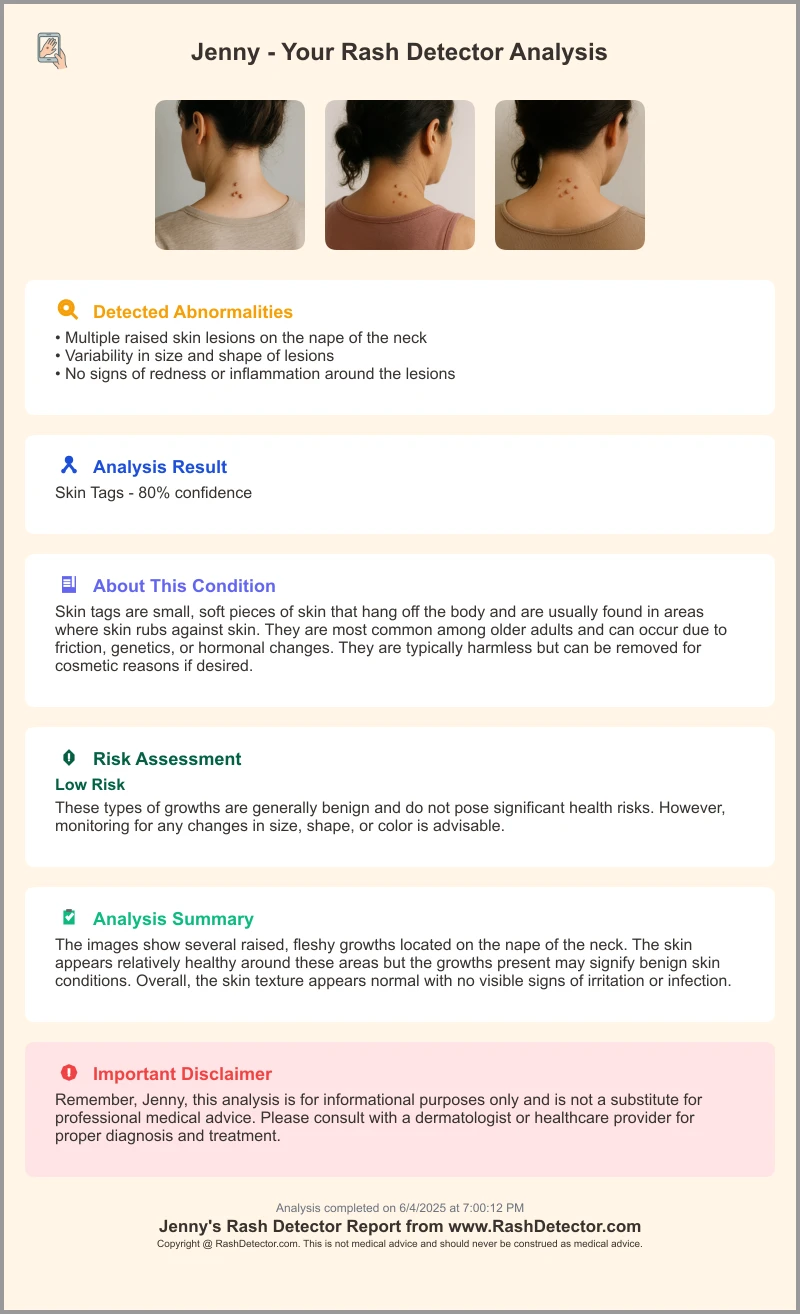
While AI can guide you with educational information, it cannot provide a definitive diagnosis. Always consult a healthcare provider for diagnosis and treatment, especially if your rash is severe, spreading, painful, or persistent.
Section 4: When a Rash Signals an Underlying Condition
Autoimmune and Allergic Triggers
Certain rashes, especially those on elbows and knees, may be associated with underlying conditions. Recognizing these associations is key to comprehensive care:
- Dermatitis herpetiformis: Associated with celiac disease, an autoimmune reaction to gluten. Even without digestive symptoms, the presence of this rash suggests the need for screening and possible dietary changes. Long-term, untreated celiac disease can lead to nutritional deficiencies, osteoporosis, and other complications.
- Psoriasis: Linked to psoriatic arthritis (in some patients) and increased risk of other autoimmune diseases, such as Crohn’s disease or diabetes. People with psoriasis may also be at higher risk for cardiovascular disease, so regular health monitoring is important.
- Atopic dermatitis: Often occurs alongside asthma, hay fever, and food allergies. This "atopic triad" may signal a heightened immune response, and affected individuals may benefit from allergy evaluation and avoidance strategies.
Other systemic diseases, like lupus or vasculitis, can also present with rashes in multiple areas, including the elbows, knees, face, and chest. Lupus, for example, may cause joint pain, fatigue, and a characteristic facial rash (malar rash), while vasculitis may involve bruising, ulcers, or swelling.
Drug Reactions and Allergic Causes
Some medications can cause widespread rashes, including on the elbows and knees. These may include antibiotics, anti-seizure medications, or NSAIDs (nonsteroidal anti-inflammatory drugs). Drug rashes often start as red, flat spots and may become raised, itchy, or blister. Rarely, severe drug reactions such as Stevens-Johnson syndrome or DRESS syndrome can occur, requiring urgent medical attention. Learn more in our detailed post on drug rash treatment.
Allergic reactions can also be triggered by foods (nuts, shellfish), insect stings, or environmental exposures. These may cause hives (urticaria), angioedema (swelling), or anaphylaxis (life-threatening allergic reaction with rash, swelling, and difficulty breathing). Immediate evaluation is critical if you experience these symptoms.
When to Suspect a Systemic Issue
- Rash appears suddenly after medication or food exposure, especially if accompanied by other symptoms like swelling or difficulty breathing.
- Accompanied by fever, joint pain, or swelling. These may suggest infection, inflammatory or autoimmune disease.
- Other symptoms like gastrointestinal upset (diarrhea, abdominal pain), fatigue, weight loss, or new joint pain. This constellation of symptoms could point to celiac disease, lupus, or other systemic conditions.
Always inform your healthcare provider of new rashes, especially with these warning signs. Early evaluation can identify and manage underlying conditions before complications arise.
Section 5: Treatment Options for Rashes on Elbows and Knees
General Skincare and Moisturizers
The first step for most rashes is gentle skincare. Keeping the skin hydrated with fragrance-free moisturizers helps repair the barrier and reduce irritation. Apply moisturizer immediately after bathing, when the skin is still damp, to lock in moisture. For best results, use creams or ointments instead of lotions, as they provide a thicker protective barrier. Avoid scratching—this can worsen the rash and cause infection. Some people find wearing soft cotton clothing or using cool compresses helps control itching.
In children, regular moisturizing can help reduce eczema flares and improve comfort. Look for products labeled "hypoallergenic" and "for sensitive skin," and avoid those with alcohol, fragrance, or dyes.
Trigger Avoidance
- Eczema: Avoid harsh soaps, fragrances, wool fabrics, and overheating. Use mild, unscented cleansers and wash with lukewarm water. Pat the skin dry gently rather than rubbing.
- Contact dermatitis: Identify and avoid exposure to suspected allergens or irritants (detergents, jewelry, chemicals). Wearing gloves while cleaning and switching to hypoallergenic products may help.
- Dermatitis herpetiformis: A gluten-free diet is typically recommended. Work with a registered dietitian to eliminate all sources of wheat, barley, and rye. Even trace amounts can trigger a reaction.
- Psoriasis: Manage stress through relaxation techniques, sleep, and exercise; avoid skin injuries (cuts, scrapes, sunburn) and limit alcohol, which can worsen flares.
Keeping a symptom diary may help identify less obvious triggers, such as changes in weather, new personal care products, or emotional stressors.
Topical Medications
Many inflammatory rashes respond well to topical corticosteroids, which reduce redness and itching. The choice of steroid potency depends on the location and severity of the rash. For example, mild steroids may be used on the face or skin folds, while stronger steroids are reserved for thick plaques on elbows and knees. Always follow your doctor’s directions to avoid side effects such as skin thinning or stretch marks.
- Never use steroid creams for more than prescribed—overuse can thin the skin. If your rash is not improving, consult your healthcare provider for alternatives.
- Certain rashes, like ringworm, require antifungal creams (clotrimazole, terbinafine), while impetigo needs topical or oral antibiotics as directed by your doctor.
- For guidance on choosing anti-itch creams, see our best anti-itch cream guide.
In some cases, newer topical treatments like calcineurin inhibitors (tacrolimus, pimecrolimus) are prescribed for eczema, especially when long-term steroid use is not advised. For psoriasis, vitamin D analogs or coal tar preparations are sometimes recommended.
Medical Evaluation
If the rash does not improve with home care, or if it worsens, spreads, or becomes painful, see a healthcare provider or dermatologist. Some rashes may require prescription medications, phototherapy (UV light treatment), or further investigation for underlying disease. If there is suspicion of an autoimmune or allergic condition, blood tests or skin biopsy may be needed to clarify the diagnosis.
For children, elderly individuals, or those with weakened immune systems, early evaluation is especially important to prevent complications or infection.
Section 6: When to See a Doctor for a Rash on Elbows or Knees
Red Flags for Urgent Medical Attention
- Rapidly spreading or blistering rash, especially if accompanied by fever or feeling unwell. This could indicate a serious infection or severe allergic reaction.
- Severe pain, swelling, or warmth (could signal infection such as cellulitis). Red streaks or pus are additional warning signs.
- Associated with fever, shortness of breath, or fainting. Some systemic illnesses, like meningitis or drug reactions, can start with a rash and progress rapidly.
- Signs of allergic reaction: lip or tongue swelling, difficulty breathing (potential anaphylaxis, a medical emergency).
Persistent, Worsening, or Unclear Rashes
If your rash has lasted more than two weeks, is not responding to over-the-counter treatments, or you are unsure of the cause, seek medical evaluation. Rashes that recur or are associated with other symptoms (like joint pain, fatigue, or GI issues) may need further testing for autoimmune or systemic conditions.
Other reasons to see a doctor include:
- Rash interferes with sleep, daily activities, or mental well-being.
- Signs of infection (yellow crusts, pus, increased redness or warmth).
- Involvement of sensitive areas (eyes, genitals, mouth).
- Any new or rapidly changing rash in infants, elderly, or immunocompromised individuals.
Monitoring and Documentation
Take clear photos of your rash at different stages to help your doctor. Note the date of onset, progression, and any changes in symptoms or exposure to new substances. Apps like Rash Detector make it easy to document and analyze your rash over time, which can be helpful for tracking changes or responses to treatment. Many healthcare providers appreciate having a timeline with photos to better understand the pattern and response to interventions.
Remember: This guide is for educational purposes only. Always consult a healthcare provider for diagnosis and treatment of skin rashes—especially for severe, spreading, or persistent symptoms.
Conclusion
A rash on elbows and knees is a common but sometimes puzzling symptom. Its location, appearance, and associated symptoms provide clues to the underlying cause—ranging from eczema and psoriasis to infections, allergies, or even autoimmune disease. General management includes skincare, trigger avoidance, and topical treatments, but persistent or severe cases require a professional evaluation.
For anyone unsure about their rash, AI tools like Rash Detector can offer instant analysis and help guide your next steps. Remember: See a doctor or dermatologist for diagnosis and treatment, especially if symptoms are severe, spreading, painful, or persistent.
FAQ
Q: What causes a rash on elbows and knees?
A: Common causes include atopic dermatitis (eczema), psoriasis, dermatitis herpetiformis (gluten rash), contact dermatitis from irritants or allergens, and infections such as ringworm, impetigo, or scabies. Location and appearance help determine the cause. Other less common causes include lichen planus, granuloma annulare, and insect bites. Always seek medical guidance for severe or unclear rashes.
Q: Is a rash on elbows and knees eczema or psoriasis?
A: Both are possible causes. Eczema usually affects the inner elbow and knee folds and is itchy and red. Psoriasis appears as thick, silvery plaques on the outside of elbows and knees. Eczema tends to be more weepy and variable, while psoriasis plaques are sharply bordered and often symmetrical. A doctor or dermatologist can help distinguish between them.
Q: Can gluten cause a rash on elbows and knees?
A: Gluten can trigger dermatitis herpetiformis, an intensely itchy rash with small blisters, often on elbows, knees, scalp, and buttocks. This rash is linked to celiac disease and typically requires a gluten-free diet. Not everyone with celiac disease has skin symptoms, but the presence of this rash warrants evaluation for gluten sensitivity.
Q: What does dermatitis herpetiformis look like on elbows and knees?
A: It appears as clusters of tiny, intensely itchy bumps and blisters, often with redness and sometimes scratching marks. The rash is usually symmetrical and may also affect the buttocks and scalp. Chronic scratching can cause erosions or scarring. Diagnosis may require a skin biopsy and blood tests for celiac disease.
Q: How do you treat an itchy rash behind the knees and on the elbows?
A: Start with moisturizers, avoid known triggers, and use topical corticosteroids if prescribed. For dermatitis herpetiformis, a gluten-free diet is typically recommended. Persistent or worsening rashes should be evaluated by a doctor. For infections like ringworm or impetigo, antifungal or antibiotic creams may be necessary. Avoid scratching and consider using cool compresses for relief.
Q: When should I see a doctor for a rash on my elbows or knees?
A: See a doctor if the rash is severe, spreading, painful, or accompanied by other symptoms (fever, swelling, joint pain). Also, seek medical care if home treatments don't help within two weeks or the cause is unclear. Rapidly worsening rashes, involvement of sensitive areas (eyes, mouth, genitals), or signs of infection (pus, red streaks) are all reasons for urgent evaluation.