
Rash on Ankles and Feet: Causes, Symptoms, and Area-Specific Guide
Discover common causes of rash on ankles and feet, what symptoms to watch for, and how location helps diagnosis. Learn when to see a doctor.

Estimated reading time: 14 min
Key Takeaways
- A rash on ankles and feet can result from infections, allergies, chronic skin conditions, or contact with irritants.
- Location matters: the site of a rash can offer important clues about its cause and possible treatment options.
- Common triggers include athlete’s foot, eczema, contact dermatitis, insect bites, and venous issues.
- Symptoms like redness, itching, swelling, blisters, and pain help narrow down possible causes.
- See a doctor or dermatologist for severe, spreading, or persistent rashes—especially with pain or signs of infection.
Table of Contents
- Section 1: Why Rash Location Matters
- Section 2: Common Causes of Rash on Ankles and Feet
- Section 3: Symptoms and Clues by Body Area
- Section 4: Fungal, Bacterial, Viral, and Allergic Rashes
- Section 5: Chronic Skin Conditions and Venous Disease
- Section 6: Treatment Options and When to Seek Care
- Conclusion
- FAQ
Section 1: Why Rash Location Matters
The Importance of Rash Location
A rash on ankles and feet isn’t just a random skin problem—it often offers clues about underlying causes. Skin rashes tend to appear in certain body areas because of how we use those parts, local exposures, or unique skin characteristics. The feet and ankles, for example, are prone to friction from shoes, moisture buildup, and environmental exposures that the face or arms might not encounter.
Comparing Rash Locations
- Rash on face: Sometimes linked to allergies, rosacea, or seborrheic dermatitis. Sun exposure and cosmetics are possible culprits.
- Rash on arms: May be caused by contact with plants, soaps, or insect bites. Eczema and psoriasis can also appear here.
- Rash on legs: May be triggered by shaving, bug bites, or chronic conditions like stasis dermatitis.
- Rash on chest: Sometimes linked to heat rash, allergies, or viral infections such as chickenpox.
- Rash on back: Can be due to acne, folliculitis, or sweat-related irritation.
- Rash on groin and between buttocks: Fungal infections, intertrigo, and irritation from moisture buildup are possible causes.
- Rash on hands: Contact dermatitis, eczema, and allergic reactions may occur due to frequent exposures.
Why Do Rashes Appear in Certain Areas?
Several factors influence where rashes appear:
- Friction or Pressure: Shoes and socks create hot, sweaty, high-friction zones on the feet and ankles.
- Moisture: Feet are often confined, trapping sweat and encouraging fungal/bacterial growth.
- Allergens: Direct contact with shoe materials, dyes, or laundry detergents can trigger allergic reactions.
- Skin Thickness: Some areas (like feet) have thicker skin, changing rash appearance and susceptibility.
Understanding the interplay between rash location and potential causes can help you—and your healthcare provider—narrow down the diagnosis and consider the most effective treatment options.
Section 2: Common Causes of Rash on Ankles and Feet
Fungal Infections
One possible cause of a rash on ankles and feet is a fungal infection, especially athlete’s foot (tinea pedis). Fungi thrive in warm, damp environments—think sweaty socks and shoes. Athlete’s foot may cause scaling, itching, burning, and sometimes blisters, often starting between the toes and spreading to the soles and sides of the feet and up to the ankles.
Contact Dermatitis
Contact dermatitis arises when the skin reacts to an external irritant or allergen. Shoes, socks, detergents, dyes, metals (like nickel in buckles), and even topical medications can provoke this type of rash. The affected skin may become red, swollen, itchy, and blistered. Sometimes the rash on ankles and feet is sharply demarcated where the offending material touched the skin.
Other Common Triggers
- Eczema (atopic dermatitis): Can affect the feet, especially in children and those with allergies or asthma. Presents as dry, itchy, inflamed patches.
- Insect bites: Ankles and feet are exposed targets for mosquitoes, fleas, and ants, leading to itchy, red bumps or blisters.
- Venous stasis dermatitis: Poor vein circulation can cause fluid buildup and a scaly, itchy, brownish rash on the lower legs and ankles, often with swelling.
Other possible causes include psoriasis, viral infections (like hand-foot-and-mouth disease), and rare conditions such as vasculitis or autoimmune diseases. Always consider recent exposures—new shoes, hikes, pet contact, or medication changes—when a rash appears.
Section 3: Symptoms and Clues by Body Area
Recognizing Rash Patterns
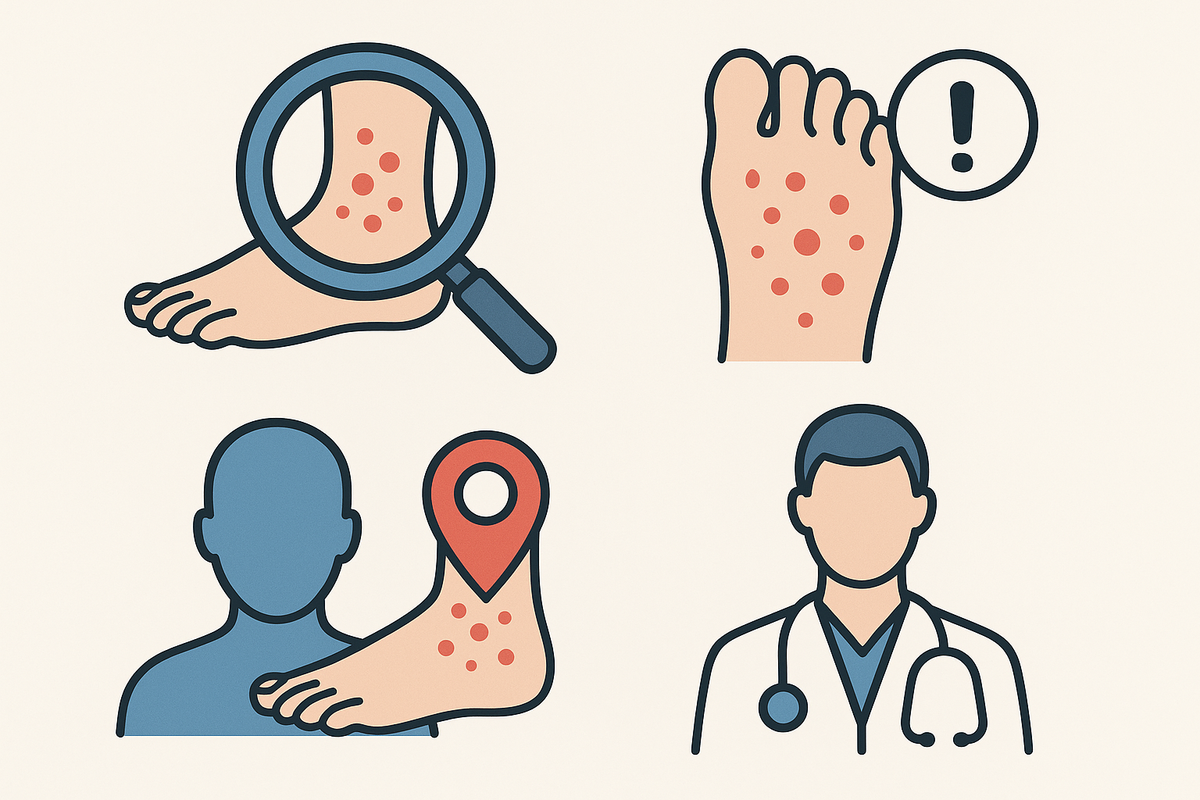
Careful observation of a rash’s appearance and symptoms can help you—and your healthcare provider—identify possible causes. For example, a rash on ankles and feet that is dry and cracked may suggest eczema, while a moist, peeling rash between the toes is more typical of athlete’s foot.
Common Symptoms
- Itching: Seen in many types of foot and ankle rashes, especially fungal infections and eczema.
- Redness: Common, but the pattern or border can be a clue (well-defined in contact dermatitis, diffuse in eczema).
- Scaling or Flaking: Prominent in athlete’s foot and chronic eczema.
- Blisters: Can occur with acute allergic reactions, insect bites, or dyshidrotic eczema (small, deep blisters).
- Pain or Burning: May suggest infection or severe inflammation.
- Swelling: May indicate venous disease or a reaction to bites or allergens.
Other Clues by Area
- Rash on face: Sometimes associated with swelling, scaling, or pus—such as in acne, perioral dermatitis, or lupus.
- Rash on arms and legs: May be more generalized, often due to eczema, drug reactions, or viral illnesses.
- Rash on chest and back: Tends to be more diffuse or scattered; heat rash or viral rashes can occur here.
- Rash between buttocks: Often moist or raw due to friction, sweat, or yeast.
- Rash on hands: Look for hand eczema, which appears as fissures, redness, and dryness.
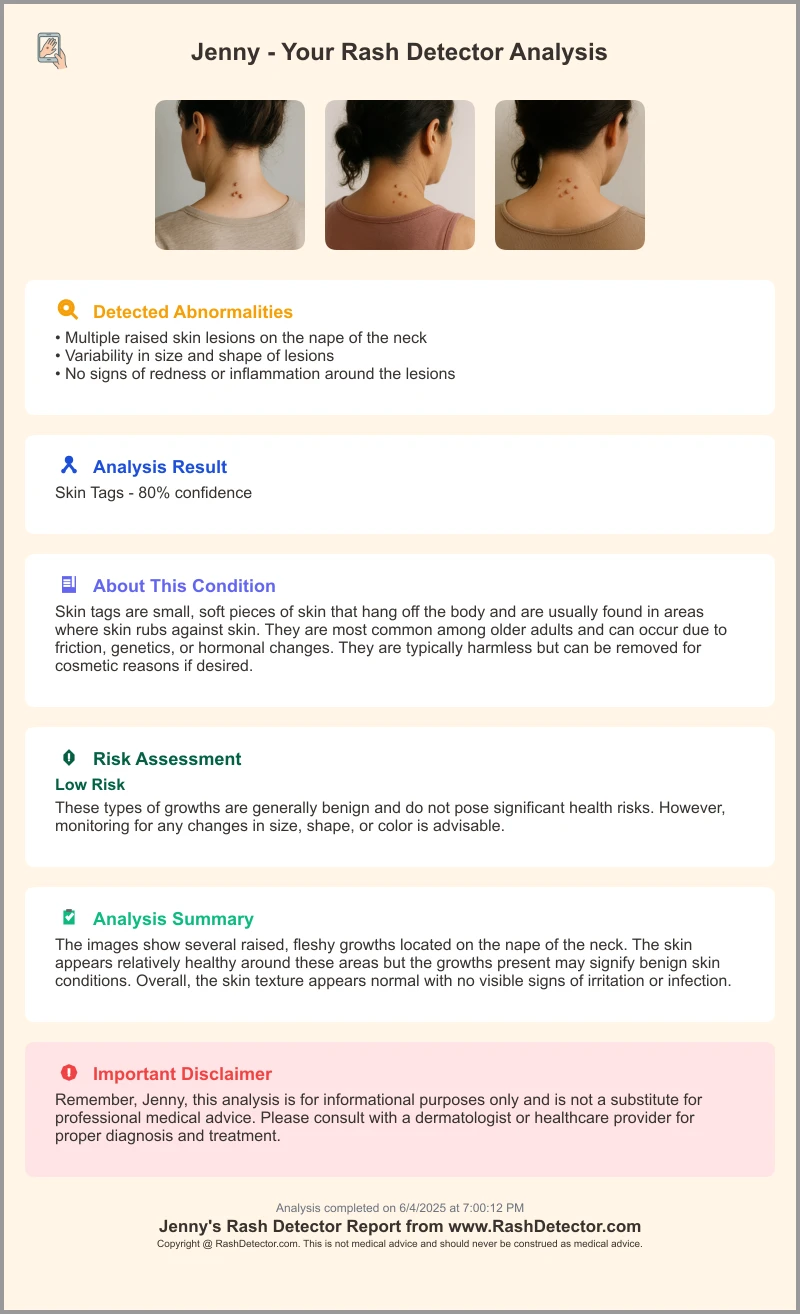
If you’re unsure, a tool like Rash Detector can help you analyze images of your rash and provide educational guidance on possible causes and next steps.
Section 4: Fungal, Bacterial, Viral, and Allergic Rashes
Fungal Infections: Athlete’s Foot and Beyond
Athlete’s foot (tinea pedis) is a common cause of rashes on ankles and feet. It often begins between the toes and can spread to the soles and sides. Look for:
- Peeling, cracking, or scaling skin, especially between the toes
- Itchy, burning sensation
- Occasional blisters or raw patches
Other fungal infections, like tinea corporis (ringworm), can also affect the feet and ankles, producing round, red, scaly patches.
Bacterial and Viral Infections
- Impetigo: A bacterial infection causing honey-colored crusts, usually in children but sometimes on the feet after minor skin trauma.
- Cellulitis: A deep bacterial skin infection marked by redness, swelling, heat, and tenderness. Requires urgent medical attention.
- Viral rashes: Conditions like hand-foot-and-mouth disease can cause red spots and sometimes blisters on the feet and hands, often with fever.
Allergic and Irritant Contact Dermatitis
- Allergic reactions can be triggered by shoe materials (leather, glues, dyes), metals, or topical medications. The rash may be itchy, red, and sometimes blistered.
- Irritant dermatitis is caused by repeated friction, sweat, or harsh soaps and detergents, leading to dry, cracked, inflamed skin.
If you suspect your rash is linked to a new product or exposure, try to identify and avoid the trigger. For more detail on managing skin reactions from medications, see our guide on drug rash treatment.
Section 5: Chronic Skin Conditions and Venous Disease
Eczema and Dermatitis on Ankles and Feet
Atopic dermatitis (eczema) can appear anywhere, but the feet and ankles are especially vulnerable in children and those with allergies. The rash is usually dry, itchy, and sometimes thickened from chronic scratching. Dyshidrotic eczema is a type that produces small, intensely itchy blisters on the sides of the fingers, palms, and soles of the feet.
Psoriasis and Other Chronic Inflammatory Conditions
- Psoriasis: Thick, silvery scales atop red plaques may develop on the ankles, soles, or elsewhere. Psoriasis can be uncomfortable and chronic, and may require prescription treatment.
- Lichen planus: A less common cause of purple, flat-topped bumps that can affect the ankles and feet.
Venous Stasis Dermatitis (Varicose Eczema)
People with chronic venous insufficiency (poor leg vein circulation) may develop venous stasis dermatitis, especially around the ankles. Symptoms can include:
- Itchy, scaly, brownish-red skin, often with swelling
- Thickened skin and possible oozing or crusting
- Heaviness or aching in the legs
This condition can lead to ulcers if untreated. Venous eczema is more common in older adults and those with varicose veins. Chronic rashes on legs and ankles that don’t improve should always be evaluated by a healthcare provider.
Section 6: Treatment Options and When to Seek Care
General Self-Care Steps
- Keep skin clean and dry: Wash feet daily, dry thoroughly (especially between toes), and change socks often.
- Avoid triggers: Switch to hypoallergenic detergents, wear breathable shoes, and avoid products or materials that provoke your rash.
- Moisturize: Use fragrance-free creams to soothe dry or eczema-prone skin.
For itchy rashes, over-the-counter hydrocortisone cream or antifungal creams may help in some cases. See our expert roundup of the best anti-itch creams for guidance.
When to See a Doctor or Dermatologist
- Rash is spreading rapidly, very painful, or blistering
- Signs of infection: pus, increasing redness, warmth, fever
- No improvement with home care after a week or two
- Persistent swelling, open sores, or chronic changes in skin color or texture
Some rashes—especially those caused by medication reactions, autoimmune disease, or infections like cellulitis—require prompt professional care. For more on medication-related rashes, explore our post on rashes from medication.
Next Steps and Digital Tools
If you’re unsure about your rash, consider using Rash Detector. Upload three photos of your rash and get instant AI-powered analysis, with educational guidance and suggestions for next steps. However, remember that any online tool is for informational use only and cannot replace a medical professional’s diagnosis.
Always see a doctor or dermatologist for diagnosis and treatment—especially for severe, spreading, painful, or persistent symptoms.
Conclusion
Rashes on ankles and feet are common—and while many are mild or self-limited, the underlying causes can range from fungal infections to chronic inflammatory diseases. Noticing where a rash appears (ankles, face, arms, legs, chest, or buttocks) and how it behaves is key to understanding its cause. Use this guide to recognize patterns and potential triggers, but always consult a professional for concerning or persistent symptoms. Digital tools like Rash Detector can help you analyze and track changes, but never substitute for expert care.
FAQ
Q: What causes a rash on the ankles and feet?
A: Common causes include fungal infections (like athlete’s foot), contact dermatitis from shoes or detergents, eczema, insect bites, and venous stasis dermatitis. Less often, bacterial or viral infections, psoriasis, or allergic reactions can be responsible.
Q: Is a rash on my feet and ankles athlete’s foot or eczema?
A: Athlete’s foot usually causes itchy, peeling, or cracking skin (often between the toes), while eczema is drier, with patches of inflamed, thickened skin. Both can itch, but their appearance and triggers differ. When in doubt, consult a doctor or use an educational tool like Rash Detector for guidance.
Q: When should I worry about a rash on my ankles and feet?
A: See a doctor if your rash is spreading quickly, very painful, has pus, is accompanied by fever, or isn’t improving after a week of home care. Persistent swelling, open sores, or chronic changes should also be evaluated by a professional.
Q: What does a fungal rash on the foot look like?
A: Fungal rashes (like athlete’s foot) often appear as red, scaly, and peeling skin, especially between toes. Blisters and itching are common. The rash may also spread to the soles or sides of the feet and up to the ankles.
Q: Can shoe allergy or contact dermatitis cause ankle rash?
A: Yes. Allergic reactions to shoe materials, glues, dyes, or metals can lead to red, itchy, sometimes blistered rashes right where the skin contacts the offending material. Switching footwear and avoiding triggers may help.
Q: How do you treat an itchy rash on the feet and ankles?
A: Keep the area clean and dry, avoid triggers, use fragrance-free moisturizers, and try over-the-counter hydrocortisone or antifungal cream if appropriate. For severe, persistent, or spreading rashes, consult a healthcare provider.