Rash Checker Guide: How to Identify Skin Rashes with Confidence
Definitive guide to using a rash checker, identifying common skin rashes, describing symptoms, and knowing when to see a doctor. Understand rash warning signs.
Estimated reading time: 14 min
Key Takeaways
- Rash checkers use AI and photos to help identify possible skin rash causes and types.
- Learning how to describe a rash—color, texture, location, and symptoms—is crucial for accurate assessment.
- Common rash types include eczema, contact dermatitis, hives, heat rash, psoriasis, fungal rashes, insect bites, and shaving irritation.
- Urgent medical attention is needed for severe, spreading, painful, or persistent rashes, or those with warning signs.
- Home care can help mild rashes, but professional evaluation is important if symptoms worsen or don't improve.
Table of Contents
- Section 1: What Is a Rash Checker and How Does It Work?
- Section 2: How to Describe a Rash for Accurate Identification
- Section 3: Common Types of Skin Rashes and Their Features
- Section 4: Where Rashes Appear and Why Location Matters
- Section 5: Rash Symptoms, Triggers, and When to Seek Medical Care
- Section 6: Using AI Rash Checkers: Photo Tips and What to Expect
- Conclusion
- FAQ
Section 1: What Is a Rash Checker and How Does It Work?
Understanding Rash Checkers
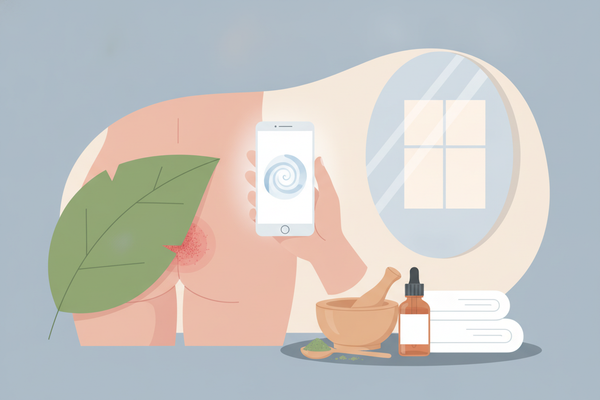
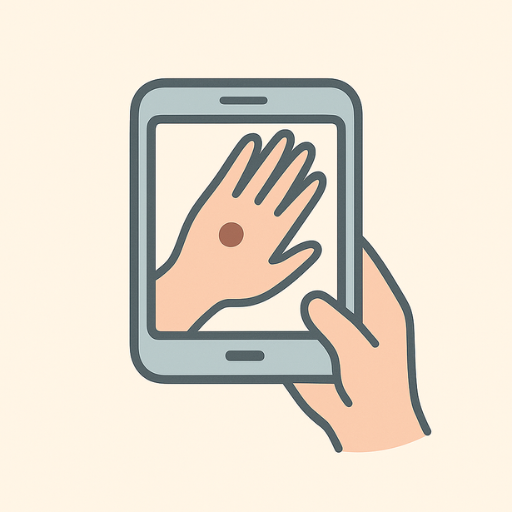
A rash checker is a digital tool—often an app or web-based service—that helps users identify possible causes of their skin rash by analyzing uploaded photos and symptoms. Modern rash checkers, like Rash Detector, leverage artificial intelligence (AI) to compare your rash image to a large database of skin conditions. This technology can offer instant feedback on what your rash might be, along with tailored guidance.
For example, someone might notice a patchy red area on their forearm after gardening. Unsure if it’s a bug bite, allergic reaction, or something else, they can upload photos to a rash checker. Within moments, the app analyzes their images and symptoms, providing a list of possible causes and suggested next steps, such as home care tips or a recommendation to consult a doctor if certain warning signs are present. This process can help users make more informed decisions about their skin health.
How AI and Photo Symptom Checkers Work
- You upload 1–3 clear photos of your rash, ideally from different angles or lighting. This helps the AI view the rash’s color and texture accurately and compare these features from multiple perspectives, which may increase the accuracy of the analysis.
- The app's AI analyzes the images for color, shape, size, border, and texture. It breaks down the photo into segments, looking for patterns like rings, clusters, or defined borders, and notes characteristics like scaling, blistering, or uniform color changes.
- You answer a few symptom questions: How long has the rash been present? Is it itchy, painful, blistered, swollen, or accompanied by fever? Detailed answers are important, as some rashes change over time or have specific associated symptoms (for example, a new, itchy rash that appeared after starting a new detergent).
- The checker compares your input against its database of skin conditions to suggest possible causes and next steps. The recommendations may include educational resources, home care suggestions, or guidance on when to seek immediate medical attention.
The AI is trained on a large number of labeled images and symptom profiles, allowing it to identify patterns and match them to known conditions. However, it cannot "see" beneath the skin or detect systemic illness, and its suggestions are not a substitute for medical advice.
Benefits and Limitations
AI tools can quickly help you narrow down common types of skin rashes and prompt you if the rash needs urgent care. For example, if a rash appears suddenly with swelling and difficulty breathing, the checker will likely flag this as a medical emergency. For less urgent cases, it might provide actionable advice on simple steps like moisturizing, avoiding triggers, or monitoring symptoms over time.
However, no app or rash checker can replace a dermatologist or doctor. The results are educational and should never be treated as a final diagnosis—especially for severe, spreading, or persistent rashes. AI can't detect every nuance, such as subtle signs of infection or rare skin diseases. It also cannot perform diagnostic tests like skin scrapings, biopsies, or blood work, which may be required for an accurate diagnosis.
For more on home skin checks, see How to Do a Skin Self Exam at Home: A Step-by-Step Guide.
Section 2: How to Describe a Rash for Accurate Identification
Why Description Matters
Whether you're using a rash checker or speaking with a medical professional, knowing how to identify a rash and describe its appearance is crucial. Detailed descriptions help guide the AI's analysis and help doctors narrow down possible causes. The more precise your description, the more likely you are to receive relevant advice, whether from technology or a healthcare provider.
For instance, describing a rash simply as "red" is less helpful than noting "red, raised, circular patches with visible scaling along the edges, mostly on the left thigh." This level of detail can distinguish between conditions like eczema, ringworm, or psoriasis.
Key Features to Note
- Color: Is the rash red, pink, purple, brown, or another color? Some rashes, such as purpura, appear purple, while others, like eczema, tend to be pink or red. Brown or grayish rashes may point to chronic conditions or post-inflammatory changes.
- Texture: Is the skin smooth, bumpy, scaly, blistered, or crusted? For example, chickenpox starts as small red bumps that become fluid-filled blisters, then crust over.
- Pattern: Are the spots circular, linear, ring-shaped, clustered, or diffuse? For example, poison ivy often creates linear streaks, while ringworm forms circular rings.
- Border: Are the edges well-defined or fading into the surrounding skin? Sharp borders can point to fungal rashes, while ill-defined borders are more typical of eczema.
- Size and Shape: Are the lesions small dots, large patches, or a mix? Measure the largest spot if possible (e.g., "the largest area is 3 cm across").
- Location: Where on the body did it start? Has it spread? Did it begin on the face, arms, legs, or trunk? Did it move to other areas?
- Other Features: Is there swelling, warmth, pain, or discharge? Take note of any associated symptoms, like joint pain or eye redness, which may suggest a systemic issue.
Tips for Describing a Rash to a Doctor or Checker
- Take clear, well-lit photos from multiple angles. Natural daylight works best. Avoid using filters or editing the photo, as this can obscure important features.
- Note when the rash appeared and how it's changed over time. For example, "Started as a small red spot two days ago, now spread to cover most of my right arm and is blistering."
- Mention any recent exposures to new products, foods, medications, or environments. For example, "I just switched laundry detergent," or "I ate shellfish for the first time."
- Describe the main symptoms: itching, burning, pain, fever, or other sensations. For instance, "The rash is extremely itchy, especially at night."
- Record if anyone else in your household or workplace has a similar rash, which may indicate an infectious cause.
Using these descriptive details helps both AI-powered rash checkers and healthcare providers offer better guidance. A thorough description can sometimes save you time and avoid unnecessary appointments or testing.
Section 3: Common Types of Skin Rashes and Their Features
Eczema (Atopic Dermatitis)
Eczema is one of the most common chronic skin conditions. It often appears as dry, red, itchy patches, mostly on the face, elbows, or knees, especially in children. Adults may develop eczema on the hands, neck, or around the eyes. The rash is often scaly, and in chronic cases, the skin may thicken (a process called lichenification) from repeated scratching. Eczema flares can be triggered by allergens (like pollen, dust mites), stress, cold weather, or irritants such as soaps and detergents.
In infants, eczema commonly affects the cheeks and scalp, while older children experience it more in the creases of the elbows and knees. Adults may notice outbreaks on the hands or around the neck. Eczema is not contagious and can sometimes improve with age, though many people experience lifelong symptoms.
Contact Dermatitis
- Allergic Contact Dermatitis: This is caused by skin contact with an allergen (for example: poison ivy, nickel in jewelry, certain cosmetics). The rash usually appears hours to days after exposure and is red, swollen, and often blistered or weepy. Itchiness is common, and the rash may follow the area of contact (like a watchband outline on the wrist).
- Irritant Contact Dermatitis: Triggered by repeated contact with soaps, detergents, cleaning chemicals, or even frequent hand washing. The affected area is typically dry, red, sometimes cracked, and usually non-blistering. It is most common on the hands and can be prevented by using gloves or gentle cleansers.
Hives (Urticaria)
- Hives are raised, pale or red bumps (welts) that appear suddenly and can move around the body. They are often intensely itchy and may vary in size from a few millimeters to several centimeters.
- Hives are commonly caused by allergies (such as foods, medications, insect stings), but can also be triggered by stress, viral infections, or temperature changes. Individual hives typically last less than 24 hours but new ones may continue to appear as old ones fade.
Heat Rash (Miliaria)
- Heat rash results from blocked sweat ducts and is common in hot, humid weather. It appears as tiny, red, or clear bumps—often on the neck, chest, back, or skin folds. In babies, it frequently appears in the diaper area or on the neck and shoulders.
- The rash may itch or sting. Miliaria can be prevented by keeping the skin cool and dry, wearing loose clothing, and avoiding excessive heat or humidity.
Fungal Rashes (Ringworm, Athlete’s Foot)
- Ringworm (Tinea corporis): Appears as circular, red, scaly patches with a raised edge and clear center. The border is often more prominent than the center and may be slightly elevated. Ringworm can affect any part of the body and is commonly spread through direct contact with infected people, pets, or surfaces (like gym mats).
- Athlete’s Foot (Tinea pedis): Found between the toes, this rash is often itchy, peeling, and sometimes cracked or blistered. It may also appear as dry, scaling skin on the soles and sides of the feet. Keeping feet clean and dry, changing socks regularly, and wearing breathable shoes are key to prevention.
Psoriasis
Psoriasis is a chronic autoimmune condition that causes thick, silvery scales over red patches, often on elbows, knees, or scalp, but it can occur anywhere. The lesions are usually well-defined, symmetrical, and may be accompanied by itching or burning. Psoriasis can be triggered by stress, skin injury (the "Koebner phenomenon"), certain medications, or infections. The severity can range from a few small plaques to widespread involvement. Psoriasis is not contagious and often runs in families.
Insect Bites and Shaving Irritation
- Insect bites: Usually present as individual red bumps, sometimes with a central puncture mark. Itching and localized swelling are common. Mosquito and flea bites tend to cluster, while tick bites may have a bullseye appearance (see a doctor for any tick bite with a spreading rash).
- Shaving irritation (Pseudofolliculitis barbae): Characterized by small, red, sometimes pustular bumps, usually limited to shaved areas like the face, legs, or bikini line. Using sharp razors and proper shaving technique can minimize irritation.
For medication-related rashes, see Rash from Medication: Causes, Symptoms & Next Steps.
Section 4: Where Rashes Appear and Why Location Matters
Face, Arms, Legs, and Body
Some rashes have typical locations: eczema often appears on the face and elbows in kids, while psoriasis may appear on the scalp and knees. The distribution can help a rash checker or doctor identify likely causes. For instance, a rash that is localized to the wrists and under a watchband may suggest contact dermatitis from nickel, while a symmetrical rash on both cheeks may point to eczema or lupus.
- Face: Eczema, contact dermatitis, perioral dermatitis (around the mouth), and impetigo (contagious bacterial infection) commonly occur here. Seborrheic dermatitis (dandruff) often affects the eyebrows and scalp line.
- Arms and Legs: Eczema, hives, insect bites, and psoriasis are frequent. Linear streaks on the arm may indicate poison ivy exposure. Elbows and knees are classic sites for psoriasis plaques.
- Body/Trunk: Viral rashes (especially in children), drug rashes (which often start on the trunk and spread), and heat rash are common here. Viral exanthems (widespread rashes due to viruses) like measles or chickenpox usually begin on the trunk and progress outward.
- Skin Folds: Fungal infections (such as intertrigo and candidiasis), heat rash, and friction rashes arise in moist, warm areas like the armpits, under the breasts, or groin. These rashes often become red, raw, and may have a foul odor or satellite lesions (small spots around the main rash).
Children’s Rash Locations
Infants and children often get rashes in the diaper area (diaper dermatitis), cheeks (eczema), or arms and legs (viral exanthems). It’s important to note if a rash is generalized (over most of the body), localized (confined to one area), or starts in one spot and spreads. For example, hand-foot-and-mouth disease causes rashes on the hands, feet, and inside the mouth, while chickenpox starts on the trunk and spreads outward.
Diaper rash in babies is usually red and confined to the area covered by the diaper. If you notice blisters, open sores, or if the rash spreads beyond the diaper area, consult a pediatrician promptly.
Why Location Guides Diagnosis
- Some rashes have classic locations (e.g., athlete’s foot between toes, cradle cap on baby’s scalp).
- Drug rashes often start on the trunk and spread to the limbs and face. The timing of medication exposure and rash onset is key for diagnosis.
- Pattern and spread help distinguish between allergic, infectious, and irritant causes. A rash that follows a straight line may be due to scratching (Koebner phenomenon), while a symmetrical rash suggests a systemic cause.
- Unusual sites (such as mucous membranes, palms, or soles) can indicate specific conditions, like hand-foot-and-mouth disease or secondary syphilis.
For more about drug-related rashes, see Drug Rash: Causes, Symptoms, and How to Identify It.
Section 5: Rash Symptoms, Triggers, and When to Seek Medical Care
Key Rash Symptoms to Watch
- Itching: Common with eczema, hives, and fungal rashes. Severe itching can lead to scratching, which may break the skin and cause secondary infection.
- Redness: Seen in most inflammatory and allergic rashes. The intensity and spread can help differentiate between mild irritation and more serious inflammation.
- Blistering or Oozing: Suggests allergic reactions, herpes, or severe irritation. Blisters that burst may become crusted. For example, poison ivy causes small, fluid-filled blisters.
- Swelling: Can indicate allergy—seek care if lips/tongue/throat swell. Swelling of the eyelids or face can be particularly concerning and warrants prompt evaluation.
- Burning/Stinging: May occur with contact dermatitis or infection. Stinging is more common with chemical irritants or sunburns.
- Flaking/Scaling: Common in eczema, psoriasis, fungal rashes. Extensive scaling may point to chronic conditions or fungal involvement.
- Pain: More likely with infections (like cellulitis or shingles) or severe inflammation. Painful rashes may also signal underlying nerve involvement.
- Fever: Suggests infection or systemic cause. A rash with fever in children should always be evaluated by a doctor, as it can indicate serious illnesses such as meningitis or Kawasaki disease.
Possible Causes and Triggers
- Allergens (plants like poison ivy, metals like nickel, fragrances in soaps or perfumes, certain foods)
- Irritants (soaps, detergents, cleaning agents, harsh fabrics, solvents)
- Heat, sweating, friction (from tight clothing, exercise, or hot environments)
- Infections (bacterial such as impetigo, viral such as measles or chickenpox, fungal such as ringworm or athlete’s foot)
- Medications (antibiotics, anti-seizure drugs, blood pressure medicines, and more can cause drug rashes)
- Insect or tick bites (mosquitoes, bedbugs, fleas, ticks; Lyme disease may present as a bullseye rash)
- Autoimmune conditions (like lupus or psoriasis)
- Underlying medical issues (liver/kidney disease, blood disorders)
Urgent Rash Warning Signs
- Rash with difficulty breathing, lip/tongue swelling, or throat tightness (possible anaphylaxis, a life-threatening allergic reaction)
- Rash with high fever, severe pain, or rapidly spreading (can be a sign of severe infection or systemic illness)
- Blistering over large areas, skin peeling, or purple spots (could indicate serious conditions such as Stevens-Johnson syndrome, meningococcemia, or vasculitis)
- Signs of infection: warmth, pus, red streaks moving from the rash, or significant swelling (may indicate cellulitis or abscess)
- Rash in infants under 3 months or in anyone who appears very ill, unusually lethargic, or unresponsive
- Rash involving the eyes or genitals (which may cause long-term complications if not treated promptly)
If you experience any of these warning signs, seek medical care immediately. Always consult a doctor or dermatologist for diagnosis and treatment, especially for severe, spreading, painful, or persistent symptoms. Early intervention can prevent complications and improve outcomes.
When to Monitor at Home
For mild, non-urgent rashes (for example, mild eczema or heat rash), home care may be appropriate. This can include avoiding known triggers, keeping the area clean and dry, using gentle moisturizers, and monitoring for changes. However, if the rash worsens, spreads, or fails to improve with basic care, a medical evaluation is essential.
For itch relief options, read Best Anti Itch Cream: Top Picks and How to Choose.
Section 6: Using AI Rash Checkers: Photo Tips and What to Expect
How to Take a Useful Rash Photo
- Use natural light or a bright, indirect lamp—avoid harsh shadows or flash glare. Natural daylight by a window is ideal. Avoid yellow or colored bulbs that can distort the skin’s true color.
- Focus sharply so the rash’s color, border, and texture are clear. Most smartphone cameras allow you to tap the screen to focus. Avoid blurry images or photos taken too far away.
- Take at least one close-up and one wider shot showing the rash’s location on the body. The close-up should display detail, while the wide shot provides context for size and distribution.
- Upload images without filters or edits—true color and detail matter. Editing or adding filters can mask important diagnostic clues.
- If possible, include an object for scale (like a coin or ruler) in one image. This helps judge the size of the rash or lesions.
- Capture changes over time: if the rash changes day to day, upload photos from different stages if available.
- Show the rash in relation to anatomical landmarks (knee, elbow, wrist, face) for context.
What Rash Detector Analyzes
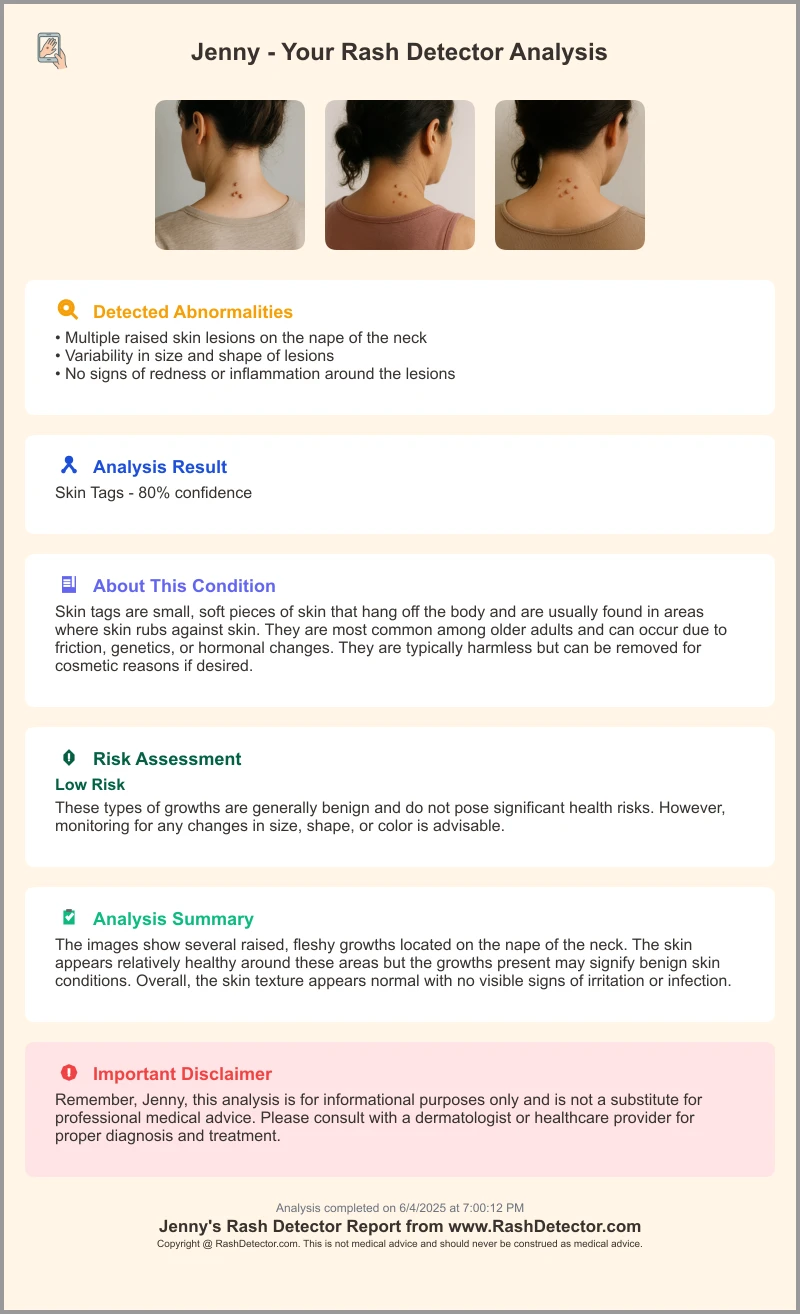
AI-powered rash checkers like Rash Detector look for:
- Color, size, and shape of each lesion (for example, whether the spots are red, purple, brown, small dots, or large patches)
- Border definition and uniformity (sharp, ring-shaped, or faded edges)
- Texture: flat, raised, scaly, blistered, crusted, or smooth
- Pattern and spread (ring, cluster, linear, diffuse, or following a nerve line)
- Location on the body and if multiple areas are involved (for example, just the feet versus the whole trunk)
- Whether the rash is symmetrical (the same on both sides of the body) or asymmetrical
The AI combines these visual clues with your answers to symptom questions (such as itchiness, pain, or fever). This approach allows the checker to narrow down the list of possible conditions, flag urgent warning signs, and offer personalized guidance.
What to Expect from an AI Rash Checker
- An instant report listing possible rash types with educational details (such as likely causes, common triggers, and typical symptoms)
- Symptom filters and questions to refine suggestions (for example, filtering out non-itchy rashes if you report intense itching)
- Advice on warning signs and when to see a doctor (for instance, if your symptoms suggest a potentially serious condition)
- Clear statement that results are not a diagnosis—medical confirmation is always needed for serious concerns. The app will emphasize that its suggestions are for educational purposes only.
- Links to further reading or resources on rash care, prevention, and when to seek help
Rash checkers can help you learn how to identify a rash, but for any concerning symptoms, always follow up with a professional. Try Rash Detector free at rashdetector.com.
Conclusion
Identifying a rash can be challenging, but using a rash checker can empower you to better understand your skin and communicate your symptoms. Mastering how to describe a rash—its color, texture, pattern, and location—improves both AI analysis and doctor visits. Common skin rashes like eczema, contact dermatitis, hives, and fungal infections have characteristic features, but many look similar. Always be alert for urgent warning signs, and never hesitate to seek medical care for severe, spreading, painful, or persistent rashes.
While digital tools like Rash Detector are valuable for education and self-care, they do not replace professional diagnosis. For more guidance on skin health and safe self-exams, see What Is the ABCDE Rule for Moles? and our Free Mole Check Guide. Prioritize your health—when in doubt, always consult a medical professional.
FAQ
Q: What rash do I have?
A: Only a doctor can diagnose your rash for certain. Rash checkers like Rash Detector can help you identify possible causes based on photos and symptoms, but for severe, spreading, or persistent rashes, see a healthcare professional.
Q: Is this rash eczema, ringworm, or hives?
A: Eczema is usually dry and itchy, ringworm forms circular scaly patches, and hives appear as sudden, raised, itchy welts. Use a rash checker for guidance, but consult a doctor for a definitive answer.
Q: When should I see a doctor for a rash?
A: Seek medical care if your rash is severe, spreading rapidly, painful, blistering, associated with fever, or involves swelling of the lips, tongue, or difficulty breathing. Always consult a doctor for persistent or recurring rashes.
Q: What does an itchy red rash mean?
A: Many rashes cause itching and redness, including eczema, hives, allergic reactions, or fungal infections. A rash checker can help narrow down possibilities, but a doctor should evaluate rashes that don’t improve or have severe symptoms.
Q: Can a rash checker identify skin conditions from a photo?
A: Rash checkers use AI to compare your photo and symptoms with a database of skin conditions and suggest possible causes. They offer educational guidance, but only a healthcare provider can make a diagnosis.
Q: What causes a rash that won’t go away?
A: Persistent rashes may be due to eczema, psoriasis, chronic infection, or ongoing exposure to triggers. See a doctor or dermatologist for evaluation and treatment if your rash lasts more than a couple of weeks or worsens.