Purple Rash: Causes, Meanings, and When to Worry
Learn what a purple rash means, its causes (purpura, petechiae), how to tell if it's serious, and when to see a doctor. Get expert insights and guidance.

Estimated reading time: 13 min
Key Takeaways
- A purple rash may signal bleeding under the skin—often called purpura or petechiae—and typically does not fade when pressed.
- Common causes can include low platelets, blood vessel inflammation, infections, and medications.
- Red vs. purple rashes differ: purple spots are often due to blood leakage, not just inflammation.
- Some purple rashes may be medical emergencies, especially if spreading rapidly or with fever, confusion, or severe illness.
- Diagnosis requires a doctor’s input: never ignore a new, unexplained, or rapidly changing purple rash.
Table of Contents
- Section 1: What Is a Purple Rash?
- Section 2: Purpura, Petechiae, and Bruises: Key Differences
- Section 3: Common Causes of Purple Rashes
- Section 4: Major Patterns: Henoch-Schönlein Purpura and More
- Section 5: Danger Signs and When to Seek Emergency Care
- Section 6: Diagnosis and What to Expect from Your Doctor
- Conclusion
- FAQ
Section 1: What Is a Purple Rash?
Understanding the Basics: Purple vs. Red Rashes
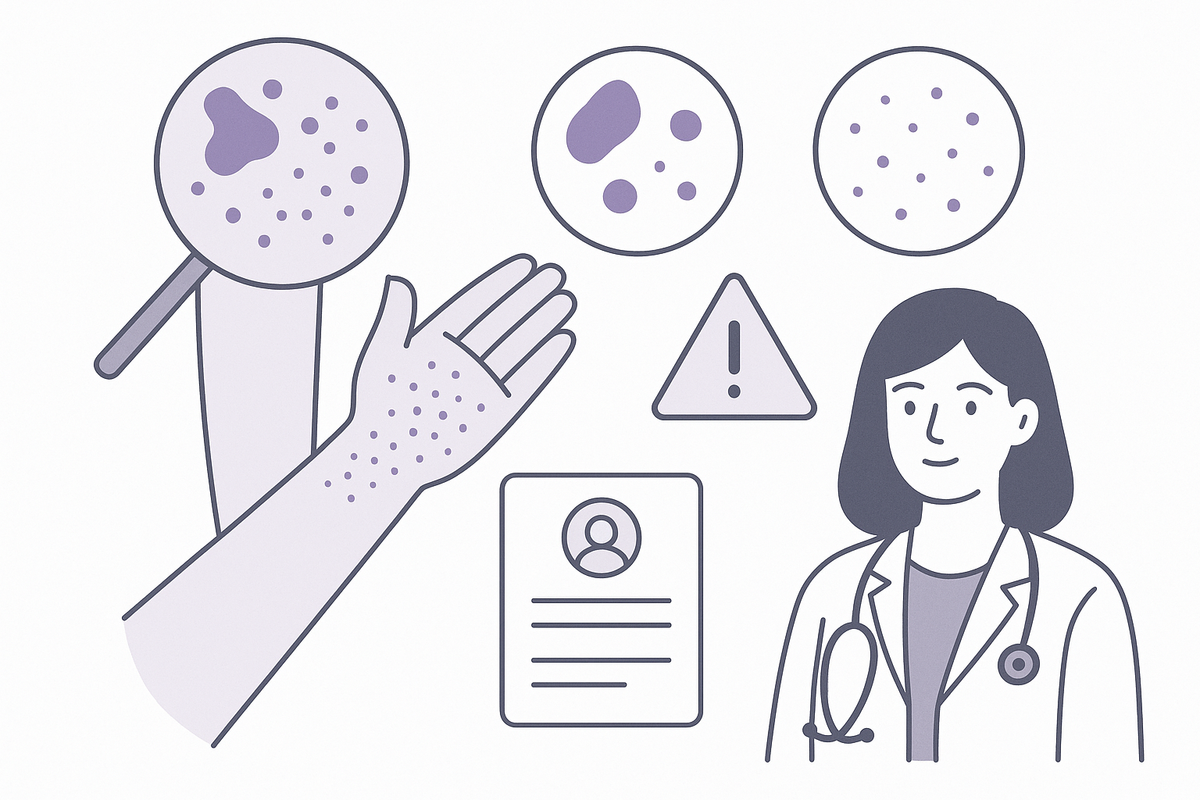
A purple rash refers to areas of skin where blood has leaked out of small blood vessels, causing distinct purple, red, or dark spots. Unlike most red rashes (which are due to inflammation or irritation), purple rashes—also known as purpura or petechiae—do not turn white when pressed (non-blanching). This is an important distinction for both patients and clinicians.
- Red rash: Usually from inflammation, allergies, or infections affecting the skin's surface.
- Purple rash: May indicate bleeding under the skin—blood escapes into the tissues, resulting in purple spots.
When searching "what does a purple rash mean," it’s important to know that this is not a specific disease but a sign of something affecting the blood vessels or clotting system.
What Does Non-Blanching Mean?
Non-blanching means the purple spots do not fade or disappear when you press a glass or clear object against them. This is because the color comes from blood that’s leaked outside the vessels, not from increased blood flow within them.
Where Do Purple Rashes Appear?
- Legs, feet, and buttocks (especially in children)
- Pressure points or areas prone to trauma
- Forearms and hands (in older adults, typically due to fragile vessels)
Because a purple rash may signal a serious health issue, it’s important to recognize its features and seek prompt medical attention for new, unexplained, or fast-changing purple spots on the skin.
Section 2: Purpura, Petechiae, and Bruises: Key Differences
Defining Petechiae vs. Purpura vs. Ecchymosis (Bruising)
When a purple rash appears, doctors use precise terms based on the size of the spots:
- Petechiae: Tiny, pinpoint purple or red spots (<2mm) that don’t blanch. Commonly found on the legs, ankles, or in the mouth.
- Purpura: Slightly larger purple spots (2mm–1cm). Purpura may be scattered or clustered, and are still non-blanching.
- Ecchymosis (bruise): Even larger areas (>1cm), often with a more diffuse, blue-purple color. Bruises are usually due to direct trauma but can occur spontaneously in bleeding disorders.
Key Differences:
- Petechiae and purpura are both signs of bleeding under the skin, but petechiae are smaller.
- Bruises (ecchymoses) are usually linked to an identifiable injury, while petechiae or purpura often arise without trauma and may suggest systemic issues.
How to Tell: The Blanching Test
Press a clear glass or plastic object firmly over the rash. If the spots remain purple or red (non-blanching), this may indicate petechiae or purpura. If they fade, the rash is likely inflammatory or vascular (not from bleeding).
Why the Difference Matters
- Petechiae and purpura may signal low platelets, blood disorders, or infections.
- Bruising without injury should also be evaluated, but may have different causes (fragile vessels, certain medications).
Understanding these terms can help you communicate accurately with healthcare providers and identify when a purple rash could be a sign of something more serious.
Section 3: Common Causes of Purple Rashes
Low Platelets (Thrombocytopenia)
Platelets are blood cells essential for clotting. When your platelet count drops, even minor bumps can cause bleeding under the skin, resulting in petechiae or purpura. Possible causes include:
- Viral infections (e.g., Epstein-Barr virus, hepatitis, HIV)
- Medications (antibiotics, chemotherapy, blood thinners)
- Autoimmune diseases (immune thrombocytopenic purpura/ITP)
- Blood cancers (leukemia, lymphoma)
Clotting Disorders and Blood Vessel Problems
Clotting factors help stop bleeding. If there’s a deficiency or abnormality, purple rashes can develop:
- Liver disease (reduces clotting factor production)
- Genetic conditions (hemophilia, von Willebrand disease)
- Vitamin K deficiency
Vasculitis—inflammation of the blood vessels—can also cause purpura, as inflamed vessels leak blood into the skin.
Medication-Induced Purple Rashes
Some medications can trigger immune reactions or directly affect vessels/platelets, causing purple spots on the skin. This includes certain antibiotics, antiepileptics, and blood thinners. To learn more about medication-related skin reactions, visit Drug Rash Treatment: Effective Solutions for Skin Reactions and Rash from Medication: Causes, Symptoms & Next Steps.
Infections and Sepsis
Serious infections (such as meningococcal sepsis) can cause rapidly spreading purple rashes, often with fever and other severe symptoms. This can be a medical emergency.
Other Causes
- Physical trauma (esp. bruises)
- Senile/actinic purpura (in elderly, due to fragile skin and vessels)
- Autoimmune conditions (lupus, vasculitis syndromes)
Always seek medical evaluation for new or unexplained purple rashes, especially with other symptoms.
Section 4: Major Patterns: Henoch-Schönlein Purpura and More
Henoch-Schönlein Purpura (HSP) / IgA Vasculitis
This is one of the more common causes of purple rash in children and sometimes young adults. HSP is now called IgA vasculitis. It’s a type of small-vessel vasculitis—an inflammation of tiny blood vessels—triggered by the immune system.
Key features:
- Purple, non-blanching spots (purpura) on the legs, buttocks, and sometimes arms
- Joint pain, especially knees and ankles
- Abdominal pain, sometimes with blood in the urine or stool
- Possible kidney involvement (seen as blood/protein in urine)
The rash often appears in clusters and is most common on dependent areas (where blood pools due to gravity). HSP often follows a respiratory infection by 1–3 weeks.
Senile (Actinic) Purpura
Older adults may develop flat, purple patches on their forearms and hands. This "senile purpura" results from fragile blood vessels and thin skin, commonly due to aging and sun exposure. The spots are typically painless and not associated with systemic illness.
Other Vasculitis Syndromes
- Leukocytoclastic vasculitis: Can cause palpable, tender purpura—sometimes with ulceration—often on the lower legs.
- Systemic lupus erythematosus (SLE): Can involve purpura or petechiae as part of a more widespread autoimmune process.
These patterns help doctors narrow down the cause, but blood tests and other workup are usually needed for a diagnosis.
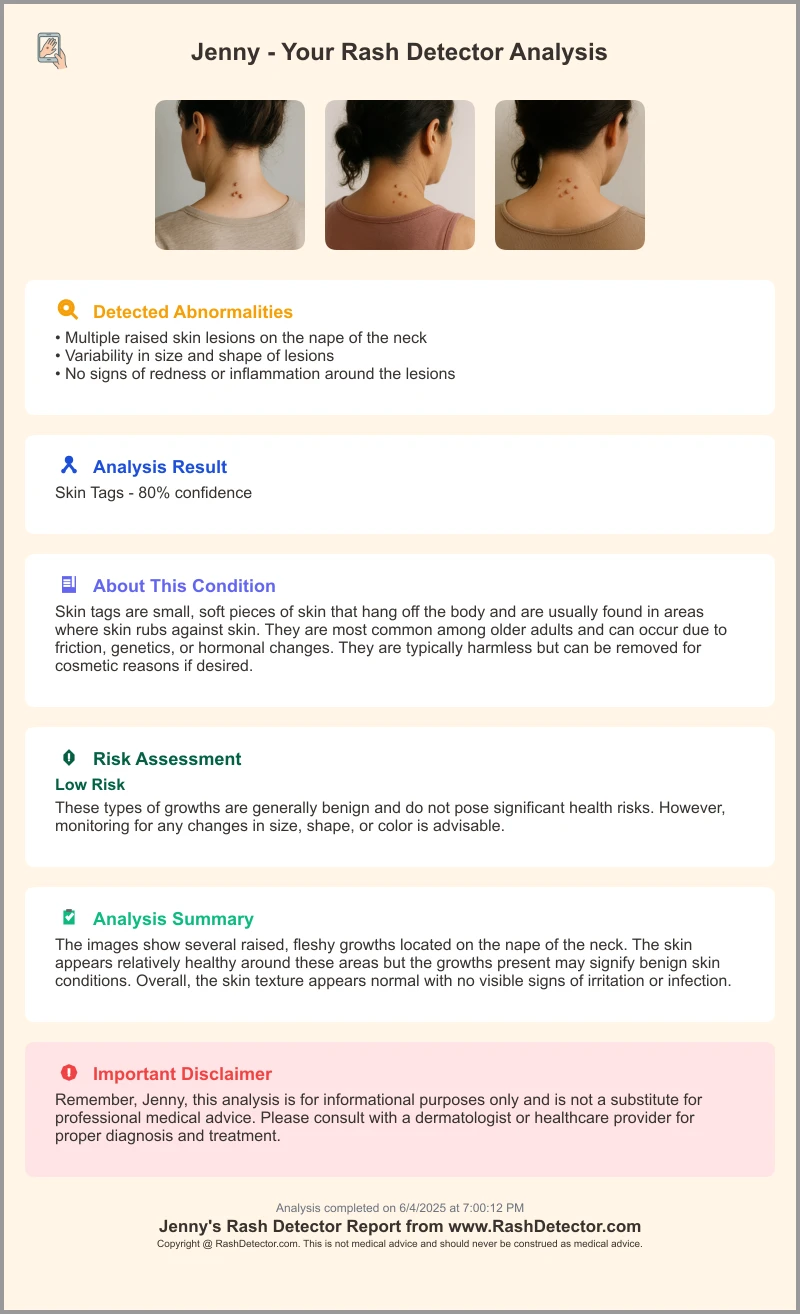
If you’re unsure about a rash, uploading images to Rash Detector can provide instant analysis and possible causes, but it’s not a substitute for in-person medical care—especially for purple rashes.
Section 5: Danger Signs and When to Seek Emergency Care
When Is a Purple Rash an Emergency?
Most purple rashes are not life-threatening, but certain features can signal severe, rapidly progressing underlying illness. Watch for:
- Sudden, widespread appearance—especially in minutes to hours
- Fever, chills, or confusion
- Severe headache, neck stiffness, or difficulty waking up
- Rapidly spreading rash with or without blisters
- Signs of shock (pale, cold, low blood pressure, rapid heartbeat)
- Bleeding from nose, gums, or other sites
Purpura fulminans and meningococcal sepsis are medical emergencies that can start as a purple rash and progress to life-threatening illness within hours. Immediate hospital evaluation is critical.
Associated Symptoms to Watch For
- Joint pain or swelling
- Abdominal pain, vomiting, or blood in stool/urine
- New or easy bruising elsewhere
- Shortness of breath, chest pain
If a purple rash appears suddenly, spreads, or is accompanied by these symptoms, call emergency services or go to the nearest emergency department.
When to See a Doctor (Non-Emergency)
- Rash persists more than a few days
- New purple spots without obvious injury
- Multiple episodes or recurrences
- Accompanied by mild systemic symptoms (fatigue, malaise)
If in doubt, always err on the side of caution and seek professional evaluation.
Section 6: Diagnosis and What to Expect from Your Doctor
Medical History and Physical Exam
Your provider will ask about:
- When the rash appeared and how it has changed
- Associated symptoms (fever, pain, bleeding, joint or abdominal pain)
- Recent illnesses or infections
- Medications (including new starts or recent changes)
- Personal and family history of bleeding or autoimmune disorders
The physical exam will focus on the size, shape, and distribution of the purple spots, as well as any systemic signs of illness.
Non-Blanching Test and Lab Work
Doctors may use the non-blanching test (glass test) to help confirm purpura or petechiae. Laboratory evaluation may include:
- Platelet count (CBC)
- Clotting studies (PT, aPTT, INR)
- Kidney and liver function tests
- Urinalysis (to check for blood/protein)
- Tests for infections (cultures, viral serologies)
- Autoimmune screening if vasculitis is suspected
Additional workup depends on your age, medical history, and associated symptoms.
Treatment: Addressing the Underlying Cause
Treatment is directed at the underlying cause, not the rash itself. Depending on the diagnosis:
- Supportive care: Rest, fluids, monitoring
- Stopping a culprit medication (if drug-induced)
- Treating infection (antibiotics for bacterial causes)
- Managing vasculitis (steroids, immunosuppressants for autoimmune causes)
- Treating low platelets (immune therapies, transfusions if severe)
For more on treatment options for rashes in general, see Skin Rash Treatment: Effective Solutions and Smart Tools.
Never self-diagnose or self-treat a purple rash. Always consult a doctor or dermatologist for diagnosis and appropriate management. This information is for general educational purposes only. For diagnosis and treatment, especially if symptoms are severe, spreading, painful, or persistent, see a healthcare professional.
Conclusion
A purple rash—whether petechiae, purpura, or bruising—suggests that blood has leaked into the skin, often from an underlying problem with platelets, blood vessels, or clotting. It can range from benign (senile purpura in older adults) to potentially life-threatening (such as meningococcal sepsis in children or adults). Key clues include non-blanching spots, sudden onset, and associated symptoms such as fever, joint pain, or bleeding elsewhere.
Never ignore a new, unexplained, or rapidly spreading purple rash. Always consult a healthcare professional for proper evaluation. If you notice other symptoms (fever, confusion, severe pain, or signs of shock), seek emergency care immediately.
For instant, AI-powered analysis of rashes and skin changes, try uploading images to Rash Detector. However, online apps are not a substitute for in-person diagnosis—especially for purple rashes that may indicate a serious medical issue.
FAQ
Q: What does a purple rash mean?
A purple rash usually means blood has leaked into the skin, forming spots called petechiae or purpura. This can be caused by low platelets, blood vessel inflammation, clotting problems, infections, or medications. It’s a sign to seek medical advice, as some causes can be serious.
Q: Is a purple rash serious or an emergency?
Sometimes. If the rash appears suddenly, spreads quickly, or is accompanied by fever, confusion, or severe illness, it can signal a medical emergency (such as meningococcal sepsis). Any new, unexplained, or persistent purple rash should be evaluated by a doctor.
Q: What is the difference between petechiae, purpura, and bruising?
Petechiae are tiny (<2mm) purple spots; purpura are larger (2mm–1cm); and bruises (ecchymoses) are even bigger (>1cm). All involve bleeding under the skin, but bruises are often due to trauma, while petechiae or purpura may suggest an underlying medical problem.
Q: What causes purple spots on the skin without injury?
Common causes include low platelet counts (thrombocytopenia), blood vessel inflammation (vasculitis), clotting disorders, infections, and certain medications. Sometimes, especially in older adults, fragile vessels cause spontaneous purpura (senile purpura).
Q: Can a purple rash be from an infection or low platelets?
Yes. Serious infections (like meningococcal sepsis) and low platelets (from conditions like ITP or leukemia) can both cause purple rashes. Both can be dangerous and require urgent medical attention.
候補を比べる場合は、目的、使用場面、サイズ、付属品を同じ基準で確認すると判断しやすくなります。複数の候補を比較する際は、ハロウィン コスプレ 女性 人気で仕様の違いを確認できます。商品が届いたら内容を早めに確認し、必要な調整や追加準備を本番前に済ませましょう。
Q: When should I see a doctor for a purple rash?
See a doctor if the rash is new, unexplained, spreading, or accompanied by other symptoms like fever, pain, confusion, or bleeding. Seek emergency care if it appears suddenly or with signs of severe illness. Always consult a healthcare provider for diagnosis and treatment, especially for severe, spreading, painful, or persistent symptoms.