Comprehensive Guide to Medication Rash Treatment
Learn medication rash treatment steps: identification, diagnosis, and management to prevent life-threatening reactions. Stay safe while taking your medication.
Estimated reading time: 6 minutes
Key Takeaways
- Medication rashes range from mild redness to life-threatening reactions.
- Early detection and tracking medication history aid timely diagnosis.
- Treatment options include antihistamines, corticosteroids, and emergency care.
- Preventative measures and long-term skin management help avoid future rashes.
- Always consult your healthcare provider before stopping or changing medications.
Table of Contents
- Understanding Medication-Induced Rashes
- Common Types of Medication Rashes
- Identifying Medication Rashes
- Diagnosing a Medication Rash
- Medication Rash Treatment Options
- Preventative Measures and Long-Term Management
- Conclusion
- FAQ
Understanding Medication-Induced Rashes
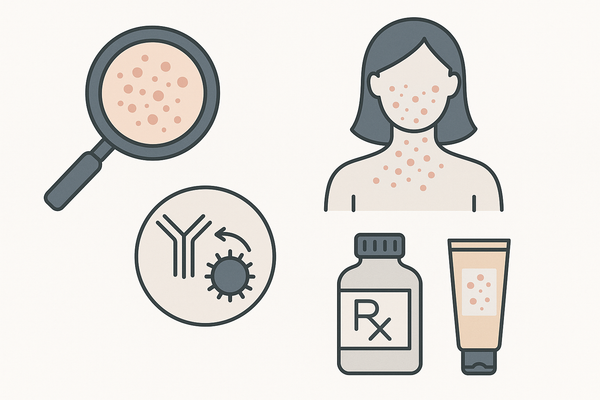
Medication-induced rash is a cutaneous reaction caused by a drug rather than a skin infection or chronic condition like eczema. These reactions can arise from side effects, allergic responses, or drug interactions. Timely recognition matters because some rashes can progress to severe, life-threatening conditions (NYU Langone Health; Mayo Clinic).
Underlying mechanisms include:
- Immune hypersensitivity – The body’s defense system overreacts to a drug as if it were harmful.
- Non-immune side effects – Some medications irritate skin cells directly.
- Drug–drug interactions – Two or more medicines interact and trigger skin changes.
Some rashes can become severe:
- Stevens-Johnson syndrome (SJS) – Rare, serious blistering that affects skin and mucous membranes.
- DRESS (Drug Reaction with Eosinophilia and Systemic Symptoms) – Rash accompanied by fever and organ damage (NYU Langone Health; Cleveland Clinic Journal of Medicine).
Key points:
- A drug eruption can mimic many skin conditions.
- Early reactions often present as redness and itching.
- Severe systemic drug reactions require urgent medical attention.
Common Types of Medication Rashes
Recognizing the form, timing, and common culprits of drug-induced rashes helps you act quickly.
- Maculopapular Rash
Flat red areas with small raised bumps; appears 1–2 weeks after starting. Common culprits: penicillins, sulfonamides (Children’s National Health System). - Urticaria (Hives)
Itchy, raised welts that migrate; can show up within hours. Common drugs: NSAIDs, antibiotics (NYU Langone Health). - Photosensitivity-Related Rash
Redness or blisters in sun-exposed areas; occurs after sun exposure while on certain drugs. Common drugs: tetracyclines, thiazide diuretics (Mayo Clinic). - Severe Variants
SJS – Blisters on skin and mucous membranes, fever.
DRESS – Rash plus fever, swollen lymph nodes, liver or kidney issues. Common drugs: allopurinol, anticonvulsants (Cleveland Clinic Journal of Medicine).
Identifying Medication Rashes
Spotting a drug rash early enables prompt intervention.
Hallmark signs and symptoms:
- Redness or pink patches.
- Itching or burning sensation.
- Swelling and raised bumps or blisters.
- Peeling or scaling of skin.
- Mucosal sores in the eyes, mouth, or genitals (Cedars-Sinai).
Track your medication history:
- List new prescriptions, over-the-counter drugs, and supplements.
- Note when each dose was taken and when the rash appeared.
- Use an app to track rash progress.
- Capture clear photos to compare changes; see tips for clear rash photos.
Red-flag symptoms needing emergency care:
- Difficulty breathing or wheezing.
- Swollen face, lips, or tongue.
- Widespread blistering or peeling.
- Dizziness or rapid heartbeat (Mayo Clinic).
Key tips: Never ignore swelling around the eyes or mouth; do not stop essential medications without consulting your provider; keep a photo diary to share with your doctor.
Diagnosing a Medication Rash
A clear diagnosis paves the way for safe treatment.
Diagnostic workflow:
- Medication and allergy history
List all drugs, supplements, and herbal remedies with dates and past reactions (American Academy of Family Physicians). - Physical exam
Assessment of rash pattern, spread, lesions, and any mucosal involvement. - Lab tests
Complete blood count for eosinophilia; liver and kidney panels to detect systemic damage. - Allergy testing or drug challenge
Skin prick or patch tests; supervised oral drug challenge (Mayo Clinic).
Communication tips: Bring a written medication list with start dates, doses, and any family history of drug allergies.
Medication Rash Treatment Options
Treatment depends on rash type and severity.
Immediate first steps:
- Do not stop essential drugs without medical guidance.
- Under a provider’s supervision, discontinue or switch the suspected medication (NYU Langone Health).
Symptomatic treatments:
- Antihistamines (cetirizine, diphenhydramine) to ease itching and swelling (NYU Langone Health).
- Topical corticosteroids (hydrocortisone) for local inflammation (Children’s National Health System).
- Oral or IV steroids (prednisone, methylprednisolone) for moderate to severe rashes (Children’s National Health System).
- Epinephrine auto-injector for anaphylaxis (Mayo Clinic).
Home care for mild rashes:
- Apply cool compresses to red areas.
- Use fragrance-free moisturizers on dry, peeling skin.
- Wear loose, breathable clothing.
- Avoid direct sunlight and skin irritants.
Follow-up: Schedule a re-examination to confirm resolution; watch for secondary infections; report any new symptoms immediately.
Preventative Measures and Long-Term Management
Proactive steps can help you avoid future rashes.
- Review allergy history with your provider or pharmacist.
- Read drug labels and leaflets for rash warnings.
- Consider patch testing for high-risk medications.
Ongoing skin care:
- Use gentle, unscented soaps and moisturizers.
- Apply broad-spectrum sunscreen if your medication increases sun sensitivity.
Lifestyle tips: Report new skin changes promptly; keep an updated list of medications and allergies for every healthcare visit.
Conclusion
Early recognition, accurate diagnosis, and tailored treatment enable most medication rashes to resolve quickly. Some reactions, like Stevens-Johnson syndrome, require urgent care. Always communicate openly with your healthcare provider before stopping or changing any medication. With the right approach, you can minimize discomfort and reduce the risk of serious complications.
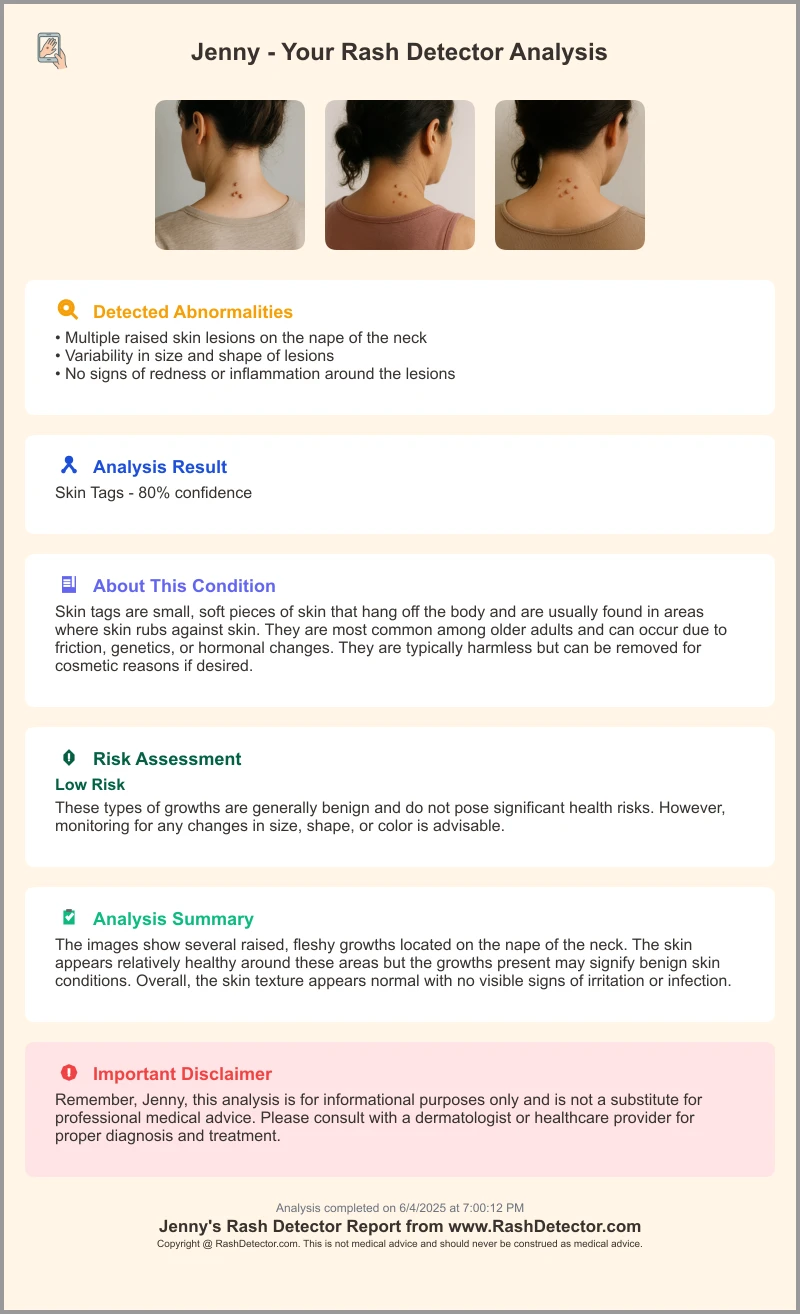
For added support in monitoring your medication-induced rash, consider using the AI-based Rash Detector to upload images and receive instant analysis.
FAQ
- What causes medication rashes?
Medication rashes can result from immune hypersensitivity, direct drug irritation, or interactions between drugs. - How are medication rashes diagnosed?
A combination of medical history, physical exam, lab tests, and sometimes skin testing or drug challenges. - When should I seek emergency care?
If you experience breathing difficulty, facial swelling, or widespread blistering, call emergency services immediately. - How can I prevent future rashes?
Keep an updated medication list, review allergy history, read warnings on drug labels, and discuss patch testing for high-risk drugs.