Allergic Reaction Rash: Causes, Signs, and How to Tell It Apart
Learn what an allergic reaction rash looks like, how to tell it from other rashes, common triggers, home care, and when to see a doctor. Comprehensive guide.

Estimated reading time: 13 min
Key Takeaways
- Allergic reaction rash is a common skin response, but not all rashes are allergic—learn how to tell the difference.
- Common triggers include foods, medications, plants, cosmetics, and insect stings.
- Appearance, body location, and symptoms may help distinguish allergic rashes from others like heat rash, contact dermatitis, or fungal infections.
- Home treatments may include antihistamines, moisturizers, and cool compresses—urgent care is needed for severe or spreading symptoms.
- Prevention focuses on trigger avoidance, patch testing, and careful monitoring of new products.
Table of Contents
- Section 1: Understanding Allergic Reaction Rash
- Section 2: Allergic Rash vs. Other Common Rash Types
- Section 3: Common Triggers for Allergic Reaction Rash
- Section 4: Appearance, Patterns, and Locations of Allergic Rashes
- Section 5: Home Treatment for Allergic Reaction Rash
- Section 6: When to Seek Medical Care and Prevention Strategies
- Conclusion
- FAQ
Section 1: Understanding Allergic Reaction Rash
What Is an Allergic Reaction Rash?
An allergic reaction rash is a visible skin response caused by your immune system reacting to a harmless substance (called an allergen). The body mistakenly identifies the allergen as a threat and releases chemicals—like histamine—that can trigger redness, swelling, itching, and sometimes blisters or welts.
- Common examples: contact with poison ivy, eating peanuts if allergic, using a new skin cream, or taking a new medication.
- Allergic rashes can develop quickly (within minutes) or take hours to days to appear.
What Causes Skin Rashes in General?
While allergies are a possible cause, skin rashes can also result from:
- Heat rash (blocked sweat glands)
- Fungal skin rash (like ringworm or athlete’s foot)
- Contact dermatitis (irritation or allergy from touching substances)
- Drug rash (reaction to medications)
- Viral or bacterial infections
- Autoimmune diseases (like lupus or psoriasis)
- Underlying health conditions (e.g., diabetes skin rash)
- Stress rash (triggered by emotional or physical stress)
Why Is It Important to Identify the Cause?
Correctly identifying a rash is important for effective treatment and prevention. Allergic rashes can sometimes signal serious reactions (like anaphylaxis), while other types may point to infections or chronic illness. When in doubt, always consult a healthcare provider or dermatologist for a diagnosis. For educational guidance and instant analysis of your rash, you can try uploading photos to Rash Detector.
Section 2: Allergic Rash vs. Other Common Rash Types
How to Tell Allergic Rash Apart
Not every itchy or red skin patch is an allergic reaction rash. Here’s how allergic rashes may differ from other common types:
- Allergic rash: Often appears suddenly, with redness, swelling, and intense itching. May develop blisters, welts (hives), or patches that move or spread.
- Heat rash: Looks like tiny clear or red bumps, often in skin folds or areas that sweat. Caused by blocked sweat ducts; not itchy in everyone.
- Contact dermatitis: Red, swollen, sometimes blistered skin at the site of contact with an irritant or allergen. Can be hard to tell apart from allergic rash—both may itch and burn.
- Fungal skin rash: Ring-shaped patches (like ringworm), scaling, or cracked skin, often in moist areas (groin, feet, underarms). May itch or burn.
- Drug rash: Red or pink spots or patches, possibly all over the body. May be flat or raised, and sometimes resemble measles or hives. Can occur days after starting a new medication.
- Diabetes skin rash: Includes dark, velvety patches (acanthosis nigricans), shiny bumps, or slow-healing sores—usually linked to blood sugar issues.
- Stress rash: Hives or red patches triggered by emotional or physical stress. Often comes and goes, sometimes moving locations.
Diagnostic Tips
- Consider timing (Did you try a new product, eat a new food, or start a new medication?)
- Note the location (Allergic rashes often match where the allergen touched or where your body reacts most strongly—face, hands, chest, etc.)
- Check for associated symptoms: fever (may mean infection), trouble breathing (urgent!), pain, or spreading blisters.
When to Use Rash Detector
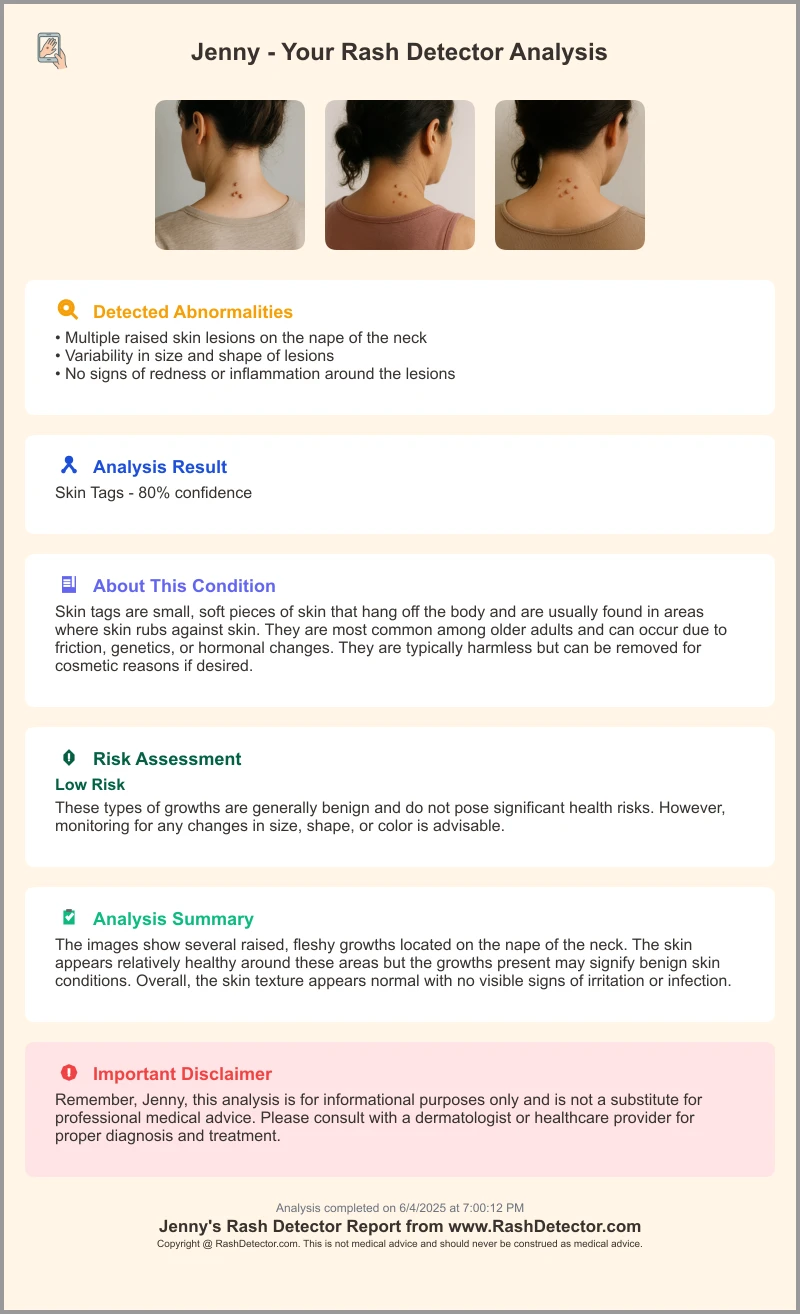
If you’re unsure what type of rash you have, Rash Detector allows you to upload three images for instant AI analysis and guidance—helping you better understand potential causes before seeing a doctor.
Section 3: Common Triggers for Allergic Reaction Rash
Food Allergies
Some foods are known to cause allergic reaction rashes, especially in children, but adults can be affected as well. Common triggers include:
- Peanuts and tree nuts
- Shellfish and fish
- Milk, eggs, and soy
- Wheat and gluten-containing grains
Food allergy rashes (often hives or red patches) can appear within minutes to hours after eating the trigger.
Medication and Drug Rash
Certain medications can cause allergic rashes, known as drug rash or medicine allergy rash. These can range from mild (hives, red spots) to more severe forms. Examples include:
- Antibiotics (penicillin, sulfa drugs)
- Anticonvulsants
- NSAIDs (ibuprofen, aspirin)
If you notice a rash after starting a new medication, stop and contact your healthcare provider. For more on this, see Drug Rash Treatment: Effective Solutions for Skin Reactions.
Environmental and Contact Allergens
Allergic rashes may result from touching or coming into contact with substances such as:
- Plants (poison ivy, oak, sumac)
- Fragrances and preservatives in cosmetics
- Nickel (jewelry, belt buckles)
- Latex (gloves, balloons)
Reactions may be immediate or delayed, and can persist until the allergen is removed or washed off.
Insect Stings and Bites
Bee, wasp, and ant stings can trigger localized rashes or, in allergic individuals, widespread hives and swelling. Seek urgent medical attention if you have trouble breathing, swallowing, or feel faint.
Section 4: Appearance, Patterns, and Locations of Allergic Rashes
Typical Appearance
The appearance of an allergic reaction rash varies, but common features can include:
- Red or pink patches, sometimes with swelling
- Raised, itchy welts (hives or urticaria)
- Blisters or oozing in some cases
- Scaly or cracked skin if chronic
Common Body Locations
- Face: Allergic rashes here may be from cosmetics, pollen, or food contact.
- Hands: Common with latex or plant allergies; often in healthcare workers or gardeners.
- Genital area: Reactions to soaps, detergents, or latex condoms.
- Widespread: Food or drug rashes can affect the whole body.
Special Patterns: Poison Ivy, Sun Sensitivity, and More
- Poison ivy/oak/sumac: May cause distinctive linear streaks or blisters where the plant brushed the skin.
- Photoallergic contact dermatitis: Rash appears after sun exposure and contact with certain chemicals (perfumes, sunscreen ingredients).
- Hives: Raised, pale or pink welts that can change location or shape quickly.
Signs of Severe or Dangerous Rashes
- Swelling of the lips, tongue, or throat
- Rapidly spreading rash, especially with fever
- Blistering, peeling, or painful skin
- Signs of infection (pus, yellow crusts, warmth)
If any of these occur, seek emergency care immediately.
Section 5: Home Treatment for Allergic Reaction Rash
First Steps at Home
- Remove or avoid the suspected trigger (wash skin, remove jewelry, stop new product use).
- Consider taking an oral antihistamine (such as diphenhydramine or loratadine) to help reduce itching and swelling, if appropriate for you.
- Apply a cool, damp compress to affected areas for 15–20 minutes at a time.
- Use fragrance-free moisturizers to soothe and protect the skin barrier.
Topical Treatments
- Over-the-counter anti-itch creams (such as hydrocortisone or calamine lotion) may help relieve mild itching and inflammation.
- Oatmeal baths (colloidal oatmeal) can help reduce irritation, especially for widespread rashes.
- Avoid topical antihistamine creams (they can sometimes worsen rashes).
What Not to Do
- Don’t scratch—this increases the risk of infection and scarring.
- Avoid hot water or harsh soaps, which can further irritate skin.
- Don’t use steroid creams on the face or groin unless directed by a doctor.
When to Get Professional Help
If your rash is severe, spreading, persistent, or accompanied by fever, pain, or swelling, see your doctor or dermatologist promptly. Severe drug rashes, blistering, or any signs of anaphylaxis (trouble breathing/swallowing) are emergencies. Learn more in Drug Allergy Rash: Identification, Causes, and What to Do.
Section 6: When to Seek Medical Care and Prevention Strategies
When to See a Doctor
- Rash with difficulty breathing, swallowing, or facial/tongue swelling (call 911 or emergency services!)
- Rash with fever, blistering, or rapidly spreading areas
- Signs of infection: yellow crusts, oozing, warmth, or red streaks
- Rash that persists more than 1–2 weeks, worsens, or recurs frequently
- Suspected drug rash or severe allergy—these may require prescription treatment or stopping a medication
See a dermatologist for chronic, painful, or hard-to-diagnose rashes. Never delay professional evaluation if you’re worried about your symptoms.
Prevention and Trigger Avoidance
- Patch testing: If you have frequent allergic rashes, a dermatologist can test your skin for common allergens.
- Keep a diary: Track foods, medications, products, and activities to identify patterns and triggers.
- Protective clothing: Wear gloves when handling chemicals, gardening, or cleaning.
- Read labels: Learn common allergen names in cosmetics, soaps, and cleaning products.
- Avoid sharing personal items: Towels, razors, and makeup can transfer irritants or infections.
If you’re prone to heat rash, stay cool and dry, especially in hot weather—see How to Prevent Heat Rash: Practical Tips for Every Season for more.
Special Cases: Poison Ivy and Photoallergic Rashes
- Poison ivy/oak/sumac: Learn to identify these plants and wash skin/clothes after exposure. Use barrier creams when hiking or gardening.
- Photoallergic contact dermatitis: Limit sun exposure after applying new lotions, perfumes, or medications. Wear protective clothing and sunscreen (if not the trigger).
For ongoing monitoring, Rash Detector can help track changes and alert you to patterns in your skin reactions.
Conclusion
Allergic reaction rashes are among the most common skin complaints, but not every rash is caused by an allergy. Distinguishing between allergic rashes, heat rash, contact dermatitis, fungal skin rash, drug rash, and other causes is key to effective care. Knowing your triggers, recognizing patterns, and seeking timely medical advice will help keep your skin healthy and your reactions under control. Remember: Always see a healthcare provider or dermatologist for diagnosis and treatment—especially for severe, painful, spreading, or persistent rashes. For quick, educational analysis before your appointment, try Rash Detector.
FAQ
Q: What does an allergic reaction rash look like?
A: Allergic reaction rashes are usually red or pink, itchy, and may appear as raised welts (hives), swollen patches, or blisters. They can be localized (where the allergen touched) or widespread, especially after eating a trigger food or taking a medication.
Q: How do you know if a rash is from an allergy or something else?
A: Consider timing (exposure to a new food, product, or medication), symptoms (itching, swelling, rapid spread), and the rash's appearance. Allergic rashes often itch intensely and may come with swelling or hives, while other rashes (like fungal or heat rash) have different patterns. When in doubt, consult a doctor for diagnosis.
Q: What is the best treatment for an allergic skin rash?
A: Remove the trigger, consider taking an oral antihistamine, and use cool compresses and fragrance-free moisturizers. Hydrocortisone cream or calamine lotion may help mild cases. For severe, blistering, or spreading rashes, see a doctor promptly.
Q: When should I go to the doctor for an allergic rash?
A: Seek medical care if the rash is accompanied by difficulty breathing, swallowing, swelling of the lips or tongue, fever, blistering, rapid spread, or signs of infection. Persistent or recurring rashes should also be evaluated by a healthcare provider.
Q: Can food or medicine allergies cause a rash?
A: Yes. Both food and medicine allergies can cause hives or widespread red rashes. Drug rashes may develop days after starting a new medication. Always talk to your doctor if you suspect a medicine allergy.
Q: Is poison ivy a type of allergic reaction rash?
A: Yes. Poison ivy, oak, and sumac rashes are examples of allergic contact dermatitis, caused by the skin’s reaction to plant oils. They often appear as linear streaks or blisters where the plant touched the skin.