Smartwatch Rash Monitoring: Revolutionizing Continuous Skin Health Surveillance
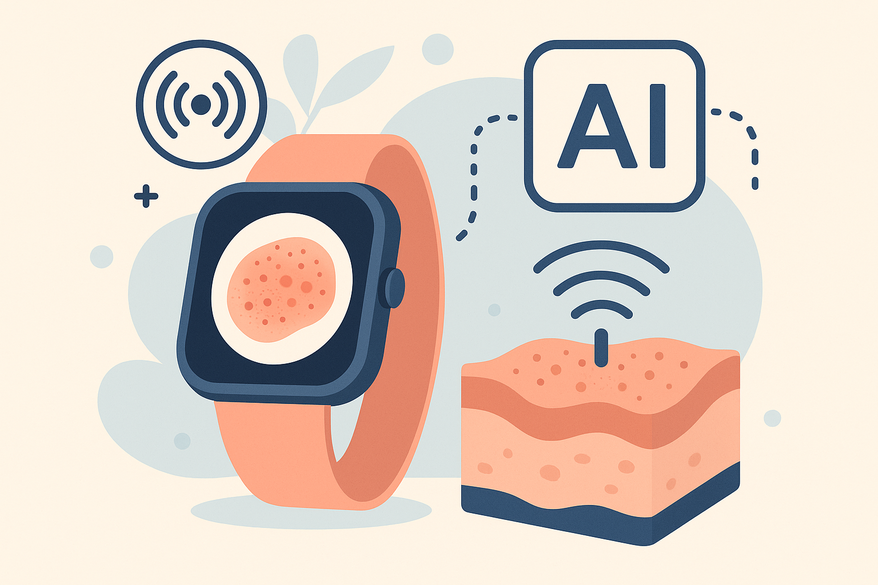
Explore how smartwatch rash monitoring uses sensors and AI to enhance skin health by detecting irritation early, transforming wearable technology.
Estimated reading time: 8 minutes
Key Takeaways
- Continuous rash monitoring uses advanced on-wrist sensors to help detect early signs of skin irritation in real time.
- Integration of optical, thermal, and moisture sensors with AI allows for instant analysis and user alerts.
- Potential benefits include early warnings, personalized skin-care insights, and support for teledermatology and remote care.
- Challenges include sensor accuracy, strap-induced irritation, data privacy, and evolving regulatory requirements.
- 2026 innovations may include multispectral imaging, real-time ultrasound, and federated AI learning for more precise detection and privacy protection.
Table of Contents
- Key Takeaways
- Table of Contents
- Background on Smartwatch Rash Monitoring and Wearable Technology
- How Smartwatch Rash Monitoring Works
- Benefits of Smartwatch Rash Monitoring
- Challenges and Considerations
- Future Trends and Innovations
- Conclusion
- FAQ
Background on Smartwatch Rash Monitoring and Wearable Technology
Smartwatch rash monitoring is a developing feature in wearable health technology, enabling continuous skin surveillance for early detection of irritation, allergic reactions, or infections. Since 2023, wearables have advanced from basic activity trackers to more comprehensive health platforms, now including some skin health metrics alongside heart rate, SpO₂, ECG, and blood pressure. By helping users notice early signs of dermatitis and related skin issues, these devices may support earlier intervention and proactive dermatological care.
Defining Rash Monitoring
- Detection, characterization, and tracking of skin abnormalities—such as redness, swelling, or itchiness—using sensor data.
- Traditional reliance on self-inspection or dermatologist visits can delay recognition of skin changes. Wearables aim to shorten this window.
Evolution of Smartwatches
- Early models (pre-2020) focused on step counts and basic activity metrics.
- 2023–2025: Introduction of advanced sensors for photoplethysmography (PPG), pulse oximetry, and cuffless blood pressure.
- 2025–2026: Prototypes and select consumer models now integrate ultrasound, PPG, and multispectral imaging; see the Digital Trends report on ultrasound BP monitoring.
Growing Demand for Preventive Care
- Health-conscious consumers increasingly seek tools beyond fitness tracking, especially for skin and allergy management.
- Preventive dermatology may help reduce costs and improve quality of life by catching problems early.
- The term “smartwatch rash monitoring” reflects the trend toward passive, real-time skin assessment, now gaining more attention in 2026.
How Smartwatch Rash Monitoring Works
Sensor Suite for Skin Surveillance
- Optical Sensors (Advanced PPG and Multispectral)
• Detect color changes (erythema, pallor) by measuring reflected light at multiple wavelengths, including near-infrared for deeper tissue assessment. - Thermal Sensors
• Identify temperature changes that may be linked to inflammation or infection, generating thermal maps to localize hot spots. - Humidity/Moisture Sensors
• Track sweat levels and transepidermal water loss (TEWL) to flag early barrier breakdown or excessive moisture, which can be a risk for irritation.
Imaging & AI Pipeline
- Miniature Camera or Multispectral Diode Array
• Captures high-resolution images in visible and near-infrared bands, enabling layered skin assessment. - On-device Machine Learning
• Convolutional Neural Networks (CNNs) may classify skin regions as normal or rash based on dermatology datasets. - Data Preprocessing & Alerts
• Denoising, normalization, and threshold-based algorithms can trigger haptic or visual warnings for the user, with severity scoring.
Integration Process
- Hardware Design
• Hypoallergenic titanium, ceramic, or medical-grade polymer casings may reduce device-induced dermatitis.
• Smooth, low-friction surfaces and sweat-wicking designs can help minimize contact irritation (Vositone guidelines). - Firmware & Software
• Sensing intervals (e.g., every 10–20 minutes) balance real-time monitoring with battery life.
• Lightweight AI inference engines may run locally, supporting user privacy and fast feedback. - Power Management
• Dynamic sensor activation based on activity or risk profiles, using ultra-low-power co-processors (common in 2026 models).
Emerging Prototypes
- University and industry research (2025–2026) explores combined real-time ultrasound and multispectral imaging for both epidermal and dermal assessment, as highlighted in the Digital Trends feature.
Benefits of Smartwatch Rash Monitoring
Early Warning System
- Instant alerts for redness, swelling, or itching may enable users to apply topical treatments or adjust habits before issues worsen.
- May help users notice early signs of skin barrier compromise, which could help prevent secondary infections.
Personalized Skin Management
- Trend Graphs
• Visualize skin metrics over days, weeks, and months.
• Identify patterns linked to activities, environmental factors, or hygiene routines. See the Best Skin Tracking App guide. - Trigger Correlation
• Correlate rash flare-ups with sweat rates, skincare products, or exposure to allergens for data-driven lifestyle adjustments.
Enhanced Dermatological Care
- Remote Monitoring
• Dermatologists may be able to track chronic skin conditions between appointments, supporting adherence to treatment plans. Learn more in the teledermatology guide.
Clinician-Ready Reports
• Exportable logs with time-stamped rash events, severity scores, and sensor data.
• May augment teledermatology or in-office visits with objective, longitudinal data.
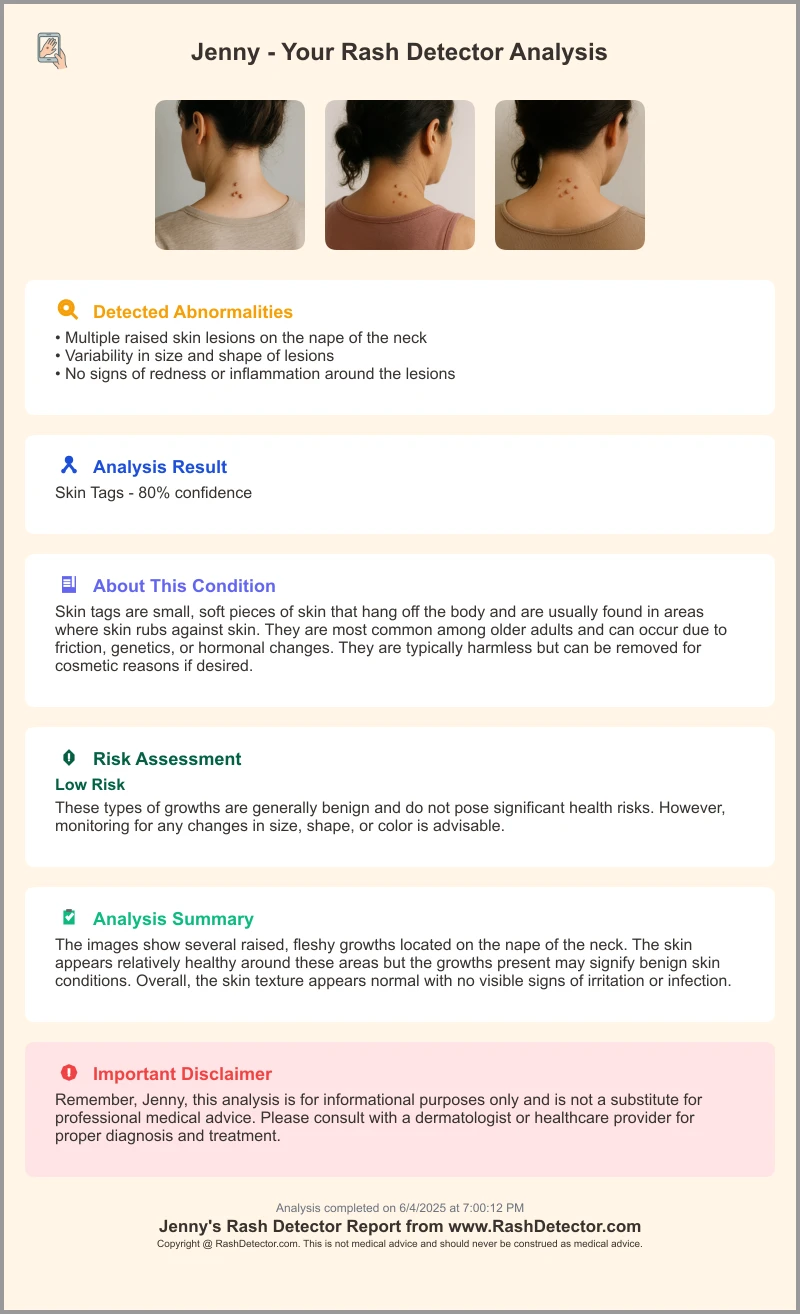
Users can upload images to the Skin Analysis App for detailed AI reports.
User Convenience & Adherence
- Passive monitoring during daily life, exercise, and sleep—no manual image capture or diary entries required.
- Haptic reminders and notifications are delivered only when necessary, minimizing alert fatigue.
Challenges and Considerations
Sensor Accuracy & False Positives
- Environmental Confounders
• Sweat, dirt, sunscreen, or cosmetics may mimic erythema signals and cause false alerts.
• Solar exposure and ambient lighting can skew optical readings, requiring robust calibration. - User Variability
• Diverse skin tones, thicknesses, and sensitivities require adaptable algorithms and sometimes per-user calibration for accuracy.
Strap-Induced Irritation
- Chemical Exposure
• Some bands (e.g., fluoroelastomer) may leach PFHxA or other chemicals, raising safety concerns (CyberNews report). - Mechanical Friction & Moisture
• Tight straps can trap sweat, leading to maceration or false rash alerts.
• Hypoallergenic alternatives (silicone blends, woven textiles, medical-grade polymers) are increasingly available. See preventive habits.
Data Privacy & Consent
- Skin health data is sensitive and may reveal allergies or underlying conditions.
- In 2026, devices must comply with updated HIPAA, GDPR, and regional privacy laws—requiring explicit opt-in, end-to-end encryption, and transparent data policies.
Regulatory Hurdles
- Medical Device Classification
• FDA 510(k) clearance (US) or CE marking (EU) is often required for diagnostic or health claims.
• Clinical validation and post-market surveillance are necessary for safety and efficacy.
Technical Miniaturization
- Balancing sensor fidelity, device size, and battery life remains a key engineering challenge, though 2026 models are thinner and more efficient than ever.
- Advances in flexible electronics and low-power semiconductors are helping overcome form-factor constraints.
Future Trends and Innovations
Advanced Sensing Modalities
- Real-Time Ultrasound Arrays
• May assess subdermal structures to help distinguish superficial from deeper inflammation, a feature in some 2026 prototypes. - Multispectral Imaging
• Map melanin, hemoglobin, and water content using a combination of visible and near-infrared light for more precise rash detection.
AI & Software Enhancements
- Federated Learning
• Aggregate anonymized insights across devices to improve AI models while preserving user privacy—an increasingly common approach in 2026. - Teledermatology Integration
• One-tap video consultations may be triggered by persistent rash alerts, with seamless data sharing via apps. See teledermatology guide.
Material Science Developments
- Flexible, breathable bands with micro-fluidic channels for sweat analysis and improved comfort are now available in some premium models.
- Self-cleaning and antimicrobial surface coatings to reduce microbial growth and skin irritation are a 2026 industry trend.
Impact on Preventive Medicine
- Potential shift from reactive treatments to proactive skin health maintenance, empowering users to address issues early.
- May help reduce dermatology clinic loads by flagging only high-risk or persistent cases for further evaluation.
- Aggregated, anonymized data could provide public health insights on rash prevalence and triggers.
Conclusion
Smartwatch rash monitoring combines on-wrist sensors, imaging technology, and AI-driven analytics to provide real-time skin-health alerts. By helping users notice early signs of irritation, they may be able to intervene before minor issues escalate. Continuous, passive monitoring can deliver personalized insights, enrich dermatologist consultations with objective data, and support adherence through minimal effort. While challenges around sensor accuracy, strap materials, privacy, and regulation remain, ongoing innovations in sensing modalities, machine learning, and materials science are addressing these hurdles. As these devices mature in 2026 and beyond, they may play an increasing role in preventive dermatology and the broader wearable health ecosystem.
Important: Smartwatch rash monitoring is not a substitute for professional medical care. If you have a severe, spreading, painful, or persistent rash, or if you are unsure about your symptoms, see a doctor or dermatologist for diagnosis and treatment.
FAQ
- Q: How accurate is smartwatch rash monitoring?
A: Accuracy depends on sensor quality and AI algorithm training. Some modern devices (2026) use multi-sensor fusion and models trained on dermatology datasets to help minimize false positives and negatives, but results may vary by user and device. - Q: Can any smartwatch detect rashes?
A: Only select 2025–2026 models and specialized prototypes with integrated thermal, optical, and moisture sensors support rash detection. Most mainstream smartwatches still focus on cardiovascular metrics. - Q: Is my skin health data safe?
A: Reputable manufacturers implement end-to-end encryption, comply with GDPR, HIPAA, and other privacy laws, and offer user controls over data sharing. Always review privacy policies before use. - Q: Will these features drain my battery quickly?
A: Recent devices use duty-cycled sensing and efficient co-processors, typically lasting a full day or longer on a single charge, even with continuous skin monitoring. - Q: How can I share data with my dermatologist?
A: Most platforms offer exportable reports or direct app integrations for teledermatology. You can also upload logged events and images to clinician portals for remote consultation.