Rash Under Jawline: Causes, Patterns, and When to Worry
Learn why rashes appear under the jawline, how to tell acne from dermatitis, and what symptoms require a doctor's visit. Full guide to rashes by location.

Estimated reading time: 15 min
Key Takeaways
- The location of a rash—like under the jawline—can reveal important clues about its cause.
- Jawline rashes can be due to acne, perioral dermatitis, folliculitis, contact dermatitis, infections, or even swollen lymph nodes.
- Shaving, skincare, cosmetics, toothpaste, and masks are common triggers for jawline and beard area rashes.
- Some symptoms—like lumps, spreading, pain, or fever—require prompt medical attention.
- At-home care focuses on gentle cleansing, avoiding irritants, and using non-comedogenic products.
Table of Contents
- Section 1: Why Rash Location Matters
- Section 2: Rash Under Jawline – Common Causes & Patterns
- Section 3: Differentiating Jawline Acne, Dermatitis, and Folliculitis
- Section 4: Other Causes: Lumps, Cysts, Boils, and Infections
- Section 5: Rashes by Body Area – Face, Arms, Legs, Chest, and More
- Section 6: At-Home Care, Prevention, and When to See a Doctor
- Conclusion
- FAQ
Section 1: Why Rash Location Matters
Why Do Rashes Appear in Certain Areas?
The location of a rash can help narrow down its possible causes. Skin in different areas of the body varies in thickness, oil production, hair density, and exposure to irritants. For example, facial skin—especially around the jawline—often reacts differently than skin on the arms or legs.
- Areas with facial hair (jawline, chin) are prone to folliculitis and shaving irritation. Hair follicles are denser, and shaving can introduce bacteria, cause microtears, or create ingrown hairs.
- Regions exposed to cosmetics or masks (jaw, cheeks) may develop contact dermatitis. The friction and occlusion from masks can trap sweat, oil, and irritants, increasing the risk of rashes sometimes called "maskne."
- Moisture-prone spots (under breasts, between buttocks, groin) are susceptible to fungal rashes or intertrigo due to prolonged dampness and friction, especially in warmer climates or during exercise.
- Hands and arms are vulnerable to allergic reactions and irritant contact dermatitis due to frequent washing, exposure to soaps, hand sanitizers, and contact with cleaning agents or plants (like poison ivy).
Clues from Rash Patterns
Doctors look for where a rash appears, its shape, color, and whether it’s symmetrical. For example, a rash on both sides of the jaw may suggest perioral dermatitis, while a single lump under the jaw could mean a cyst or swollen lymph node. The border of the rash may also provide clues: sharply defined edges suggest contact with an irritant, while a more diffuse border may point to an internal cause or systemic reaction.
- Symmetry: Rashes that affect both sides of the body (for example, both jawlines or both arms) are more likely to have systemic or allergic causes, while asymmetrical rashes may be due to localized irritation, insect bites, or infections.
- Shape and Color: Circular, target-like, or ring-shaped rashes can indicate fungal infections or certain immune reactions. Redness, scaling, blistering, or crusting can help differentiate between eczema, psoriasis, or contact dermatitis.
- Surface Features: Raised bumps, blisters, or pustules suggest infection or inflammation of hair follicles, while flat, scaly patches may indicate eczema or psoriasis.
Importance of Medical Evaluation
Although location provides clues, only a healthcare professional can accurately diagnose a rash. Some rashes are benign and self-limited, but others may signal underlying health issues. If you notice a sudden, severe, or spreading rash under the jawline, or symptoms like fever or pain, see a doctor promptly. Apps like Rash Detector can help guide your next steps, but are not a substitute for medical care. Always err on the side of caution with new, painful, or persistent rashes.
Section 2: Rash Under Jawline – Common Causes & Patterns
Perioral Dermatitis and Rash Patterns
Perioral dermatitis is a possible cause of red, bumpy rashes around the mouth, sometimes extending to the jawline and chin. It can occur in both men and women, but is more frequently reported in young women. The rash consists of small, red papules (bumps), sometimes with mild scaling or clear fluid. It typically spares the skin immediately adjacent to the lips (the vermillion border), forming a "halo." Potential triggers include:
- Heavy face creams and topical steroids – Overuse of corticosteroid creams (even over-the-counter hydrocortisone) can sometimes worsen or trigger perioral dermatitis.
- Fluoridated toothpaste – Some people may be sensitive to fluoride or other toothpaste additives, leading to irritation near the mouth and jawline.
- Hormonal changes – Fluctuations in estrogen and progesterone can affect skin sensitivity, especially in women during the menstrual cycle, pregnancy, or menopause.
- Masks or facial coverings – Prolonged mask-wearing can create a warm, moist environment, trapping sweat, sebum, and bacteria, which may contribute to inflammation and perioral dermatitis.
Perioral dermatitis can persist for weeks or months if triggers aren't removed. It is sometimes mistaken for acne or eczema, but the pattern and sparing of the lip margin can be distinctive.
Jawline Acne vs. Rash
Acne along the jawline is common in adults, particularly women, and may be linked to hormonal fluctuations. Jawline acne typically presents as:
- Tender, deep bumps (nodules or cysts) that may be painful to touch
- Comedones (clogged pores), including blackheads and whiteheads
- Occasional pus-filled pimples
Jawline acne can be aggravated by:
- Menstrual cycles, hormonal disorders (such as PCOS), or medications that alter hormone levels
- Stress, which may increase oil production
- Use of comedogenic (pore-clogging) makeup, sunscreen, or moisturizers
- Prolonged mask use or friction from clothing (sometimes called "acne mechanica")
The key difference between acne and other rashes is the presence of deeper, painful lumps and classic comedones. Acne is usually less itchy than dermatitis and doesn't typically spread rapidly.
Contact Dermatitis from Skincare, Masks, and More
Contact dermatitis is an irritation or allergic reaction to substances touching the skin. There are two main types:
- Irritant contact dermatitis: From repeated friction or exposure to harsh chemicals (soaps, detergents, exfoliants, mask straps).
- Allergic contact dermatitis: Due to an immune reaction to specific ingredients (fragrances, preservatives, metals in jewelry, certain essential oils).
On the jawline, common culprits include:
- Shaving creams, aftershave, or beard oils – especially those containing alcohol, fragrance, or certain plant extracts.
- Cosmetics and facial cleansers – makeup removers, toners, exfoliants, and even "natural" or organic products can cause reactions.
- Mask friction – The edges or straps of masks can cause linear rashes that match contact points. Moisture buildup under masks increases risk.
- Toothpaste dribbling onto the chin – Ingredients like sodium lauryl sulfate, flavorings, or whitening agents can irritate skin.
Contact dermatitis can cause redness, itching, burning, or even blistering. The rash often matches the shape of the object causing the irritation (like a mask strap or shaving area), and can be sharply demarcated. In more severe allergic reactions, swelling and oozing may occur.
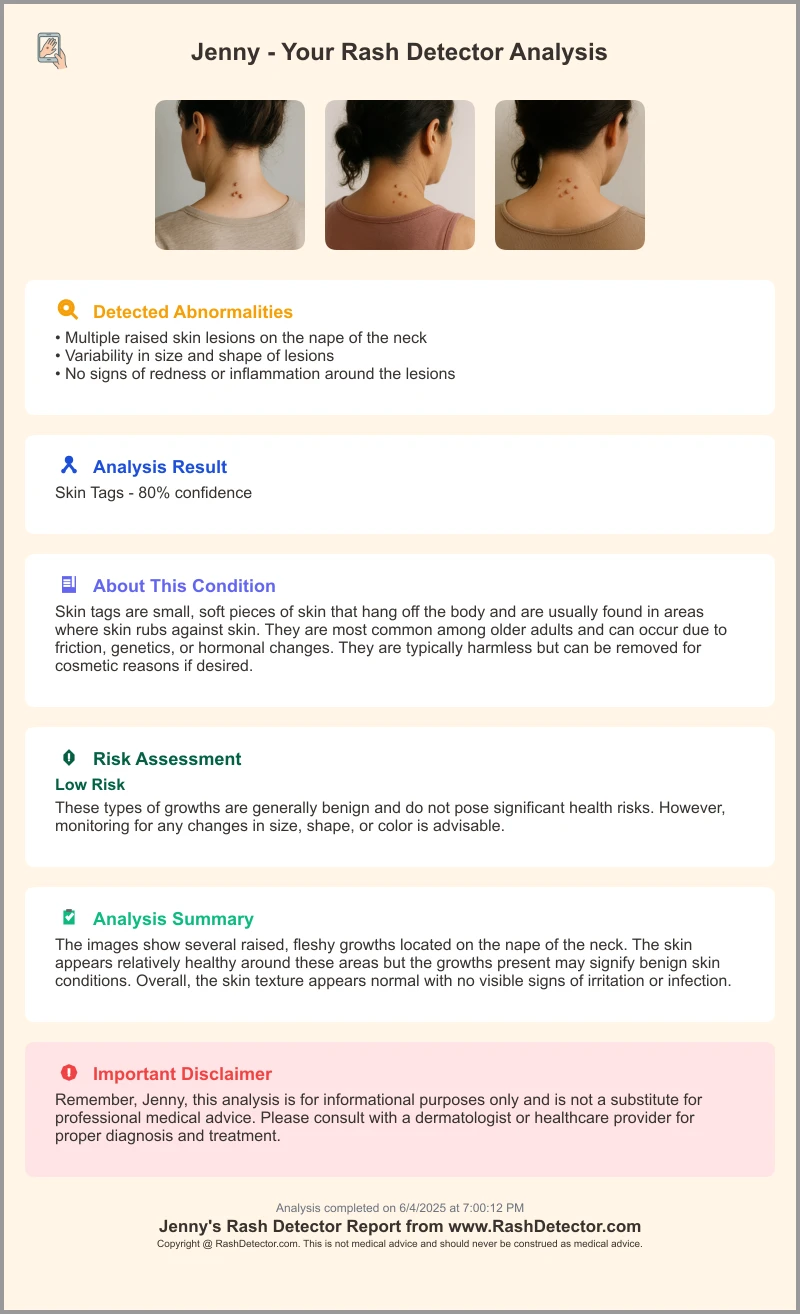
Sample report generated by Rash Detector: image analytics can help you compare your rash to typical patterns for faster triage and education.
Section 3: Differentiating Jawline Acne, Dermatitis, and Folliculitis
Folliculitis and Beard-Area Irritation
Folliculitis is inflammation or infection of hair follicles. On the jawline or chin—especially in people who shave—it’s common and can be triggered by:
- Using dull or dirty razors, which create micro-injuries and introduce bacteria
- Shaving too closely or against the grain, raising risk of ingrown hairs (sometimes called pseudofolliculitis barbae)
- Applying thick creams, beard oils, or greasy products that clog follicles
- Not rinsing thoroughly after shaving or using products with pore-clogging ingredients
Folliculitis appears as small, red or pus-filled bumps, sometimes itchy or tender. The bumps often center around a hair follicle, and may develop a white "head" if pus is present. People with curly or coarse hair may be particularly prone to ingrown hairs, which can look like folliculitis and cause chronic irritation.
In mild cases, folliculitis may resolve with improved shaving techniques and hygiene. More severe or persistent cases may require topical or oral antibiotics prescribed by a healthcare provider.
Is It Acne or a Rash?
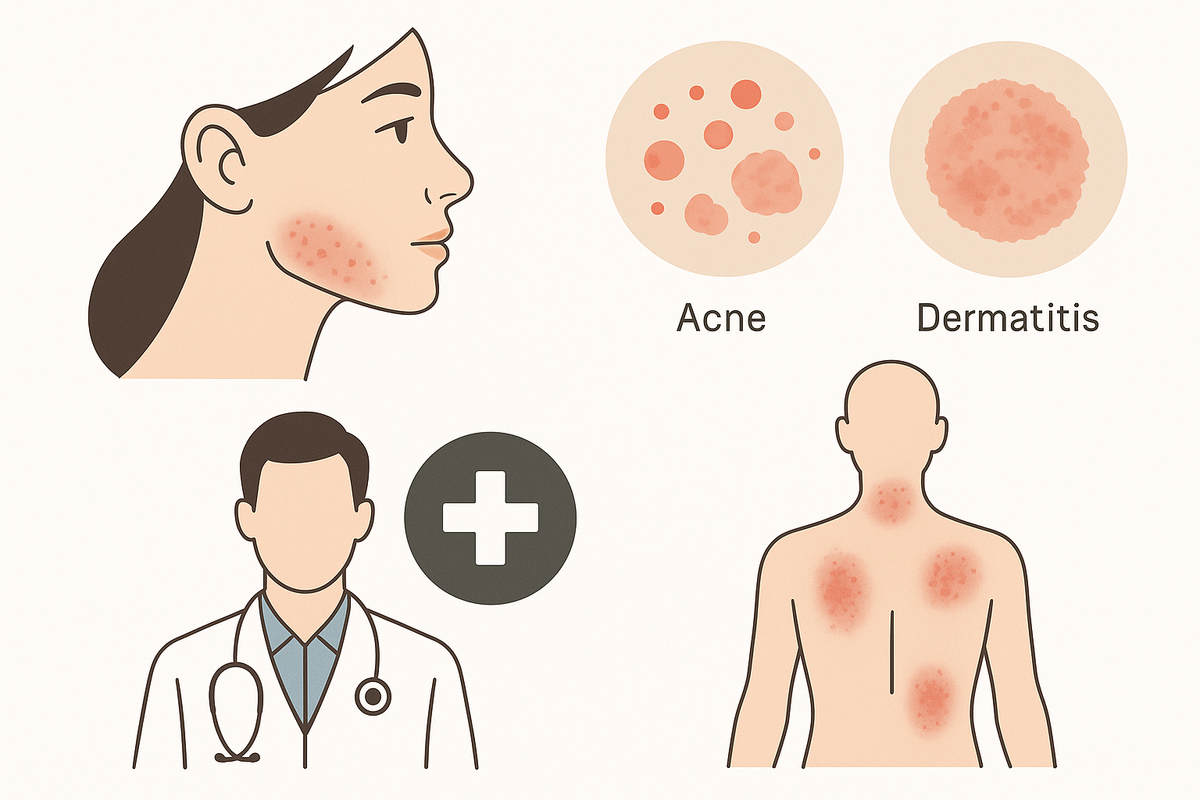
Sometimes, what looks like a "rash under jawline" is actually acne, which tends to be more nodular and less itchy than a typical rash. Key features:
- Acne lesions (comedones, nodules, or cysts) are usually deeper, firmer, and can be painful, but less likely to be intensely itchy.
- Jawline acne is often hormonally driven, especially in women between 20–40 years old.
- Acne can be triggered or worsened by oil-based cosmetics, stress, and frequent mask use.
- Dermatitis, in contrast, tends to be more diffuse, itchy, and red, sometimes with scaling or blistering.
When in doubt, look for blackheads, whiteheads, or deeper lumps—which are classic for acne. If the area is red, itchy, and has no classic acne lesions, consider dermatitis or folliculitis.
Perioral Dermatitis vs. Folliculitis
Both can cause bumps around the mouth and jaw, but:
- Perioral dermatitis usually spares the skin right at the edge of the lips and appears as clusters of small, pink or red bumps, sometimes with dry or flaky skin.
- Folliculitis follows hair follicle lines and is often tender or pustular. The bumps are centered around hairs and may have a visible hair in their center.
Other distinguishing features include:
- Perioral dermatitis may worsen with topical steroid use—if your rash flares after using hydrocortisone, this is a clue.
- Folliculitis is associated with shaving, waxing, or friction and may occur elsewhere hair is dense (scalp, armpits, groin).
If you’re unsure, uploading clear images to Rash Detector can help you compare your rash to typical patterns and get guidance on next steps. However, a dermatologist’s input is essential for persistent or severe rashes.
Section 4: Other Causes – Lumps, Cysts, Boils, and Infections
Swollen Lymph Nodes vs. Skin Rashes
A lump under the jawline may be a swollen lymph node, not a skin rash. Lymph nodes are part of the immune system and react to infections or inflammation nearby (throat, mouth, teeth, scalp). Typical features of swollen lymph nodes:
- Soft, mobile, and tender—usually feel like a small pea or grape beneath the skin
- May appear after a sore throat, dental infection, or upper respiratory illness
- Can persist for days to weeks after infection resolves
See a doctor if:
- The lump is hard, fixed, rapidly growing, or persists longer than 2–3 weeks
- It’s associated with weight loss, night sweats, or high fever
- There are multiple swollen nodes or other unexplained lumps
Boils, Cysts, and Infected Bumps
Sometimes, red, painful lumps under the jawline are boils (furuncles) or cysts:
- Boils: Localized infections of hair follicles, often due to Staphylococcus aureus bacteria. Start as red, tender lumps, become larger and more painful, and may form a "head" that can drain pus.
- Cysts: Benign, slow-growing lumps filled with keratin or oil. Usually painless unless infected. Can feel firm, smooth, and mobile under the skin. Common types in this area are epidermoid or pilar cysts.
- Infected cysts: May become red, swollen, and painful, and can resemble boils. Medical drainage or antibiotics may be needed.
Do not squeeze or attempt to drain boils or cysts at home—this increases risk of spreading infection or scarring. Warm compresses may help, but persistent or worsening cases require medical attention.
Other Bumps: Hives, Insect Bites, and Allergic Reactions
Other causes of jawline lumps or rashes include:
- Hives (urticaria): Rapidly appearing, intensely itchy, raised welts. Can be triggered by allergies (foods, medications, environmental factors) or stress. Welts may move or change shape.
- Insect bites: Typically single, red, itchy bumps with a possible central puncture. Mosquitoes, fleas, or spiders may bite exposed jawline skin.
- Allergic reactions: Swelling and redness after exposure to allergens—such as certain foods, medications, or cosmetics. Severe reactions may cause facial or throat swelling (angioedema)—seek emergency care if you have trouble breathing or swallowing.
For more details on medication-related rashes, see our guide to drug rash treatment. Always consult a healthcare provider if you’re uncertain or have severe symptoms.
Section 5: Rashes by Body Area – Face, Arms, Legs, Chest, and More
Rash on Face and Jawline
Facial rashes are among the most distressing, particularly under the jawline, around the mouth, and on the cheeks. The skin here is exposed, sensitive, and often reacts to environmental factors. Common causes include:
- Acne: Most commonly affects the jawline, chin, and cheeks. Hormonal acne often clusters here, especially in adults.
- Perioral dermatitis: Typically involves the area around the mouth and may extend to the jawline.
- Contact dermatitis: Reactions to skincare, make-up, toothpaste, or mask friction.
- Rosacea: Chronic redness, visible blood vessels, and occasional pimples on the central face and chin, sometimes extending to the jawline.
- Seborrheic dermatitis: Red, flaky patches around the nose, eyebrows, and hairline, occasionally extending to the jaw and beard area.
Location and symmetry (whether the rash is on one or both sides) provide diagnostic clues:
- Symmetrical rashes are more likely to be systemic or allergic.
- Localized or sharply demarcated rashes may be due to contact or frictional causes.
Rash on Arms, Legs, Chest, and Other Areas
While this guide focuses on the jawline, rashes can appear anywhere. Each area has unique risks and common causes:
- Rash on arms: Frequently due to contact allergens (nickel jewelry, plants), eczema (atopic dermatitis), or sun exposure (photodermatitis). Children often develop eczema in the flexures (elbows, behind knees).
- Rash on legs: In adults, often related to shaving, friction, or bug bites. Fungal infections like tinea (ringworm) are more common here, especially in athletes or those with sweaty skin.
- Rash on chest: Causes include heat rash (miliaria), acne, drug reactions, or viral infections (such as chickenpox or shingles).
- Rash on hands: Hands are exposed to repeated washing, sanitizers, and irritants, leading to irritant or allergic contact dermatitis. Small blisters (dyshidrotic eczema) may develop due to stress or moisture.
- Rash between buttocks: Prolonged moisture, friction, or lack of airflow can cause intertrigo (red, sore rash in skin folds), yeast infections, or even pressure sores in those who sit for long periods.
Want to know more about treating rashes in different areas? Visit our in-depth post on skin rash treatment.
Why Rashes Choose Certain Locations
Certain body areas are uniquely predisposed to rashes due to their physiology and exposure:
- High sweat and friction areas: Groin, underarms, under breasts, and between buttocks are prone to fungal and bacterial infections due to warmth and moisture.
- Hormonal hotspots: Jawline, chin, and lower cheeks have more androgen receptors and are more likely to break out with hormonal shifts.
- Hair-dense regions: Beard area, scalp, and pubic region are susceptible to folliculitis, ingrown hairs, and seborrheic dermatitis.
- High-contact zones: Hands, wrists, neck, and face are more exposed to allergens, irritants, and UV light.
Understanding these patterns can help you and your healthcare provider diagnose and prevent future rashes.
Section 6: At-Home Care, Prevention, and When to See a Doctor
At-Home Care for Jawline Rashes
- Wash the area gently with a mild, fragrance-free cleanser. Avoid harsh soaps or scrubbing, which can worsen irritation.
- Avoid scrubbing or using harsh exfoliants. Physical exfoliants (scrubs, brushes) can break the skin barrier and cause micro-injuries.
- Use non-comedogenic moisturizers and sunscreen. Look for labels such as "oil-free," "won't clog pores," or "for sensitive skin." Mineral sunscreens (zinc oxide or titanium dioxide) are less likely to irritate.
- Avoid topical steroids unless directed by a healthcare professional, as they can worsen some rashes (like perioral dermatitis). Overuse can thin the skin and trigger rebound redness.
- If you shave, use a clean razor and shave in the direction of hair growth. Consider using a shaving cream designed for sensitive skin and rinsing well afterward. Do not share razors.
- Apply a cool compress for brief periods to soothe itching or burning, but avoid ice directly on the skin.
- Keep the area dry and avoid occlusive bandages or heavy creams that can trap sweat and bacteria.
- If using beard oils or balms, choose those labeled as non-comedogenic and fragrance-free.
Prevention Tips
- Choose gentle, non-irritating skincare and beard products. Avoid frequent switching between new products, and patch-test unfamiliar items before applying to the jawline or face.
- Rinse off toothpaste residue thoroughly after brushing, and wipe the jawline and chin area to remove any drips or foam.
- Change mask materials if you notice friction or irritation (try cotton or silk inner layers). Wash reusable masks frequently with fragrance-free detergent.
- Keep the area dry and avoid heavy occlusive creams, especially in humid or sweaty environments.
- For itching or discomfort, consider an over-the-counter anti-itch cream (see our guide to anti-itch creams). Hydrocortisone may help with itching but should not be used long-term or on the face without medical supervision.
- Practice good shaving hygiene: replace razors every 5–7 shaves, avoid shaving over irritated skin, and moisturize after.
- Limit use of makeup or heavy skincare on affected areas until the rash resolves. Clean makeup brushes regularly.
- If prone to perioral dermatitis, avoid steroid creams and opt for simple, gentle skincare routines.
When to Seek Medical Care
- Rash is severe, spreading rapidly, or associated with fever, pain, or pus
- Hard, fixed, or rapidly growing lump under the chin or jawline
- Rash lasts more than 2 weeks or keeps coming back
- Difficulty swallowing, breathing, or swelling of face/tongue
- Signs of infection: increasing redness, warmth, swelling, or draining pus
- Unexplained weight loss, night sweats, or other systemic symptoms
Always consult a doctor or dermatologist for diagnosis and treatment, especially if symptoms are severe, persistent, or worsening. Home care can relieve mild cases, but some rashes require prescription treatment or further investigation. If you’re unsure, tools like Rash Detector can provide instant analysis of your rash by uploading images, but they do not replace professional evaluation.
Conclusion
Rashes under the jawline have many possible causes—from acne and perioral dermatitis to folliculitis, contact dermatitis, and infection. The pattern, triggers, and associated symptoms all provide important clues. Because rashes can look similar but require different treatments, it’s crucial to seek medical advice for severe, spreading, or persistent rashes. The location of a rash—whether on the face, arms, legs, chest, or other areas—can guide both diagnosis and care. For those seeking quick, educational analysis, try uploading photos to Rash Detector to see possible causes and next steps. Remember, only a doctor or dermatologist can provide a definitive diagnosis and treatment plan, especially for rashes that are severe, rapidly changing, or not improving with home care.
FAQ
Q: What causes a rash under the jawline?
A: Common causes include jawline acne, perioral dermatitis, folliculitis from shaving, contact dermatitis (from skincare, cosmetics, toothpaste, or masks), allergic reactions, infections, and occasionally, cysts or swollen lymph nodes. The rash's appearance, triggers, and associated symptoms help narrow down the possibilities. Always see a doctor to confirm the cause if the rash is severe, spreading, or persistent.
Q: Is a rash under the jawline acne, folliculitis, or perioral dermatitis?
A: It can be any of these. Acne appears as deeper, sometimes tender bumps (often hormonal), folliculitis shows as small, red or pus-filled bumps from irritated or infected hair follicles (common after shaving), and perioral dermatitis presents as red, bumpy rashes often around the mouth and jaw. A healthcare provider can help distinguish among them with a physical exam and medical history.
Q: Can shaving, beard products, or mask friction cause a jawline rash?
A: Yes. Shaving can cause irritation or folliculitis, beard oils or creams may clog pores or cause contact dermatitis, and mask friction is a frequent trigger of jawline rashes. Using gentle, non-comedogenic products and proper shaving techniques can help prevent these issues. If irritation persists, consider changing products or consulting a dermatologist.
Q: When should I worry about a lump under the chin instead of a rash?
A: If you feel a hard, fixed, or rapidly enlarging lump under your jawline or chin, or if it's associated with pain, fever, or persists beyond a couple of weeks, see a doctor. Swollen lymph nodes can result from infection, but persistent or hard lumps may need further evaluation to rule out serious conditions like tumors or chronic infections.
Q: How do you treat a rash under the jawline at home?
A: Wash the area gently, avoid irritants, use non-comedogenic products, keep it dry, and avoid topical steroids unless prescribed. For itching or mild discomfort, over-the-counter anti-itch creams may help. If the rash worsens or lasts more than 2 weeks, consult a healthcare provider for a thorough evaluation.
Q: When should I see a doctor for a jawline rash?
A: Seek medical care for severe pain, rapid spreading, fever, pus, difficulty swallowing or breathing, a persistent or hard lump, or if the rash lasts longer than 2 weeks. A doctor can provide a definitive diagnosis and appropriate treatment, which may include prescription creams, antibiotics, or further testing if indicated.