Comprehensive Guide to Medication Rash Treatment
Discover effective medication rash treatment techniques, identification methods, and prevention strategies to ensure patient safety and comfort.

Estimated reading time: 8 minutes
Key Takeaways
- Early identification of medication-induced rashes is critical for patient safety and effective treatment.
- Discontinuing the offending drug under medical guidance and documenting rashes helps prevent complications.
- Treatment ranges from topical steroids and antihistamines for mild reactions to systemic therapies and hospitalization for severe cases.
- Understanding patient risk factors and immune mechanisms informs personalized prevention and management.
- Maintaining up-to-date allergy records and vigilant monitoring reduces the risk of future medication rashes.
Table of Contents
- 1. Identification of Medication-Induced Rashes
- 2. Causes and Risk Factors for Medication Rash Treatment
- 3. Steps for Diagnosis and When to Seek Medical Advice for Medication Rash Treatment
- 4. Medication Rash Treatment Options
- 5. Tips for Preventing Future Medication Rashes
- Conclusion
- Additional Resources
- Contact Suggestions
- FAQ
1. Identification of Medication-Induced Rashes
Early recognition is key to effective medication rash treatment. Different rash types have distinct features.
Common Signs and Symptoms
- Rash (flat red or pink spots) – diffuse or localized macules and papules.
- Hives (urticaria) – raised, itchy welts that come and go.
- Itching (pruritus), burning sensation.
- Fever and malaise in systemic reactions.
- Swelling (angioedema) around eyes, lips.
- Blistering or peeling eruptions—vesicles, bullae.
- Mucous membrane involvement—sores in mouth, eyes, genitals.
Types of Drug Rashes
- Exanthematous (morbilliform) eruptions – widespread, symmetric maculopapular rash.
- Fixed drug eruptions – solitary round or oval lesions that recur at the same site with re-exposure.
- Urticarial rashes – transient wheals with central clearing and red halo.
- Severe forms – Stevens-Johnson syndrome (SJS) and toxic epidermal necrolysis (TEN) with mucocutaneous sloughing and high morbidity.
Differentiating from Other Skin Issues
- Timing – rash onset days to weeks after starting the suspect drug.
- Distribution – symmetric pattern often on trunk and limbs.
- Absence of infection signs – no bacterial cultures or viral PCR positivity.
- Medication history – correlation between new drug intake and rash timeline.
2. Causes and Risk Factors for Medication Rash Treatment
Understanding triggers and patient susceptibilities helps tailor prevention and treatment.
Common Drug Triggers
- Antibiotics – penicillins, cephalosporins, sulfa drugs often cause exanthematous eruptions or urticaria.
- Chemotherapy agents – taxanes, anthracyclines can lead to severe cutaneous adverse reactions.
- Anticonvulsants – phenytoin, carbamazepine linked to SJS/TEN via T-cell–mediated pathways.
- Non-steroidal anti-inflammatory drugs (NSAIDs) – ibuprofen, naproxen trigger urticaria or fixed eruptions.
- Herbal supplements – several botanicals may provoke immunologic drug reactions.
Patient-Related Risk Factors
- Prior drug allergy or rash history – increases chance of recurrence.
- Immune-mediated hypersensitivity – Types I–IV responses, from immediate mast cell degranulation to delayed T-cell reactions.
- Genetic predispositions – certain HLA alleles (e.g., HLA-B*15:02) raise SJS/TEN risk with carbamazepine.
- Age and comorbidities – elderly patients or those with HIV/autoimmune disease face higher risk.
Immune Mechanisms
- Type I hypersensitivity – IgE-mediated mast cell activation produces histamine, leading to hives and angioedema.
- Type IV hypersensitivity – T-cell–driven delayed reactions cause maculopapular rashes or severe mucocutaneous necrosis.
For a detailed look at symptoms and management, see Identifying and Managing Drug-Induced Rash Symptoms.
3. Steps for Diagnosis and When to Seek Medical Advice for Medication Rash Treatment
Accurate diagnosis underpins effective medication rash treatment. Follow these steps:
Self-Assessment Guidelines
- Note rash timing – record hours or days after starting the medication.
- Document appearance – photograph lesions, note color, shape, size, and distribution.
- Use a structured, time-stamped approach—learn more in How to Track Rash Progress Pictures.
- Record associated symptoms – itching, fever, swelling, blistering, mucosal involvement.
- Check red-flag signs – difficulty breathing, facial or tongue swelling, high fever, blistering, sloughing.
Preliminary Steps Before Consulting a Doctor
- Stop non-essential suspect medication under clinician supervision.
- Photograph the rash with date stamps for medical records.
- Compile a full list of medications including over-the-counter drugs and supplements.
- Track rash progression daily in a symptom diary.
Importance of Professional Diagnosis
- Medical history review – clinician correlates drug timeline with rash onset.
- Physical exam – dermatologist or allergist evaluates morphology and pattern.
- Diagnostic tests – patch testing or skin biopsy to confirm drug hypersensitivity.
- Specialist referrals – allergist for immunologic evaluation, dermatologist for severe mucocutaneous cases.
Urgent Care Criteria
- Anaphylaxis signs – wheezing, hypotension, stridor.
- Stevens-Johnson syndrome or toxic epidermal necrolysis features – widespread blistering, mucous membrane erosion.
- High fever or systemic involvement – arthralgia, malaise, organ dysfunction.
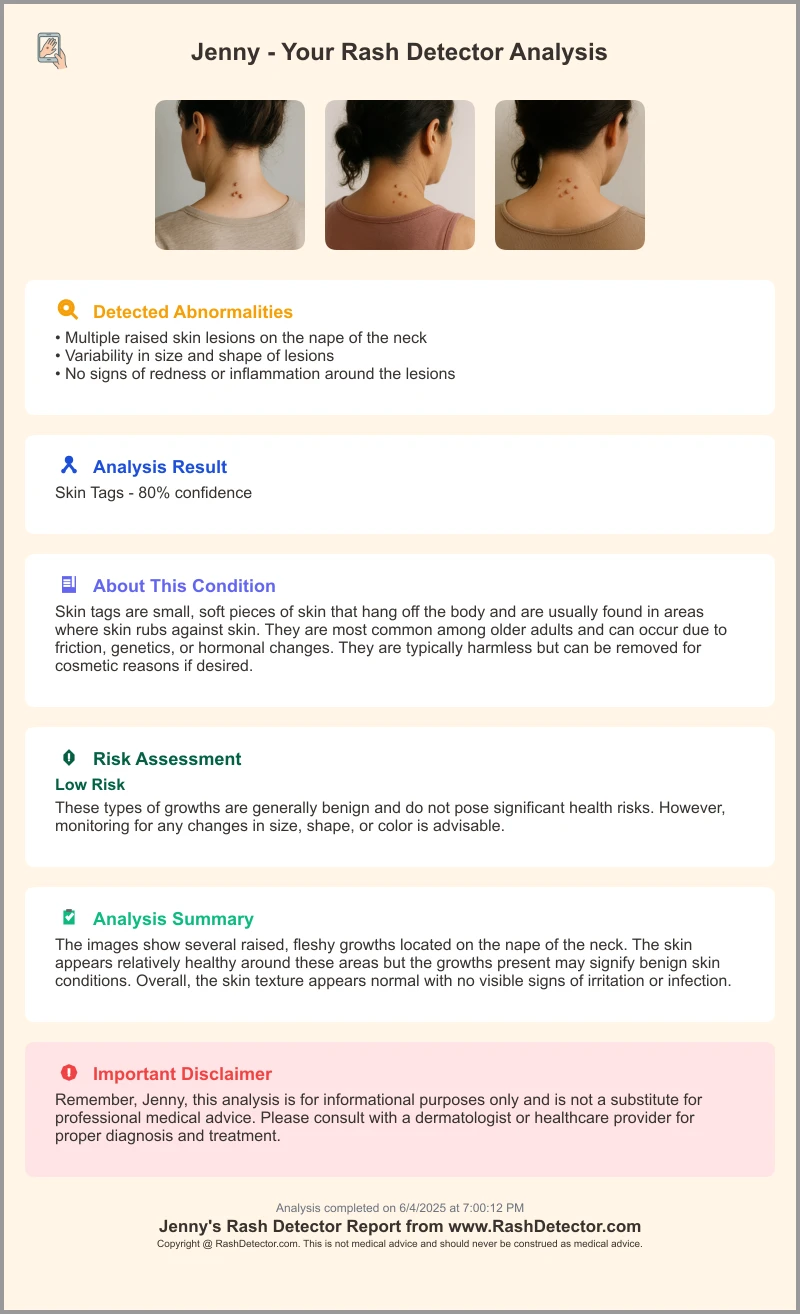
For additional support outside the clinic, consider uploading images of your rash to Rash Detector for an AI-driven report in minutes. While not a substitute for professional evaluation, this quick analysis can help you track changing features over time.
4. Medication Rash Treatment Options
Effective medication rash treatment depends on severity and rash type.
1. Discontinue Suspected Medication
- First and most important step: stop the offending drug under clinician guidance.
- Substitute with an alternative if therapy is essential.
2. Mild Reaction Management
- Oral antihistamines – cetirizine, diphenhydramine for pruritus relief.
- Topical corticosteroids – 1% hydrocortisone cream applied twice daily.
- Emollients and moisturizers – maintain skin barrier and reduce dryness.
- Cool compresses and colloidal oatmeal baths – soothe inflamed skin.
- Patient tip – wear loose cotton clothing and avoid hot showers.
3. Moderate to Severe Reactions
- Systemic corticosteroids – prednisone taper (e.g., 0.5–1 mg/kg per day) for widespread inflammation.
- Hospitalization – required for Stevens-Johnson syndrome or toxic epidermal necrolysis.
- – IV fluids, wound care in a burn unit.
- – Pain management and nutritional support.
- Specialist therapies – IV immunoglobulin or cyclosporine in selective severe cases.
- Monitor for secondary infections – use prophylactic antibiotics only if bacterial superinfection occurs.
4. Supportive Care
- Hydration and electrolyte balance – monitor intake/output in hospitalized patients.
- Pain control – non-sedating analgesics, topical anesthetics for painful lesions.
- Psychological support – severe reactions may cause anxiety; involve mental health services if needed.
5. Tips for Preventing Future Medication Rashes
Proactive strategies reduce the risk of recurrence and ensure safe prescribing.
Maintain Up-to-Date Allergy Records
- Inform all healthcare providers of any past drug reactions.
- Use an allergy list in your patient portal or paper record.
- Wear a medical alert bracelet or carry an allergy card.
Consider Formal Allergy Testing
- Skin patch testing for suspected delayed hypersensitivities.
- HLA screening before starting high-risk drugs (e.g., carbamazepine in certain ethnicities).
- Consult an allergist for detailed immunologic evaluation.
Vigilant Monitoring with New Medications
- Check skin daily for the first 2–4 weeks after starting a new drug.
- Report any itching, redness, or rash immediately to your provider.
- Ask about alternative medications with a lower rash risk if you have prior reactions.
Enhance Communication
- Discuss medication risks and benefits with prescribers.
- Clarify drug names, dosing schedules, and common side effects.
- Use digital tools or apps to set reminders and track symptoms.
- For more preventive strategies, see 10 Expert Tips to Prevent Recurring Rashes and Maintain Healthy Skin.
Conclusion
Prompt identification, accurate diagnosis, and personalized medication rash treatment are vital for patient safety. The critical first step is stopping the offending drug under medical guidance and seeking professional evaluation. From mild cases managed with antihistamines and topical corticosteroids to severe reactions requiring hospitalization and systemic therapy, tailored approaches enhance outcomes. Preventive actions—maintaining updated allergy lists, formal testing, and vigilant monitoring—minimize future risks. Bookmark reliable resources and consult healthcare providers immediately if you suspect a medication rash. Timely intervention not only alleviates discomfort but also safeguards health.
Additional Resources
- Johns Hopkins Medicine – Drug Rashes
- Stanford Children’s Health – Drug Rash Diagnosis & Treatment
- Mayo Clinic – Drug Allergy Symptoms & Causes
- Harvard Health – When Is a Drug Rash More Than Just a Rash
- Cleveland Clinic Journal of Medicine – Severe Drug Rash Recognition & Management
Contact Suggestions
- Local dermatology clinics – find board-certified dermatologists via the American Academy of Dermatology website.
- Allergy and immunology centers – consult the American College of Allergy, Asthma & Immunology directory.
- Patient support forums – join Drug Allergy Support Groups on Facebook or patient.info.
FAQ
Q: How can I tell if a rash is caused by a medication?
A: Medication rashes often appear days to weeks after starting a drug, are symmetrically distributed, lack infection signs, and align with your medication history.
Q: When should I seek emergency care for a drug rash?
A: Go to the emergency department if you experience breathing difficulty, facial swelling, widespread blistering or skin peeling, high fever, or systemic symptoms like hypotension.
Q: Are there ways to prevent medication-induced rashes?
A: Yes. Maintain up-to-date allergy records, consider formal allergy testing, screen for high-risk HLA alleles, and monitor your skin closely when starting new medications.
Q: What treatments are recommended for mild versus severe rashes?
A: Mild rashes can be managed with oral antihistamines, topical corticosteroids, emollients, and cool compresses. Severe reactions may require systemic steroids, hospitalization, IV immunoglobulin, and specialized wound care.
Q: Should I undergo allergy testing after experiencing a drug rash?
A: Consulting an allergist for skin patch testing or immunologic evaluation can identify specific drug sensitivities and guide future safe prescribing.