The Critical Role of Data Encryption in Dermatology Apps
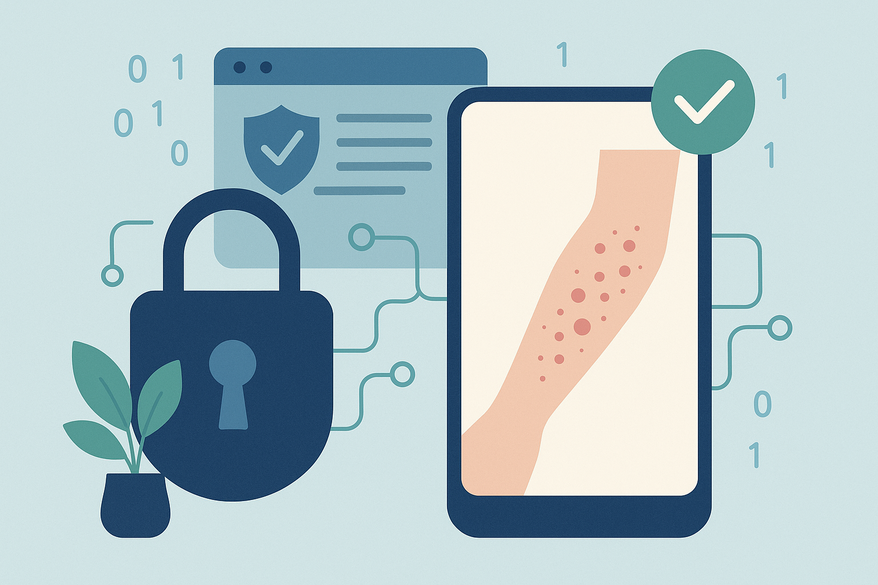
Discover the importance of data encryption in dermatology apps for secure rash detection, ensuring compliance and user privacy while building trust.
Estimated reading time: 8 minutes
Key Takeaways
- Data encryption remains essential for protecting sensitive skin-health data in teledermatology and rash detection apps in 2026.
- End-to-end encryption and AES-256 at rest are widely used approaches to help uphold HIPAA, GDPR, and new privacy regulations.
- Balancing robust security with seamless user experience is important for patient trust and engagement.
- Emerging methods like homomorphic encryption, quantum-resistant algorithms, and secure enclave hardware are influencing the future of medical app security.
Table of Contents
- Overview of Dermatology and Rash Detection Apps
- Importance of Data Encryption
- End-to-End Encryption and Secure Storage
- HIPAA and GDPR: Privacy and Data Security
- Balancing Security and User Experience
- Case Study: Teledermatology Platforms
- Future Trends in Encryption
- Conclusion
- Call to Action
- FAQ
1. Overview of Dermatology Apps and Rash Detection Apps
Dermatology and rash detection apps in 2026 continue to change how users manage skin health. Powered by advanced AI and deep learning, these apps can analyze high-resolution images, log symptoms, and facilitate secure teleconsultations. The typical personal health information (PHI) collected includes:
- Skin photos (JPEG, PNG, and now HEIF formats)
- Medical history, allergies, and medication lists
- User identity details (name, age, contact info, sometimes biometric data for login)
- Prescription records and follow-up notes
With the volume and sensitivity of this data increasing, encryption is important for protecting pixel data, metadata, and personal records. This helps preserve user confidentiality and is also a legal and ethical consideration.
2. Importance of Data Encryption in Dermatology Apps
Encryption transforms readable health records into ciphertext, ensuring only authorized parties can access them. Key benefits include:
- Protection of PHI under HIPAA, GDPR, and updated global privacy regulations
- Defense against man-in-the-middle attacks during image uploads and video consultations
- Assurance of data integrity, helping prevent tampering or unauthorized modifications
- Enhanced patient trust, encouraging accurate and honest reporting
In 2026, strong cryptographic protocols and secure key management are widely used to help prevent data leaks and demonstrate a commitment to privacy and user safety. ConsentZ
3. End-to-End Encryption and Secure Storage
Multi-layered encryption in today’s teledermatology apps may involve:
- End-to-End Encryption:
- Device-level encryption at the moment of image capture
- TLS 1.3+ for encrypted data transmission (including QUIC protocol support for faster, more secure transfers)
- Clinician-only decryption keys, sometimes stored in secure hardware enclaves
- Secure Data Storage:
- AES-256 encryption-at-rest on cloud servers, often with region-specific data residency
- Segregated, encrypted databases for health images and user data
- Hardware Security Module (HSM)-based key vaults or cloud-native key management services for cryptographic keys
- Automated key rotation (every 60–90 days is a common practice)
Common protocols in 2026:
- AES – Symmetric block cipher with 256-bit keys (recognized by NIST and EU eIDAS).
- RSA/ECC – Asymmetric encryption for secure key exchange and digital signatures, with ECC (Elliptic Curve Cryptography) increasingly used for mobile efficiency.
4. HIPAA and GDPR: Privacy and Data Security
Regulatory frameworks continue to require strong safeguards:
- HIPAA – Encryption is an “addressable” Security Rule measure; breach notification is mandatory for incidents affecting over 500 individuals. The 2025 HIPAA update is expected to clarify encryption standards for cloud and AI use.
- GDPR – “Data protection by design and by default” encourages encryption at all stages, secure deletion, and data portability. The 2026 EU Digital Health Act is anticipated to further mandate transparency in AI-driven health apps.
- Other regions – Countries like Canada, Australia, and Japan have introduced their own digital health privacy laws requiring similar or stronger encryption for medical apps.
Encrypted data is unreadable if intercepted, which can help minimize breach impacts and demonstrate proactive privacy protection. Rash Detector Privacy
5. Balancing Security and User Experience
Strong encryption should be seamless and user-friendly. Current best practices include:
- Biometric Login: Fingerprint, Face ID, and Palm ID for instant, secure access
- Hardware-Accelerated Encryption: AES and ECC offloaded to device security chips (e.g., Apple Secure Enclave, Android StrongBox)
- Session Caching: Temporary key caching reduces repeated authentication prompts while maintaining security
- Transparent Privacy Prompts: Plain-language explanations of security benefits and data handling, with interactive consent management
- Granular Permissions: Users can control which data is shared, with real-time audit trails
By making encryption invisible and intuitive, developers can help ensure a smooth experience while protecting sensitive health information.
6. Case Study: Data Encryption in Teledermatology
Verified Medical
- End-to-end encryption of patient images and clinical notes
- AES-256 at rest on HIPAA- and GDPR-certified cloud infrastructure
- Role-based access control with biometric authentication for clinicians
- Automated key rotation every 60 days
Skinive
- Device encryption isolating photos and AI analysis results
- TLS 1.3+ and QUIC for secure, low-latency data transfer
- Automated key rotation and secure enclave storage for decryption keys
7. Homomorphic Encryption and Future Trends
Several advanced techniques are being explored in 2026:
- Homomorphic Encryption: Enables AI analysis on encrypted data without decrypting it, which can help preserve privacy during diagnosis and research
- Quantum-Resistant Algorithms: Lattice-based and post-quantum cryptography are being developed to defend against potential future quantum computing threats; NIST's post-quantum cryptography standards are being considered in new apps
- Secure Multi-Party Computation: Allows collaborative diagnostics and research across multiple institutions without exposing raw patient data
- Federated Learning: AI models are trained on-device, and only encrypted model updates are shared, minimizing data movement
Early adoption of these technologies may set new benchmarks for privacy and security in digital health. (See NIST post-quantum cryptography initiatives for the latest standards.)
8. Conclusion: Data Encryption in Dermatology Apps
Robust encryption—from AES-256 to end-to-end tunnels—remains a foundation for secure, compliant, and trustworthy dermatology and rash detection apps. As threats evolve, homomorphic encryption and quantum-safe schemes may become increasingly important. Investing in strong encryption today can help support safe, user-friendly teledermatology in the future.
Important: Rash Detector and similar apps provide general information only. For a diagnosis or treatment, especially for severe, spreading, painful, or persistent rashes, always consult a doctor or dermatologist.
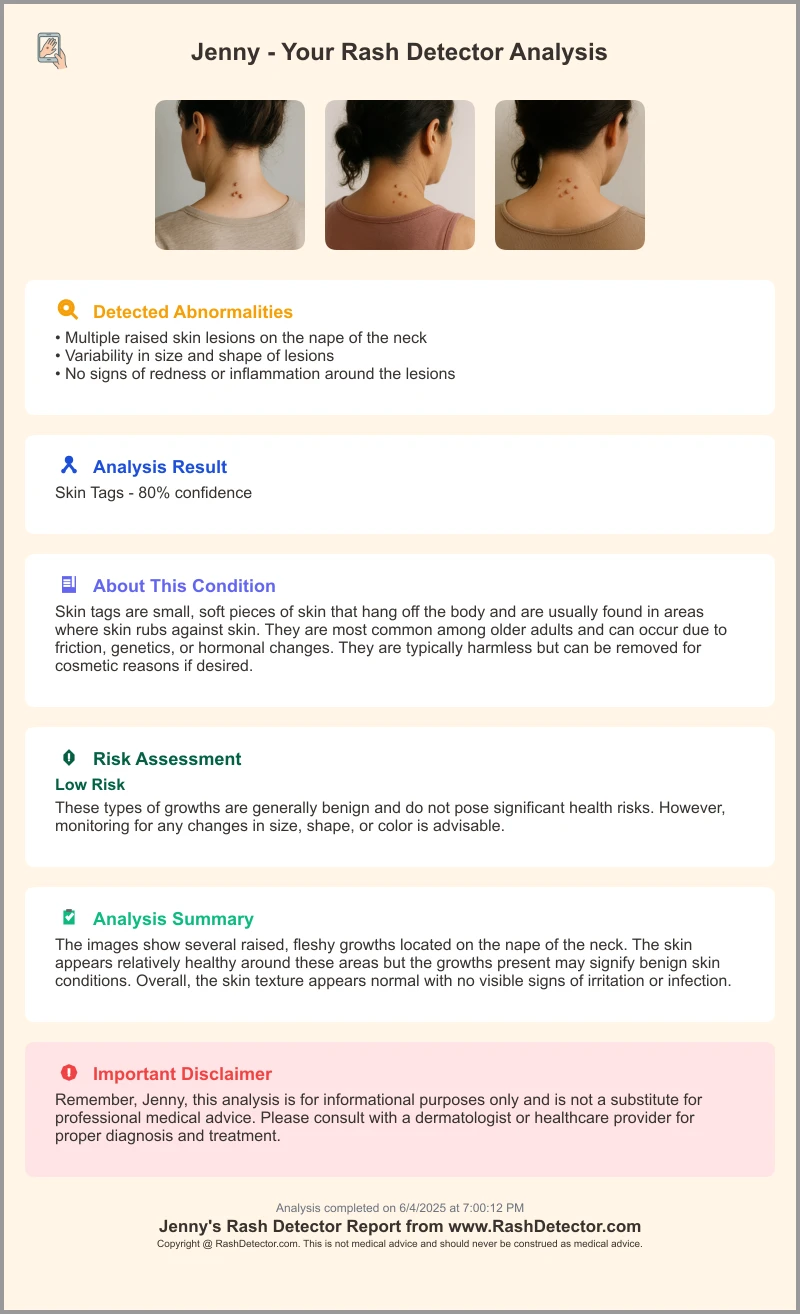
For a practical glimpse, see the sample report generated by Rash Detector.
9. Call to Action: Healthcare Data Security
What are your experiences or concerns about data privacy in dermatology or rash detection apps? Share your thoughts in the comments below.
Further Reading:
FAQ
- Why is encryption critical in dermatology apps?
It helps protect sensitive PHI—like skin photos and medical history—from unauthorized access and supports regulatory compliance. - What is AES-256?
Advanced Encryption Standard with 256-bit keys, used to help secure data at rest in cloud servers and on devices. - How does end-to-end encryption work?
Data is encrypted on the user’s device, transmitted securely via TLS/SSL, and only decrypted by authorized clinicians or systems. - Can encryption affect app performance?
Minimal latency can occur, but hardware-accelerated encryption and session caching in modern devices help keep apps fast and responsive. - What future encryption trends should I watch?
Homomorphic encryption, quantum-resistant algorithms, secure multi-party computation, and federated learning are emerging solutions. - Should I rely on an app for diagnosis?
No. Apps like Rash Detector provide educational information only. For diagnosis or treatment—especially for severe, spreading, or persistent symptoms—see a doctor or dermatologist.