AI Skin Check for Nurses: Improve Rash Diagnosis with AI Tools
AI skin check for nurses offers fast, accurate rash analysis and triage to reduce wait times and improve patient care in primary settings.

Estimated reading time: 18 min
Key Takeaways
- AI skin check tools can assist nurses in assessing rashes and skin lesions, potentially supporting timely clinical decisions.
- These tools may help improve triage decisions and support prioritization of urgent cases in primary care settings.
- AI can aid in detection of skin cancers, inflammatory conditions, pressure injuries, and wound status using trained algorithms.
- Integration into nursing workflows may enhance documentation, communication, and referral prioritization, potentially saving time and resources.
- Training and awareness of AI limitations are essential for effective and responsible use by nurses, ensuring patient safety.
Table of Contents
- Section 1: Understanding AI Skin Check for Nurses
- Section 2: AI-Assisted Triage and Rash Detection
- Section 3: Skin Cancer and Mole Assessment with AI
- Section 4: AI for Inflammatory Skin Conditions and Wound Assessment
- Section 5: Workflow Integration and Referral Reduction
- Section 6: Safety, Limitations, and Training Considerations
Conclusion
FAQ
Section 1: Understanding AI Skin Check for Nurses
What is AI Skin Check?
AI skin check refers to the use of artificial intelligence algorithms, particularly those based on deep learning and convolutional neural networks, to analyze images of skin rashes, lesions, or other dermatological conditions. Nurses can upload photographs taken with smartphones or digital devices during clinical encounters, and the AI provides suggested assessments, risk stratification, and management guidance. These algorithms have been trained on large datasets of dermatological images, spanning diverse skin types, ages, and conditions, enabling them to recognize patterns and suggest likely causes and urgency levels.
For example, a nurse capturing an image of a new rash may receive feedback from the AI about whether the presentation is consistent with benign eczema or a potentially serious drug reaction that requires urgent evaluation. The AI can also flag suspicious moles or ulcerated lesions that may warrant biopsy. This decision support can enhance the nurse's ability to triage and manage skin complaints effectively.
Why Use AI Skin Check in Nursing?
Nurses are often the first point of contact for patients presenting with skin complaints in primary care, emergency rooms, or telehealth settings. However, many such settings lack immediate access to dermatologists, leading to delays in diagnosis and treatment. AI skin check tools may empower nurses to make better-informed decisions on triage, documentation, and referrals, potentially improving patient outcomes and optimizing healthcare resource utilization.
Moreover, AI tools can reduce some diagnostic uncertainty that nurses face when encountering unfamiliar or complex skin conditions. By providing evidence-based, standardized assessments, AI supports consistent evaluation and can help nurses identify red flags that merit urgent attention. This is especially valuable in rural or underserved areas where dermatology specialists are scarce.
Key Features of AI Tools for Nurses
- Rapid image-based analysis with instant feedback: AI can analyze uploaded images quickly, providing decision support during patient encounters.
- Identification of common rashes, infections, and suspicious moles: Algorithms recognize a wide spectrum of dermatological conditions, including inflammatory, infectious, neoplastic, and traumatic skin changes.
- Decision support for prioritizing urgent cases: AI classifies lesions by urgency categories (e.g., urgent referral, routine follow-up, watchful waiting), guiding triage and management.
- Integration with electronic health records and reporting: AI tools can generate structured reports that can be incorporated into patient records, supporting documentation and communication with other providers.
- Patient-friendly interfaces for teledermatology consultations: Some AI platforms enable patients to submit images remotely, facilitating virtual triage and monitoring.
These features collectively may enhance nursing efficiency, accuracy, and confidence when managing skin complaints.
Section 2: AI-Assisted Triage and Rash Detection
How AI Supports Rash Triage
AI skin check tools assist nurses by classifying lesions or rashes into categories such as urgent, non-urgent, or requiring specialist referral. This triage can help prioritize patients needing immediate care, such as those with suspected infections, drug eruptions, or skin cancers, versus benign inflammatory conditions that can be managed conservatively.
For example, a nurse evaluating a patient with a rash can upload images to the AI system, which then analyzes key features — such as distribution, color, morphology, and associated symptoms — to suggest whether the rash may represent a serious drug reaction (e.g., Stevens-Johnson Syndrome), an infectious process like cellulitis, or an eczema flare. Based on this assessment, the nurse can decide whether to initiate urgent referral, prescribe topical treatment, or monitor symptoms.
This decision support is especially valuable in telehealth settings where physical examination is limited. AI helps compensate for the lack of in-person assessment by providing objective image-based analysis, augmenting clinical judgment.
Common Rashes Detected by AI
AI models have been trained to recognize a broad range of inflammatory and infectious skin conditions commonly encountered in nursing and primary care. Examples include:
- Acne and rosacea: Differentiating papulopustular lesions from other eruptions for appropriate treatment.
- Eczema and psoriasis: Identifying characteristic plaques, scaling, and distribution patterns.
- Drug rashes and allergic reactions: Recognizing maculopapular eruptions, urticaria, and more severe presentations.
- Heat rash and contact dermatitis: Detecting localized rash patterns related to irritants or environmental factors.
- Fungal infections: Identifying tinea corporis, candidiasis, and other superficial mycoses.
For instance, the Drug Rash Causes and Symptoms guide complements AI findings by educating nurses on typical presentations, risk factors, and management approaches. This integrated approach may enhance nurses' ability to differentiate between benign and potentially serious rashes, reducing unnecessary referrals and improving patient safety.
Accuracy and Sensitivity in Rash Detection
Some AI models have demonstrated diagnostic accuracy approaching that of experienced clinicians in identifying common skin conditions. Published validation studies report sensitivities often exceeding 80% for urgent lesions, such as cellulitis or drug eruptions, aiming to minimize false negatives that could delay critical treatment. Specificity may vary, with some false positives leading to cautious referral, which errs on the side of safety.
It is important to note that AI performance depends on image quality, lighting, and diversity of training datasets. Algorithms trained on diverse skin types and conditions are generally more reliable across populations. Nurses must remain vigilant for atypical presentations or symptoms not captured in images, such as systemic signs or pain.
Ultimately, AI serves as an adjunct to nursing assessment, supporting but not replacing clinical judgment. Combining AI insights with patient history and physical examination leads to the best outcomes.
Section 3: Skin Cancer and Mole Assessment with AI
AI for Melanoma and Skin Cancer Screening
One of the potential uses of AI skin check tools for nurses is early detection of skin cancer, including melanoma, basal cell carcinoma, and squamous cell carcinoma. AI algorithms analyze mole shape, color variation, asymmetry, and texture to flag suspicious lesions that may require biopsy or specialist evaluation.
For example, a nurse performing a routine skin check or responding to a patient concern can capture images of moles and receive a risk assessment from the AI. The system highlights features such as irregular borders, multiple colors, or rapid changes, which are hallmarks of malignancy. This supports nurses in making timely dermatology referrals, potentially reducing diagnostic delays that impact prognosis.
In clinical practice, AI tools have demonstrated relatively high sensitivity for melanoma detection, often exceeding 80%, with specificity varying between 70-80%, which helps balance early detection with minimizing unnecessary biopsies. This technology can augment nurses’ ability to screen effectively, especially when access to dermatologists is limited.
Using the ABCDE Rule with AI Assistance
The ABCDE rule (Asymmetry, Border, Color, Diameter, Evolving) is a widely accepted clinical guide for mole assessment. AI tools incorporate these criteria and provide visual reports highlighting each feature’s presence or absence. For example, the AI may show an overlay outlining asymmetric areas, irregular borders, or color heterogeneity in the lesion.
Nurses trained in the ABCDE rule can use AI as a second opinion to improve diagnostic confidence. This combined approach helps identify lesions that may otherwise be overlooked during busy clinical workflows. Educational resources such as What Is the ABCDE Rule for Moles? provide detailed explanations and examples to support nurse training.
Furthermore, AI can track changes over time by comparing sequential images, aiding in monitoring evolving lesions. This longitudinal assessment may be helpful in identifying malignant transformation early.
Reducing Missed Diagnoses and Wait Times
By enabling early screening in primary care, AI skin check tools may help reduce delays in melanoma diagnosis. Nurses can identify high-risk patients faster and prioritize urgent dermatology referrals, potentially improving survival outcomes. For example, melanomas detected at an early stage (in situ or thin lesions) have a higher 5-year survival rate compared to late-stage melanomas.
This technology also helps manage specialist workloads by filtering out benign lesions, reducing unnecessary biopsies and clinic appointments. Some studies suggest that AI-assisted triage can decrease dermatology wait times in high-demand settings, improving overall patient flow.
In summary, AI-supported mole assessment can empower nurses to contribute meaningfully to skin cancer prevention and early detection efforts.
Section 4: AI for Inflammatory Skin Conditions and Wound Assessment
Evaluating Common Inflammatory Conditions
AI skin check apps analyze images to detect acne severity, eczema flare-ups, psoriasis plaques, and rosacea patterns. For example, AI can quantify lesion counts, erythema intensity, and scaling severity, which supports nurses in monitoring disease progression and response to treatment over time.
This objective grading may enable more precise tailoring of treatment plans. For instance, recognizing worsening eczema early can prompt timely medication adjustments, such as increasing topical corticosteroids or initiating systemic therapy referrals. Similarly, tracking psoriasis plaque extent aids in assessing the need for phototherapy or biologic agents.
AI tools may also detect subtle changes that are difficult to appreciate visually, such as early inflammation or secondary infection signs, enhancing clinical vigilance.
Pressure Injury and Wound Integrity Assessment
Beyond rashes, AI tools assist nurses in evaluating pressure ulcers and wound healing status. Image analysis can grade injury severity using standardized scales such as the National Pressure Injury Advisory Panel (NPIAP) staging system, detect infection signs like increased erythema or exudate, and document changes over time with photographic records.
This supports evidence-based wound care, enabling nurses to adjust dressing types, implement offloading strategies, or escalate care promptly. For example, detecting early stage 2 pressure injury can trigger pressure relief interventions before ulcer progression.
AI tools can also facilitate remote wound monitoring in home care or telehealth scenarios, reducing the need for frequent in-person visits while maintaining high-quality assessment.
Supporting Patient Education and Treatment
AI-generated reports provide understandable explanations of skin conditions tailored for patients. Nurses can use these visual and textual summaries to educate patients about disease mechanisms, expected course, and treatment rationale, reinforcing clinical advice.
For example, combining AI assessments with resources like the Skin Rash Treatment guide may empower better self-care by helping patients recognize triggers, adhere to medication regimens, and identify warning signs requiring medical attention. This patient engagement can improve outcomes and satisfaction.
Section 5: Workflow Integration and Referral Reduction
Seamless Documentation and Reporting
AI skin check tools integrate with nursing workflows by generating structured, standardized reports that can be added directly to electronic health records (EHRs). These reports typically include high-resolution images, AI-generated diagnostic suggestions, risk stratification, and recommended next steps.
This integration may reduce administrative burden by automating documentation that would otherwise require manual input. It also ensures clear, consistent communication with dermatologists and other healthcare providers, facilitating coordinated care. For example, a nurse performing a teledermatology consult can submit the AI report alongside patient history, expediting specialist review.
Decision Support for Referral Prioritization
AI helps nurses decide which patients require urgent specialist evaluation versus those suitable for watchful waiting or primary care management. By classifying lesions by risk, AI supports task shifting, enabling nurses to manage low-risk cases independently and refer high-risk cases promptly.
This prioritization may optimize resource use by preventing unnecessary referrals that contribute to specialist clinic overload. For instance, an AI system may flag a suspicious mole with high melanoma risk, triggering immediate referral, while deeming common acne exacerbations appropriate for primary care follow-up.
Reducing Dermatology Wait Times
By filtering out low-risk cases and fast-tracking suspicious lesions, AI-assisted nursing assessment may decrease dermatology clinic backlog. This can lead to shorter wait times for patients with serious conditions and reduced healthcare costs.
Some health systems report reductions in wait times after AI implementation, with corresponding improvements in patient satisfaction and outcomes. Furthermore, AI facilitates remote triage and monitoring, allowing efficient management of chronic skin conditions without frequent in-person visits.
Section 6: Safety, Limitations, and Training Considerations
Safety and Accuracy Considerations
AI tools for skin assessment are designed as decision support, not definitive diagnosis. Nurses should always corroborate AI findings with clinical evaluation, patient history, and physical examination. Severe, spreading, painful, or persistent symptoms require immediate physician or dermatologist consultation.
It is critical to emphasize that AI may miss rare or atypical presentations and cannot assess systemic features such as fever or lymphadenopathy. Therefore, clinical vigilance is mandatory. Nurses must educate patients about the limitations and the importance of follow-up when symptoms evolve.
Limitations of AI Skin Check
- Potential false positives or negatives: AI may misclassify rare or atypical conditions, leading to unnecessary referrals or missed diagnoses.
- Dependence on image quality and lighting conditions: Poor photo quality, shadows, or artifacts can reduce accuracy.
- Limited ability to assess symptoms beyond visual signs: AI cannot evaluate pain, itching, or systemic manifestations.
- Bias in training datasets: AI trained predominantly on lighter skin types may underperform in darker skin tones, highlighting the need for diverse data.
Understanding these limitations is critical to safe use in nursing practice and patient safety.
Training and Scope-of-Practice
Effective AI use requires nurses to be trained in dermatological basics, image capture techniques, and interpretation of AI reports. Training should cover:
- Proper photography methods to ensure image clarity, lighting, and focus
- Recognition of common skin conditions and their clinical features
- Understanding AI-generated risk scores and how to integrate them into decision-making
- Awareness of AI limitations and when to escalate care
Incorporating AI into nursing scope-of-practice policies ensures appropriate oversight and accountability. Ongoing education and clinical supervision support confident, responsible use.
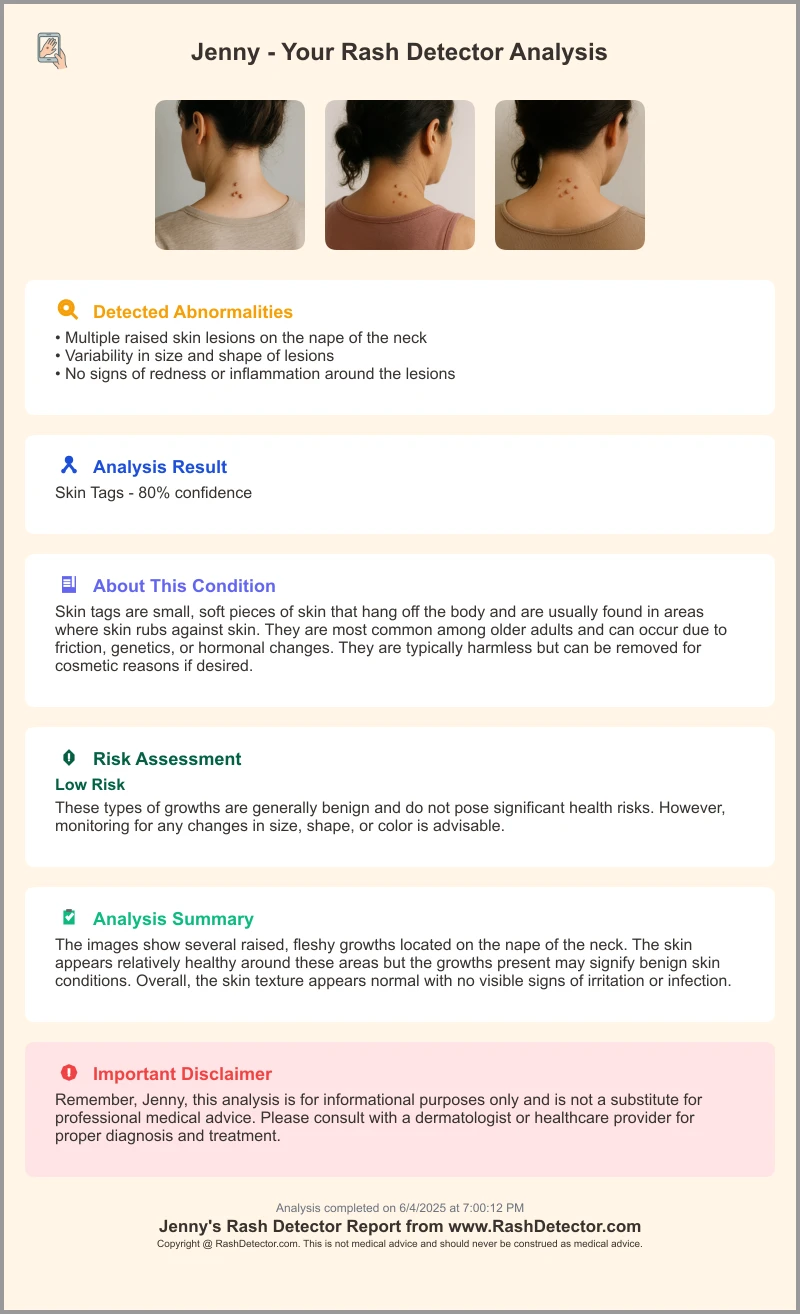
For nurses interested in exploring AI-assisted skin assessment, tools like Rash Detector offer user-friendly platforms designed to enhance rash diagnosis and patient care with intuitive interfaces and comprehensive support materials.
Conclusion
AI skin check technology is evolving and has the potential to support nursing practice by enabling rapid assessment of rashes, moles, and wounds. It may aid early detection of skin cancer, improve triage decisions, and reduce specialist wait times. While not a replacement for clinical judgment, AI tools provide valuable decision support that can enhance nursing efficiency and patient outcomes.
Proper training, awareness of limitations, and integration into workflows are vital for safe and effective use. Nurses using AI-based apps like Rash Detector can potentially deliver higher-quality skin care in primary and telehealth settings, ultimately improving access to dermatological expertise and patient care.
Remember, AI is a tool to augment your clinical skills—not a substitute. Always seek physician or dermatologist consultation for severe, spreading, painful, or persistent symptoms.
FAQ
Q: How accurate is AI skin checking for nurses compared with dermatologists?
A: AI skin check tools have demonstrated promising diagnostic accuracy for common skin conditions and suspicious lesions. They provide valuable decision support but should always be used alongside clinical judgment and patient evaluation.
Q: Can nurses use AI tools to screen moles or possible skin cancer?
A: Yes, AI can assist nurses in evaluating moles for signs of melanoma and other skin cancers, helping prioritize urgent referrals and facilitate early detection. Proper training in mole assessment enhances effective use.
Q: What skin conditions can AI detect in nursing or primary care settings?
A: AI can detect a broad range of inflammatory conditions like eczema, psoriasis, acne, rosacea, drug rashes, as well as pressure injuries, fungal infections, and suspicious skin lesions requiring further evaluation.
Q: How does AI help nurses triage skin lesions or rashes?
A: AI classifies lesions based on urgency, supporting nurses to identify cases needing immediate specialist evaluation versus those manageable in primary care, improving triage efficiency and patient safety.
Q: Is AI skin assessment safe for teledermatology or primary care use by nurses?
A: When used as a decision support tool with proper training and understanding of limitations, AI skin assessment can be safe and effective in teledermatology and primary care nursing.
Q: Does AI reduce dermatology referrals and wait times for patients?
A: AI may help reduce unnecessary referrals by filtering low-risk cases and prioritizing urgent ones, thereby potentially shortening wait times for specialist care and optimizing healthcare resources.