Rash Detection App Influencer Reviews: Top Opinions on AI Skin Health Tools
Explore how influencer reviews are shaping the trust in rash detection apps. Discover insights into AI accuracy, privacy, and usability for skin health tools.
Estimated reading time: 8 minutes
Key Takeaways
- Influencer reviews guide user trust by evaluating accuracy, privacy, usability, and inclusivity.
- AI-powered rash detection apps deliver instant feedback, but performance and reliability vary widely.
- On-device privacy and support for diverse skin tones remain critical to user confidence in 2026.
- Comparisons highlight strengths and limitations across leading tools like Skinive AI, Rash ID, and newer entrants.
- Future trends include dermatologist-in-the-loop models, advanced privacy-by-design, and expanded telehealth integration.
Table of Contents
- Introduction
- Understanding Rash Detection Apps
- The Role of Influencers in the Health Tech Space
- In-Depth Analysis of Influencer Reviews
- Comparative Insights
- Trends and Future Outlook
- Conclusion & Call to Action
- FAQ
Introduction
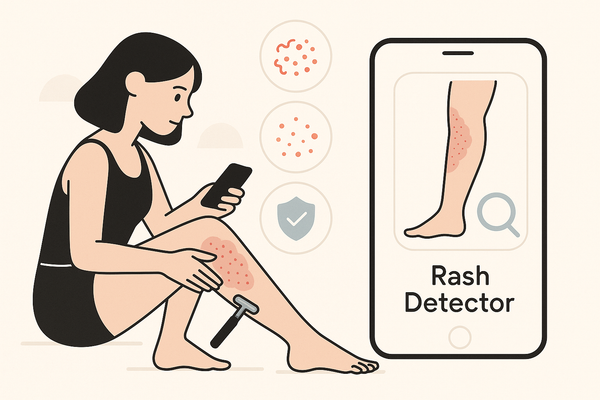
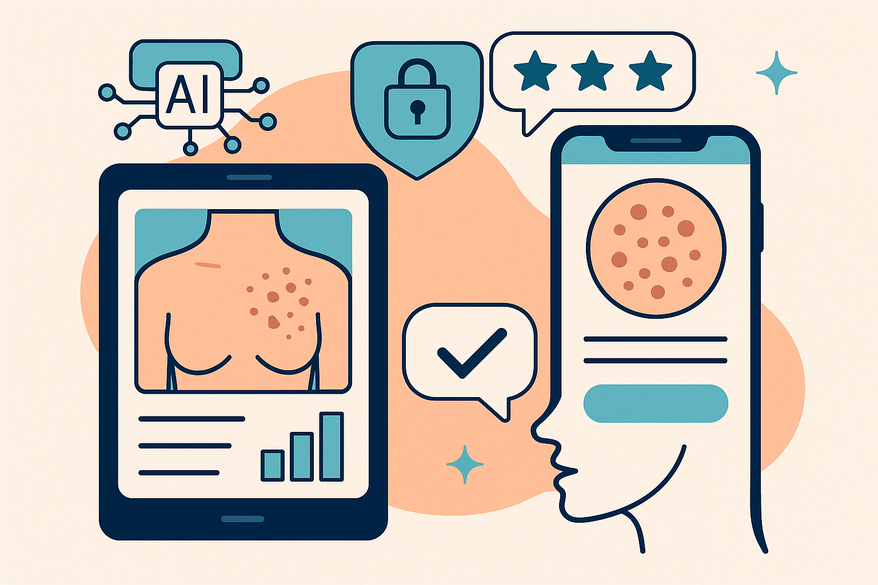
Rash detection app influencer reviews are increasingly influential, shaping how people evaluate and trust health apps. With the rise of AI-driven image analysis, users often turn to expert voices online before downloading new tools. Rash detection apps use AI to scan user-submitted photos, attempt to identify possible skin conditions, and provide instant, preliminary feedback—helping users recognize when to seek further attention. When respected influencers and dermatology professionals test these apps, their reviews can help guide users toward safer, more informed health tech choices.
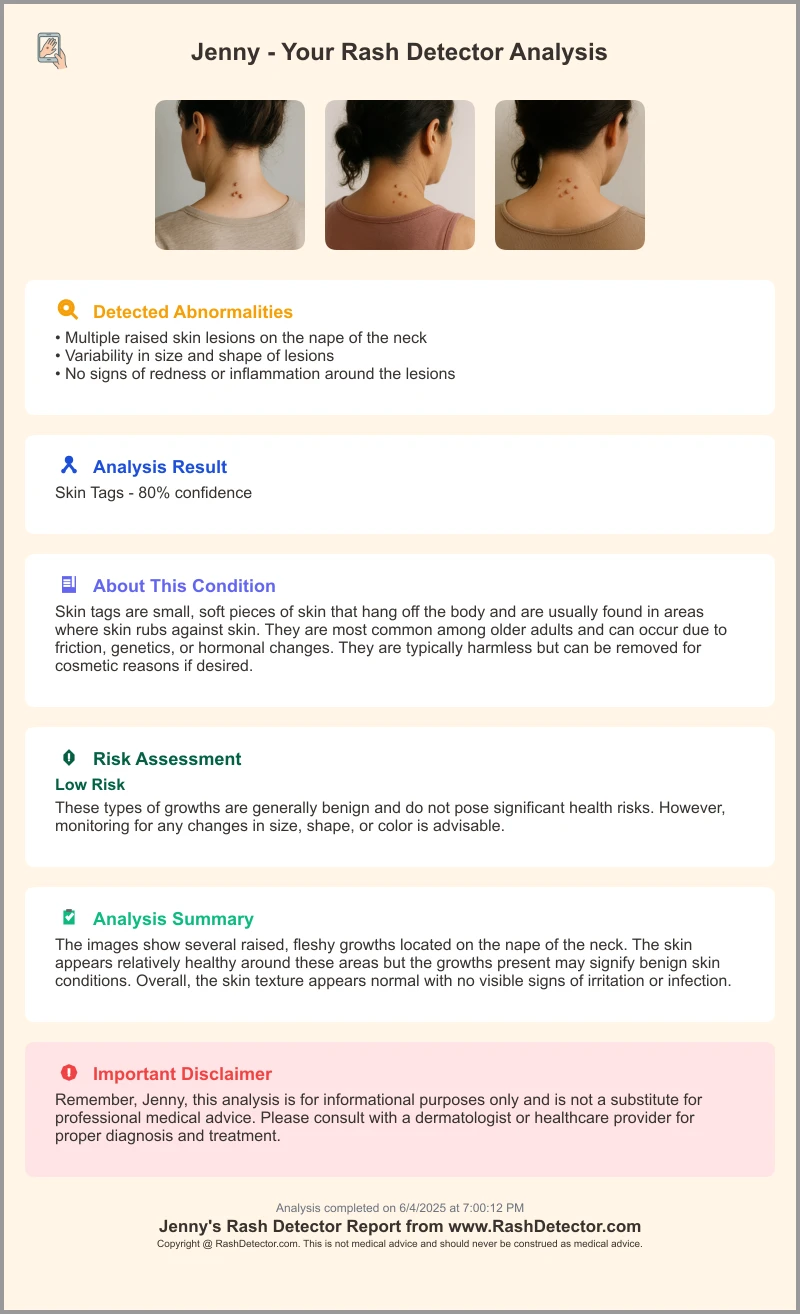
For example, Skin Analysis App offers instant rash analysis and downloadable reports, with recent updates aimed at improving skin tone inclusivity and privacy controls.
Understanding Rash Detection Apps
What Is a Rash Detection App?
- Mobile apps that use AI-powered image analysis to assess rashes, skin irritations, and related symptoms.
- Interactive Q&A or chatbots for follow-up questions and symptom clarification.
- Symptom tracking with visual and text-based history logs, now often exportable for telehealth visits.
- On-device privacy models that aim to comply with HIPAA, GDPR, and CCPA standards.
Core Technologies (2026)
- AI image recognition with convolutional neural networks (CNNs) and transformer models for improved accuracy and handling of edge cases (learn more).
- Conversational AI chatbots for tailored follow-up and triage suggestions.
- End-to-end encrypted data storage, with many apps offering on-device processing—no cloud uploads by default.
- Continuous machine learning updates, sometimes with federated learning to improve models while aiming to protect privacy (details here).
Key Benefits (2026)
- Speed of Results: Many apps deliver analysis within seconds.
- 24/7 Access: No clinic wait—use at home, work, or while traveling.
- Convenience: Some integrate with telehealth platforms for referrals.
- Early Warning & Peace of Mind: May help users recognize when to seek medical attention sooner.
Influencer reviews in 2026 often praise these advances, especially improved inclusivity and privacy, but continue to highlight the limitations of AI-based self-assessment.
The Role of Influencers in the Health Tech Space
Who Are App Influencers?
Content creators and experts—dermatologists, tech journalists, patient advocates, and healthcare professionals—who test and review health-tech tools, providing transparency on accuracy, privacy, inclusivity, and usability.
How Influencers Shape Adoption
- Real-World Testing: Demonstrations with real photos, walkthroughs, and scenario-based trials.
- Trust Transfer: Followers rely on honest, evidence-based reviews and transparency about sponsorships.
- Accuracy Insight: Analysis of when AI results are helpful—and when they fall short.
- Privacy Lens: Evaluation of data collection, on-device processing, and privacy policy clarity.
- Bias Checking: Testing on a range of skin tones, ages, and lighting conditions to assess inclusivity.
Why Health Tech Reviews Matter More (2026)
- Medical Impact: Health apps may influence real medical decisions, so accuracy and safety are critical.
- Regulatory Focus: Compliance with HIPAA, GDPR, and CCPA is now expected as standard.
- User Caution: Users demand transparency and proof before trusting AI with sensitive health data.
In-Depth Analysis of Influencer Reviews
Top Influencer Reviews (2026)
- Skinive AI (2026 update, Product Hunt & YouTube)
– Often praised for instant scans and user-friendly design.
– Influencers highlight the addition of a "skin tone calibration" step for improved inclusivity.
– Quote: “Skinive AI’s privacy-first approach is a model for the industry.”
– Highlights: Empowerment, clear interface, regular algorithm updates.
Source: Skinive AI review on Product Hunt - Rash ID (Apple App Store, 2026)
– Positive: Symptom tracking now includes photo timeline and export to PDF for doctor visits.
– Privacy: Data remains on device; policy updated for 2026 standards.
– Negative: “Still struggles with less common rashes and pediatric cases.”
– Mixed feedback: Some users report improved accuracy; others cite confusion with rare conditions.
– Average rating: 3.2 stars (2026 aggregate).
Sources: Rash ID US App Store - Google Derm Assist (2026 Influencer Blog Review)
– Noted for high accuracy on common rashes and integration with Google Health telemedicine.
– Still limited for rare or complex skin conditions.
– UX praised for simplicity; lacks advanced tracking features.
– Reviewer: “Ideal for quick checks, but not a substitute for medical advice.”
Source: Google Derm Assist review - New Entrant: DermAI Scan (2026 Launch)
– Receives attention for dermatologist-in-the-loop feature: users can request a remote review for a fee.
– Influencers note increased user confidence when human review is used.
– Limitations: Slower results if dermatologist review is selected.
– Source: DermAI Scan review
Recurring Themes
• User Empowerment vs. Tech Limits – Apps provide guidance and education, not diagnosis.
• Accuracy Variability & AI Bias – Influencers note that even top apps may misclassify rare, pediatric, or melanin-rich skin rashes.
• Privacy Assurance – On-device models and transparent data policies are increasingly common (see user sentiment).
Comparative Insights
How Influencers Compare Key Features (2026)
- User Experience
• Skinive AI: Guided chat, clear scan results, and new skin tone calibration.
• Rash ID: Clean interface, now with exportable symptom history.
• DermAI Scan: Option for human review adds reassurance, but increases wait time. - Accuracy
• Skinive AI: Reported as reliable on common rashes by some influencers.
• Rash ID: Improvements noted, but accuracy varies.
• DermAI Scan: AI alone is similar to Skinive; with dermatologist review, user confidence may increase. - Privacy
• All leading apps now offer on-device processing and clear, user-friendly privacy dashboards.
• Rash ID and Skinive AI both updated for compliance; DermAI Scan offers opt-in remote review with explicit consent. - Inclusivity
• Skinive AI: Expanded dark-skin dataset and calibration step.
• Rash ID: Progress, but still developing in diverse skin tone representation.
• DermAI Scan: Early reviews positive, but more data needed for non-white skin accuracy.
Trends and Future Outlook
Emerging Trends in AI Skin Health (2026)
- Transformer-based models and federated learning are being used to improve reliability and inclusivity.
- Privacy-by-design is increasingly standard: users control data, and processing often defaults to on-device.
- Telehealth and dermatologist-in-the-loop models are becoming more common, offering hybrid AI–human care.
- Influencer feedback can shape app updates, especially in inclusivity and user experience.
Future Outlook
- AI models may approach dermatologist-level accuracy for some common rashes, but human review remains essential for complex cases.
- Inclusivity is expected to improve as more diverse datasets are collected and used for training.
- Community-driven design and influencer partnerships will likely continue to shape app features and transparency.
- Hybrid care—combining instant AI checks, telehealth, and in-person care—may become more common for skin health triage.
Conclusion & Call to Action
Influencer insights on rash detection apps are increasingly valuable. They help users understand the strengths and limits of new AI tools, highlighting accuracy, usability, privacy, and inclusivity. While these apps offer fast, preliminary guidance, they are not a replacement for professional medical evaluation. Trusted reviews can help users choose wisely and set realistic expectations.
Important: Always consult a doctor or dermatologist for diagnosis and treatment of any rash, especially if symptoms are severe, spreading, painful, or persistent. Rash detection apps are for educational purposes only and do not provide a medical diagnosis.
Have you tried a rash detection app? Share your own influencer reviews and experiences in the comments below. For more expert insights and in-depth comparisons, explore our other posts and stay tuned for updates on AI dermatology tools.
FAQ
Q: How accurate are AI rash detection apps in 2026?
A: Accuracy for common rashes is reported as high by some influencers, but rare, complex, or pediatric cases may still be misclassified. Always follow up with a healthcare provider.
Q: Is my personal data safe?
A: Leading apps often process images on your device and aim to comply with HIPAA, GDPR, and CCPA. Review each app’s privacy dashboard and policy before use.
Q: Can these apps replace a dermatologist?
A: No. Rash detection apps offer preliminary educational guidance but are not a substitute for professional diagnosis and treatment. Always see a doctor or dermatologist for persistent, severe, or spreading symptoms.