Comprehensive Guide to Medication Rash Treatment: Identification, Management, and Prevention
Learn how to identify, manage, and prevent medication rashes with expert guidance. Discover proactive steps for effective medication rash treatment.
Estimated reading time: 10 minutes
Key Takeaways
- Medication-induced rashes have a clear temporal link to drug exposure and can range from mild itching to life-threatening reactions like SJS/TEN.
- Early recognition—by tracking onset, symptoms, and ruling out other causes—prevents escalation and guides appropriate treatment.
- Treatment varies by severity: OTC antihistamines and topical steroids for mild cases; systemic therapies and hospitalization for severe cases.
- Prevention and long-term management rely on thorough allergy history, cautious drug initiation, patient education, and collaboration with specialists.
Table of Contents
- Section 1: Understanding Medication-Induced Rashes
- Section 2: Recognizing the Signs and Symptoms
- Section 3: Common Medications That Can Cause Rashes
- Section 4: Diagnosis – How to Identify a Medication Rash
- Section 5: Medication Rash Treatment Options
- Section 6: When to Seek Urgent Medical Care
- Section 7: Prevention and Long-Term Management
- Section 8: Conclusion and Key Takeaways
- Section 9: Additional Resources
If you’ve started a new drug and notice skin irritation, redness, or an unusual rash, you may be facing a medication reaction. In this guide on medication rash treatment, we cover everything from recognition to long-term management. Our goal is to offer clear, evidence-based guidance on identifying and managing medication-induced rashes so you can work confidently with your healthcare provider.
Section 1: Understanding Medication-Induced Rashes
Defining a Medication-Induced Rash
- A medication-induced rash is a cutaneous reaction triggered directly by a pharmaceutical agent, distinguished by its temporal link to drug exposure.
- It differs from environmental or infectious rashes by appearing in direct response to a drug rather than external contact or virus.
Distinguishing Features
- Timing: Rash appears days to weeks after medication start.
- Improvement on discontinuation: Symptoms often resolve when the drug is stopped.
- No alternative causes: Rule out infections, contact irritants, or autoimmune triggers.
- Mechanisms:
- Immune pathways – IgE-mediated (Type I) or T-cell delayed (Type IV).
- Non-immune pathways – direct cytotoxicity or cytokine-driven inflammation.
Prevalence & Clinical Importance
- Medication rashes are relatively rare in the context of all adverse drug reactions but carry risk of progression to severe conditions like Stevens–Johnson syndrome (SJS), Toxic Epidermal Necrolysis (TEN), or anaphylaxis.
- Early identification prevents escalation and ensures safe drug use.
Research References:
- Johns Hopkins Medicine overview of drug rashes
- IU Health evidence on prevalence & clinical significance
Section 2: Recognizing the Signs and Symptoms
Common Rash Types
- Hives (Urticaria): Raised, itchy welts; onset within hours of drug exposure.
- Morbilliform Eruptions: Measles-like red macules/papules; appear 7–14 days after drug start.
- Fixed Drug Eruptions: Round or oval lesions at the same site each time; may blister. See our detailed guide on fixed drug eruptions.
- Severe Blistering (SJS/TEN): Epidermal detachment with mucous membrane involvement.
Associated Symptoms
- Itching, burning sensations.
- Angioedema – swelling of face, lips, tongue.
- Fever, lymphadenopathy.
- Joint or muscle pain.
Distinguishing Tips
- Correlate rash onset with medication start date.
- Note improvement after stopping the drug.
- Rule out viral illness (cough, sore throat).
- Check for new environmental exposures (soaps, plants).
Research Reference:
Section 3: Common Medications That Can Cause Rashes
High-Risk Drug Classes
- Antibiotics – Penicillins, sulfonamides, fluoroquinolones (IgE-mediated hypersensitivity; Type IV T-cell reactions).
- Anticonvulsants – Phenytoin, carbamazepine, lamotrigine (Delayed T-cell reactions leading to DRESS syndrome).
- NSAIDs – Ibuprofen, naproxen, aspirin (Mixed immune and non-immune pathways; histamine release).
- Others – ACE inhibitors, allopurinol, antifungals (Direct cytotoxicity, photosensitivity, cytokine-driven inflammation).
Mechanistic Overview:
- Type I (IgE) hypersensitivity: Rapid histamine release causes hives/anaphylaxis.
- Type IV (T-cell) delayed reactions: Eruptions appear days–weeks later.
- Non-allergic pathways: Drug-induced cell damage or inflammation without true sensitization.
Research Reference:
Section 4: Diagnosis – How to Identify a Medication Rash
Step 1: Document Timing
- Record start date of each medication and rash onset date.
- Typical window: 7–14 days post-drug initiation.
Step 2: Track Progression
- Note rash location, spread pattern, color, and texture.
- Photograph lesions under consistent lighting.
- Log associated systemic symptoms (fever, swelling).
Step 3: Rule Out Other Causes
- Review recent exposures: plants, soaps, fabrics.
- Examine for infection signs: cough, congestion, sore throat.
Step 4: Review Medication History
- List all prescription, OTC, and supplement drugs.
- Note dose changes or drug additions in past weeks.
When to Seek Professional Evaluation
Non-urgent: New rash after drug start, moderate itching, questions about continuation.
Urgent (same day): Fever with rash, mucous-membrane involvement, larger spread.
Emergency (ER/911): Blistering, facial swelling, breathing difficulty.
Diagnostic Tools
- Clinical exam by dermatologist or allergist
- Skin prick/patch testing for specific drug allergy
- Biopsy if presentation is unclear
- Drug challenge under specialist supervision
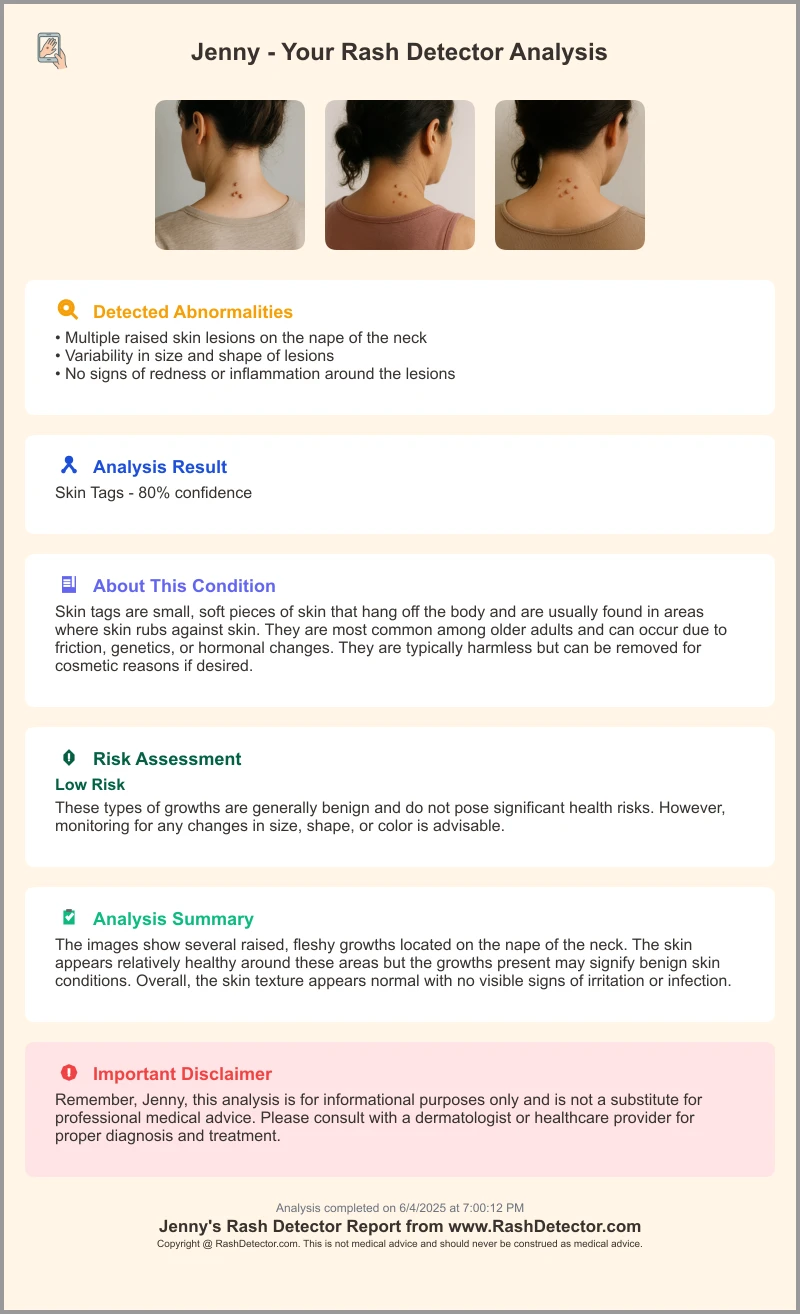
For patients seeking quick preliminary insight, the Rash Detector AI Skin Analysis App offers immediate analysis based on uploaded photos. Below is a sample report to illustrate the kind of feedback you can expect:
Section 5: Medication Rash Treatment Options
Immediate First Steps
- Discontinue suspected drug under medical guidance (taper vs stop).
- Document in a medication diary—include drug name, dose, dates, photos.
- Symptom relief: cool baths, fragrance-free moisturizers, loose clothing.
Mild Cases
- OTC Antihistamines (Diphenhydramine, Cetirizine)
- Topical Hydrocortisone 1% (apply 2–3× per day)
- Emollients & Colloidal oatmeal baths
Moderate Cases
- Systemic Corticosteroids (Prednisone taper)
- Mid- to High-Potency Topical Steroids
- Combination Antihistamines/H2 blockers or Doxepin
Severe Cases (SJS/TEN, DRESS)
- Hospitalization (burn/ICU setting)
- Supportive care: fluids, wound care, nutritional support
- Systemic steroids ± IVIG, plasmapheresis, cyclosporine
- Biologics for refractory cases
Role of Healthcare Provider
- Adjust medications and plan safe alternatives.
- Monitor response and taper therapies appropriately.
- Update records to flag drug allergies.
Research References:
Section 6: When to Seek Urgent Medical Care
Red-Flag Symptoms Requiring ER/Emergency
- Respiratory distress – wheezing, throat tightness
- Angioedema – facial/lip/tongue swelling
- Widespread blistering or skin detachment >10% BSA
- Mucous membrane involvement
- High fever (>102°F) with severe malaise
- Anaphylaxis signs – hypotension, altered consciousness
Non-Emergency but Urgent (Contact Provider Within 24 hrs): Rash worsens despite stopping the drug, moderate systemic symptoms, or uncertainty about cause/treatment.
Section 7: Prevention and Long-Term Management
Comprehensive Allergy & Medication History
- Record past reactions: drug name, reaction type, timing, severity.
- Distinguish true allergies vs predictable side effects.
Careful Drug Initiation
- Start at low dose; increase gradually.
- Monitor for rash during first 2–4 weeks.
- Educate on early warning signs (redness, itching).
Self-Education
- Learn high-risk drug classes and cross-reactivity.
- Recognize early rash patterns and seek prompt evaluation.
- For strategies on preventing drug allergies over the long term
Medication Diary Template
Columns: Drug name, indication, dose & frequency, start/discontinuation dates, rash onset & description, interventions & outcomes, date-stamped photos.
Specialist Interventions
- Skin prick/patch testing
- Lymphocyte transformation test (research setting)
- Controlled drug challenges
- Desensitization protocols for essential medications
Collaboration with Providers
- Share your diary with dermatologists, allergists, pharmacists.
- Flag allergies in electronic medical records.
- Ask pharmacists about cross-reactive alternatives.
Research Reference:
Section 8: Conclusion and Key Takeaways
- Medication-induced rashes are drug-triggered cutaneous reactions with a clear temporal link.
- Early recognition prevents progression to severe reactions like SJS/TEN or anaphylaxis.
- Common culprits include antibiotics, anticonvulsants, and NSAIDs.
- Diagnosis relies on timeline documentation, clinical exam, and specialized testing.
- Treatment is severity-based: OTC relief for mild cases, systemic therapies for moderate, and ICU care for severe.
- Prevention requires thorough history, careful dosing, patient education, and specialist collaboration.
Prompt medication rash treatment improves outcomes and prevents life-threatening complications. Track your symptoms, consult providers early, and seek emergency care for red-flag signs.
Section 9: Additional Resources
- Johns Hopkins Medicine – Drug Rashes
- American Academy of Dermatology – Patient Guides
- IU Health – Drug Rashes Clinical Overview
FAQ
How can I tell if my rash is caused by medication?
Medication rashes typically appear days to weeks after starting a new drug, improve upon discontinuation, and lack alternative environmental or infectious explanations.
When should I stop my medication if I have a rash?
Always consult your healthcare provider. For mild itching, seek non-urgent advice; for fever, mucous-membrane involvement, or rapid spread, stop the drug and seek urgent evaluation.
Are all drug rashes allergic reactions?
No. Some rashes result from non-immune mechanisms like direct cytotoxicity or cytokine-driven inflammation rather than true hypersensitivity.
撮影に使うウィッグは、照明による色の見え方と顔まわりのシルエットも考えて選びましょう。条件に合う選択肢を探す際は、男装 コスプレウィッグを手掛かりに内容を確認できます。購入後は本番前に一度着用し、前髪、長さ、毛量を少しずつ調整すると安心です。
Can I take antihistamines to treat a medication rash?
Yes, OTC antihistamines can help relieve itching in mild cases, but always confirm with a provider before self-treating.