Medication Rash Treatment: A Comprehensive Guide to Safe Management
Discover how to safely identify and manage medication rash treatment with expert guidance on causes, symptoms, and prevention strategies for optimal care.

Estimated reading time: 12 minutes
Key Takeaways
- Understand causes of drug-induced rashes and immune mechanisms.
- Recognize key symptoms from mild urticaria to life-threatening SJS/TEN.
- Follow tiered treatment approach: mild (OTC), moderate (prescription), severe (hospitalization).
- Implement prevention with medication history, genetic testing, safe initiation.
- Know red-flag signs necessitating immediate medical attention.
Table of Contents
- Introduction
- Understanding Medication-Induced Rashes
- Recognizing the Symptoms
- Diagnosis and When to Seek Help
- Medication Rash Treatment Options
- Prevention and Management Strategies
- Conclusion
- FAQ
Introduction
Medication rash treatment starts with knowing why drug eruptions happen and how to stop them safely. Hypersensitivity skin reactions—also known as drug rashes or drug eruptions—are triggered when the immune system mistakes a medication or its metabolites for harmful substances. They affect up to 2–3% of hospitalized patients, making them a leading cause of drug discontinuation.
Our goal is to equip you with clear, evidence-based guidance on identifying, managing, and treating medication-induced rashes safely. This comprehensive guide to medication rash treatment will cover causes, symptoms, diagnosis, treatment tiers, and prevention strategies. For more on spotting early signs of drug-induced reactions, see Identifying and Managing Drug-Induced Rash Symptoms.
Source: https://www.merckmanuals.com/professional/dermatological-disorders/drug-eruptions/drug-eruptions
Understanding Medication-Induced Rashes
Pathophysiology of Drug Eruptions
- Type I (IgE-mediated) immediate reactions
- Occur within minutes to hours
- Histamine release leads to urticaria and anaphylaxis
- Type IV (T-cell mediated) delayed reactions
- Develop over days to weeks
- Cytokine release causes red, inflamed skin
- Mechanism
- Immune cells recognize drug haptens bound to skin proteins
- Trigger a cascade of cytokines and inflammation
Common Culprit Drugs and Reaction Types
- Antibiotics
- Penicillins, sulfa drugs → hives, morbilliform rash
- Anticonvulsants
- Phenytoin → exfoliative dermatitis
- NSAIDs, ACE inhibitors, allopurinol
- Risk of Stevens-Johnson syndrome (SJS) and toxic epidermal necrolysis (TEN)
Typical Onset
- Most rashes appear 4–14 days after starting a new medication
- Immediate Type I reactions may occur within hours
Risk Factors and Susceptible Groups
- Genetic predispositions
- HLA-B*1502 in certain Asian populations on carbamazepine
- Viral co-infections
- Epstein-Barr virus plus amoxicillin raises risk
- Age >65, polypharmacy, autoimmune disease history
Note: Specific management for each rash type is essential in medication rash treatment.
Sources:
https://www.hopkinsmedicine.org/health/conditions-and-diseases/drug-reactions
https://www.merckmanuals.com/professional/dermatological-disorders/drug-eruptions/drug-eruptions
https://www.health.harvard.edu/
Recognizing the Symptoms
| Rash Type | Key Features | Onset | Severity |
|---|---|---|---|
| Hives (Urticaria) | Raised, itchy welts that migrate | Hours after dose | Mild |
| Morbilliform (Measles-like) | Flat red maculopapular spots, often itchy | 4–14 days | Mild–Moderate |
| Exfoliative Dermatitis | Widespread redness, skin scaling | 1–2 weeks | Severe |
| Stevens-Johnson Syndrome | Blistering, mucosal involvement, skin sloughing | 1–3 weeks | Life-threatening |
Mild vs. Serious Reactions
- Mild
- Localized itching or hives
- Resolves days after stopping the drug
- Serious
- Involvement of >30% body surface
- Fever, mucosal sores, systemic signs (e.g., wheezing, eosinophilia in DRESS)
Tracking Progress
- Note symptom emergence date
- Photograph rash daily
- Monitor for spread, blistering, fever
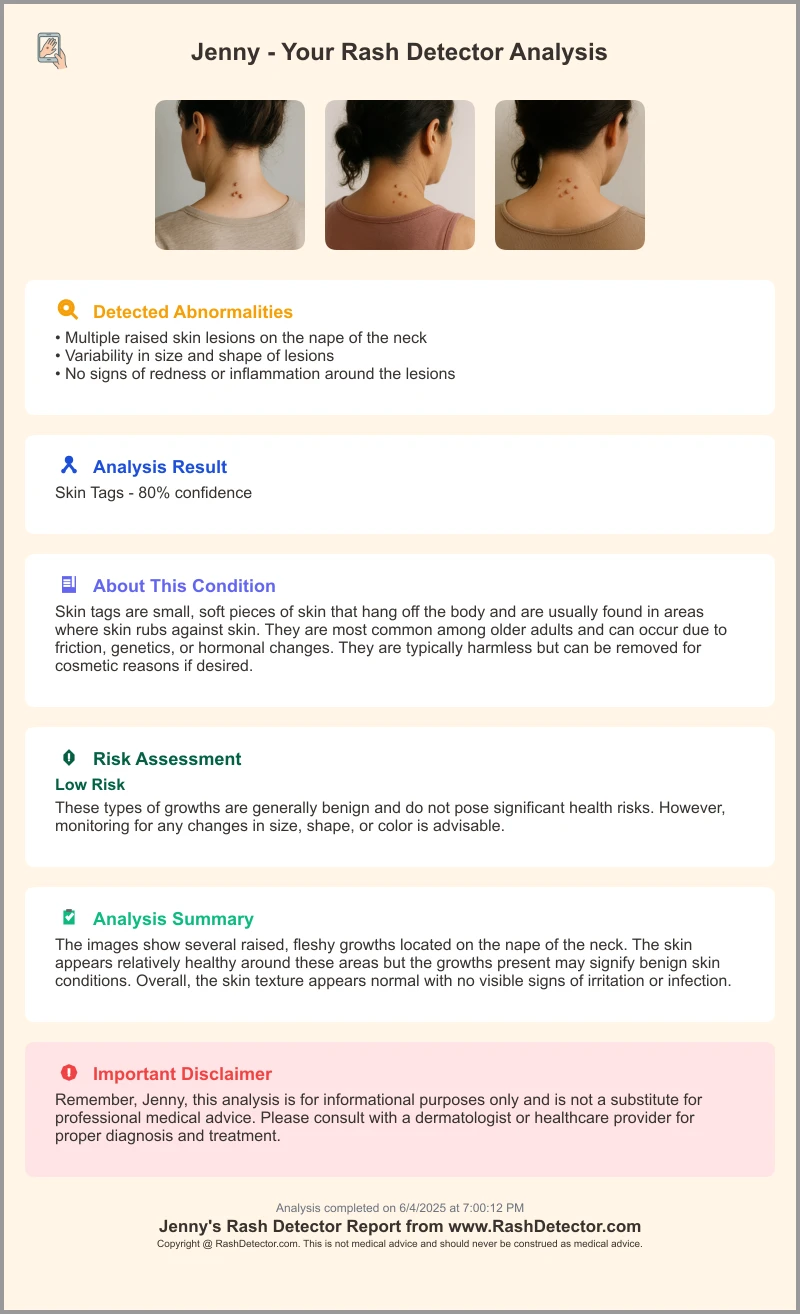
You can also use AI tools like Rash Detector for on-the-go analysis. Simply upload three clear images of your rash to get an instant sample report and guidance on next steps.
Diagnosis and When to Seek Help
Self-Assessment Steps
- Record rash onset date relative to new medication start.
- Photograph the rash every day to note changes.
- Track associated symptoms: fever, breathing or swallowing difficulty.
- Consult your provider before stopping any prescription.
Red-Flag Signs
- Rapidly spreading rash or blistering
- Mucosal involvement (lips, eyes, mouth)
- Systemic symptoms: fever >38°C, swollen lymph nodes, breathing/swallowing issues
- Rash persists >2 weeks after drug discontinuation
Doctor-Visit Checklist
- Questions to ask:
- “Could this be an allergic reaction or DRESS syndrome?”
- “What diagnostic tests confirm the cause?”
- Possible Diagnostics:
- Skin biopsy (for SJS/TEN confirmation)
- Complete blood count with eosinophil count (for DRESS)
- Patch testing (to identify delayed hypersensitivity)
- Comprehensive medication history review
Early professional diagnosis guides safe medication rash treatment.
Sources:
https://www.mayoclinic.org/
https://iuhealth.org/
Medication Rash Treatment Options
Tier 1: Mild Reactions
- Discontinue offending drug—rashes resolve in days to two weeks.
- OTC antihistamines: Cetirizine (Zyrtec), Diphenhydramine (Benadryl)
- Topical agents: Hydrocortisone 1% cream, Calamine lotion
- Natural/supportive remedies: Cool compresses, Colloidal oatmeal baths, Aloe vera gel
- Avoid scratching to prevent secondary infection.
Tier 2: Moderate to Severe Reactions
- Oral corticosteroids (prednisone tapered over 2–6 weeks) reduce inflammation.
- Antihistamine/steroid combinations for severe urticaria.
- Epinephrine and IV steroids/antihistamines for anaphylaxis.
Tier 3: Life-Threatening Reactions
- Immediate hospitalization with wound care and fluid/electrolyte management.
- Consider IV cyclosporine or IVIG for SJS/TEN.
- Specialty consults: dermatology, critical care. For detailed strategies on managing drug allergy rashes.
Individualize treatment based on reaction type and patient history; follow-up ensures safe alternative medications.
Sources:
https://www.beckerent.com/
https://www.merckmanuals.com/professional/dermatological-disorders/drug-eruptions/drug-eruptions
https://burtsrx.com/
https://www.hopkinsmedicine.org/health/conditions-and-diseases/drug-reactions
https://iuhealth.org/
Prevention and Management Strategies
Pre-treatment Review
- Compile full medication and allergy history; share with all healthcare providers.
- Consider HLA/B genetic testing for high-risk drugs in susceptible populations.
Safe Initiation Practices
- “Start low, go slow” dosing for high-risk medications.
- Schedule early check-ins after initiating a new drug.
- Use allergy bracelets or mobile apps to record known drug sensitivities.
Daily Management Tips
| Strategy | Benefit | Source |
|---|---|---|
| Loose, breathable clothing | Reduces skin irritation | Becker ENT |
| Fragrance-free, hypoallergenic moisturizers | Locks in moisture, minimizes dryness | General consensus |
| Stay hydrated; avoid heat/triggers | Supports skin repair, limits itching flare-ups | Mayo Clinic |
Pharmacists and nurses can proactively flag potential cross-reactivities to prevent severe drug eruptions.
Sources:
https://www.health.harvard.edu/
https://www.beckerent.com/
https://www.mayoclinic.org/
Conclusion
Early recognition, prompt discontinuation, and a tiered medication rash treatment approach lead to the best outcomes. From OTC antihistamines and natural remedies for mild cases to hospital-based care for life-threatening reactions, every step matters. Remember: identify the rash, discontinue the suspect drug, treat appropriately, and prevent recurrence with thorough history and safe prescribing practices. If you suspect a serious drug rash, consult a healthcare professional immediately—do not self-diagnose severe reactions.
For professional advice and personalized care, always reach out to your healthcare provider at the first sign of a medication-induced rash.
FAQ
What causes medication-induced rashes?
Medication rashes occur when the immune system misidentifies a drug or its byproducts as harmful, triggering inflammatory responses ranging from mild hives to severe reactions like SJS/TEN.
How soon after taking a drug can a rash appear?
Immediate Type I reactions can occur within minutes to hours, while Type IV delayed reactions typically develop 4–14 days after starting the medication.
When should I seek medical attention for a rash?
If you experience rapid rash spread, blistering, mucosal involvement, fever, or systemic symptoms, seek medical care immediately.
What first steps should I take if I suspect a drug rash?
Record the rash onset date, photograph daily, note any other symptoms, and consult your healthcare provider before stopping the medication.
Can medication rashes be prevented?
Yes. Prevention includes comprehensive medication and allergy histories, genetic testing for high-risk drugs, “start low, go slow” dosing, and vigilant monitoring after initiation.