Medication Rash Treatment: Essential Guide to Identification, Management, and Prevention
Learn to identify, manage, and prevent medication rash treatment effectively to avoid complications and ensure continued therapy with our comprehensive guide.
Estimated reading time: 8 minutes
Key Takeaways
- Recognize early warning signs of a medication rash
- Diagnose different types of drug eruptions
- Manage symptoms with home and medical treatments
- Prevent future reactions through smart strategies
Table of Contents
- Understanding Medication-Induced Rashes
- Identification and Symptoms of Medication Rash
- Diagnosis Process for Medication Rash Treatment
- Medication Rash Treatment Options
- Prevention and Management Strategies
- When to Contact a Healthcare Professional
- Conclusion
- FAQ
Understanding Medication-Induced Rashes
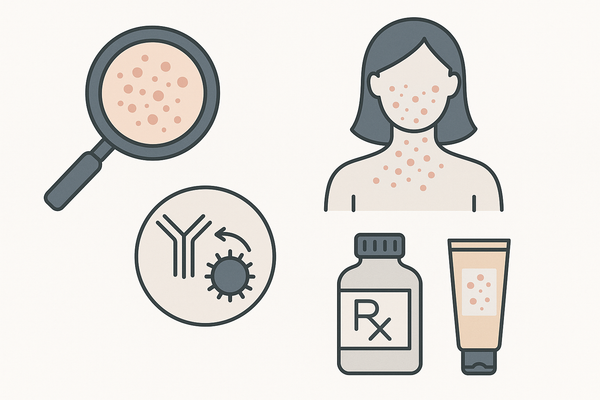
Medication-induced rash is an immune-mediated hypersensitivity reaction that leads to skin inflammation. The body mistakes a drug for a threat and releases chemicals that cause redness, swelling, or itching.
Common triggers include:
- Antibiotics such as penicillins and sulfa drugs
- Antihypertensives and aspirin
- Anticonvulsants like phenytoin
- Contrast dyes used in imaging
Timing of reactions:
- Immediate (minutes to hours): hives and itching from histamine release
- Delayed (4–14 days): morbilliform eruptions with red, measles-like spots
How rashes differ:
- Contact dermatitis – reaction to soaps or fabrics, not pills
- Eczema – a chronic atopic rash that flares with stress or dry skin
Risk factors for treatment failure:
- Older age (over 65)
- Multiple medications at once (polypharmacy)
- Autoimmune conditions
- Personal or family history of allergies
Identification and Symptoms of Medication Rash
Spotting a drug rash early makes treatment simpler. Know these types:
- Urticaria (hives): raised, itchy welts that come and go
- Morbilliform rash: flat red spots with small bumps
- Fixed drug eruption: purple or red patch that recurs in the same spot
- Exfoliative dermatitis: widespread redness and skin peeling
- Severe signs: blistering, mouth or eye sores, fever (Stevens-Johnson syndrome)
First steps when you notice a rash:
- Safely stop the suspect medication and note the start date.
- Apply cool compresses; resist scratching to avoid infection.
- Keep a symptom journal: track rash spread, itch level, new meds.
Red-flag symptoms needing urgent care:
- Difficulty breathing or swallowing (anaphylaxis)
- Swelling of lips, tongue, or face
- Rash covering more than 30% of your body
- Rapid formation of blisters or mucosal lesions
- High fever or body aches
Learn more about identifying drug-induced rash symptoms.
Diagnosis Process for Medication Rash Treatment
A clear diagnosis starts with your history and exam.
Medical history review:
- List all new and recent medications with start dates
- Note any past rashes or known drug allergies
- Mention family history of reactions
Physical examination pointers:
- Urticaria: wheals that move or change shape
- Maculopapular: mixed flat and raised red spots
- Bullous lesions: fluid-filled blisters
Diagnostic tests overview:
- Skin biopsy – to distinguish Stevens-Johnson syndrome from toxic epidermal necrolysis
- Blood tests – check eosinophil levels for DRESS syndrome
- Patch testing – tiny doses of suspect medicines applied on skin to confirm allergy
- Graded challenge – under an allergist’s care, small oral doses escalate to test tolerance
Medication Rash Treatment Options
Stopping the offending drug is the first and most effective step. After that, choose home care or medical measures:
Home remedies & OTC measures:
- Oral antihistamines: cetirizine, diphenhydramine, loratadine
- Topical corticosteroids: hydrocortisone 1% OTC; clobetasol 0.05% or triamcinolone 0.1% by prescription
- Cool compresses and oatmeal baths to soothe skin
- Fragrance-free moisturizers to restore the skin barrier
Professional medical treatments:
- Oral corticosteroids: prednisone taper over 2–6 weeks for moderate to severe rashes
- Epinephrine auto-injector for anaphylaxis emergencies
- Immunomodulators: topical tacrolimus (Protopic) or pimecrolimus (Elidel) for persistent dermatitis
- Hospital therapies: IV corticosteroids, cyclosporine, or IV immunoglobulin in severe cases
For in-depth strategies on managing drug allergy rash.
Prevention and Management Strategies
Good prevention starts before you take a pill:
- Communicate allergies: tell every provider about your drug history and reactions
- Wear a medical alert bracelet listing your allergies
- Introduce new medications one at a time and follow dosing instructions exactly
- Monitor skin for at least 14 days after starting any new drug
- Ask about allergy testing before high-risk medications
- Choose alternative drugs when possible (non-penicillin antibiotics)
- Schedule follow-up visits when beginning long-term therapies
- Consider desensitization protocols under specialist care when no alternatives exist
When to Contact a Healthcare Professional
Self-care can ease mild, localized itching that fades in 48 hours. But seek professional help if you notice:
- Worsening rash after 48 hours or rapid spread
- Fever, swollen lymph nodes, or signs of infection
- Trouble breathing, wheezing, or throat tightness
- Mouth sores, eye redness or pain, or other mucosal lesions
- Skin peeling or detachment over more than 10% of body surface
Conclusion
Medication rash treatment involves these steps:
- Identify the reaction type (hives, morbilliform, or more severe).
- Diagnose with history, exam, and tests.
- Treat with antihistamines, steroids, or hospital care for severe cases.
- Prevent future rashes with clear communication, slow drug introduction, and allergy testing.
Prompt medication rash treatment can avert serious outcomes like anaphylaxis or extensive skin loss. Track any new symptoms, ask questions at your next healthcare visit, and seek personalized care right away. Your safety and comfort depend on early recognition and swift action.
Start today by reviewing your medication list, noting any past reactions, and planning a talk with your provider at your next appointment.
FAQ
- What causes medication-induced rashes? Drug-induced rashes are immune-mediated reactions where the body mistakes a medication for a threat, releasing chemicals that inflame the skin.
- How are medication rashes diagnosed? A thorough medical history, physical examination, and tests like skin biopsies or blood work guide an accurate diagnosis.
- What treatments are available? Mild rashes may respond to antihistamines and topical steroids, while severe cases require oral steroids or hospital therapies such as IV immunoglobulin.
- How can I prevent future reactions? Communicate all allergies, introduce new drugs one at a time, monitor skin closely, and consider allergy testing before high-risk medications.
- When should I seek medical help? Seek immediate care if you experience breathing difficulties, rapid rash spread, blistering, or systemic symptoms like fever or mouth sores.