Medication Rash Treatment: Comprehensive Guide to Identification, First Aid, and Prevention
Learn effective medication rash treatment strategies including identification, first aid, and prevention to manage and prevent future reactions.
Estimated reading time: 8 minutes
Key Takeaways
- Drug eruptions are hypersensitivity reactions to prescription or OTC medications.
- Recognize common rash types—from hives and maculopapular eruptions to life-threatening SJS/TEN—by their appearance and timing.
- Initial first aid includes discontinuing the culprit drug, cool compresses, and colloidal oatmeal baths.
- Treatment ranges from antihistamines and topical steroids to emergency epinephrine and IV support in severe cases.
- Prevention relies on allergy testing, detailed documentation, and desensitization protocols when necessary.
Table of Contents
- Introduction: Overview
- Understanding Medication-Induced Rashes
- Identifying a Medication-Induced Rash
- Step-by-Step Guide to Medication Rash Treatment
- When to Consult a Healthcare Provider
- Preventive Measures and Management Strategies
- Conclusion
Introduction: Medication Rash Treatment Overview
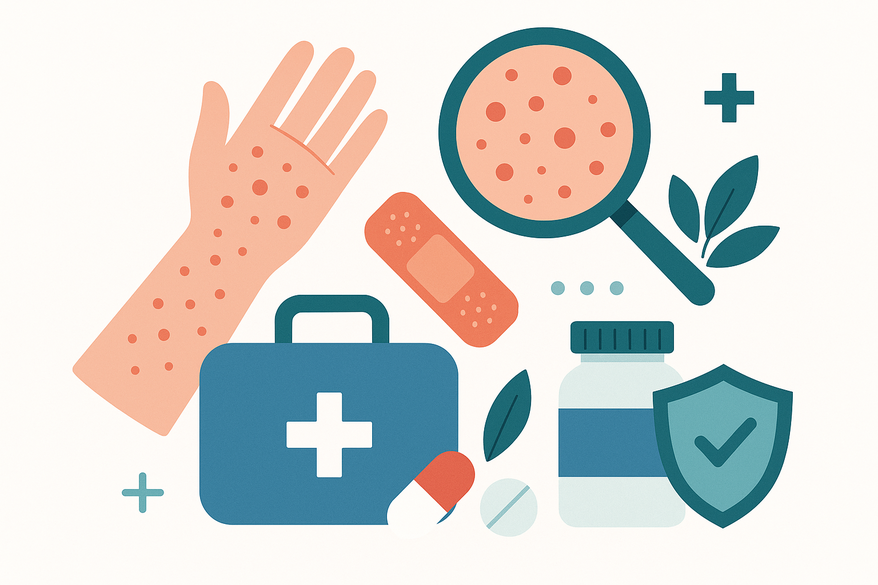
A medication-induced rash, or drug eruption, is an adverse hypersensitivity response to a prescription or over-the-counter drug. Prompt treatment can prevent discomfort, secondary infection, or life-threatening complications. Common offenders include antibiotics, NSAIDs, and antiseizure medications; this guide will help you identify various rashes, manage them safely at home, and prevent future reactions.
Understanding Medication-Induced Rashes
- Urticaria (Hives)
Raised, red, itchy wheals that appear and fade within hours; often triggered by penicillins, aspirin, dyes, or food-drug interactions. - Morbilliform/Maculopapular Rash
Flat or slightly raised red spots spreading from trunk to limbs; common after antibiotics like amoxicillin. - Fixed Drug Eruption
Round, dark red or purple patches recur at the same site; heals with hyperpigmentation; linked to sulfa drugs and NSAIDs. - Exfoliative Dermatitis
Widespread redness, scaling, and peeling; may cause itching and fever; associated with sulfonamides and phenytoin. - Acne-Like Rash
Small papules and pustules on face, chest, and shoulders; seen with systemic steroids and bromide medications. - Severe Reactions (SJS/TEN)
Painful blisters, target lesions, mucosal involvement; a medical emergency often triggered by allopurinol, sulfa drugs, or anticonvulsants.
Distinguishing Medication Rashes from Other Skin Conditions
• Fever: unusual in mild eruptions but common in infections.
• Lesion Pattern: migratory hives vs. fixed eczema patches.
• Timing: drug rashes typically appear 4–14 days after starting a new medication.
Identifying a Medication-Induced Rash
Timing and appearance are key to diagnosis when a new drug causes a rash.
Timing of Onset
- Immediate: Histamine-mediated hives within minutes to hours.
- Delayed: Maculopapular eruptions 4–14 days after initiation.
Rash Characteristics
- Itching: common in urticaria and morbilliform eruptions.
- Distribution: trunk/limbs for maculopapular; face/chest for acne-like.
- Color Changes: red turning brown in fixed eruptions.
- Blisters/Mucosal Involvement: indicates severe reactions (SJS/TEN).
Differentiating Mild vs. Severe Reactions
Mild Reactions
- Localized itch or small hives clusters.
- No fever; stable vital signs.
- Typically resolves with OTC care in days.
Severe Reactions
- Angioedema around eyes, lips, throat.
- Respiratory distress, wheezing, or stridor.
- Target lesions; widespread peeling skin.
- Fever >100.4°F, joint pain, malaise.
When to Seek Medical Evaluation
Rash persists beyond one week despite home care.
Rapid spread to face, palms, or soles.
Systemic symptoms: fever, joint aches.
Any signs of anaphylaxis.
Step-by-Step Guide to Medication Rash Treatment
Use these first-aid steps and professional options to manage drug-induced rashes safely.
Immediate First Aid
- Discontinue the offending drug immediately.
- Apply cool compresses to reduce itching and inflammation.
- Take colloidal oatmeal baths to soothe the skin; learn more here.
Professional Treatment Options
- Antihistamines (cetirizine, loratadine, diphenhydramine) to block histamine and relieve itching.
- Topical Corticosteroids (OTC hydrocortisone 1%; prescription triamcinolone 0.1%, clobetasol 0.05%) applied 1–2 times daily.
- Short-Course Oral Corticosteroids (prednisone taper over 5–7 days) for moderate to severe swelling; monitor blood sugar and mood.
- Emergency Measures for anaphylaxis/SJS: epinephrine 0.3 mg IM and hospital-based IV steroids/fluid support for SJS/TEN.
- Immunomodulators (tacrolimus, pimecrolimus) as steroid-sparing agents applied twice daily for chronic or sensitive-area rashes.
Over-The-Counter and Home Care Tips
- Use fragrance-free moisturizers (ceramide creams, petrolatum).
- Wear loose, breathable cotton clothing to reduce friction.
- Avoid scratching: keep nails trimmed and wear gloves at night.
- Take short, lukewarm showers to prevent skin drying.
For more on choosing between OTC and prescription remedies, see OTC vs Prescription Rash Treatment.
When to Consult a Healthcare Provider
Warning signs require professional care without delay.
- Difficulty breathing or throat tightness.
- Facial/lip/tongue swelling (angioedema).
- High fever (>100.4°F) with rash.
- Widespread blistering or mucosal ulcers.
- Rash covering >30% of body surface.
Risks of Delayed Care
Secondary skin infections, permanent scarring, systemic organ involvement, and increased mortality in SJS/TEN.
Next Steps in Clinical Evaluation
Allergy workup with skin testing, patch testing for fixed eruptions, and supervised drug challenges.
Preventive Measures and Management Strategies
Prevent future drug rashes through careful planning and communication.
ウィッグの候補を比べる場合は、毛質、耐熱性、長さ、セットのしやすさを同じ基準で確認しましょう。条件に合う選択肢を探す際は、ブルアカ コスプレウィッグを手掛かりに内容を確認できます。使用後は毛流れを整えて十分に乾かし、形が崩れない状態で保管することが大切です。
Pre-Prescription Steps
- Document full medication history and past reactions.
- Perform allergy testing (skin prick or blood tests) for high-risk drugs.
- Keep detailed chart notes of reaction type, severity, and date.
Long-Term Management
- Use desensitization protocols under specialist care when no alternatives exist.
- Carry medical alert identification listing drug allergies.
- Engage in shared decision-making about rechallenge vs. alternatives.
- Check for drug interactions using reliable databases or pharmacy apps.
Conclusion: Improving Medication Rash Treatment
At the first sign of a medication-induced rash, stop the offending drug and start first-aid measures like cool compresses and OTC antihistamines. Depending on severity, you may need topical or oral steroids, epinephrine for anaphylaxis, or specialized care for SJS/TEN. Long-term prevention hinges on allergy testing, desensitization strategies, and meticulous documentation. Prompt, appropriate treatment protects against complications and supports safer medication use.
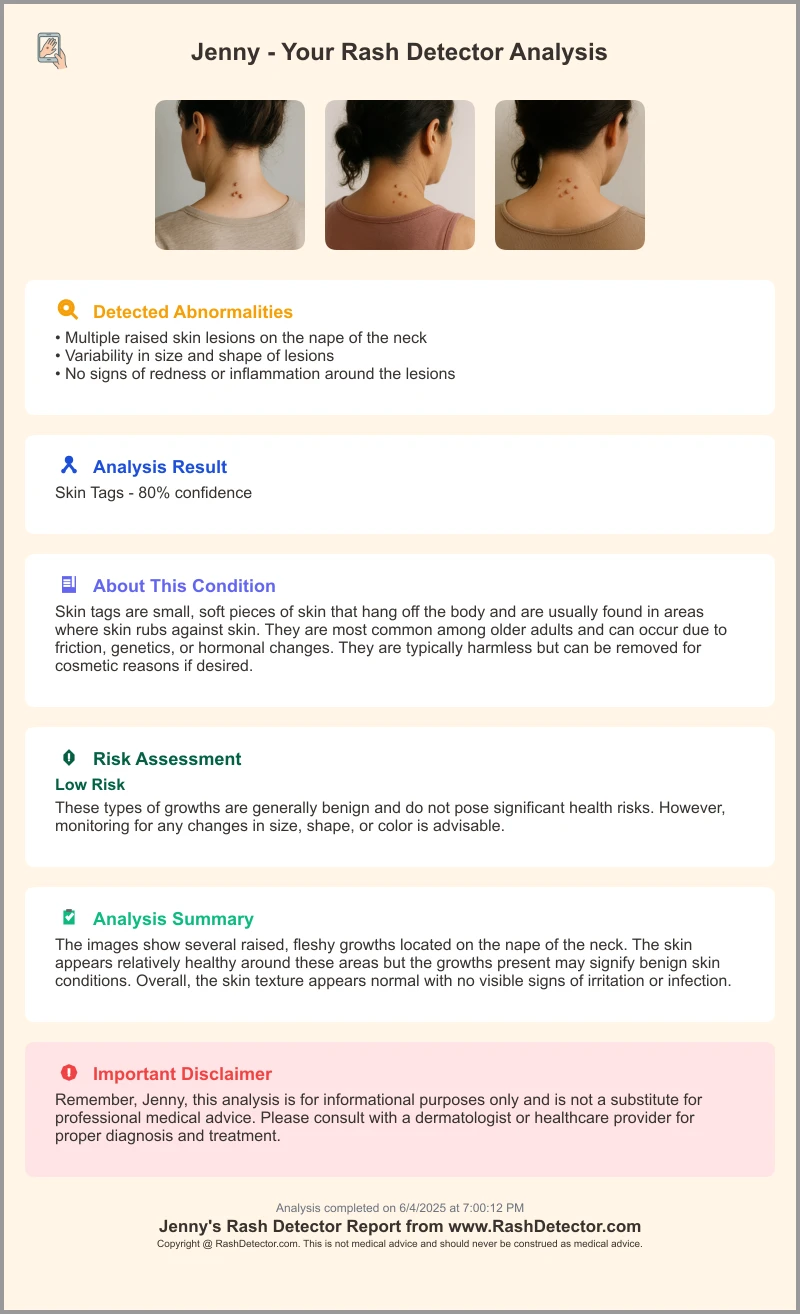
For an instant, professional-grade preliminary analysis, try Rash Detector—upload photos of your rash to get insights within seconds.
FAQ
- How long does a medication-induced rash last?
Mild rashes usually clear within days after stopping the drug; severe reactions may take weeks to resolve fully. - Can over-the-counter antihistamines help my rash?
Yes; H1 blockers like diphenhydramine relieve itching and hives, but consult your provider if symptoms persist. - Are all medication rashes allergic reactions?
No; some eruptions are non-immune-driven, such as phototoxic or pharmacologic side effects without antibody involvement. - What steps prevent severe reactions like SJS?
Avoid known high-risk drugs, introduce new medications one at a time, and monitor for symptoms within two weeks. - Is it safe to restart a medication after a rash?
Generally not advisable; consider allergy testing and discuss alternatives or desensitization protocols with your allergist.