Complete Guide to Medication Rash Treatment
Discover effective medication rash treatment solutions to prevent infections and scarring. Learn to recognize symptoms and manage drug-related skin reactions.

Estimated reading time: 8 minutes
Key Takeaways
- Early recognition of medication rashes—from mild hives to severe Stevens–Johnson syndrome—prevents complications.
- Accurate diagnosis relies on clinical evaluation, lab tests, and sometimes skin biopsy.
- Treatment spans discontinuation of the offending drug, antihistamines, corticosteroids, and advanced therapies for severe reactions.
- Self-care measures and moisturizers support healing, while prevention hinges on detailed drug histories and close monitoring.
Table of Contents
- Understanding Medication-Induced Rashes
- Recognizing Medication Rash Symptoms
- Diagnosis and When to Seek Medical Help
- Exploring Treatment Options
- Prevention and Future Precautions
- Summary and Conclusion
- FAQ
Understanding Medication-Induced Rashes
When certain drugs or their metabolites enter the body, the immune system may mistake them for invaders, triggering a hypersensitivity reaction. Two major types affect the skin:
Type I (Immediate) Hypersensitivity
- Onset: minutes to hours after drug intake
- Reaction: hives, itching, swelling from histamine release
- Mechanism: IgE antibodies on mast cells cause a histamine “dump” (allergic response)
Type IV (Delayed) Hypersensitivity
- Onset: 4–14 days after starting medication
- Reaction: pink or red bumps that spread outward, followed by peeling
- Mechanism: T-cell–mediated response causing cell damage
Common Drug Triggers include:
- Antibiotics: sulfa drugs, penicillins
- Anti-seizure agents: phenytoin, barbiturates, isoniazid
- Hormonal drugs: anabolic steroids, corticosteroids
- Inorganic compounds: bromides, iodides
Learn more at Johns Hopkins Medicine and Divine Dermatology.
Recognizing Medication Rash Symptoms
Early and accurate symptom recognition is crucial for successful treatment. Watch for:
- Hives and itching
- Raised, itchy welts that may join together (Becker ENT and Allergy)
- Swelling (angioedema)
- Puffiness around eyes, lips, or limbs (Becker ENT and Allergy)
- Redness and burning
- Skin appears flushed, feels hot (NYU Langone Health)
- Pink/red bumps
- Often starts on the trunk and spreads (Divine Dermatology)
- Skin peeling
- Flaky or sheet-like shedding (Divine Dermatology)
- Acne-like pimples
- Papules resembling acne (Johns Hopkins Medicine)
- Exfoliative dermatitis
- Red, scaly thickened skin over large areas (Johns Hopkins Medicine)
Timeline for symptom onset:
- Immediate reactions: within minutes to hours of first dose
- Delayed reactions: typically 4–14 days after starting medication
Learn more from the Rash Detector Blog.
Diagnosis and When to Seek Medical Help
Correct diagnosis ensures you receive the right care. Healthcare providers may use:
- Clinical evaluation
- Health history, detailed drug timeline, physical exam
- Laboratory tests
- Blood work to check for elevated eosinophils or liver enzymes
- Skin biopsy
- Small tissue sample under a microscope for severe or unclear rashes
According to NYU Langone Health and Merck Manuals, seek immediate help if you notice:
- Wheezing or difficulty breathing (anaphylaxis)
- Rapid facial or tongue swelling (angioedema)
- Rash spreading quickly or severe pain
- Signs of Stevens–Johnson syndrome (blisters, mouth sores)
- No improvement with home care or OTC treatments
Even mild rashes benefit from professional evaluation to confirm an allergy and plan safe future prescriptions.
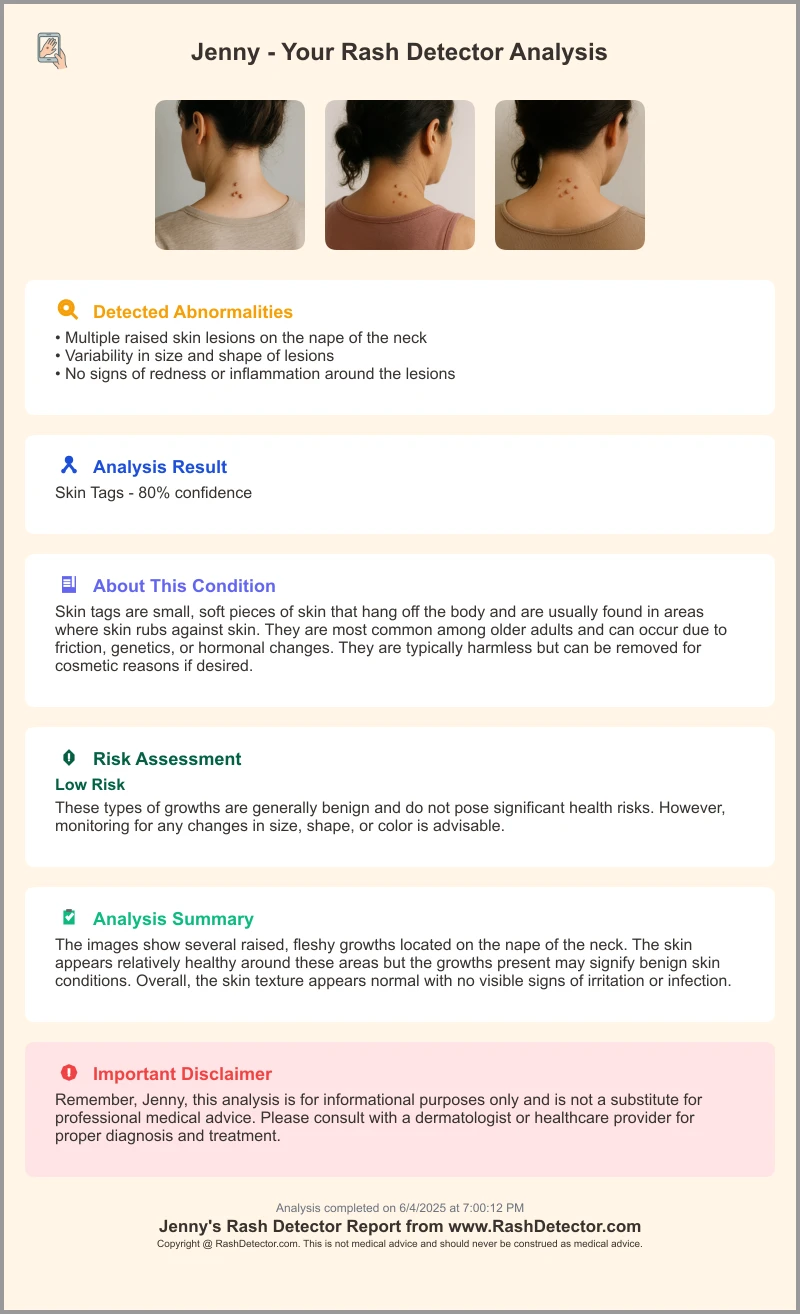
AI Skin Analysis App
For a quick at-home evaluation, try Rash Detector, an AI skin analysis app that offers instant insights based on your rash photos.
Exploring Treatment Options
A. Discontinuation or Adjustment of Causative Medication
- Under medical supervision, stopping the offending drug is the first step.
- Abrupt cessation without guidance can cause withdrawal or recurrence of the original illness.
- Your provider may switch you to a safer alternative (Rash Detector Blog).
Learn more at Merck Manuals, Johns Hopkins Medicine, and Becker ENT and Allergy.
B. Antihistamines
- Over-the-counter options: cetirizine, diphenhydramine for itch relief and hives control.
- Mechanism: block histamine receptors to reduce swelling and itching.
- Dosage: follow package or provider instructions; watch for drowsiness.
Sources: Becker ENT and Allergy, Divine Dermatology, and IU Health.
C. Corticosteroids
- Topical: clobetasol 0.05%, triamcinolone 0.1% for delayed rashes (apply 1–2 times daily for up to 2 weeks).
- Oral: for severe morbilliform eruptions and DRESS syndrome (2–6 week taper).
Topical sources: Harvard Health Blog, Mayo Clinic. Oral therapy: NYU Langone Health.
D. Advanced Treatments for Severe Reactions
- Epinephrine injection for anaphylaxis; carry an auto-injector.
- Immunomodulators and IV corticosteroids for Stevens–Johnson syndrome or toxic epidermal necrolysis.
References: Merck Manuals, IU Health, NYU Langone Health.
衣装を通販で探すときは、商品画像だけでなく実寸とセット内容も確認しておくと安心です。具体的な候補を確認する場合は、崩壊スターレイル コスプレ衣装から関連する商品や情報を比較できます。商品が届いたら付属品とサイズを早めに確認し、必要な調整を本番前に済ませましょう。
E. Topical and Self-Care Measures
- Cool compresses: 10–15 minutes to soothe itching (Becker ENT and Allergy).
- Avoid scratching: loose clothing, trimmed nails, soothing lotions.
- Moisturizers: fragrance-free creams and ointments support barrier repair.
F. Timeline for Resolution
- Mild rashes clear in days with antihistamines and topical steroids.
- Moderate reactions resolve in 1–2 weeks with combined treatments.
- Stevens–Johnson syndrome and toxic epidermal necrolysis require extended hospital care.
Prevention and Future Precautions
- Keep detailed records of drugs and reactions.
- Inform every healthcare provider about known drug allergies.
- Monitor closely during the first 14 days of any new prescription.
- Ask about safe alternatives if you have a class allergy (e.g., switch penicillin to a macrolide).
- Wear a medical alert bracelet or carry an allergy card listing your triggers.
Summary and Conclusion
A medication rash is an undesirable skin reaction caused by prescription or OTC drugs. Early recognition of symptoms—from hives and itching to blistering and systemic distress—guides prompt management. Diagnosis relies on clinical evaluation, labs, and sometimes skin biopsy. Key treatment strategies include discontinuation of the offending drug, antihistamines, corticosteroids, advanced therapies for severe reactions, and supportive self-care. Preventing recurrence hinges on thorough medical histories, patient education, and close monitoring of new medications.
For personalized medication rash treatment advice and before you stop or start any drug, consult your healthcare provider. Early action and tailored care ensure safer drug use and healthier skin.
FAQ
- What triggers a medication rash?
A medication rash is triggered when the immune system reacts to a drug or its byproducts, mistaking them for harmful invaders. - How are medication rashes diagnosed?
Diagnosis involves clinical evaluation, lab tests (e.g., blood work), and sometimes a skin biopsy to confirm the type of reaction. - When should I seek emergency care?
If you experience wheezing, difficulty breathing, rapid swelling of the face or tongue, severe pain, or signs of Stevens–Johnson syndrome, seek immediate medical attention. - Can medication rashes be prevented?
Prevention relies on keeping detailed drug records, informing providers of known allergies, and closely monitoring new prescriptions during the first two weeks. - What treatments work best for mild versus severe reactions?
Mild reactions often respond to antihistamines and topical steroids, while severe reactions may require systemic corticosteroids, immunomodulators, or hospital-based care.