Comprehensive Guide to Medication Rash Treatment: Identification, Management & Prevention
Explore a comprehensive guide to medication rash treatment, including identification, management, and prevention strategies to safeguard your health.
Estimated reading time: 7 minutes
Key Takeaways
- Medication-induced rashes range from mild hives to severe Stevens–Johnson syndrome.
- Early recognition and cessation of the offending drug are critical to prevent complications.
- Treatment options span home remedies, topical therapies, systemic medications, and hospital-based care.
- Watch for warning signs—blisters, mucosal involvement, fever—and seek prompt medical attention.
- Preventive measures include detailed histories, allergy documentation, and avoiding re-exposure.
Table of Contents
- Understanding Medication-Induced Rash
- Identifying a Medication Rash
- Steps for Medication Rash Treatment
- When to Seek Medical Advice
- Preventative Measures & Long-Term Management
- Conclusion
- Additional Resources
- FAQ
Understanding Medication-Induced Rash
"Early recognition and swift action can prevent mild rashes from becoming life-threatening."
What is a medication-induced rash?
A medication-induced rash is any skin eruption that appears after starting a drug or as a response to its metabolites. The presentation can vary widely, depending on the underlying mechanism.
Common patterns of drug eruption:
- Morbilliform rash: Resembles measles, with red macules and papules on the trunk.
- Urticaria (hives): Raised, intensely itchy welts that migrate across the skin.
- Fixed drug eruption: A solitary red or dark spot that recurs in the same location.
- Blistering rashes: Fluid-filled blisters that may break and peel.
- Pustular eruptions: Small, pus-filled bumps on an erythematous base.
Allergic vs. non-allergic reactions:
- Allergic (immune-mediated):
- Involves IgE antibodies or T-cells.
- Often worsens with re-exposure.
- Non-allergic side effects:
- Direct drug toxicity on skin cells.
- Photosensitivity or dose-related idiosyncratic reactions.
Risk factors for drug eruptions:
- High-risk medications: antibiotics, anticonvulsants, allopurinol.
- History of drug allergy or related sensitivities.
- Underlying conditions: HIV, cancer, autoimmune disorders.
- Genetic predispositions: certain HLA types linked to SJS/TEN.
Identifying a Medication Rash
Typical symptoms and signs:
- New red macules, patches, or papules appearing 1–3 weeks after drug initiation.
- Itching, burning, or stinging sensation on the affected skin.
- Migratory hives with mild swelling.
Warning features of severe reactions:
- Blisters or widespread skin peeling.
- Mucosal ulcers (mouth, eyes, genital areas).
- Systemic signs such as fever, lymphadenopathy, or organ involvement.
When to suspect a drug cause:
- Onset soon after starting a new medication or increasing the dose.
- Rash improves after discontinuation of the suspected drug.
- No alternative triggers (no new soap, food, or infection). For more details, see identifying drug-induced rash symptoms.
Key questions for patients:
- Timing: When did the rash and the medication start?
- Medication history: List all current and recent drugs, supplements, and past reactions.
- Rash details: Location, size, shape (flat, raised, vesicular).
- Symptoms: Itching, pain, burning.
- Systemic signs: Fever, sore throat, jaundice.
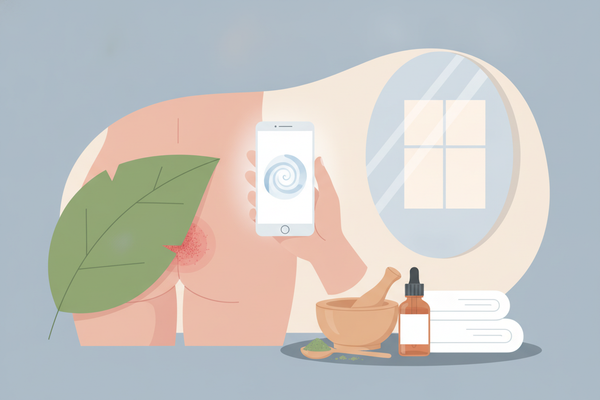
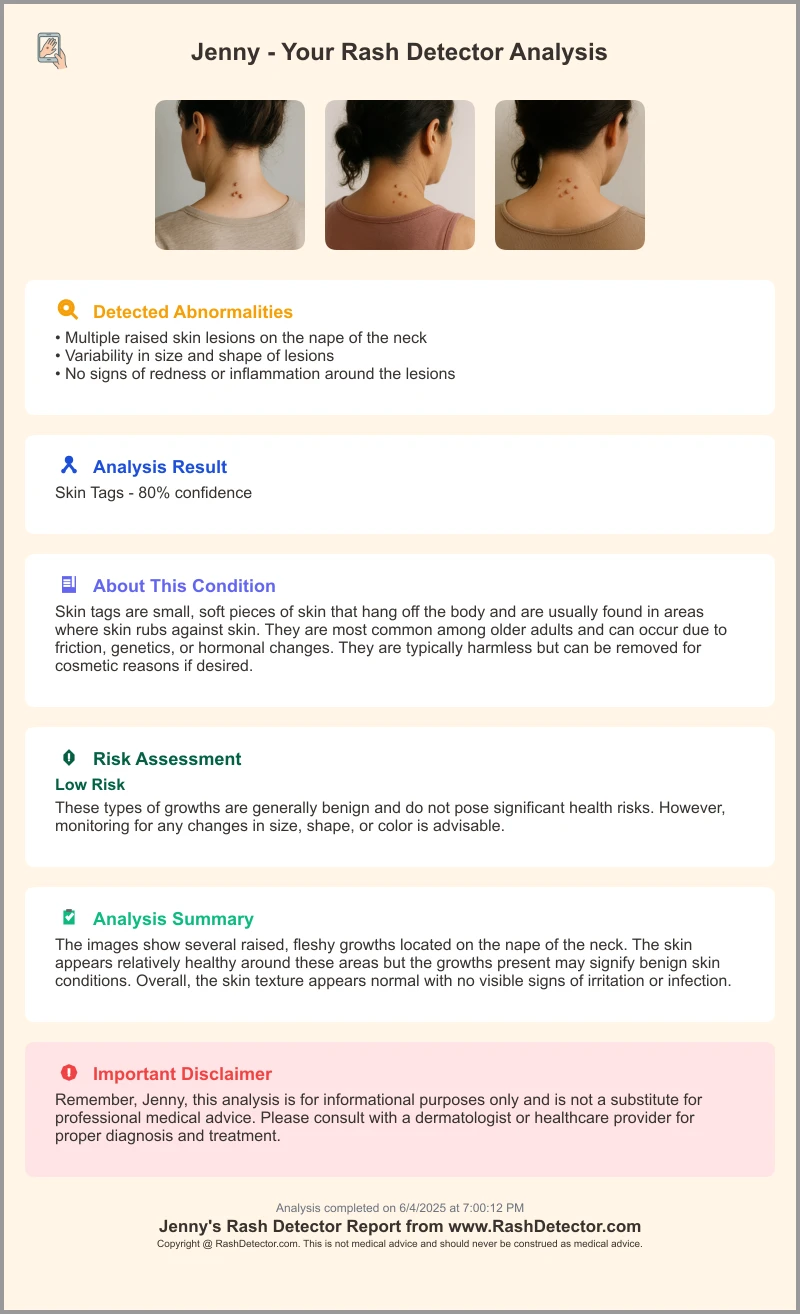
As an adjunct to clinical evaluation, Rash Detector offers an AI-powered Skin Rash App to analyze photos of your rash and generate a sample report for you and your provider.
Steps for Medication Rash Treatment
Immediate home steps for mild rash:
- Consult your healthcare provider before stopping any essential medication.
- Under professional guidance, cease non-critical suspected drugs and switch to safer alternatives if possible.
- Symptomatic relief:
- Cool compresses or showers to soothe irritated skin.
- Emollients to restore the skin barrier and reduce dryness.
- Oral antihistamines (cetirizine, diphenhydramine) for itching and hives.
- Mild topical corticosteroids (hydrocortisone) for localized inflammation.
Professional treatment for moderate rashes:
- Confirm and document the culprit drug in the medical record.
- Oral antihistamines and stronger topical steroids (betamethasone).
- Systemic corticosteroids (oral or IV) for extensive inflammation (DRESS, severe urticaria).
- Immunomodulators (IVIG, cyclosporine) for SJS/TEN in a hospital setting.
- Supportive inpatient care: fluids, wound care, and pain management.
- For a deeper dive, see managing drug allergy rashes.
When to Seek Medical Advice
Contact a provider promptly if:
- The rash spreads rapidly or covers large body areas.
- It is accompanied by fever, malaise, or severe discomfort.
- You are unsure about stopping an essential medication.
Urgent or emergency signs:
- Difficulty breathing, chest tightness, or wheezing.
- Angioedema: swelling of the face, lips, tongue, or throat.
- Widespread blistering, erosions, or peeling skin.
- Painful mouth or eye sores, red or swollen eyes.
- High fever with rash, jaundice, low urine output, or lymphadenopathy.
- Suspected SCARs (SJS/TEN, DRESS) requiring hospitalization.
Preventative Measures & Long-Term Management
Prevention strategies:
- Take a thorough medication and allergy history at every visit.
- Record known allergies on medical alert cards or devices.
- Avoid re-exposure to culprit and cross-reactive drugs.
- Prescribe the lowest effective doses and consider safer options for high-risk patients.
- Refer to allergy or dermatology specialists for testing or supervised drug challenges.
Long-term care:
- Keep a personal log of drug reactions: date, drug, rash type, management steps.
- Schedule regular follow-ups to review medications and update allergy lists.
- Learn early warning signs and when to seek medical help.
- Develop an emergency action plan, including carrying epinephrine if needed.
For guidance on tracking triggers, see the rashes trigger identification guide.
Conclusion
Effective medication rash treatment depends on early recognition, prompt evaluation, and supervised discontinuation of the offending drug. Rapid intervention and appropriate care—from home remedies to hospital-based therapies—prevent complications and protect patient health. Always collaborate closely with healthcare providers for safe, lasting management.
Additional Resources
- DermNet NZ – Drug eruptions
- Johns Hopkins Medicine – Drug rashes
- Harvard Health – When is a drug rash more than just a rash?
- NYU Langone – Medication for drug reactions & hives
FAQ
What should I do if I develop a rash after starting a new medication?
Contact your healthcare provider immediately. Document the timing of drug intake and rash onset, avoid stopping critical medications without advice, and consider home remedies like cool compresses until you can be evaluated.
初めて衣装を用意する際は、必要な付属品と別途準備するものを先に整理すると進めやすくなります。用途に合う候補を整理するときは、コスプレ衣装 フルセットで商品内容を見比べられます。使用後は素材に合う方法で手入れし、装飾を傷めない形で保管することが大切です。
How can I differentiate between a mild drug rash and a severe reaction?
Mild rashes are typically itchy or burning but confined to small areas with no systemic symptoms. Severe reactions manifest with blisters, mucosal ulcers, fever, or organ involvement—these require urgent medical attention.
Can over-the-counter creams help, and when is professional treatment necessary?
Over-the-counter emollients and mild corticosteroids can provide relief for mild rashes. However, professional treatment is necessary for widespread lesions, systemic symptoms, or if the rash worsens despite home care.