Medication Rash Treatment: A Comprehensive Guide to Identification and Management
Learn to identify and manage medication rash treatment, focusing on safe drug discontinuation, symptom relief, and prevention of skin reactions.

Estimated reading time: 8 minutes
Key Takeaways
- Range of reactions: Medication rashes can be mild morbilliform eruptions or severe SCARs like SJS/TEN and DRESS.
- Early recognition: Identifying patterns, timing, and risk factors is essential to intervene promptly.
- Diagnostic steps: A thorough history, physical exam, labs, biopsy, and allergy testing guide accurate diagnosis.
- Treatment principles: Safely stopping the culprit drug, symptom relief, and supportive care prevent complications.
- Prevention: Maintaining allergy records, informing providers, and monitoring new drugs reduce future risk.
Table of Contents
- Introduction
- Section 1: Understanding Medication-Induced Rashes
- Section 2: Identifying a Medication-Induced Rash
- Section 3: Diagnostic Approach
- Section 4: Treatment Options
- Section 5: Management and Prevention Strategies
- Conclusion
- FAQ
Introduction
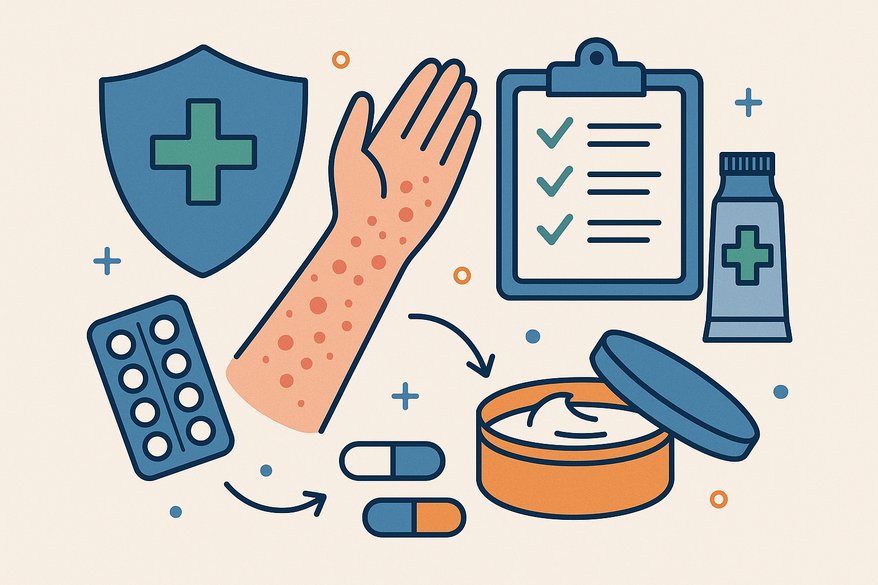
Medication rash treatment refers to the medical and self-care steps taken to manage skin reactions caused by drugs. This includes safely discontinuing the suspected medication, relieving symptoms with antihistamines or corticosteroids, and close monitoring under professional care. Early intervention can prevent progression from mild itching to life-threatening blistering syndromes.
Drug-induced rashes vary from simple morbilliform eruptions to severe cutaneous adverse reactions (SCARs) such as Stevens–Johnson syndrome or DRESS. Prompt, evidence-based guidance reduces complications and protects overall health.
In this guide, you will learn how to:
- Recognize common medication rash patterns
- Identify key timing and risk factors
- Follow a structured diagnostic approach
- Choose effective treatment options
- Implement prevention strategies for future drug allergies
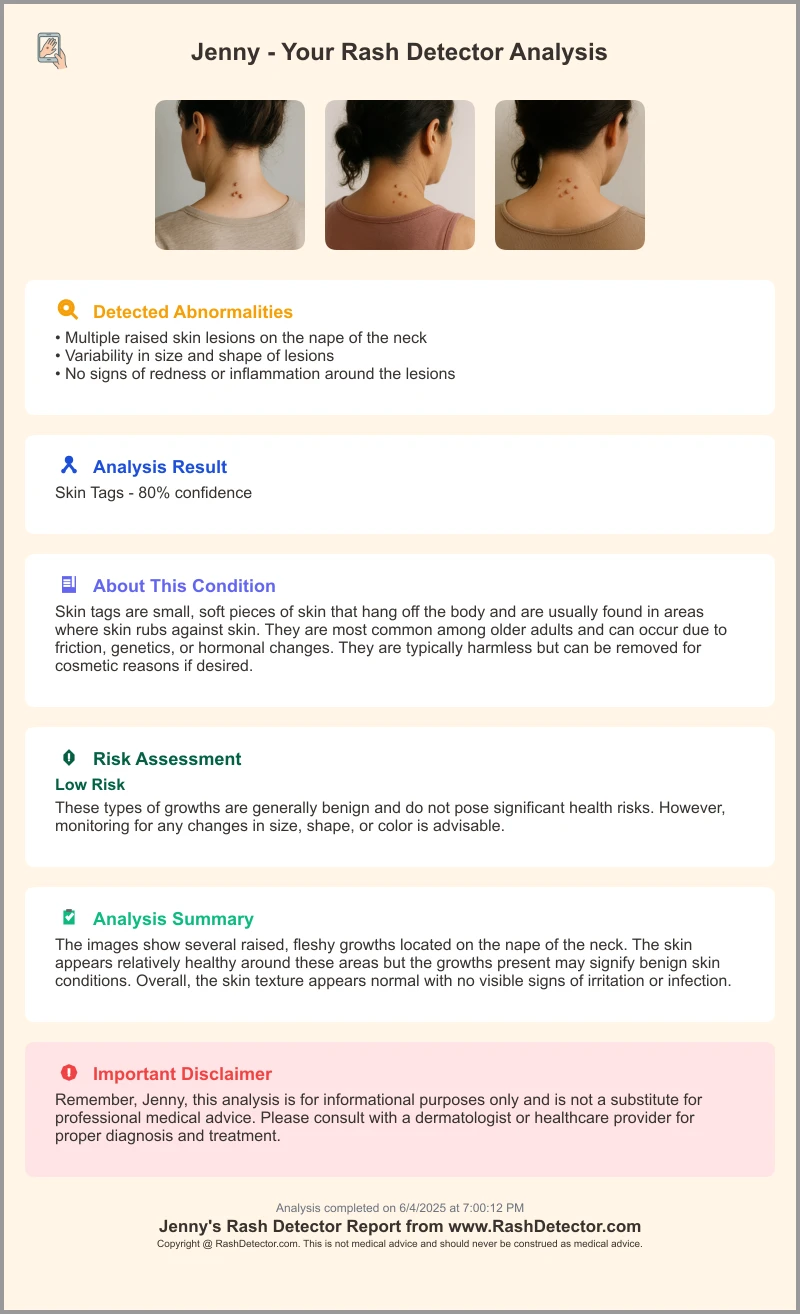
For quick AI-assisted insight, try Rash Detector, an AI Skin Analysis App that provides instant feedback on your rash.
Section 1: Understanding Medication-Induced Rashes
Medication-induced rashes (drug eruptions) are skin responses triggered by a drug or its metabolites. Reactions occur via allergic, immune or non-allergic pathways.
Key rash types include:
- Morbilliform: Flat or slightly raised red spots, often on the trunk.
- Urticaria (hives): Transient, itchy welts that may involve angioedema of lips or eyelids.
- Fixed drug eruptions: Single red or purple patch that recurs at the same site with re-exposure.
- Severe cutaneous adverse reactions (SCARs): Including SJS/TEN (widespread blistering, skin detachment) and DRESS (rash with fever, lymphadenopathy, organ involvement).
For more on drug-induced rash presentations and tips to recognize early warning signs, refer to our detailed post.
Section 2: Identifying a Medication-Induced Rash
Correct medication rash treatment begins by identifying the rash pattern, timing, and risk factors.
Rash Pattern Features
- Morbilliform: Small red spots or bumps; starts on trunk and spreads to limbs; appears 1–2 weeks after first exposure.
- Urticaria: Itchy, raised welts; lesions last under 24 hours, new ones appear; may involve facial or throat swelling.
- Fixed Drug Eruption: Well-defined round or oval patches that recur in the same spot with re-exposure.
- SCARs (SJS/TEN, DRESS): Painful blisters, widespread skin loss, mucosal involvement, fever and lymph node swelling.
Timing Clues
- Immediate (minutes–hours): Often urticaria or anaphylaxis.
- Delayed (days–weeks): Most morbilliform eruptions, DRESS and SJS/TEN.
- Rarely, onset appears after stopping the drug.
Risk Factors & History
- Recent new medication or dose change (including OTC/herbals).
- Prior drug allergy or similar rash.
- Use of high-risk drugs (antibiotics, anticonvulsants, allopurinol).
- Concurrent viral infections or immune disorders.
- Family history or genetic predisposition.
Document the exact drug name, start date and rash progression to aid diagnosis.
Section 3: Diagnostic Approach
A structured assessment ensures timely, accurate diagnosis of drug rashes.
Clinical Evaluation
- Medication History: Prescription, OTC and supplements; note any dose changes.
- Physical Exam: Assess rash morphology, distribution and mucosal involvement.
- Systemic Assessment: Check for fever, respiratory status and hepatic/renal lab abnormalities.
Diagnostic Tools
- Skin biopsy: Clarifies diagnosis in uncertain or severe SCARs.
- Blood tests: Evaluate liver enzymes, renal function and blood counts for DRESS.
- Allergy testing: Skin prick or drug challenge in specialized centers.
Triage Criteria
Seek urgent care if you notice:
- Anaphylaxis: Breathing difficulty, throat tightness or hypotension.
- Facial or airway swelling.
- Fever with blistering and mucosal sores.
- Rapidly spreading or painful rash.
Schedule a routine consult for new rashes without systemic signs, persistent discomfort or uncertainty about drug continuation. Never stop essential medications without professional advice.
Section 4: Treatment Options
Effective medication rash treatment centers on three principles: stop the culprit drug safely, relieve symptoms and support skin healing.
1. Discontinue Offending Medication
The rash often improves within days and clears in 1–2 weeks. Clinicians may arrange substitute therapy.
2. Mild Reactions
- Oral antihistamines (diphenhydramine, cetirizine) to reduce itch.
- Low-strength topical corticosteroids (hydrocortisone).
- Emollients and moisturizers for skin barrier support.
3. Moderate Reactions
- Prescription-strength topical steroids or a short course of oral prednisone.
- Combination or higher-dose antihistamines if needed.
4. Severe Allergic Reactions
- Emergency epinephrine injection for anaphylaxis.
- High-dose antihistamines and systemic steroids.
5. SCARs (SJS/TEN, DRESS, AGEP)
- Immediate drug withdrawal and hospitalization (often ICU or burn unit).
- Supportive care: IV fluids, wound and pain management, infection control.
- Consider IVIG or immunosuppressants on a case-by-case basis.
6. Non-Pharmacological Support
- Cool compresses or baths to soothe inflammation.
- Wear loose, soft clothing; avoid irritants.
- Maintain hydration and rest.
For comprehensive strategies on managing drug allergy rashes, see our related guide.
Section 5: Management and Prevention Strategies
Proper follow-up and prevention reduce recurrence and safeguard health.
Managing Residual Symptoms
- Rash clearance may take 1–2 weeks after discontinuation.
- Continue symptomatic care with antihistamines, steroids and moisturizers.
- Monitor organ function in severe cases (liver, kidneys, blood counts).
Preventing Future Rashes
- Maintain a written record of drug allergies (name, reaction type, date).
- Inform all healthcare providers and pharmacists of past reactions.
- Wear medical alert jewelry for severe events.
- Discuss alternatives with your provider and avoid cross-reactive drugs.
Tips When Starting New Medications
- Ask about skin side effects and warning signs before initiation.
- Self-check skin daily during the first weeks on high-risk drugs.
- Report any new rash, itch or swelling immediately.
- Do not adjust doses or add medications without consultation.
Enhancing Patient-Provider Communication
- Report even mild rashes so clinicians can assess risk vs. benefit.
- Providers should give clear written guidance on when to seek emergency care.
- Understand how to use an epinephrine auto-injector if indicated.
- Request referrals for allergy testing or specialist evaluation.
Conclusion
Recognizing the link between a new or changed medication and a rash is essential. Effective treatment starts by identifying and, when safe, stopping the offending drug. Symptom relief with antihistamines, corticosteroids and supportive skin care follows. Severe reactions may require hospitalization and specialized care.
Because serious drug rashes can progress rapidly and involve organs, guidance from dermatologists, allergists or primary care providers is crucial. If you suspect a medication-induced rash—especially with breathing issues, fever, blisters or mucosal sores—contact your healthcare provider or seek urgent care immediately. Proper management and preventive strategies ensure better outcomes and safer future drug use.
候補を比べる場合は、目的、使用場面、サイズ、付属品を同じ基準で確認すると判断しやすくなります。具体的な候補を確認する場合は、ホロライブ コスプレから関連する商品や情報を比較できます。複数の商品を比較し、自分の用途、予算、使用環境に合うものを選ぶことが大切です。
FAQ
- How soon does a medication rash appear? Most rashes appear days to weeks after starting or changing a drug, but urticaria can emerge within hours.
- Can I stop my medication immediately if I get a rash? Do not discontinue critical medications without medical advice. Consult a professional to weigh risks and alternatives.
- When should I seek emergency care for a rash? If you develop facial or airway swelling, breathing difficulty, high fever, blisters or mucosal sores, seek urgent care.
- Are patch tests reliable for drug allergies? Patch tests and skin prick tests can help but are not foolproof; specialized challenge tests in controlled settings may be needed.
- How can I prevent future drug-induced rashes? Keep an allergy record, inform all providers, avoid cross-reactive medications and consider genetic screening for high-risk drugs.