Medication Rash Treatment: A Comprehensive Guide
Learn how to effectively identify, diagnose, and treat medication-induced rashes with expert-backed strategies and practical home management tips.
Estimated reading time: 8 minutes
Key Takeaways
- Range of severity: Medication-induced rashes can be as mild as itching and redness or progress to life-threatening conditions.
- Prompt action: Early recognition and discontinuation of the culprit drug prevent complications.
- Symptomatic relief: Antihistamines, corticosteroids, and skin barriers support healing.
- Professional evaluation: Severe or atypical rashes require specialist care and possible hospitalization.
Table of Contents
- Introduction
- Understanding Medication-Induced Rashes
- Identifying the Rash
- Diagnosing the Rash
- Options for Medication Rash Treatment
- Home Care and Management Strategies
- Prevention and Future Considerations
- Conclusion
- FAQ
Introduction
Medication rash treatment starts with understanding that a medication-induced rash is a skin reaction resulting from prescription, over-the-counter, or herbal drugs. These drug rashes vary from mild redness and itching to severe blistering and systemic involvement. Timely intervention prevents progression to conditions like Stevens–Johnson syndrome or toxic epidermal necrolysis.
Inadequate or delayed care can allow a simple morbilliform eruption to become widespread, leading to mucosal sores and organ dysfunction. Prompt recognition reduces hospital admissions, minimizes scarring, and improves outcomes.
This guide equips readers with clear steps for identifying, diagnosing, treating, home-managing, and preventing medication-induced rashes. Each section draws on practical tips and expert-backed data.
- GoodRx: Drug Rash Skin Reaction
- Johns Hopkins Medicine: Drug Rashes
- NYU Langone Health: Medication for Drug Reactions & Hives
Understanding Medication-Induced Rashes
What is a medication-induced rash?
A medication-induced rash (also called a drug rash or cutaneous drug eruption) is any skin reaction triggered by a medicine:
- Allergic immune responses in which IgE or T-cells attack drug molecules.
- Non-allergic toxic effects such as direct irritation or photosensitivity.
- Delayed hypersensitivity appearing days to weeks after drug initiation.
Mechanisms behind drug rashes
- Allergic reactions release histamine and cytokines, causing redness, swelling, and itch.
- Toxic side effects may sensitize skin to UV light, leading to phototoxic eruptions.
- Delayed reactions involve memory T-cells and manifest as widespread pruritic eruptions.
Identifying the Rash
Signs & Symptoms
- Morbilliform rash: pink or red macules/papules resembling measles.
- Pruritus or burning sensation.
- Urticaria (hives): raised, transient wheals.
- Dry, flaky skin or mild edema.
Diagnosing the Rash
Clinical Evaluation
- Skin exam: lesion type, pattern, distribution, severity.
- Vital signs: temperature, blood pressure, respiratory rate.
- Medication review: prescription, OTC, herbal, and supplements.
Diagnostic Tests & Procedures
- Skin biopsy: histopathology in severe or blistering cases.
- Blood tests: CBC with differential, liver/kidney panels, inflammatory markers, eosinophilia (DRESS).
- Allergy testing: patch tests for recurrent or unclear reactions.
- Hospital observation: for critical cases requiring supportive care.
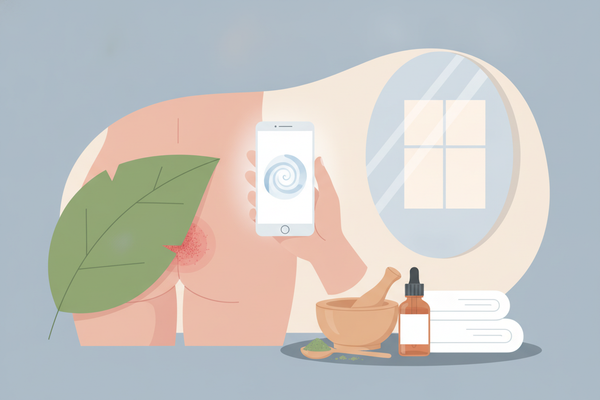
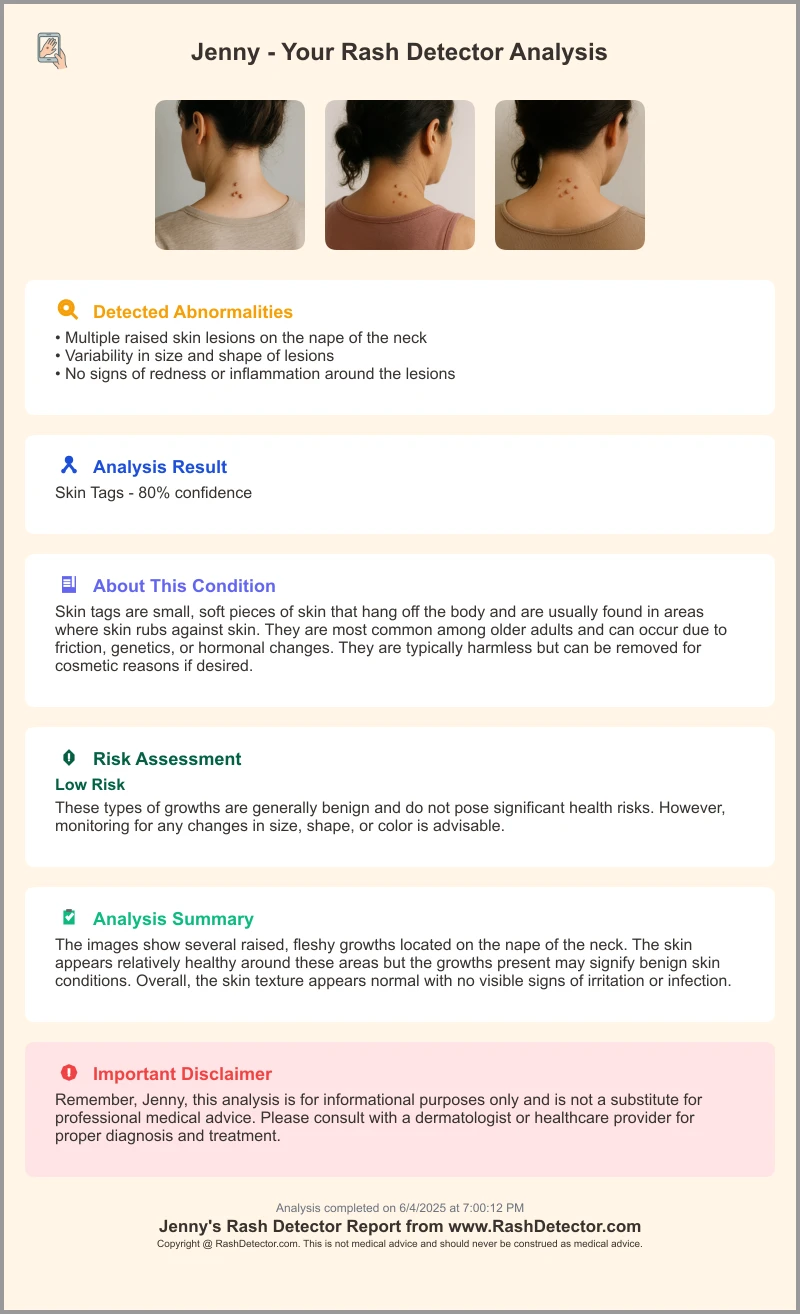
For quick, preliminary assessment, you can upload photos of your rash to Rash Detector and get an instant AI-generated report like this sample:
Options for Medication Rash Treatment
Core Principle
Identify and discontinue the offending medication under medical supervision to allow the rash to resolve.
- Discontinuation or Substitution
Stop the causative drug with clinician approval. Switch to an alternative with lower risk when essential drugs are involved. - Symptomatic Treatments
Over-the-counter (with provider approval)
- Oral antihistamines (cetirizine, loratadine) to relieve itch.
- Low- to mid-potency topical corticosteroids (hydrocortisone) for localized inflammation.
- Emollients and moisturizers to restore the skin barrier.
Prescription Therapies
- Strong topical corticosteroids for extensive or refractory lesions.
- Short-course oral corticosteroids (prednisone) with tapering for moderate–severe reactions.
- High-dose antihistamines or epinephrine for anaphylaxis.
- IVIG or immunosuppressants for Stevens–Johnson syndrome/TEN.
- Hospital-Based Care
Admission for life-threatening reactions; wound care; IV fluids; nutritional support; multidisciplinary team.
Home Care and Management Strategies
Self-care tips for mild rashes (after clinician confirmation): cool compresses, fragrance-free moisturizers, loose clothing, approved OTC antihistamines, low-potency steroid creams. Avoid scratching, hot water, and harsh soaps.
Prevention and Future Considerations
Prevent re-exposure to culprit drugs; discuss cross-reactivity; keep an updated allergy list; consider medical alert jewelry; seek allergist or dermatologist evaluation.
For long-term safety strategies after a drug rash, explore this guide.
Conclusion
Medication-induced rashes range from mild irritation to severe systemic reactions. Effective treatment hinges on prompt recognition, medical evaluation, and safe discontinuation of the offending drug. Symptomatic relief with antihistamines, corticosteroids, and specialist intervention supports healing and prevents complications. Always consult a healthcare professional if a rash appears during medication use—especially if red-flag symptoms arise.
ウィッグを通販で探すときは、つむじ、毛量、長さ、セットできる範囲を確認しておくと安心です。用途に合う候補を整理するときは、ロングウィッグ コスプレ 通販で商品内容を見比べられます。使用後は毛流れを整えて十分に乾かし、形が崩れない状態で保管することが大切です。
FAQ
- What should I do if I develop a rash after taking medication?
Stop the medication, contact your healthcare provider promptly, and follow their guidance. - How can I distinguish a drug rash from other skin issues?
Drug rashes often appear symmetrically, coincide with drug timing, and may include itching or systemic symptoms. - Are over-the-counter treatments safe for drug rashes?
OTC antihistamines and low-potency corticosteroids can help mild cases but always consult your clinician first. - When is a drug rash an emergency?
If you experience blistering, fever, difficulty breathing, or widespread pain, seek immediate medical attention.