Complete Guide to Medication Rash Treatment: Identification, Management, and Prevention
Learn how to identify, manage, and prevent medication rashes with our comprehensive guide. Early recognition and effective treatment can prevent complications.

Estimated reading time: 10 minutes
Key Takeaways
- Early recognition prevents progression to severe reactions.
- Discontinue offending drugs safely and manage symptoms promptly.
- Be aware of red flags like breathing issues, blistering, and fever.
- Use antihistamines, corticosteroids, and supportive skin care.
- Prevention through thorough allergy history and close monitoring.
Table of Contents
- Understanding Medication-Induced Rashes
- Signs and Symptoms of Medication Rashes
- Diagnosis and When to Seek Medical Advice
- Medication Rash Treatment Options
- Prevention and Risk Management
- Case Studies / Real-Life Examples
- Conclusion and Key Takeaways
- FAQ
Understanding Medication-Induced Rashes
A medication rash is a new skin eruption that appears after starting or changing a drug. It may be immune-mediated or non-immune.
- Immune mechanisms
- IgE-mediated hypersensitivity (immediate hives, anaphylaxis)
- T-cell–mediated delayed reactions (morbilliform rash, DRESS)
- Non-immune mechanisms
- Direct toxic effect (photosensitivity, fixed eruptions)
- Pharmacologic side effects (NSAID rash)
Common clinical patterns:
- Morbilliform eruptions (measles-like red macules and papules)
- Urticaria (hives: itchy wheals)
- Fixed drug eruptions (recurrent dark patch at same spot)
- Severe reactions:
- Stevens–Johnson syndrome (SJS) / toxic epidermal necrolysis (TEN)
- DRESS (Drug Reaction with Eosinophilia and Systemic Symptoms)
Frequently implicated drug classes:
- Antibiotics (penicillins, cephalosporins, sulfonamides)
- Anticonvulsants (carbamazepine, lamotrigine, phenytoin)
- Allopurinol (gout therapy)
- NSAIDs (ibuprofen, naproxen)
- ACE inhibitors
- Chemotherapy agents
Signs and Symptoms of Medication Rashes
- Maculopapular rash: red spots and patches that may merge
- Pruritus: intense itching
- Urticaria and angioedema: transient hives and swelling of lips, eyelids
- Blistering or peeling: warning signs for SJS/TEN
- Mucosal involvement: painful mouth or eye sores
- Systemic signs: fever, malaise, lymphadenopathy
Contrasting drug rashes with other dermatitis:
- Timing:
- Drug rash: appears 4–14 days after most drugs; immediate for hives
- Contact dermatitis: hours after exposure; chronic eczema: persistent
- Distribution:
- Drug rash: generalized, symmetrical, often on trunk
- Contact dermatitis: localized to contact site
- Systemic features:
- Drug rash: may have fever, organ involvement
- Contact dermatitis: usually confined to skin
- Course after stopping drug:
- Improves within days to weeks
- Other dermatitis may persist without targeted therapy
Diagnosis and When to Seek Medical Advice
Clinical diagnosis steps:
- Detailed drug history (prescription, OTC, supplements)
- Record start/stop dates and prior reactions
- Physical exam: rash type, distribution, mucosal checks
- Labs/biopsy for suspected DRESS or blistering eruptions
- Dechallenge (stop drug) and cautious rechallenge in specialized settings
Red flags requiring emergency care:
- Anaphylaxis: difficulty breathing, angioedema, hypotension
- Rapidly spreading blistering or mucosal sloughing (SJS/TEN)
- High fever, systemic illness, altered mental status
Criteria for self-management:
- Mild, limited rash without systemic signs
- No breathing issues, swelling, or mucosal involvement
- Do not stop critical medications (heart, seizure drugs) without clinician input
Medication Rash Treatment Options
Effective rash treatment prevents progression and promotes healing:
Stop or Switch the Offending Medication
- Discontinue the suspected drug when safe
- Never stop essential meds (e.g., transplant, seizure drugs) without medical advice
- Discuss alternative therapies with your provider
Over-the-Counter Strategies
- Oral antihistamines (diphenhydramine, loratadine, cetirizine) for itching and hives
- Topical low-potency corticosteroids (hydrocortisone) to reduce redness
- Soothing agents: calamine lotion, colloidal oatmeal baths
- Skin care: fragrance-free moisturizers, avoid irritants
- For detailed OTC options, see best anti-itch cream solutions
Prescription Treatments
- Stronger antihistamines or combination agents for severe urticaria
- Medium- to high-potency topical steroids for intense inflammation
- Oral or IV corticosteroids for widespread or systemic reactions
- Epinephrine injections for anaphylaxis
- IVIG and specialized burn-unit care for SJS/TEN
- Treatment durations: 1–2 weeks for mild reactions; 6+ week taper for DRESS
Home Remedies & Self-Care (Caution)
- Cool compresses and lukewarm oatmeal baths
- Gentle cleansing and loose clothing
- Avoid unvetted herbal or home remedies
- Do not overuse topical steroids; follow medical guidance
For a more in-depth look at identification, management, and prevention, see our Comprehensive Guide to Medication Rash Treatment.
Prevention and Risk Management
Key strategies to reduce harm:
- Maintain an up-to-date list of drug allergies/reactions in your health record or app
- Communicate allergy history to every provider and pharmacist
- Strictly avoid drugs that caused severe reactions; consider medical ID bracelets
- Monitor high-risk medications (anticonvulsants, allopurinol) with scheduled follow-up
- Watch for early rash signs and have a clinician contact plan
- For focused steps, see managing drug allergy rash
Case Studies / Real-Life Examples
Case 1: Mild Morbilliform Rash from Amoxicillin
- Timeline: Day 5 – itchy red spots on trunk
- Action: Discontinued amoxicillin; switched antibiotic
- Treatment: OTC antihistamine, hydrocortisone cream
- Outcome: Rash resolved in 10 days; patient avoids related penicillins
Case 2: Urticaria and Angioedema after Ibuprofen
- Timeline: Within 2 hours – hives, lip swelling, mild throat tightness
- Action: Emergency visit; epinephrine, antihistamines, steroids
- Outcome: Rapid relief; advised to avoid NSAIDs and carry auto-injector
Case 3: DRESS from Allopurinol
- Timeline: 3 weeks – rash, facial edema, fever, elevated liver tests
- Action: Hospitalization; stopped allopurinol; systemic corticosteroids
- Outcome: Gradual improvement; slow steroid taper to prevent relapse
Case 4: SJS from Anticonvulsant
- Timeline: 2 weeks – flu-like prodrome, blistering, mucosal sloughing
- Action: ICU admission; IV fluids, wound care, pain management, IVIG
- Outcome: Long hospitalization; permanent avoidance of the offending drug
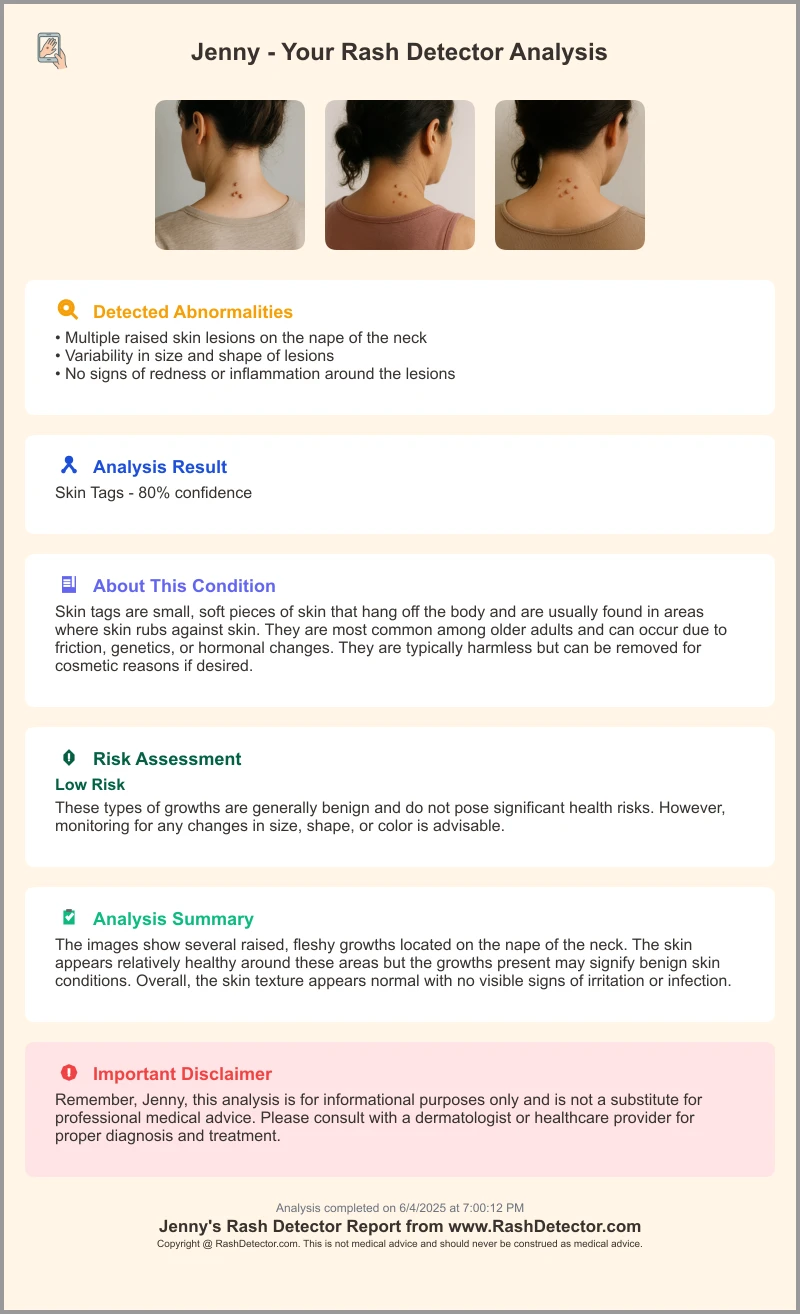
For quick, AI-driven analysis of medication rashes, try uploading photos to Rash Detector. The AI Skin Analysis App returns an instant sample report showing possible diagnoses and confidence scores.
Conclusion and Key Takeaways
Medication-induced rashes range from mild eruptions to life-threatening reactions. Early recognition and prompt treatment are vital:
- Identify and discontinue the offending drug safely.
- Provide symptom relief with antihistamines, corticosteroids, and supportive care.
- Recognize red flags—breathing issues, swelling, blistering, fever—and seek urgent care.
Prevention hinges on a detailed medication history, clear communication of allergies, careful monitoring of new or high-risk drugs, and strict avoidance of previously offending medications. Timely intervention improves outcomes and reduces complications for patients facing drug rashes.
FAQ
- What is a medication-induced rash?
A skin reaction that appears after starting or changing a drug, ranging from mild redness to severe blistering. - How soon do medication rashes appear?
Most rashes develop 4–14 days after starting treatment, though hives can appear immediately. - When should I seek emergency care?
If you experience breathing difficulties, rapid blistering, mucosal sloughing, high fever, or systemic illness. - Can mild rashes be treated at home?
Yes—if limited and without systemic signs—with OTC antihistamines, topical steroids, and soothing baths. - How can I prevent future reactions?
Keep an updated allergy list, inform all providers, avoid known offenders, and monitor high-risk medications.