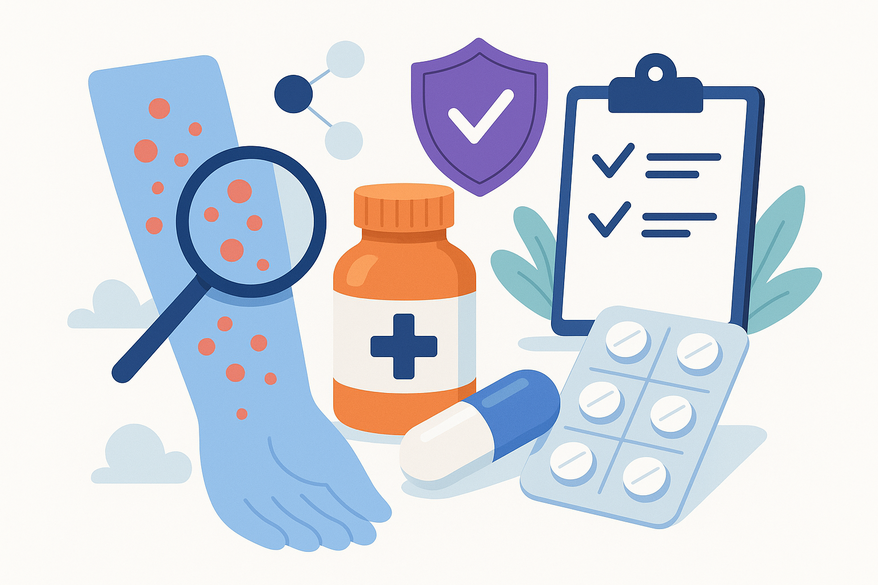
Medication Rash Treatment: How to Identify, Manage, and Prevent Drug-Induced Rashes
Discover how to effectively manage medication rash with identification tips, treatment strategies, and prevention methods for safer drug use.
Estimated reading time: 8 minutes
Key Takeaways
- Early recognition of medication-induced rashes is crucial.
- Proper management spans home care, OTC remedies, and prescription options.
- Preventive strategies reduce recurrence and severe reactions.
- Emergency red flags indicate when to seek immediate care.
- Record keeping: maintain a medication and symptom diary.
Table of Contents
- Introduction
- Understanding Medication-Induced Rashes
- Identifying a Medication Rash
- Medication Rash Treatment Options
- Preventive Measures & Monitoring
- When to Consult a Healthcare Professional
- Integrating AI Tools for Rash Assessment
- Conclusion
- Additional Resources
- FAQ
Introduction
Medication rash treatment begins with recognizing that a medication-induced rash is an abnormal cutaneous reaction caused by a prescription drug, over-the-counter medicine, or supplement. Early recognition and stopping the offending medication safely are crucial to prevent serious complications like anaphylaxis or Stevens–Johnson syndrome.
This post will walk you through:
- Identifying medication-induced skin reactions
- Managing rashes with home, OTC, and prescription therapies
- Preventing future drug-related eruptions
Understanding Medication-Induced Rashes
What Is a Medication-Induced Rash?
- A drug-induced skin reaction occurs when a medicine triggers inflammation or damage in the skin layers.
- Two main types:
- Immunologic/allergic reactions – immune system misidentifies the drug, leading to antibody- or T-cell–mediated inflammation.
- Non-immunologic/toxic reactions – the drug directly harms skin cells or alters normal processes without classic allergy mechanisms.
How It Differs from Other Skin Reactions
- Onset is typically days to weeks after starting or changing a medication.
- Rash often improves once the drug is stopped under medical supervision.
- Recurs rapidly with re-exposure to the same medication.
Common Causes & Trigger Medications
- Antibiotics (penicillins, sulfonamides)
- Anticonvulsants (e.g., carbamazepine)
- NSAIDs (ibuprofen, naproxen)
- Gout medications (allopurinol)
- Herbal supplements or over-the-counter remedies
For more on spotting drug-related skin changes, see identifying drug-induced rash symptoms.
Typical Symptoms to Watch For
- Red or pink patches
- Small, measles-like bumps (morbilliform rash)
- Itchy hives (urticaria) with raised welts
- Burning, stinging, or pruritus
Severe signs (SJS/TEN warning): blisters or peeling skin, mucosal involvement (mouth, eyes, genitals), fever, joint pain, swollen lymph nodes.
Identifying a Medication Rash
Key Clues for Recognition
- Track timing: rash appears days to weeks after drug initiation or dose change.
- Observe distribution: often starts on trunk and spreads outward.
- Rule out other causes: new soaps, foods, infections.
- Note improvement after stopping the suspect medication under a doctor’s guidance.
- Maintain a medication and symptom diary listing the drug name, dose, start date, and rash onset.
When to Seek Medical Advice
Routine Provider Visit
- Any new rash shortly after starting or changing medications.
- Rash that spreads or causes severe itch or discomfort.
- Mild systemic symptoms accompany the rash (low-grade fever, malaise).
Emergency Red Flags (Call 911 or Go to ER)
- Difficulty breathing, wheezing, or throat tightness.
- Rapid facial or tongue swelling.
- Rapidly forming blisters or widespread skin peeling.
- High fever with rash and mucosal sores.
Medication Rash Treatment Options
1. Stopping or Switching the Offending Medication
- Discontinue the culprit drug under medical supervision to prevent progression.
- Some medications require tapering (e.g., corticosteroids, heart or seizure drugs) to avoid withdrawal or rebound flares.
- Substitute with safer alternatives, avoiding drugs with cross-reactive potential.
2. Over-the-Counter Remedies & Home Care
- Oral antihistamines (cetirizine, diphenhydramine) for itch relief.
- Topical hydrocortisone 1% cream for mild localized inflammation.
- Cool compresses or cool showers to soothe irritation.
- Fragrance-free, hypoallergenic moisturizers to repair the skin barrier.
- Loose, breathable cotton clothing and gentle cleansers.
- Hydration and avoiding scratching with short nails or soft mittens.
3. Prescription Therapies for Severe Cases
- Stronger topical steroids (triamcinolone 0.1%) for intense localized lesions.
- Oral corticosteroid taper (prednisone) for widespread eruptions.
- Systemic immunosuppressants (cyclosporine) or specialized SJS/TEN protocols in hospital settings.
- Epinephrine auto-injector for anaphylaxis, with emergency care.
Preventive Measures & Monitoring
Monitoring Skin with New Medications
- Start at the lowest effective dose when clinically feasible.
- Check your skin daily for the first 2–4 weeks after initiation.
- Photograph and date any new redness, bumps, or itch.
- Keep your medication diary updated with skin observations.
Strategies to Reduce Risk
- Inform all healthcare providers about past drug reactions; carry an allergy list with details.
- Avoid re-exposure to known triggers and ask about cross-reactivity in drug classes.
- Use a long-term medication diary to flag patterns over months or years.
- Consider specialist testing (skin prick or patch tests) for unclear or severe cases.
Discussing Side Effects Before Starting New Drugs
- Ask about common versus serious skin reactions and the expected timeframe.
- Clarify action plans: when to use OTC relief, when to stop the drug, when to call for help.
- Explore alternative treatments if you have a history of drug-induced rashes.
When to Consult a Healthcare Professional
Severity Indicators & Warning Signs
Contact your doctor if a rash appears soon after a medication change and spreads or becomes very itchy. Seek emergency care for difficulty breathing, facial swelling, rapid blistering, skin peeling, high fever, or mucosal sores.
For long-term safety strategies after a drug allergy, see managing drug allergy rash.
Follow-Up Care & Long-Term Management
- Document the culprit medication and reaction type clearly in your medical records.
- Consider referral to a dermatologist or allergist for specialized testing and desensitization.
- Plan safe drug alternatives for ongoing health needs.
- Ensure allergy information is prominent in every health record to guide future prescribing.
Integrating AI Tools for Rash Assessment
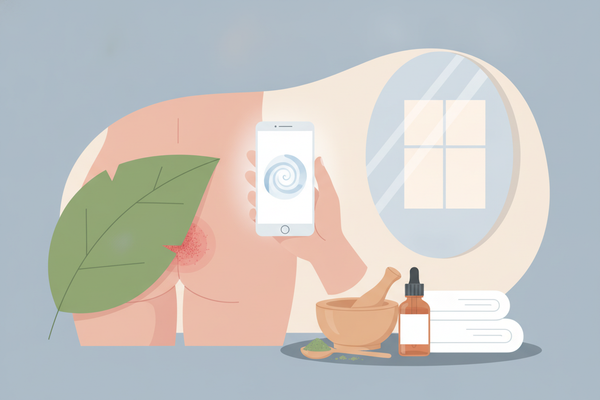
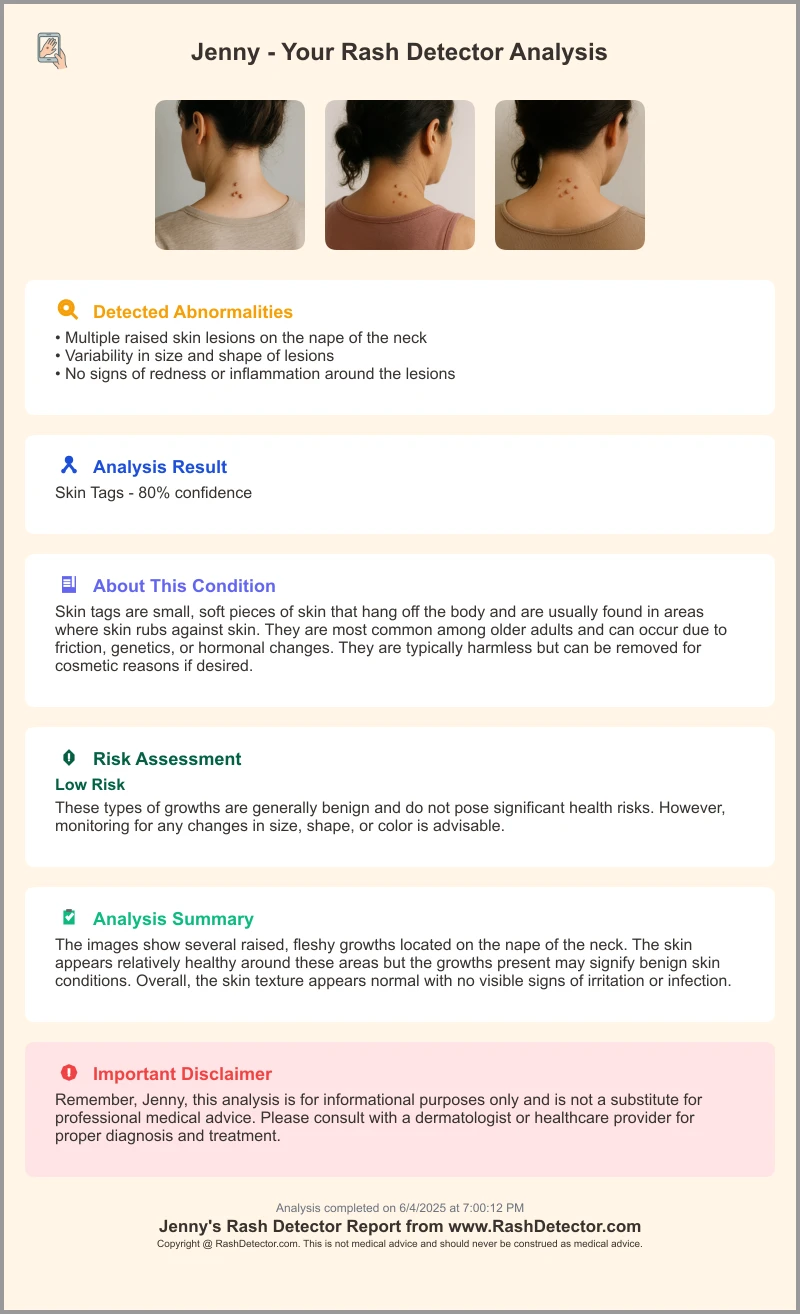
For a rapid, AI-driven preliminary evaluation of medication-induced rashes, consider using the Rash Detector Skin Analysis App, which lets you upload images and receive an instant sample report.
Conclusion
Medication rash treatment hinges on four pillars: early recognition, safe drug management, effective symptom relief, and proactive prevention. Balancing self-monitoring with home/OTC care and timely professional consultation ensures both safe management of your current condition and protection against serious drug-induced skin reactions.
Share your experiences, ask questions in the comments, and always consult your healthcare provider when in doubt.
Additional Resources
- American Academy of Dermatology (AAD) – patient information on drug rashes
- National Institute of Allergy and Infectious Diseases (NIAID) – guidelines on drug allergy
- Stevens–Johnson Syndrome Foundation – patient support and education
- Online forums: SJS Support Network, Drug Allergy Community
FAQ
What causes medication-induced rashes?
Medication rashes result from immune or toxic reactions to drugs, ranging from mild irritation to life-threatening conditions like Stevens–Johnson syndrome.
How can I relieve a mild drug rash at home?
Use OTC antihistamines, topical hydrocortisone, cool compresses, and gentle moisturizers, while avoiding scratching and keeping skin hydrated.
When should I stop a medication if I develop a rash?
Always consult a healthcare provider before stopping any drug. Seek immediate help if you experience breathing difficulty, rapid swelling, or widespread blistering.
How do I prevent future drug rashes?
Keep a detailed allergy list, maintain a medication diary, inform all healthcare providers of past reactions, and consider allergy testing for unclear cases.
Can AI tools help assess my rash?
Yes, apps like the Rash Detector Skin Analysis App can provide a preliminary evaluation, but they should not replace professional medical advice.