Medication Rash Treatment: A Comprehensive Guide
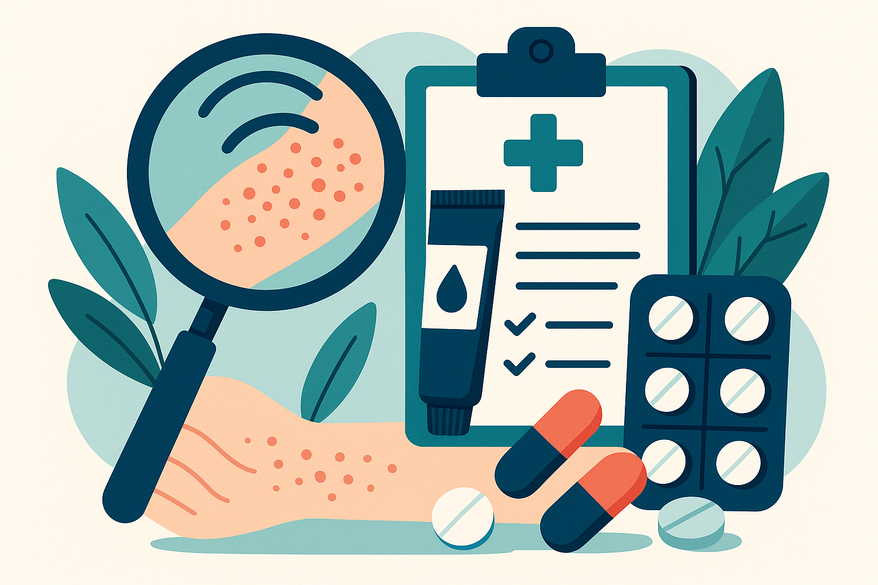
Learn how to identify, manage, and prevent drug-related skin reactions with this comprehensive guide on medication rash treatment.
Estimated reading time: 10 minutes
Key Takeaways
- Recognize early warning signs of drug-induced rashes for prompt and safe medication rash treatment.
- Differentiation between mild eruptions and life-threatening reactions like SJS/TEN is critical.
- Diagnosis relies on a thorough drug history, clinical examination, and laboratory or biopsy when needed.
- Management includes discontinuing the culprit drug, symptomatic relief with antihistamines and steroids, and emergency care for severe cases.
- Prevention involves clear documentation, medical ID use, and specialist consultations for future drug safety.
Table of Contents
- 1. Understanding Medication-Induced Rashes
- 2. Types of Medication Rashes
- 3. Signs and Symptoms
- 4. Diagnosis
- 5. Treatment Strategies
- 6. Preventive Measures and Long-Term Management
- 7. Patient Guidance and Next Steps
- Conclusion
- Additional Resources
- FAQ
1. Understanding Medication-Induced Rashes
A medication-induced rash—also known as a drug eruption—is a cutaneous reaction to a medication that ranges from mild redness to severe blistering.
- Allergic (immune-mediated): involves IgE or T-cell responses.
- Non-allergic (toxic or irritant): direct skin irritation or dose-related side effect.
- Common culprits: penicillins, sulfa drugs, anticonvulsants, NSAIDs, diuretics, allopurinol, contrast agents.
Risk factors include prior drug reactions, multiple medications, infections, and organ impairment.
Timing: immediate reactions (hives) appear within minutes; delayed reactions (morbilliform) may take days to weeks.
(Source: Merck Manual – Drug Rashes)
2. Types of Medication Rashes
- Morbilliform rash: pink maculopapular eruption, mild itch, starts on trunk.
- Urticaria (hives): transient wheals with intense itching.
- Fixed drug eruption: recurrent red/purple patches at the same site.
- Acneiform eruptions: steroid-induced pimples on face and trunk.
- Exfoliative dermatitis: widespread redness, scaling, and peeling.
- Severe patterns: Stevens–Johnson Syndrome/TEN and DRESS require specialist care.
(Source: Johns Hopkins Medicine – Drug Rashes)
3. Signs and Symptoms
Drug-related rashes often begin on the trunk and spread outward, presenting as red bumps or patches, itching, and possible swelling.
Benign signs: localized redness, mild itch, no systemic symptoms.
Red flags: blisters, peeling, mucosal involvement, difficulty breathing, high fever.
Seek emergency care for anaphylaxis or rapidly spreading reactions; urgent or routine care for less severe cases.
4. Diagnosis
- Compile a detailed drug timeline (prescription, OTC, supplements).
- Conduct a physical exam to assess rash type and systemic involvement.
- Rule out infections, contact dermatitis, and autoimmune diseases.
- Perform blood tests for eosinophilia and organ panels; consider skin biopsy if needed.
- Refer to dermatology or allergy/immunology for complex or persistent cases.
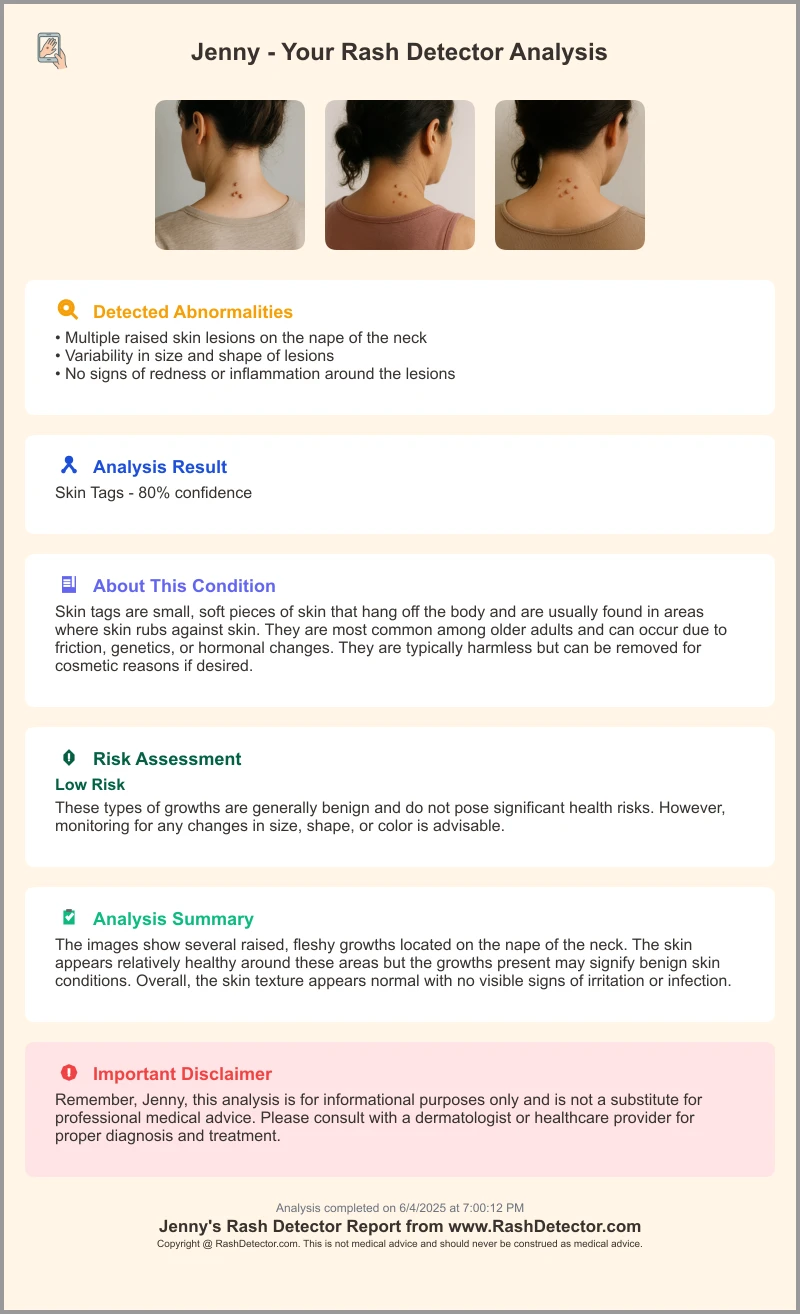
For initial assessment, you can try AI analysis with Rash Detector, which generates a sample report in seconds.
5. Treatment Strategies
- Discontinue the suspected drug under medical supervision.
- Relieve symptoms with oral antihistamines and topical corticosteroids.
- Use systemic steroids, epinephrine for anaphylaxis, or immunosuppressives/IVIG for SJS/TEN.
- OTC options: cetirizine, loratadine, hydrocortisone 1%, cool compresses.
- Prescription: high-potency steroids, IV fluids, and specialized wound care.
6. Preventive Measures and Long-Term Management
- Document drug reactions clearly in medical records and patient-held reports.
- Use medical ID bracelets or allergy cards for severe drug allergies.
- Discuss cross-reactivity and safe alternatives with an allergist.
- Introduce new medications one at a time under supervision.
7. Patient Guidance and Next Steps
- List all medications started within the past 1–4 weeks.
- Check for red-flag symptoms: breathing issues, swelling, blisters.
- Choose appropriate care level: ER for emergencies, urgent or routine visits otherwise.
- Do not abruptly stop critical medications—consult your prescriber.
- Use supportive measures and monitor for symptom progression.
Conclusion
Early recognition, accurate diagnosis, and prompt management are essential for safe and effective medication rash treatment. Mild reactions often resolve with drug discontinuation and supportive care, while severe cases demand emergency or specialist intervention. Prevent future events through clear documentation, communication with your healthcare team, and use of medical identification.
ウィッグを購入する前に、ネットや固定用品が付属するかも確認しておきましょう。複数の候補を比較する際は、ツインテール コスプレウィッグ 通販で仕様の違いを確認できます。使用後は毛流れを整えて十分に乾かし、形が崩れない状態で保管することが大切です。
Additional Resources
- Merck Manual – Drug Rashes
- Johns Hopkins Medicine – Drug Rashes
- Harvard Health Blog – When is a drug rash more than just a rash?
- NYU Langone – Medication for Drug Reactions & Hives
- IU Health – Drug Rashes Information
- Becker ENT & Allergy – Strategies for Managing Drug Allergy Rash
FAQ
- What causes a medication rash?
Most rashes are due to immune responses or direct irritation; common triggers include antibiotics, NSAIDs, and anticonvulsants. - When should I seek emergency care?
Go to the ER for difficulty breathing, facial swelling, rapid blistering, or fever with rash. - Can I treat a drug rash at home?
Mild rashes may improve with OTC antihistamines and topical steroids, but always consult your healthcare provider. - Will the rash return if I take the same medication again?
Yes, re-exposure often leads to a quicker and more severe reaction. - How can I prevent future drug rashes?
Document allergies, wear medical ID, and discuss safe alternatives with your physician or allergist.