Medication Rash Treatment: Comprehensive Guide to Identifying and Preventing Drug-Induced Skin Reactions
Learn to identify, manage, and prevent drug-induced skin reactions with this comprehensive guide on medication rash treatment. Stay informed and protect your skin.
Estimated reading time: 10 min read
Key Takeaways
- Recognize the signs and types of drug-induced rashes early
- Use timelines and symptom checklists to identify medication links
- Adopt a layered treatment approach from home remedies to prescription therapies
- Know the red flags that require urgent medical attention
- Implement self-care and preventative strategies to avoid future reactions
Table of Contents
- Introduction
- Understanding Medication-Induced Rashes
- Identifying a Medication-Induced Rash
- When to Seek Medical Advice
- Treatment Options and Management Strategies
- Self-Care and Prevention
- Conclusion
- FAQ
Introduction
Medication rash treatment is an important topic for anyone who notices a sudden skin reaction after taking a new prescription or over-the-counter drug. A medication-induced rash (also called a drug eruption) happens when your body reacts to a medicine, causing redness, swelling, itching, or even blisters.
These reactions are not rare. They affect up to 10% of hospitalized patients and can range from mild irritation to life-threatening Stevens-Johnson syndrome. Early recognition and proper care are key to stopping symptoms and preventing serious complications (First Derm; Johns Hopkins Medicine).
In this guide, we will share evidence-based steps for:
- Recognizing different rash types
- Getting a timely diagnosis
- Applying effective medication rash treatment at home and in medical settings
- Preventing future drug-induced skin reactions
By the end, you’ll know how to respond safely if a medication causes unwanted skin symptoms.
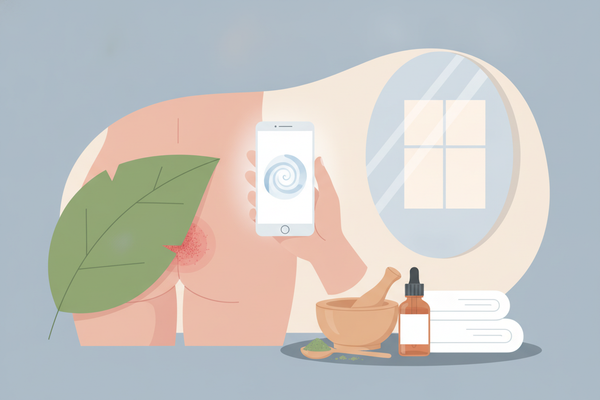
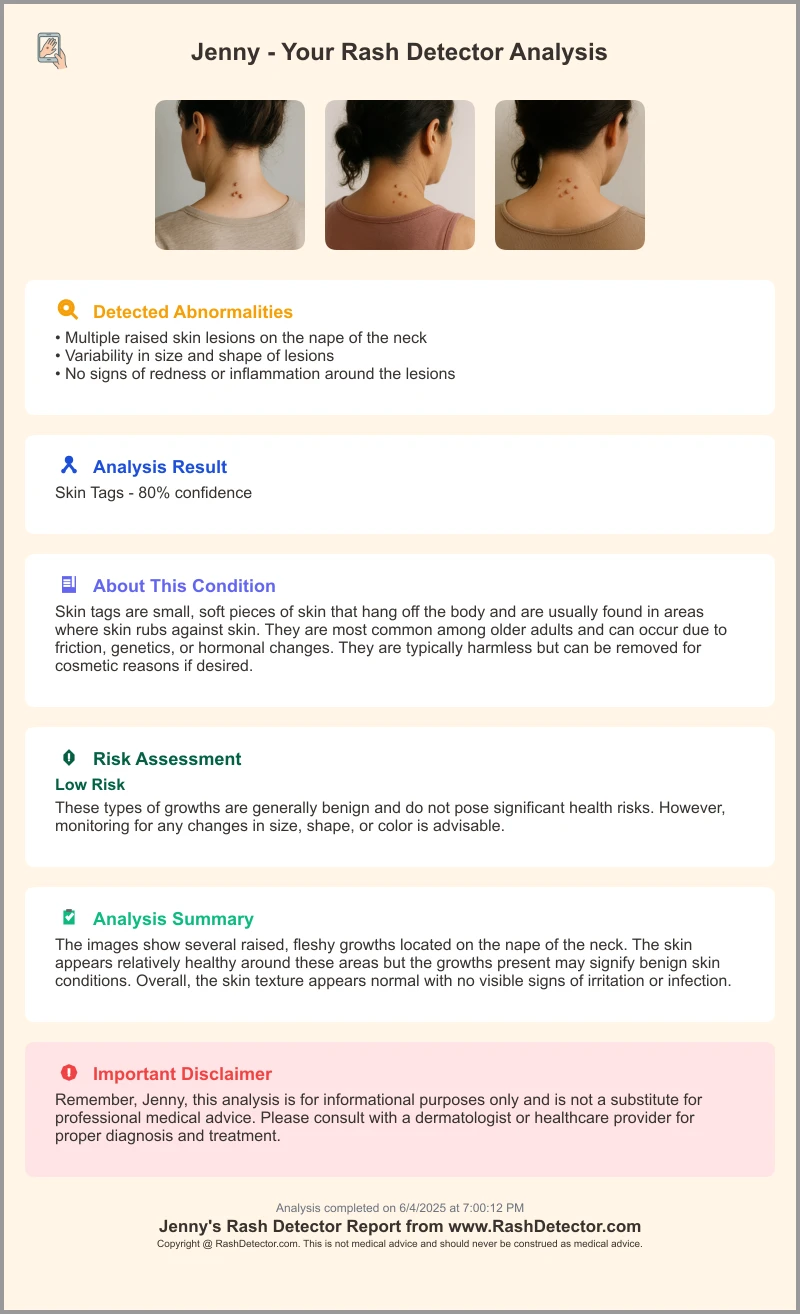
For an instant AI-based preliminary assessment, try the Rash Detector app. Below is a sample report generated after uploading rash images:
Understanding Medication-Induced Rashes
Medication rash treatment begins with knowing why rashes happen. Drug rashes arise mainly through:
- Allergic immune responses. Your body sees the drug as a threat and releases histamine, causing hives or swelling (Divine Dermatology).
- Direct skin irritation. Some medications irritate skin cells, leading to redness or burning.
- Photosensitivity. Certain drugs make skin extra-sensitive to UV light, causing sunburn-like rashes (Johns Hopkins Medicine).
Common rash types, timing, and appearance:
- Hives (urticaria)
• Immediate onset, often within minutes to hours
• Raised, itchy welts that change shape or location - Morbilliform rash (measles-like)
• Appears 4–14 days after drug start
• Red or pink flat spots that may join into larger patches (Healthline) - Severe blistering reactions
• Stevens-Johnson syndrome or toxic epidermal necrolysis
• Painful blisters on skin and mucous membranes (Dermatology of Seattle)
Typical symptoms of drug eruptions include red patches, itching, swelling, blisters, and sometimes fever or malaise. Risk factors are known drug allergies, high dosages, polypharmacy, and genetic predisposition (IU Health).
Identifying a Medication-Induced Rash
Accurate identification is the first step in any medication rash treatment plan. Watch for red flags:
- Onset within hours to weeks of starting a new medication (Harvard Health)
- Itchy, widespread redness or migrating hives
- Associated symptoms like fever, joint pain, or difficulty breathing
Symptom timeline:
- Immediate (minutes–hours): hives, angioedema
- Delayed (1–4 weeks): morbilliform rash, fixed drug eruptions
Differentiate from other rashes by comparing onset dates, pattern, and resolution after stopping the drug (First Derm). For more details on identifying and managing these reactions, see our comprehensive guide to medication rash treatment.
When to Seek Medical Advice
Some drug eruptions require urgent care. Seek help immediately if you notice:
- Rapid spread across large body areas
- Blistering or sores on mouth, eyes, or genitals
- Fever above 100.4°F, chills, or swollen lymph nodes
- Difficulty breathing, wheezing, or throat tightness
Clinical diagnostic workflow:
- Medical history review
List all recent medications, dose changes, and past allergic reactions (NYU Langone Health). - Physical examination
Note rash pattern and check mucous membranes. - Diagnostic tests
Patch testing, blood work, or skin biopsy as needed.
Treatment Options and Management Strategies
Effective medication rash treatment balances relief with safety. Never stop a prescribed drug without consulting your provider. For a deeper dive into identifying, managing, and preventing drug-induced rashes, see our comprehensive guide to medication rash treatment. You can also explore our comprehensive guide to identifying and managing drug-induced skin reactions for additional strategies.
Home care for mild rashes:
- Cool compresses to calm itching
- Fragrance-free moisturizers or calamine lotion
- Oatmeal baths to reduce inflammation
Over-the-counter interventions:
- Non-sedating antihistamines (e.g., loratadine, cetirizine)
- Sedating antihistamines (diphenhydramine) at bedtime
- Low-potency topical hydrocortisone 1% cream
Prescription treatments:
- High-potency topical corticosteroids (triamcinolone)
- Systemic corticosteroids (oral prednisone taper) (IU Health)
- Antihistamine plus corticosteroid combination
Medication adjustment strategies:
- Dose reduction or substitution under supervision
- Desensitization protocols for essential antibiotics
- Referral to compounding pharmacy for specialized formulations
Self-Care and Prevention
Supporting healing and avoiding future rashes:
Skin care during recovery:
- Use gentle, fragrance-free cleansers and moisturizers
- Wear loose, breathable cotton clothing
- Avoid direct sun; apply SPF 30+ sunscreen (Johns Hopkins Medicine)
Lifestyle tips:
- Stay well-hydrated
- Eat a diet rich in omega-3 fatty acids
- Manage stress with relaxation techniques
Preventing future medication rashes:
- Maintain an up-to-date allergy list and consider a medical ID (First Derm)
- Communicate your allergy history to providers and pharmacists
- Ask about rash risk and monitoring when starting new drugs (GoodRx)
Conclusion
Medication-induced rashes affect many patients but can be managed effectively when caught early. Key steps include:
- Identifying the rash–medication link
- Seeking timely medical evaluation
- Applying a layered treatment approach
- Following self-care and prevention strategies
Always consult healthcare professionals for personalized advice.
FAQ
- What causes a medication rash?
Most are due to allergic immune responses, direct skin irritation, or photosensitivity triggered by drug compounds. For more details on causes and management, check our complete guide to medication rash treatment. - How soon can a drug rash appear?
It may appear within minutes to hours for hives or take 1–4 weeks for delayed morbilliform eruptions. - Can I continue my medication if I get a rash?
Do not stop or adjust doses without consulting your healthcare provider; alternatives or dose changes may be recommended. - When should I seek emergency care?
If you develop widespread blistering, mucous membrane involvement, high fever, or breathing difficulties. - How can I prevent future drug rashes?
Keep an updated allergy list, inform all providers of your history, and discuss rash risks before starting new medications.