Medication Rash Treatment: Comprehensive Guide to Managing and Preventing Drug-Induced Rashes
Learn evidence-based medication rash treatment to identify, manage, and prevent drug-induced rashes. Discover when to consult a healthcare professional.
Estimated reading time: 10 minutes
Key Takeaways
- Medication-induced rashes are immune-mediated and vary from mild hives to severe Stevens-Johnson Syndrome.
- Early identification based on timing and rash morphology is crucial for effective treatment.
- Treatment options range from OTC antihistamines and topical corticosteroids to systemic therapies for severe reactions.
- Prevention involves medication reviews, gradual dosing, patch testing, and gentle skincare routines.
- Seek medical care if red-flag symptoms occur, including blistering, mucosal involvement, or breathing difficulty.
Table of Contents
- 1. Understanding Medication-Induced Rashes
- 2. Types and Symptoms of Medication Rashes
- 3. Identifying a Medication Rash
- 4. Medication Rash Treatment Options
- 5. Preventative Measures and Long-Term Management
- 6. When to Consult a Healthcare Professional
- 7. Conclusion and Summary
- 8. Additional Resources
1. Understanding Medication-Induced Rashes
Keyword: medication rash treatment
Medication-induced rashes are immune-mediated hypersensitivity reactions, not direct drug toxicity. Recognizing how your immune system responds enables prompt identification and management.
Immune Mechanisms
- Type I hypersensitivity (IgE-mediated, immediate)
- Type IV hypersensitivity (T-cell mediated, delayed 4–14 days)
Common Causative Drugs
- Antibiotics (penicillins, sulfa drugs)
- Anticonvulsants (phenytoin, carbamazepine)
- Others: barbiturates, isoniazid
Risk Factors
- Prior drug allergies
- Age extremes (children and older adults)
- Polypharmacy (multiple medicines)
Experience Note: Children may react to very low doses—always review past reactions.
Expert Tip: Keep an up-to-date medication list and allergy history.
Source: Johns Hopkins Medicine
2. Types and Symptoms of Medication Rashes
Keyword: medication rash treatment
Recognizing rash types guides proper treatment. Common categories include:
- Hives (Urticaria)—
- Symptoms: Raised, itchy welts that move around
- Timing: Immediate onset (minutes to hours)
- Causes: Antibiotics, NSAIDs
- Morbilliform (Maculopapular)—
- Symptoms: Pink/red macules and papules, start on torso, spread to limbs
- Timing: Delayed (4–14 days after drug start)
- Causes: Antibiotics, anticonvulsants
- Acne-like Eruptions—
- Symptoms: Pimples on face, chest, back
- Timing: Weeks to months after drug start
- Causes: Anabolic steroids, corticosteroids, phenytoin
- Exfoliative Dermatitis—
- Symptoms: Widespread red, scaly, peeling skin
- Timing: Days to weeks
- Causes: Sulfa antibiotics, barbiturates, penicillins
- Severe Reactions—
- Stevens-Johnson Syndrome / Toxic Epidermal Necrolysis
- Symptoms: Blistering, mucosal involvement, skin detachment
- Timing: 1–3 weeks after drug start
- Causes: Antibiotics, anticonvulsants (rare but life-threatening)
Timeline Note: Mild rashes often resolve in days with treatment; severe cases may take weeks.
Sources: Merck Manuals – Drug Rashes, IU Health – Stevens-Johnson Syndrome, Johns Hopkins Medicine
3. Identifying a Medication Rash
Keyword: medication rash treatment
Key Diagnostic Features
- Temporal relationship: Immediate (<24 hours) vs. delayed (4–14 days)
- Morphology: Wheals (hives) vs. maculopapular vs. vesicles/blisters
- Distribution pattern: Generalized vs. localized
For more on recognizing drug-induced rash symptoms, see identifying drug-induced rash symptoms.
Differentiate from Other Dermatoses
- Contact dermatitis: Itchy rash at contact site without systemic timing.
- Infections: Often have fever, pus, or a clear infection source.
Learn more about managing drug allergy rash at managing drug allergy rash.
Monitoring Protocol
- Keep a symptom diary: drug start date, rash onset date, severity scale (1–10)
- Photograph rash daily under the same lighting
- Note systemic signs: fever, swollen glands, breathing difficulty
Red Flags Prompting Medical Advice
- Rash lasting >2 weeks
- Rapid spread or blistering
- Mucosal involvement (mouth, eyes, genitals)
- Wheezing or breathing trouble
Source: Mayo Clinic, NYU Langone Health
4. Medication Rash Treatment Options
Keyword: medication rash treatment
Follow a stepwise approach, from home care to emergency measures.
A. Over-the-Counter (OTC) & Home Remedies
- Oral antihistamines:
- Cetirizine 10 mg once daily
- Diphenhydramine 25–50 mg every 4–6 hrs as needed
- Topical care:
- 1% hydrocortisone cream applied twice daily
- Adjunct therapies:
- Cool compresses (10 min, 3–4 times/day)
- Oatmeal baths for soothing relief
For a deeper dive, see OTC vs. prescription options.
B. Prescription Medications
- Topical corticosteroids:
- Triamcinolone 0.1% cream BID for 7–14 days
- Clobetasol 0.05% for stubborn spots
- Systemic corticosteroids:
- Prednisone taper at 0.5 mg/kg/day for 5–7 days for severe eruptions
- Epinephrine autoinjector:
- For anaphylaxis with airway compromise
Sources: Mayo Clinic guidelines; NYU Langone Health; Merck Manuals
C. Management of Severe Reactions (Stevens-Johnson/TEN)
- Urgent referral to burn unit or ICU
- IV methylprednisolone 1 mg/kg/day and/or cyclosporine 3–5 mg/kg/day
- Supportive wound care: sterile dressings, fluid and electrolyte management
Source: IU Health protocol
D. Dos and Don’ts
| Do | Don’t |
|---|---|
| Stop the suspect drug immediately | Scratch or rub the rash |
| Consult your healthcare provider | Restart medication without advice |
| Use recommended OTC and prescription meds | Use unverified herbal remedies |
| Keep a symptom diary and rash photos | Ignore warning signs like blistering or breathing issues |
5. Preventative Measures and Long-Term Management
Keyword: medication rash treatment
Prevention lowers your risk of future reactions. Adopt these habits:
- Medication review:
- Document all current and past drugs
- Note known allergies and family history
- Gradual dose escalation:
- Start high-risk drugs at low doses
- Increase slowly under supervision
- Patch testing:
- Refer to an allergist for skin patch tests
- Be aware false negatives can occur
- Skin care routine:
- Daily fragrance-free moisturizer (ceramide-based)
- Gentle, pH-balanced cleansers
- SPF 30+ broad-spectrum sunscreen
- Lifestyle tips:
- Wear breathable cotton clothing
- Take lukewarm showers
- Avoid dyes, fragrances, harsh detergents
- Collaborative care:
- Schedule allergy testing
- Work with your prescriber for safer alternatives
Source: Johns Hopkins Medicine
6. When to Consult a Healthcare Professional
Keyword: medication rash treatment
Knowing when to seek help can save your life. Look for these signs:
Immediate/Emergency Indicators
- Breathing difficulty or facial swelling (anaphylaxis)
- Blistering or mucosal lesions (>30% body surface area)
- High fever (>38 °C), low blood pressure, organ involvement
Non-Emergent but Urgent Signs
- Rash not improving after 3–5 days of OTC therapy
- Rash spreading to new areas
- Severe itching or pain
Communication Preparation
- Bring a complete medication list with start dates
- Show your symptom diary and rash photos
- Prepare questions: “Are there safe alternative drugs?”
Escalation Pathway
Primary Care → Dermatologist → Allergist
Sources: IU Health – Stevens-Johnson Syndrome, NYU Langone Health
7. Conclusion and Summary
Keyword: medication rash treatment
Medication-induced rashes span from mild hives to life-threatening syndromes. Early identification and targeted therapy—antihistamines, corticosteroids, or emergency care—are vital. Prevent recurrence through thorough drug history tracking, patch testing, and gentle skincare. Collaborate closely with healthcare providers when red flags arise. Proactive management and prevention strategies ensure healthier, rash-free skin.
8. Additional Resources
- Merck Manuals – Drug Rashes
- Johns Hopkins Medicine – Drug Rashes
- NYU Langone – Treatment for Drug Reactions/Hives
- Mayo Clinic – Contact Dermatitis Diagnosis & Treatment
- IU Health – Stevens-Johnson Syndrome
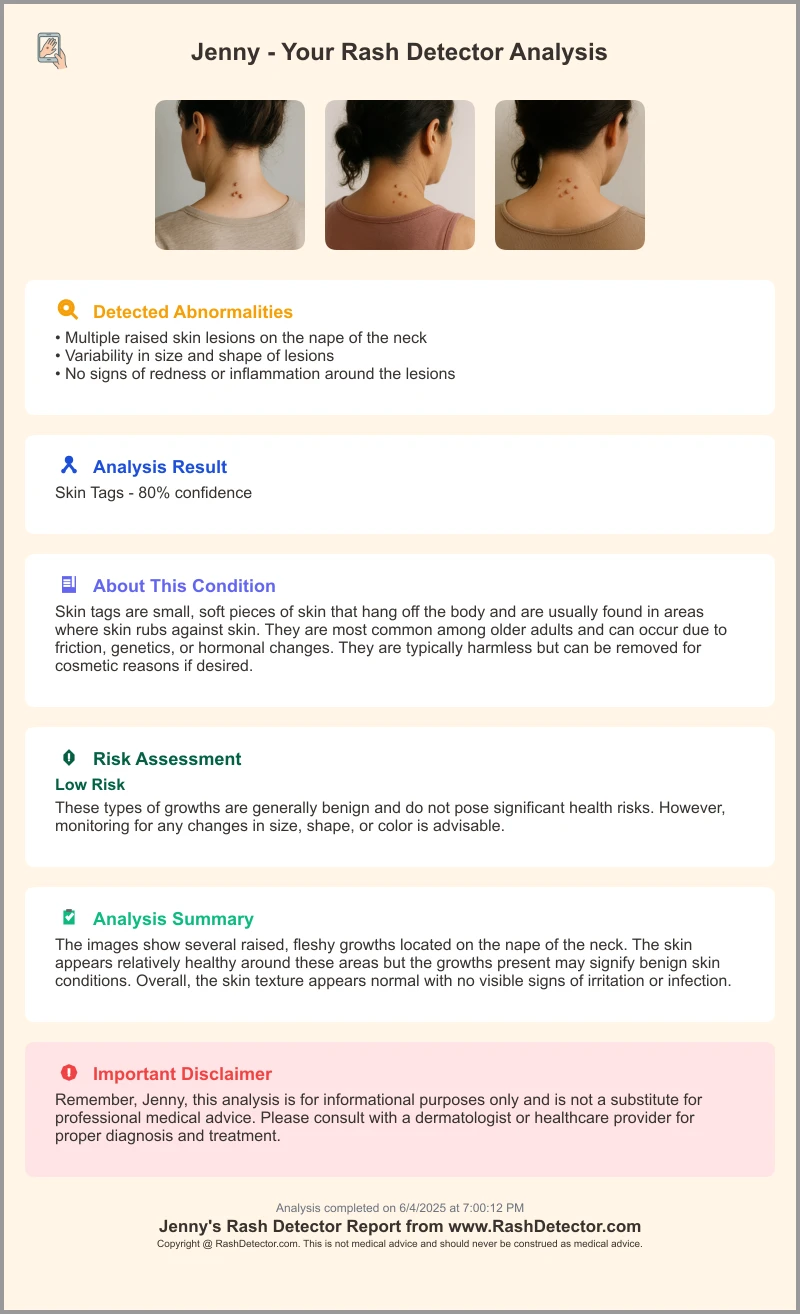
For instant AI-powered analysis of your rash, consider uploading photos to Rash Detector. You’ll receive an objective summary of rash characteristics, possible causes, and severity scores in seconds.
FAQ
What are the common symptoms of a medication-induced rash?
Symptoms vary by type but often include itching, redness, raised welts, macules or papules, sometimes blistering or peeling. Timing from drug exposure can be immediate or delayed.
How can I distinguish between a drug rash and other skin conditions?
Consider timing relative to drug start, rash morphology, distribution, and associated systemic signs. Monitoring a symptom diary and consulting a healthcare professional helps differentiate causes.
What home remedies can help relieve itch and inflammation?
Cool compresses, colloidal oatmeal baths, oral antihistamines like cetirizine, and 1% hydrocortisone cream offer relief. Avoid scratching and harsh soaps.
When should I seek medical attention for a medication rash?
Seek immediate care for breathing difficulty, facial swelling, extensive blistering, or mucosal involvement. Consult a provider if rash persists beyond a few days or worsens despite OTC treatment.