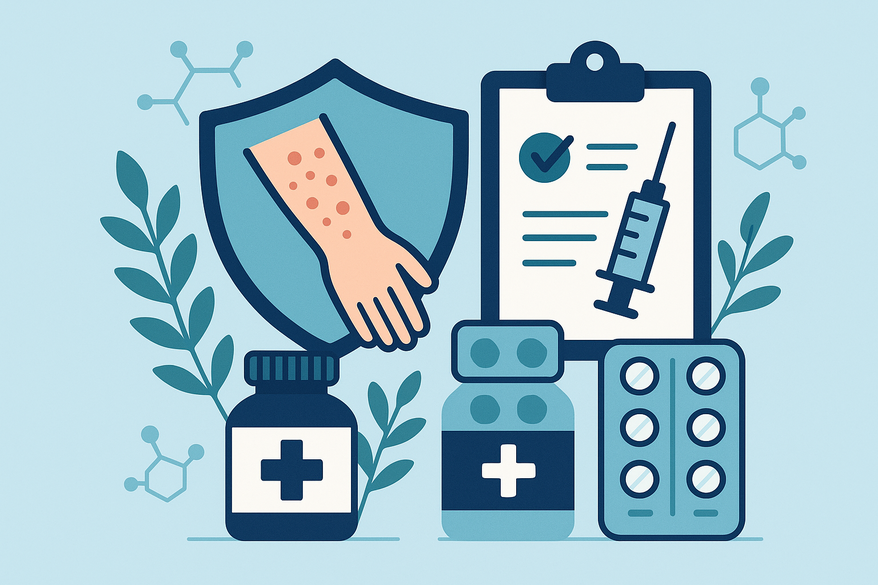
Effective Medication Rash Treatment: Strategies and Prevention
Learn how medication rash treatment can help manage and prevent drug-induced skin reactions, ensuring safety and effective recovery.
Estimated reading time: 7 minutes
Key Takeaways
- Up to 90% of cutaneous drug reactions are mild maculopapular rashes triggered by common medications.
- Antibiotics such as penicillin and sulfonamides are among the top causes of medication-induced rashes.
- Early warning signs—fever, blisters, mucosal sores—warrant immediate medical attention.
- Mild cases often resolve with antihistamines, topical steroids, and supportive care after stopping the offending drug.
- Severe reactions like Stevens-Johnson syndrome require systemic steroids, hospitalization, or burn‐unit care.
- Prevention through allergy history, low-dose titration, and clear patient‐provider communication reduces risk.
Table of Contents
- Introduction
- 1. Understanding Medication-Induced Rashes
- 2. Causes and Risk Factors
- 3. Diagnosis and When to Seek Medical Help
- 4. Effective Treatment Options
- 5. Prevention and Management Tips
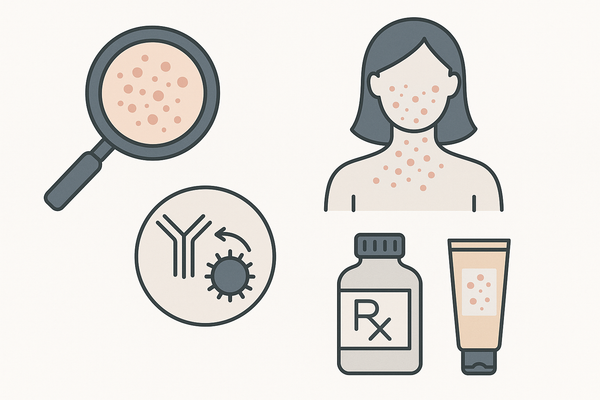
Medication rash treatment is the systematic way to find, manage, and prevent skin reactions caused by drugs. These reactions can range from mild red spots to life‐threatening blisters. Up to 90% of cutaneous drug reactions are medication‐induced rashes, making medication rash treatment essential for anyone taking medicine. According to Johns Hopkins Medicine and GoodRx, these rashes often show up as measles‐like eruptions, hives, or painful blisters. Antibiotics and many over‐the‐counter drugs can trigger them, affecting people of all ages. Without quick action, a simple rash can turn into Stevens‐Johnson syndrome. Prompt identification and proper medical management are key to safe recovery. medication rash treatment helps patients stop harmful medications, relieve symptoms, and prevent serious complications.
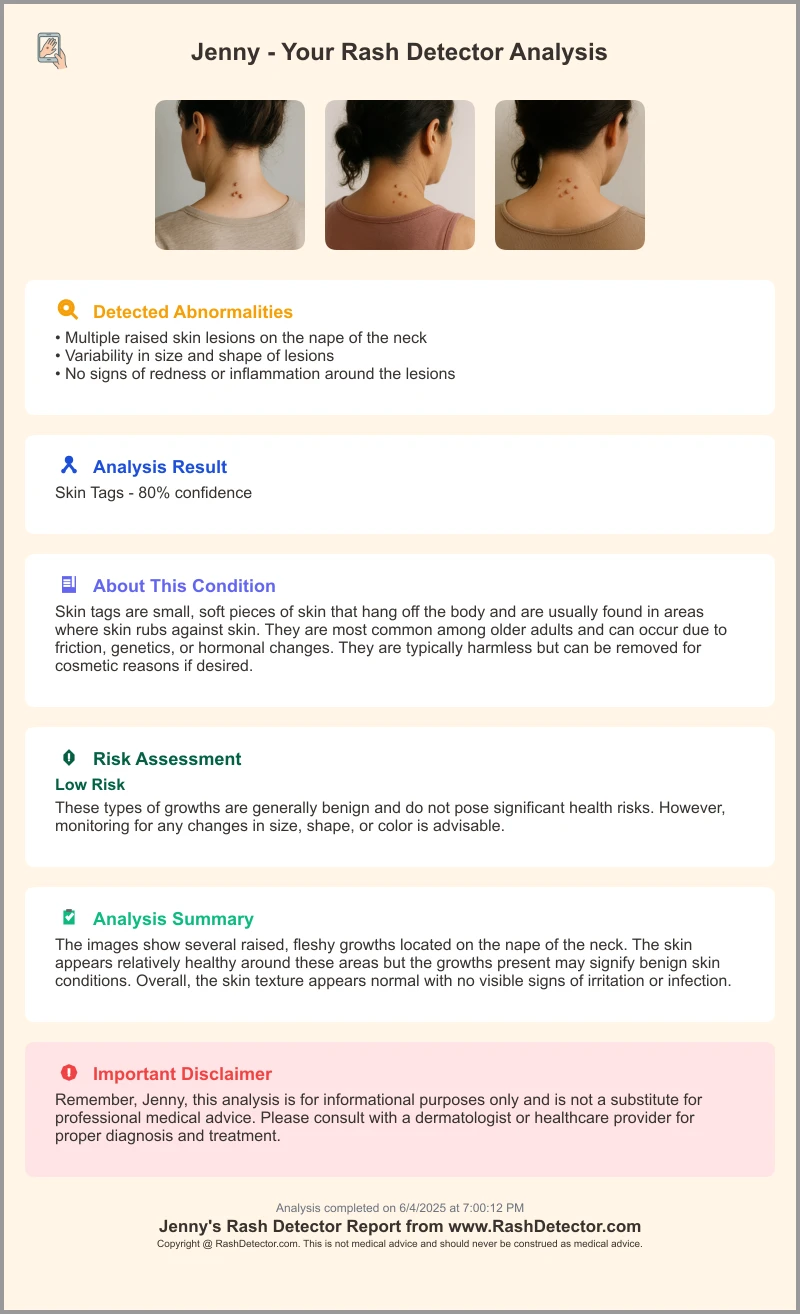
To support early assessment, you can try Rash Detector, an AI Skin Analysis App that analyzes rash photos and delivers an instant report. The sample report below illustrates how quickly you can get insights into possible causes and recommended next steps.
1. Understanding Medication-Induced Rashes
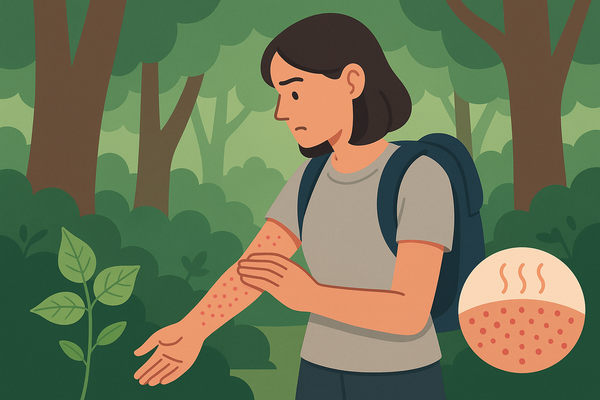
A medication‐induced rash—or drug eruption—is an inflammatory skin reaction to a drug. The body’s immune or inflammatory cells react to a pharmaceutical agent. These eruptions can appear minutes or weeks after starting a medicine, even if you have taken it before without issues.
- Definition: Inflammation or immune response in skin after drug use (drug eruption, adverse cutaneous reaction).
- Onset timing: Minutes, hours, days, or weeks after beginning or changing dose.
- Common culprits:
- Antibiotics (penicillin, cephalosporins, sulfonamides)
- Nonsteroidal anti‐inflammatory drugs (NSAIDs)
- Anticonvulsants (phenytoin, carbamazepine)
- Diuretics (furosemide)
- Typical rash patterns:
- Exanthematous maculopapular rash (≈90% of cases): red, spotty, itchy bumps
- Urticaria (hives): raised, itchy welts that move around
- Fixed drug eruption: red or purple spots in the same place after each dose
- Severe blistering: Stevens‐Johnson syndrome/toxic epidermal necrolysis (SJS/TEN)
- Identification tips:
- Record timeline: note when rash appeared relative to new drug.
- Check symptoms: look for fever, swelling, or joint pain.
- Rule out other causes: exclude new soaps, foods, or infections.
2. Causes and Risk Factors
Medication‐related skin reactions happen for different reasons. Knowing these causes helps in medication rash treatment and prevention.
- Allergic (immune‐mediated): hives, anaphylaxis, rash due to IgE or T‐cell response.
- Non‐allergic side effects: acneiform rash from steroids or antiepileptics.
- Photosensitivity: drugs sensitize skin to UV light, causing sunburn‐like rash.
- Drug interactions: combined agents may trigger eruptions even if each is tolerated alone.
Patient risk factors: age extremes, past drug allergies or atopic conditions, autoimmune disorders, chronic illnesses.
Progression spectrum:
- Mild: localized redness, itching, resolves in 1–2 weeks.
- Moderate: widespread rash, mild fever, discomfort.
- Severe: blisters, mucosal sores, fever, organ involvement—possible SJS/TEN.
3. Diagnosis and When to Seek Medical Help
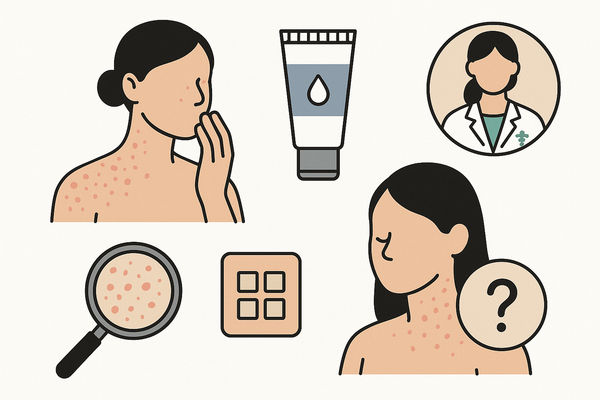
Knowing when to get help is a core part of medication rash treatment. Most mild rashes heal with home care, but some need urgent attention.
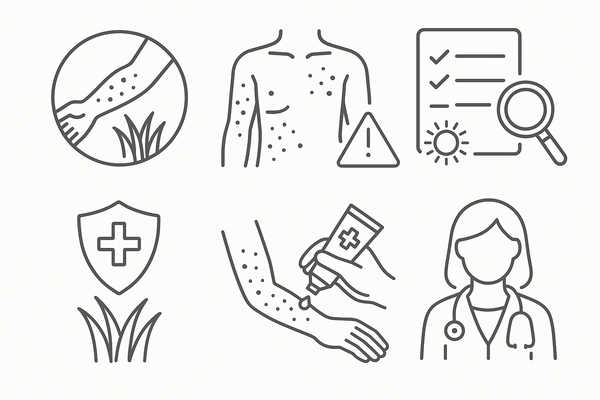
Self‐assessment steps:
- List all new medications, supplements, and OTC drugs.
- Watch for red flags:
- Fever over 100.4°F
- Facial or throat swelling
- Blisters or peeling skin
- Mouth ulcers or sore eyes
- Difficulty breathing or rapid heartbeat
If any red flag appears, seek medical help immediately. Don’t wait.
Healthcare provider evaluation: medication history, stop or replace nonessential drugs, consider safer alternatives or dose adjustments.
Diagnostic tools:
- Blood tests: CBC, liver and kidney function.
- Patch testing: small drug sample on skin to confirm allergy.
- Skin biopsy: sample to rule out other diseases.
- Drug rechallenge: controlled re‐administration to confirm culprit.
4. Effective Treatment Options
Effective medication rash treatment balances stopping the trigger drug and easing symptoms safely.
Mild reactions:
- Oral antihistamines: diphenhydramine or cetirizine for itch relief.
- Topical corticosteroids: 1% hydrocortisone cream to calm inflammation (see best anti‐itch cream solutions).
- Supportive care: cool compresses, hydration, soft cotton clothing.
Moderate to severe reactions:
- Oral corticosteroid taper (prednisone) for systemic inflammation.
- Hospitalization for SJS/TEN: burn‐unit or intensive care, fluid balance, wound care.
- Intravenous immunoglobulin (IVIG) in select SJS/TEN cases.
Alternative strategies: compounded formulations without dyes, emollients, barrier creams, calamine lotion.
5. Prevention and Management Tips
Preventing drug rashes is better than treating them. Use these strategies:
- Pre‐prescription: full allergy history, low‐dose initiation, stagger new drugs.
- Home management: oatmeal baths, loose cotton clothes, fragrance‐free moisturizers, symptom journal.
- Communication: clear timeline, daily rash photos, full medication list.
- Safety tools: allergy alert card or medical ID, update electronic health records.
By staying informed and proactive, you can reduce the risk of future medication rashes and ensure quick treatment if one appears.
FAQ
- What causes medication-induced rashes?
They result from immune or inflammatory reactions to a drug, with common triggers including antibiotics, NSAIDs, anticonvulsants, and diuretics.
- How are medication rashes diagnosed?
Diagnosis involves a medication history, timeline analysis, blood tests, patch testing, or skin biopsy to pinpoint the culprit.
- When should I seek medical help?
If you experience fever over 100.4°F, swelling, blisters, mucosal lesions, or breathing difficulty alongside a rash, seek urgent care.
- What treatments are available?
Mild rashes respond to antihistamines and topical steroids; severe cases may need systemic steroids, hospitalization, and IVIG.
- How can I prevent future drug rashes?
Maintain a detailed allergy and medication history, start new drugs at low doses, and communicate changes promptly with your healthcare provider.