Innovations in Rash Detection: Transforming Dermatology with Emerging Technologies
Explore how innovations in rash detection, including AI and imaging, are revolutionizing dermatology to enhance diagnosis and patient outcomes.
Estimated reading time: 8 minutes
Key Takeaways
- Advanced imaging and AI-driven analytics are being developed to improve the accuracy and efficiency of rash detection.
- Mobile health (mHealth) tools are increasingly offering real-time, remote monitoring and teledermatology support.
- Emerging devices like digital dermatoscopes and optical coherence tomography (OCT) provide non-invasive, high-resolution skin imaging.
- Regulatory, privacy, and ethical challenges remain, but international standards and improved oversight are being developed to foster safer, more equitable adoption.
Table of Contents
- Section 1: Background on Rash Detection
- Section 2: Overview of Current Innovations
- Section 3: Integration with Mobile Health
- Section 4: Emerging Technologies in Detail
- Section 5: Real-World Applications and Case Studies
- Section 6: Challenges and Considerations
- Section 7: Future Outlook and Trends
- Conclusion
- FAQ
Section 1: Background on Rash Detection
Keyword in header: innovations in rash detection
Traditional rash detection methods include:
- Visual inspection by dermatologists
- Patient history review and symptom discussion
- Physical examination under clinical lighting
- Skin biopsy in uncertain or severe cases
Limitations of conventional techniques:
- Subjectivity and inter-observer variability
- Difficulties distinguishing between similar-appearing conditions (e.g., eczema vs. psoriasis)
- Invasiveness, discomfort, and infection risk from biopsies
- Potential for missed or delayed diagnoses in early or mild cases
These limitations have driven the development of innovations in rash detection—objective, non-invasive tools that aim to help both clinicians and patients make more accurate and timely decisions.
Section 2: Overview of Current Innovations
Keyword in header: innovations in rash detection
Subsection A: Diagnostic Imaging Advances
- Total-Body Digital Photography (TBDP) & Dermoscopy
– Modern full-body imaging systems are being developed to use AI to track lesion changes over time.
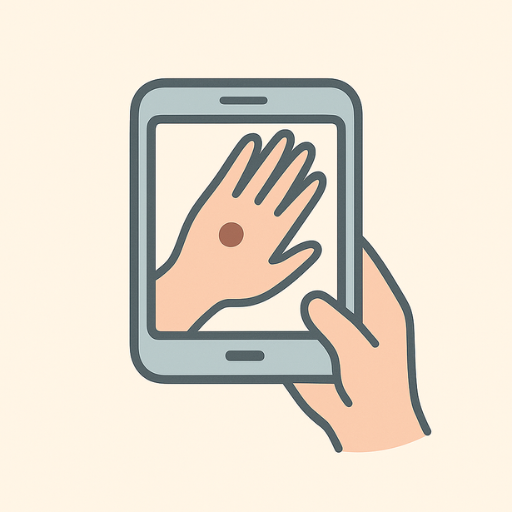
– Portable dermatoscopes can attach to smartphones or tablets, capturing detailed images for AI analysis.
– Secure cloud platforms may enable remote expert review and facilitate teledermatology workflows.
Source: top dermatology technology trends for 2025 - Fluorescence Imaging & Confocal Microscopy
– Fluorescent dyes and advanced optics can highlight skin microstructures and cell activity in real time.
– Confocal microscopy provides cellular-level imaging without the need for a biopsy.
Source: top dermatology technology trends for 2025 - Optical Coherence Tomography (OCT)
– Non-invasive, depth-resolved imaging delivers cross-sectional views of the skin up to a few millimeters deep.
– Useful for monitoring lesion depth and vascular patterns in various skin conditions.
Source: top dermatology technology trends for 2025
Subsection B: AI & Machine Learning
AI models are being developed to utilize convolutional neural networks (CNNs) combined with patient metadata (age, location, symptoms) to classify rashes. Deep learning algorithms can analyze large datasets of dermoscopic and clinical images, potentially detecting subtle patterns. Some advances have shown promise in improving accuracy for conditions such as melanoma, eczema, and psoriasis, and AI diagnostic suggestions are being integrated into some electronic health records (EHRs) to help streamline workflow. For a detailed overview, see How AI Diagnoses Rashes.
Section 3: Integration with Mobile Health
Keyword in header: innovations in rash detection
- Automated Image Capture
– Guided photo protocols and AR overlays can help users take standardized, high-quality images of rashes on their smartphones. - AI Analysis
– Cloud-based algorithms may provide instant feedback on possible diagnoses and rash severity, along with recommendations for next steps. - Teledermatology Video Calls
– Real-time video consultations can connect patients with board-certified dermatologists from anywhere, sometimes within 24 hours.
Benefits of mHealth integration:
- Remote monitoring may reduce unnecessary office visits and travel, improving access and convenience.
- Specialist advice can be made available in underserved or rural areas via secure apps.
- Continuous engagement: Automated reminders can prompt users to submit follow-up photos and symptom updates.
- Urgent cases may be flagged for expedited specialist review, potentially improving patient safety.
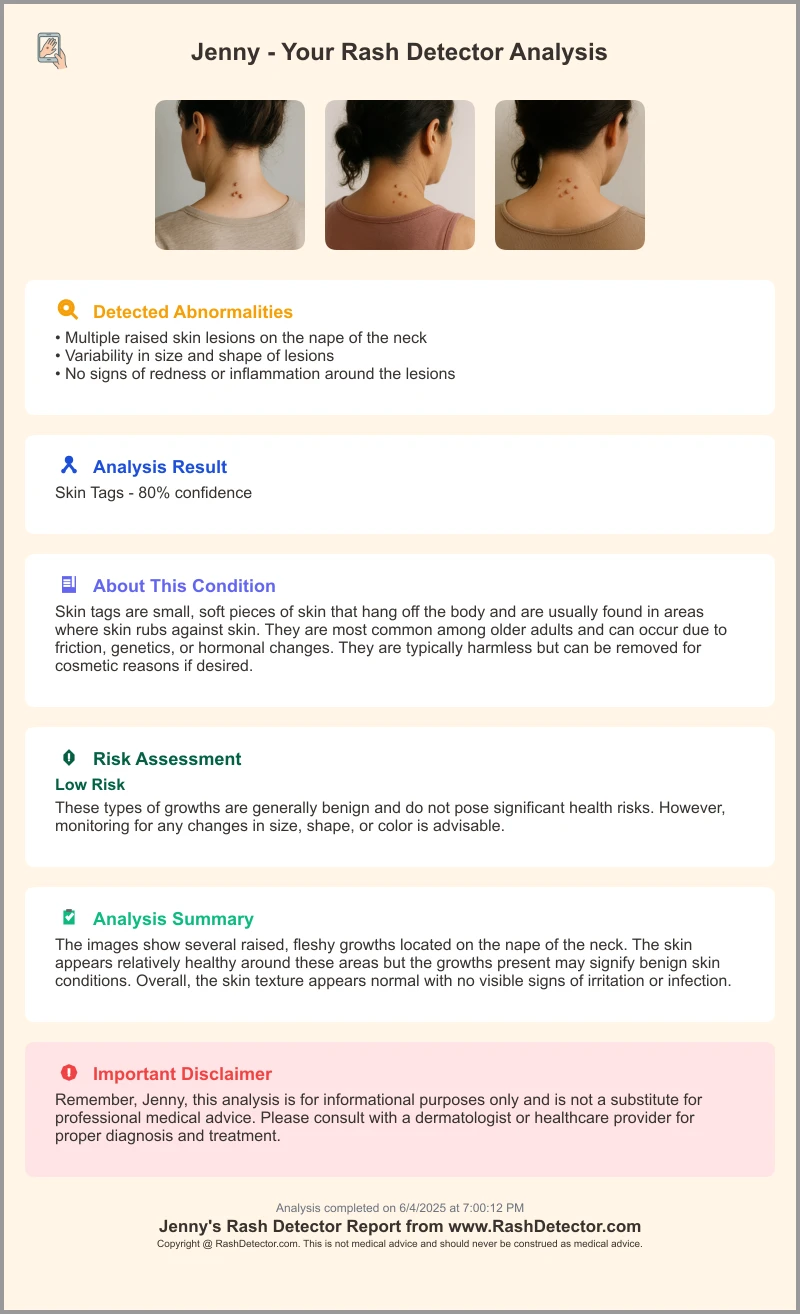
For example, the Rash Detector App uses AI to analyze user-submitted images and generate reports. Below is a sample report highlighting diagnostic metrics and recommendations:
Section 4: Emerging Technologies in Detail
Keyword in header: innovations in rash detection
Subsection A: Digital Dermatoscopes
- Device Description
– Handheld, high-magnification cameras with polarized light sources and wireless connectivity. - Functionality
– Some devices offer instant lesion analysis via embedded AI models.
– Automated measurement of lesion size, color, border irregularity, and vascular patterns. - Real-World Usage
– Used in primary care and urgent care settings to help triage suspicious lesions before specialist referral. - Source: top dermatology technology trends for 2025
Subsection B: High-Resolution Imaging Systems
- Confocal Microscopy
– Non-invasive, sub-cellular visualization of skin architecture, enabling detection of cell-level changes in vivo.
– Resolution: approximately 1 μm lateral, allowing assessment of inflammatory and neoplastic processes. - Optical Coherence Tomography (OCT)
– Provides depth-resolved scans up to a few millimeters beneath the skin surface.
– Resolution: approximately 10–15 μm axial; can be useful for assessing plaque thickness in psoriasis or early melanoma staging. - Source: top dermatology technology trends for 2025
Subsection C: Algorithm-Based Assessments
Modern neural networks, trained on large datasets of labeled rash images, are being developed to help distinguish among psoriasis, eczema, fungal infections, and viral exanthems. Some validation studies suggest high sensitivity and specificity for certain conditions, but results can vary depending on the dataset and clinical context. These algorithms are being embedded in digital dermatoscopes and mHealth platforms to provide clinicians with decision support. For more technical details, see Technical Process: Rash Detection.
Section 5: Real-World Applications and Case Studies
Keyword in header: innovations in rash detection
Case Study 1: Onychomycosis Detection via AI Model
Challenge: Nail fungal infections are often misdiagnosed or require lengthy lab tests. AI solution: CNN trained on a large set of nail images. Outcome: Some studies report improved sensitivity and specificity compared to traditional methods.
Source: review published in Dermatology Times
Case Study 2: Bacterial Skin Disease Identification
Conditions: Leprosy, acne, impetigo. AI Approach: Ensemble models analyze rash morphology and distribution. Impact: Some reports suggest earlier detection and improved accuracy for certain conditions.
Source: review published in Dermatology Times
Case Study 3: Public Health Surveillance—EPIWATCH for Monkeypox
Workflow: Smartphone image capture → AI triage → Automated public health alerts. Results: Early identification enabled more rapid isolation and contact tracing in pilot regions.
Source: review published in Dermatology Times
Section 6: Challenges and Considerations
Keyword in header: innovations in rash detection
- Regulatory Hurdles
– Regulatory approvals such as FDA and CE Mark require clinical trials and post-market monitoring for AI algorithms and imaging devices.
– International working groups are developing harmonized standards for AI in dermatology.
Source: top dermatology technology trends for 2025 - Data Privacy & Security
– Compliance with HIPAA, GDPR, and other regulations requires robust encryption, secure storage, and transparent consent protocols. - Clinical Integration
– Effective use depends on clinician training, clear workflows, and seamless EHR integration. - Ethical Balance
– Explainable AI is increasingly required to clarify decision factors.
– Bias monitoring is essential to help ensure equitable care across diverse populations.
Section 7: Future Outlook and Trends
Keyword in header: innovations in rash detection
- AI Advancement Trajectory
– Deeper integration with EHRs for automated rash flagging and clinical alerts is being explored.
– Point-of-care devices are being developed to offer instant bedside diagnostics, with regulatory pathways evolving. - Wearable & Remote Monitoring
– Smart patches with microfluidic sensors and connected smartbands are entering pilot programs for continuous skin and biomarker monitoring. - Cross-disciplinary Collaboration
– Dermatologists, engineers, and regulators are developing standardized validation frameworks and responsible AI policies to help ensure safe, effective, and equitable deployment.
Staying informed about emerging dermatology technologies may help patients and clinicians benefit from these innovations in rash detection, which aim to make care more accessible, accurate, and efficient.
Conclusion
Innovations in rash detection are addressing some of the diagnostic gaps left by traditional exams and biopsies. AI, high-resolution imaging, and mHealth are being used to support earlier and potentially more accurate detection. While regulatory, privacy, and ethical challenges persist, ongoing research and global collaboration are working toward improving early, precise rash detection.
Important: This article provides general, educational information only and is not a substitute for medical advice. For diagnosis and treatment—especially if your rash is severe, spreading, painful, or persistent—always consult a doctor or dermatologist.
FAQ
- How accurate are AI-based rash detection tools?
Some studies suggest that AI can approach or match dermatologist accuracy for certain conditions, but results vary and these tools are not a substitute for professional evaluation. - What privacy safeguards are in place for patient images?
Platforms aim to comply with HIPAA, GDPR, and other regulations by using encryption, secure data storage, and transparent user consent protocols. - When can clinicians expect widespread adoption?
Adoption is increasing as regulatory approvals and clinical integration improve, but timelines may vary by region and healthcare system.