How to Identify a Rash: Complete Guide with Rash Detector AI
Learn how to identify a rash by color, shape, and symptoms. Use our AI rash checker for fast, accurate analysis. Know when to see a doctor.


Estimated reading time: 20 min
Key Takeaways
- Identifying a rash involves noting its color, shape, texture, location, and symptoms with careful detail.
- Common types of skin rashes include eczema, contact dermatitis, hives, fungal infections, psoriasis, shingles, and heat rash, each with characteristic appearances.
- Understanding when a rash may be serious is important—look for spreading, pain, fever, blistering, or involvement of sensitive areas.
- Using photo-based rash checkers like Rash Detector can help suggest possible causes by analyzing detailed images.
- Always consult a healthcare professional for persistent, severe, spreading, or unusual rashes for accurate diagnosis and treatment.
Table of Contents
- Section 1: Visual Description – How to Describe a Rash
- Section 2: Common Types of Skin Rashes and Their Appearance
- Section 3: Location, Distribution, and Pattern of Rashes
- Section 4: Symptom Clues – What Your Rash Feels Like
- Section 5: Timing, Progression, and Trigger History
- Section 6: Skin Tone Considerations and Rash Appearance
- Section 7: When to Seek Medical Attention for a Rash
Conclusion
FAQ
Section 1: Visual Description – How to Describe a Rash
Color and Shades
One of the first steps in learning how to identify a rash is carefully observing its color. Rashes can range from bright red, pink, brown, purple, to even white, yellow, or darker hues depending on the underlying cause and skin tone. For example, a bright red or crimson rash often suggests acute inflammation or infection due to increased blood flow to the area. In contrast, pale pink or dusky tones might indicate a more chronic or healing phase of skin irritation. Some rashes, like purpura or vasculitis, may show purple or bruise-like discoloration due to bleeding under the skin. Yellowish hues can appear in rashes with crusting or pus formation, such as impetigo.
It’s important to note that lighting and skin tone affect how colors appear. Taking photos in natural light helps capture true colors for better identification.
Shape and Borders
Noting the shape and borders of a rash is helpful for diagnosis. Ask yourself: Is the rash circular, oval, annular (ring-shaped), linear, or irregular? Are the edges sharply defined or blurry? For example, fungal infections like ringworm often present as circular patches with clear, raised borders and central clearing, which is often described as annular. Contact dermatitis may have sharp borders that correspond to the area of contact with an irritant, such as a watch strap or a plant leaf. Allergic or viral rashes often have diffuse or poorly demarcated edges that appear to blend into surrounding skin.
Additionally, some rashes have distinctive shapes or patterns. For instance, poison ivy dermatitis often appears as linear streaks caused by the plant’s sap dragging along the skin. Shingles typically follows a dermatomal pattern, restricted to one side of the body or face, highlighting the nerve distribution.
Texture: Flat, Raised, Bumps, Blisters
The texture of a rash helps differentiate among various types. Rashes can be:
- Flat: Known as macules, these are discolored spots without elevation or depression. Examples include measles or early drug eruptions.
- Raised: Papules are small, solid, raised bumps less than 1 cm in diameter. They can be seen in eczema, psoriasis, or insect bites.
- Bumps with fluid: Vesicles (small blisters) or bullae (larger blisters) contain clear or yellowish fluid. Conditions like chickenpox, shingles, or contact dermatitis can present with these.
- Scaly or crusted: Indicating dryness, flaking, or secondary infection. Psoriasis plaques and eczema patches commonly have scales, while impetigo might have honey-colored crusts.
- Firm nodules or plaques: Larger, raised lesions that may be rough or thickened, seen in chronic conditions like psoriasis or granulomatous diseases.
Careful palpation can help determine if a rash is soft, firm, or tender, which adds diagnostic clues. Describing these features precisely helps doctors or apps like Rash Detector analyze the rash accurately.
Section 2: Common Types of Skin Rashes and Their Appearance
Eczema (Atopic Dermatitis)
Eczema is a chronic inflammatory skin condition characterized by itchy, dry, red patches. It often affects flexural areas such as the inner elbows, behind knees, wrists, and neck. The rash typically starts with redness and scaling, progressing to thickened skin (lichenification) due to chronic scratching. In acute flares, the rash may become weepy or oozing, sometimes with small vesicles. Over time, affected skin can become cracked and susceptible to secondary bacterial infection, leading to crusting. Itching can be intense, often worsening at night.
In infants, eczema commonly appears on the face and scalp. The condition is linked to genetic and environmental factors, including allergens and irritants.
Contact Dermatitis
Contact dermatitis occurs when the skin reacts to irritants or allergens. It usually appears as red, itchy patches localized to the area of contact. For example, nickel allergy leads to rash under jewelry, while poison ivy causes linear streaks of blisters. The rash may be blistered or dry and cracked depending on severity. Borders often sharply follow the shape of the offending object or chemical residue.
There are two types: irritant contact dermatitis caused by direct damage (e.g., detergents) and allergic contact dermatitis caused by immune reaction to allergens. Symptoms may appear within minutes to days after exposure.
Hives (Urticaria)
Hives are raised, pale red or skin-colored welts called wheals that can vary in size from a few millimeters to several centimeters. They usually appear suddenly and are intensely itchy. Hives often change location or shape within hours and can coalesce into larger areas. They result from histamine release due to allergic or non-allergic triggers such as foods, medications, insect stings, or infections.
Angioedema, a related condition, causes swelling in deeper skin layers, often around eyes, lips, or throat.
Fungal Rashes
Fungal infections commonly present as ring-shaped, red, scaly patches with central clearing, known as ringworm or tinea corporis. These rashes typically have well-defined raised borders. Athlete’s foot (tinea pedis) affects the feet, causing itching, scaling, and sometimes fissuring between toes. Jock itch (tinea cruris) appears in the groin area with red, itchy patches.
These infections thrive in warm, moist environments and are contagious. Diagnosis is often confirmed with skin scrapings examined under a microscope or fungal culture.
Heat Rash (Miliaria)
Heat rash occurs when sweat ducts become blocked, trapping sweat beneath the skin. It appears as tiny, red or pink bumps or clear vesicles, often in areas prone to sweating such as underarms, neck, chest, or skin folds. It is most common in hot, humid climates or during vigorous physical activity.
There are several types, including miliaria crystallina (clear vesicles), miliaria rubra (red papules with itching or prickling), and miliaria profunda (deeper, flesh-colored papules). Avoiding excessive heat and moisture helps prevent and treat heat rash.
Shingles (Herpes Zoster)
Shingles results from reactivation of the varicella-zoster virus, causing a painful, blistering rash usually localized to one side of the body or face. The rash follows a dermatomal pattern (along a nerve distribution). Early symptoms include burning or tingling pain before rash onset. It begins as red patches with grouped vesicles that can rupture and crust.
Shingles risk increases with age and immune suppression. Postherpetic neuralgia, persistent nerve pain, can follow after rash resolution.
Psoriasis
Psoriasis is a chronic autoimmune condition characterized by thick, silvery-scaled plaques with well-defined borders. Common sites include elbows, knees, scalp, and lower back. The plaques can be itchy or sore and are often symmetrical. Psoriasis may also cause nail changes like pitting or separation from the nail bed.
Triggers include stress, infections, medications, and trauma. Treatments range from topical steroids to systemic agents.
Section 3: Location, Distribution, and Pattern of Rashes
Localized vs. Widespread
Determining whether a rash is localized to a single area or widespread across the body is helpful for diagnosis. Localized rashes often suggest contact dermatitis, insect bites, or shingles. For example, a rash confined to the wrist may indicate reaction to a watch strap, while a rash limited to one dermatome suggests shingles.
Widespread rashes that cover large areas or multiple body regions may indicate systemic infections, drug reactions, or autoimmune diseases. Examples include measles, drug-induced exanthems, or viral exanthems like chickenpox. The extent of spread and involvement of mucous membranes can help assess severity.
Symmetry and Pattern
Symmetrical rashes appearing on both sides of the body often point to systemic causes such as eczema, psoriasis, or viral exanthems. For instance, the flexural areas of eczema typically show bilateral involvement. In contrast, unilateral rashes may be due to localized causes like nerve irritation, shingles, or contact with a localized irritant.
Clustering and Arrangement
Observing the arrangement of lesions can help narrow down diagnoses. Clustered vesicles along a nerve path suggest shingles. Linear streaks may result from poison ivy or other plant exposures. Ring-shaped (annular) patterns with central clearing often indicate fungal infections. Target or bull’s eye lesions are characteristic of erythema multiforme. Grouped papules or pustules may point to insect bites or folliculitis.
Recognizing these patterns assists healthcare providers and AI tools in making assessments.
Section 4: Symptom Clues – What Your Rash Feels Like
Itching, Burning, or Stinging
Itching (pruritus) is a common symptom associated with many rashes such as eczema, allergies, and hives. Itching can vary in intensity from mild to severe and often worsens with heat, sweating, or scratching. Prolonged scratching may exacerbate the rash and lead to skin damage or secondary infection.
Burning or stinging sensations often suggest an inflammatory or infectious process. For example, herpes zoster typically causes a burning pain before the rash appears. Contact dermatitis caused by irritants may also produce a stinging feeling.
Pain and Tenderness
Painful rashes are less common but significant. Shingles is notably painful, often with a burning or sharp sensation. Cellulitis, a bacterial skin infection, causes redness, swelling, warmth, and tenderness. Severe allergic reactions may cause painful swelling or angioedema.
Tenderness with warmth and swelling may indicate infection or inflammation requiring prompt medical attention.
Oozing, Crusting, and Swelling
Fluid oozing from the rash can occur in eczema flare-ups, impetigo (a bacterial infection), or infected dermatitis. The presence of yellowish crusts often indicates secondary bacterial infection. Swelling around the rash may be a sign of allergic reaction or angioedema.
It is important to keep the area clean and avoid scratching to prevent worsening or spreading infection. Persistent oozing or crusting warrants evaluation by a healthcare professional.
Section 5: Timing, Progression, and Trigger History
Onset: Sudden vs. Gradual
The timing of rash onset is an important diagnostic clue. Sudden onset rashes often point to allergic reactions, infections, or urticaria. For example, hives appear rapidly within minutes to hours after exposure to allergens. Viral exanthems like measles or chickenpox develop over a few days and spread quickly.
Gradual onset rashes tend to be associated with chronic conditions such as psoriasis or eczema. These may develop and worsen over weeks to months.
Spread and Duration
Note whether the rash is spreading rapidly or remains localized. Rapidly spreading rashes, especially with fever or systemic symptoms, may indicate serious infections such as cellulitis or meningococcemia requiring urgent care.
Also observe if the rash comes and goes, stays fixed, or changes appearance over days. Recurrent rashes may suggest chronic dermatitis or autoimmune conditions.
Exposure and Triggers
- New soaps, cosmetics, detergents: These can cause irritant or allergic contact dermatitis, often localized to exposed areas.
- Medications or foods introduced recently: Drug eruptions may present as widespread rashes or urticaria.
- Contact with plants (poison ivy), insects, or pets: Plant exposures may cause linear dermatitis, insect bites lead to localized papules or wheals.
- Recent travel or illness: Travel may expose you to new infections or allergens.
- Heat, sweat, or friction: Heat rash develops in areas prone to sweating, friction may cause irritation or folliculitis.
Keeping a detailed history of recent exposures, new products, or illnesses helps identify causes and avoid future outbreaks.
Section 6: Skin Tone Considerations and Rash Appearance
Rashes on Lighter Skin
On lighter skin tones, redness and inflammation often appear more pronounced and easier to detect. Scaling, flaking, and crusting are typically more visible. For example, the classic red and silvery plaques of psoriasis stand out clearly. However, some subtle color changes or early inflammation may be easier to miss if not examined closely under good lighting.
Rashes on Darker Skin
In darker skin tones, rashes may not show the typical red coloration. Instead, they may appear as darker brown, purple, gray, or even black patches. For example, eczema or psoriasis may present with hyperpigmented or hypopigmented areas rather than bright redness. Swelling, texture changes (such as thickening or scaling), and symptoms like itching or pain may be more noticeable than color changes alone.
Post-inflammatory hyperpigmentation, dark spots left after rash resolution, is more common in darker skin and can persist for months.
Importance for Accurate Identification
Healthcare providers and AI tools like Rash Detector consider these differences to improve diagnostic accuracy across diverse skin tones. Accurate diagnosis requires awareness of how rashes present differently to avoid misdiagnosis or delayed treatment, especially in populations with darker skin.
Section 7: When to Seek Medical Attention for a Rash
Urgent Warning Signs
- Rash accompanied by fever, chills, or systemic symptoms — suggests possible infection or severe allergic reaction.
- Rapid spreading or blistering — may indicate serious infections like cellulitis, Stevens-Johnson syndrome, or toxic epidermal necrolysis.
- Open sores or signs of infection such as pus, warmth, swelling — requires prompt medical evaluation.
- Severe pain or tenderness — especially with swelling or heat, can signal an urgent condition.
- Involvement of sensitive areas like eyes, mouth, genitals — needs specialist assessment.
- Difficulty breathing, swelling of face or throat — emergency situation; call emergency services immediately.
Persistent or Recurrent Rashes
If a rash does not improve within a few days of home care, recurs frequently, or worsens despite treatment, it is important to consult a doctor or dermatologist. They can perform detailed evaluation, possibly including skin biopsies, patch testing, or laboratory studies, to reach a diagnosis and recommend appropriate treatment.
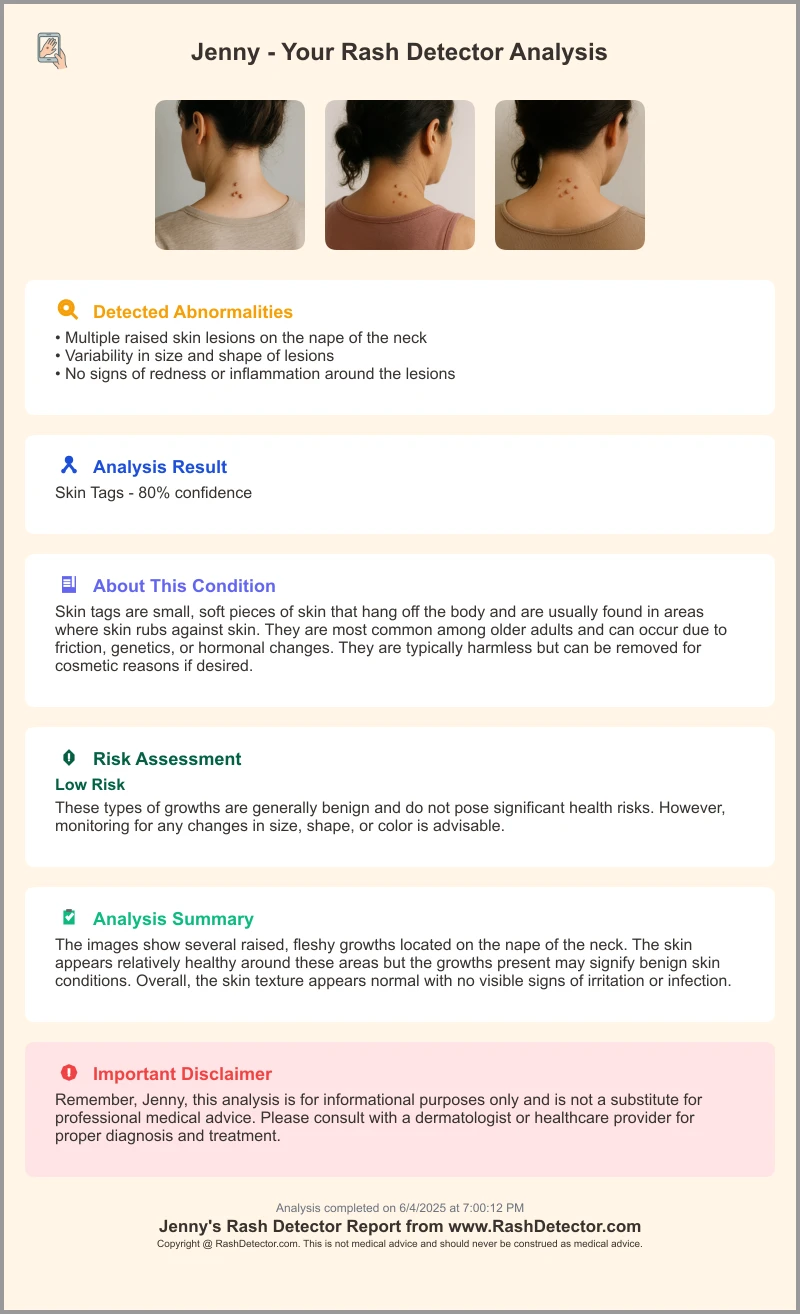
Using Photo-Based Rash Checkers
Tools like Rash Detector allow you to upload images of your rash for AI analysis of possible causes and guidance. When using such apps, take clear, well-lit photos from multiple angles including surrounding skin for best results. For example, include a ruler or coin in the photo for size reference. Avoid using flash that may distort colors.
These tools provide helpful preliminary information but do not replace professional evaluation, especially for severe or unusual rashes.
Conclusion
Learning how to identify a rash involves careful observation of its color, shape, texture, location, and symptoms, as well as understanding common rash types and their typical appearances. Paying attention to details like the pattern, progression, and possible triggers helps narrow down causes. Recognizing when a rash may be serious and requires medical attention is important for your health and safety.
For quick, AI-powered analysis, consider using a reliable rash checker like Rash Detector, which lets you upload photos and receive possible causes instantly. However, always seek professional medical advice for persistent, painful, spreading, or unusual rashes to ensure proper diagnosis and treatment.
For more detailed visual guides, explore How to Identify a Rash: A Complete Visual Guide and learn skin self-exam techniques at How to Do a Skin Self Exam at Home.
FAQ
Q: What does my rash look like based on its shape, color, and texture?
A: Describing your rash’s color (red, brown, purple), shape (round, irregular, annular), and texture (flat, raised, blistered, scaly) helps narrow down possible causes. For example, circular red scaly patches with central clearing often indicate fungal infections, while raised itchy welts that move around suggest hives. Flat discolored spots may be early signs of viral exanthems or drug reactions.
Q: How can I tell if a rash is eczema, hives, or contact dermatitis?
A: Eczema is usually dry, itchy, and scaly with chronic flare-ups and thickened skin from scratching. Hives appear suddenly as raised, itchy welts that change location rapidly and usually resolve within 24 hours. Contact dermatitis is localized redness and itching after exposure to an irritant or allergen, often with blistering or linear patterns corresponding to the exposure.
Q: When should I worry about a rash and see a doctor?
A: Seek medical care if your rash spreads rapidly, is painful, has blisters or open sores, is accompanied by fever, affects sensitive areas like eyes or genitals, or causes difficulty breathing. Persistent, worsening, or recurrent rashes despite home care also need evaluation.
Q: Why is my rash itchy, painful, or spreading quickly?
A: Itching often signals allergies, eczema, or hives. Pain can indicate infections like shingles or cellulitis, or severe inflammation. Rapid spreading may be due to infections or severe allergic reactions requiring urgent attention.
Q: What causes a rash that appears suddenly after a new product, medication, or food?
A: Sudden rashes after exposure often result from allergic contact dermatitis, drug reactions, or food allergies. Identifying and avoiding the trigger is key to preventing recurrence.
Q: How do rashes look different on dark skin?
A: On darker skin tones, rashes may appear as darker brown, purple, or gray patches rather than red. Texture changes such as scaling or thickening may be more noticeable than color changes. This variation can affect how rashes are identified and treated, so awareness is important for accurate diagnosis.