Common Issues with Rash Diagnosis Apps: Risks, Challenges, and How to Stay Safe
Explore common issues with rash diagnosis apps, including risks, challenges, and expert tips for safe use, to ensure accurate and reliable diagnosis.
Estimated reading time: 7 minutes
Key Takeaways
- Rash diagnosis apps offer fast, AI-powered skin assessments, but accuracy, privacy, and regulatory issues remain significant as of 2026.
- Technical hurdles persist, including inconsistent image recognition, data bias, and variable diagnostic rates—especially across diverse skin types.
- Regulatory oversight is improving but still lags behind rapid app development; data privacy and clinical validation are not always guaranteed.
- User interfaces and explanations have improved in some apps, but unclear feedback can still lead to false reassurance or unnecessary concern.
- Always treat app results as informational only, confirm findings with a healthcare provider, and choose apps prioritizing privacy, transparency, and regulatory compliance.
Table of Contents
- Background on Rash Diagnosis Apps
- Technical Challenges
- Regulatory and Privacy Issues
- User Experience Challenges
- Implications for Users
- Future Trends and Improvements
- Conclusion
- Additional Resources
Background on Rash Diagnosis Apps
Rash diagnosis apps are AI-powered smartphone tools that analyze user-uploaded images of skin rashes. Using deep learning and large, regularly updated medical image databases, these apps provide preliminary skin health insights—often in under a minute—without requiring an in-person appointment. In 2026, several leading apps, including Rash Detector, VisualDx/Aysa, and others, have expanded their reach globally, but their core workflow remains similar.
How They Function:
- Photo upload – Users take or upload a clear image of their rash. Many apps now offer in-app guidance for optimal lighting and focus, and some automatically detect blurry or poorly lit images before submission.
- AI analysis – The app’s machine-learning model compares the image to a continually growing database of labeled skin conditions, sometimes factoring in user-reported symptoms and medical history for more context.
- Result display – The app provides possible diagnostic categories, confidence scores, risk levels, and general advice. Some apps now include links to reputable resources or suggest when to see a healthcare provider.
For a deeper dive into the AI pipeline behind these tools, see AI pipeline behind these tools.
Intended Benefits:
- Convenience: 24/7 access to preliminary skin health information, supporting users who may not have immediate access to a dermatologist.
- Early detection: May help flag potentially serious rashes, such as rapidly spreading infections or suspicious moles, to prompt timely medical follow-up.
- Symptom tracking: Many apps now offer timeline views or reminders to re-capture images, helping users monitor rash evolution over time.
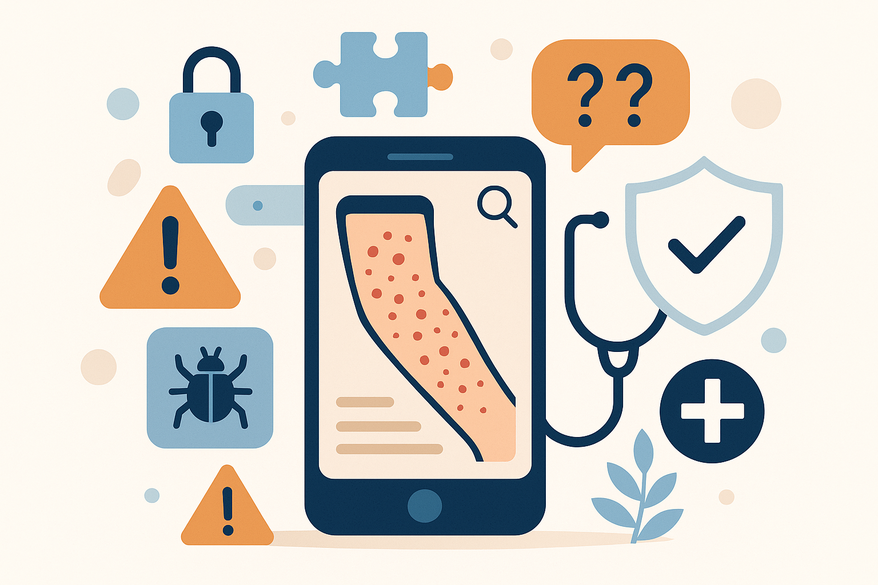
Despite these potential advantages, the rapid expansion of rash diagnosis apps continues to highlight notable limitations. Misdiagnoses, confusing interfaces, and unclear data practices remain common user concerns as of 2026.
Technical Challenges
- Inaccurate Image Recognition
- AI models may misidentify rashes due to poor lighting, out-of-focus images, unusual angles, or a wide range of skin tones. In 2026, apps increasingly use built-in quality checks but errors still occur, especially with images taken in low light or with smartphone cameras of varying quality.
- Repeated scans of the same rash can still yield inconsistent or conflicting results, especially if the rash changes or if the image quality varies.
- Algorithm Limitations
- Many AI models are trained on datasets that, despite improvements, may not fully represent rare skin diseases or all skin tones. This can lead to lower accuracy for people with darker skin or for uncommon conditions.
- Some recent evaluations have found that some apps still return different diagnoses for identical photos, especially for subtle or ambiguous rashes.
- Accuracy Rates
- While some apps report diagnostic accuracy rates for common rashes, overall accuracy across all skin conditions and platforms generally remains limited—especially for rare or complex cases. Symptom checkers may misdiagnose or miss serious conditions at significant rates.
Regulatory and Privacy Issues
- Data Security and Privacy Risks
- Most apps still send sensitive skin images and health information to remote servers for AI processing, although a growing number now offer on-device analysis to reduce exposure. End-to-end encryption is becoming more common, but not universal.
- Unauthorized access, data breaches, or misuse of personal health data remain risks. Not all apps comply with HIPAA (U.S.), GDPR (Europe), or other regional standards. Always check the app’s privacy policy before use.
- Lack of Standardization and Regulation
- Although regulatory oversight is increasing, many rash diagnosis apps in 2026 still lack formal clearance by agencies like the FDA (U.S.), CE (Europe), or similar bodies elsewhere. Some apps have achieved Class I medical device status, but requirements vary by region.
- Quality and safety are inconsistent. Some apps claim diagnostic accuracy without peer-reviewed evidence or published validation studies. New voluntary standards from dermatology associations are emerging but are not yet widely adopted.
Learn more about data security best practices.
User Experience Challenges
- Difficulty Interpreting Results
- Despite improvements, many apps still use medical jargon, probability scores, or risk percentages that can confuse non-medical users. Some now include plain-language summaries and visual aids, but not all provide clear next steps.
- False Reassurance or Undue Alarm
- A benign rash labeled as “low risk” may lead users to ignore symptoms that actually require medical attention. Conversely, a harmless condition flagged as “high risk” can cause unnecessary anxiety.
- Limited Clinical Context
- Apps cannot perform a physical exam, assess medical history in detail, or evaluate clues like temperature, pain, or systemic symptoms. Even with symptom checklists, critical information may be missed.
Implications for Users
Impact on Patient Outcomes:
- Delayed professional care – Users may postpone clinic visits after a false benign result, potentially missing early treatment windows for serious conditions.
- Misinformed self-treatment – Incorrect home remedies or over-the-counter drugs may worsen the rash or mask symptoms.
- Missed serious diagnoses – Life-threatening conditions, such as melanoma, cellulitis, or severe allergic reactions, require prompt intervention. Apps may overlook these or fail to convey urgency.
Actionable Guidelines:
- Use app results for general education only; never rely on them for a definitive diagnosis or treatment plan.
- Always seek evaluation from a board-certified dermatologist or primary care physician for any persistent, spreading, painful, or worsening rash.
- Choose apps with transparent privacy policies and, when possible, on-device image analysis to reduce data exposure.
- Prioritize apps with regulatory approval (FDA, CE, etc.) or those that publish peer-reviewed validation studies.
If you have a severe, spreading, painful, or persistent rash, or if you are unsure about your symptoms, see a doctor or dermatologist promptly for diagnosis and treatment.
Future Trends and Improvements
- AI & Machine Learning Advances
- Multi-modal models: Newer apps combine image analysis with user-reported symptoms, medical history, and sometimes environmental data (e.g., pollen counts) to better mimic clinical reasoning.
- Bias mitigation: Some platforms are expanding training datasets to include more images from diverse skin tones, ages, and rare conditions, aiming to improve accuracy for underrepresented groups.
- Enhanced Privacy Protocols
- On-device analysis: By 2026, several apps—including Rash Detector—offer the option to process images entirely on the user’s phone, minimizing cloud data transfer.
- End-to-end encryption: More apps now encrypt images and data both in transit and at rest, though users should verify these features before use.
- Regulatory Outlook
- Stricter guidelines: Dermatology associations and health authorities are developing standards for clinical validation, algorithm transparency, and user safety. Some regions now require apps to disclose diagnostic accuracy and data sources.
- Transparency requirements: By 2026, some app stores flag health apps with regulatory status and published validation results, helping users make informed choices.
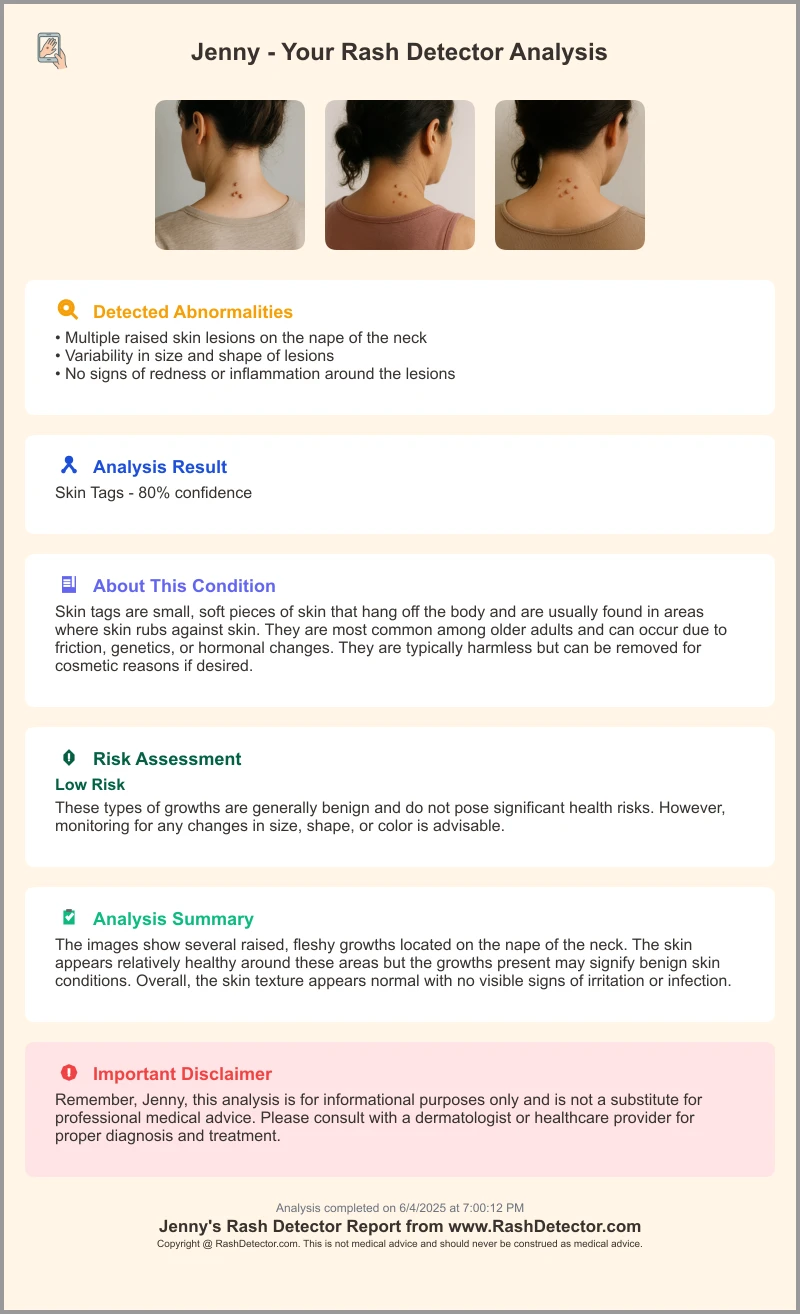
For example, tools like Rash Detector allow users to upload photos of their rash and receive an AI-generated report—often with confidence scores, risk levels, and recommended next steps—in minutes. Below is a sample report illustrating these details:
Conclusion
Rash diagnosis apps continue to offer potential support for skin health, especially in areas with limited access to dermatologists. However, technical errors, regulatory gaps, privacy concerns, and user experience challenges mean these tools should be used as educational aides—not as substitutes for professional care. For any severe, spreading, painful, or persistent rash, consult a doctor or dermatologist for accurate diagnosis and appropriate treatment.
Additional Resources
- American Academy of Dermatology: Digital Health Apps and Safety
- VisualDx/Aysa: Clinician-vetted visual reference
- For personalized advice, consult a board-certified dermatologist or your primary care provider.
FAQ
- Q: Are rash diagnosis apps reliable?
A: While some apps have improved, accuracy rates for most remain limited for many skin conditions. Always verify results with a healthcare professional. - Q: How do rash apps protect my privacy?
A: Privacy protections vary. Look for apps that offer on-device analysis, end-to-end encryption, and transparent privacy policies. Never upload images to apps you do not trust. - Q: Can a rash diagnosis app replace a dermatologist?
A: No. These tools are for general education only and cannot substitute a clinical evaluation by a licensed healthcare provider. - Q: What should I do if an app flags my rash as high risk?
A: Contact a board-certified dermatologist promptly and seek in-person care, especially for rashes that are severe, spreading, painful, or persistent.