AI Skin Rash Statistics: Data-Driven Insights in Dermatology
Explore data-driven AI skin rash statistics, offering insights into diagnosis and treatment with speed and accuracy, enhancing dermatology care.

Estimated reading time: 8 minutes
Key Takeaways
- AI models like ResNet-50 and hybrid networks achieve high accuracy in skin rash classification.
- Robust data gathering and preprocessing are crucial for reliable AI-driven insights.
- AI-generated statistics offer scalable, objective metrics but require clinical validation to mitigate bias.
- Future integration of multi-modal data promises personalized and earlier dermatological diagnoses.
Table of Contents
- Introduction
- Background and Context: Skin Rashes
- AI and Its Application in Dermatology
- Data Gathering Process
- Presentation of Statistical Data
- Benefits and Limitations
- Implications for Future Research and Healthcare
- Conclusion
- FAQ
Introduction
AI skin rash statistics refer to the numerical and analytical outputs generated by artificial intelligence for various dermatological conditions. In this post, we explore how AI models collect and analyze skin rash data, providing readers with comprehensive insights into prevalence, severity scoring, and demographic trends.
Background and Context: Skin Rashes
Skin rashes manifest as changes in color, texture, or appearance—ranging from eczema and psoriasis to allergic reactions. Their varied presentations challenge clinical diagnosis, making accurate statistical data essential for guiding treatment decisions.
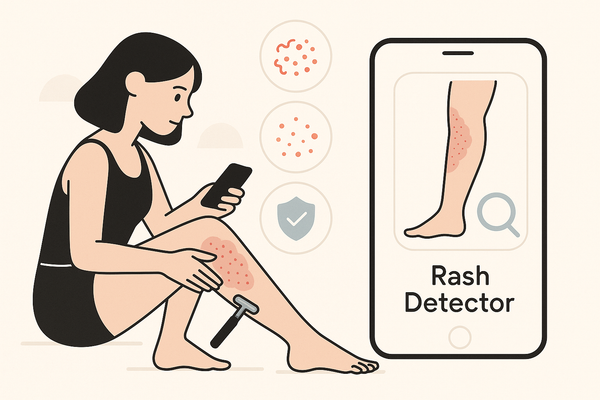
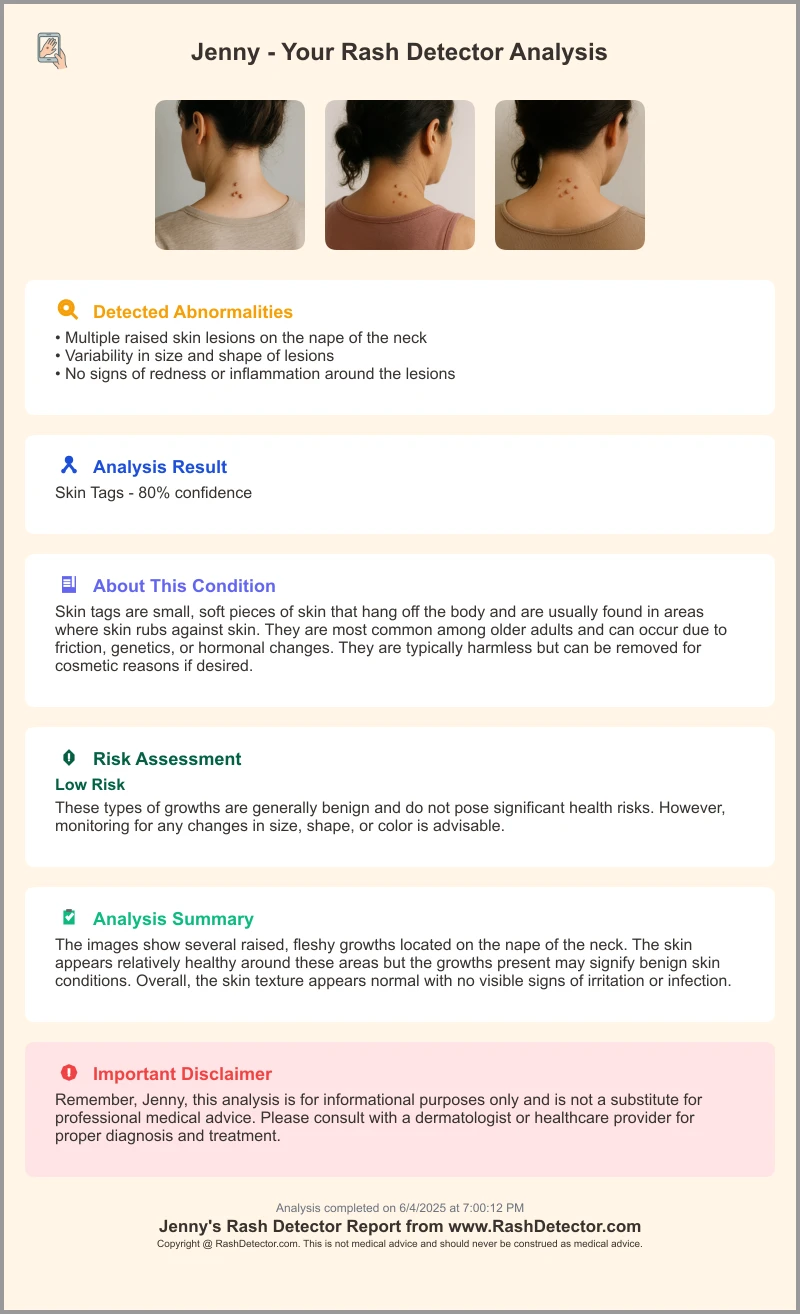
Enter AI: modern machine- and deep-learning systems can analyze images and patient records at scale, reducing human bias. For example, the Rash Detector app offers instant AI-based analysis by uploading images, delivering severity scores and personalized risk factors.
Key points:
- Definition: color changes, raised bumps, scaling, itchiness.
- Clinical significance: varied symptoms demand precise diagnosis.
- AI's role: automated image recognition, pattern detection, large-scale analysis.
AI and Its Application in Dermatology
Deep learning architectures—such as ResNet-50, VGGNet-19, MobileNetV3, MnasNet, and EfficientNetB0—power AI-driven rash analysis. These models detect patterns to classify rash types and measure severity.
In a notable example, ResNet-50 achieved:
- Accuracy: 89.80%
- Precision: 90.00%
- Sensitivity: 89.80%
- Specificity: 96.70%
A technical pipeline study on atopic dermatitis (AD) using 604 images reported 84.6% diagnostic accuracy. Hybrid networks—like DenseNet121 combined with EfficientNetB0—further enhance performance across multiple skin diseases.
Data Gathering Process
AI systems aggregate diverse sources to build robust datasets:
- Clinical images from dermatology clinics
- Electronic health records (EHRs)
- Patient-reported photos on social media
- Genomic and molecular data
Preprocessing steps include:
- Bias removal for balanced skin tone and age representation
- Standardization of image size, lighting, and format
- Annotation by specialists to label rash types and severity
Such rigor yields metrics like prevalence by region, severity scales, demographic breakdowns, and risk factor associations.
Presentation of Statistical Data
AI translate raw data into clear, actionable statistics:
- Prevalence & Accuracy: AD classification accuracy >89%; mpox/leprosy prediction >95%.
- Demographic Analysis: Incidence rates by age, region, and socio-environmental factors.
- Algorithmic Variation: Model designs yield varied performance—see the comparison below:
Model Comparison for AD Scoring:
- ResNet-50: Accuracy 89.80%, Precision 90.00%, Sensitivity 89.80%, Specificity 96.70%, F1 Score 89.95%
- VGGNet-19: ~85% across key metrics
- MobileNetV3: ~80% across key metrics
Benefits and Limitations
Benefits:
- High speed & scalability – process thousands of images in minutes
- Objectivity & reproducibility – reduces clinical bias
- Enhanced telemedicine – supports remote triage
- Population insights – uncovers large-scale risk factors
Limitations:
- Data quality demands – biased or small datasets produce unreliable statistics
- Algorithmic bias – uneven accuracy across skin tones and ages
- Need for clinical validation – expert oversight remains crucial
Implications for Future Research and Healthcare
AI skin rash statistics are poised to transform dermatology:
- Earlier diagnosis via AI-flagged alerts
- Personalized treatments driven by severity scores
- Integration of multi-modal data—images, genomics, and history
Challenges include building unbiased datasets, establishing clinical regulations, and ensuring model transparency and explainability.
Conclusion
AI skin rash statistics deliver faster, more objective insights with high accuracy. Though they offer clear benefits—such as telemedicine support and large-scale analysis—data bias and the need for clinical validation remain critical considerations. Future advances in multi-modal modeling and rigorous testing will further cement AI's role in dermatology.
FAQ
- Q: What types of skin rashes can AI analyze?
A: AI can analyze eczema, psoriasis, infections, allergic reactions, and more, depending on the training data. - Q: How accurate are AI models in dermatology?
A: Top models like ResNet-50 exceed 89% accuracy for conditions like atopic dermatitis, with even higher rates in some studies. - Q: Are AI-generated statistics reliable?
A: With high-quality, unbiased datasets and expert validation, AI statistics can be highly reliable, though oversight is essential. - Q: How can clinicians adopt AI tools?
A: Clinicians should integrate validated AI platforms, participate in pilot studies, and ensure results align with clinical expertise.