AI Rash Case Studies: Real-World Evidence in Dermatological Diagnostics
Explore AI rash case studies showcasing AI's impact on diagnostic speed and accuracy in dermatology, improving accessibility in real-world settings.
Estimated reading time: 8 minutes
Key Takeaways
- AI-driven rash detection accelerates triage and improves access in underserved regions.
- Convolutional neural networks and transfer learning enhance diagnostic accuracy.
- Real-world trials reveal strengths in speed and support, with room to improve rare-condition performance.
- Ethical, regulatory, and data-bias challenges must be addressed for widespread deployment.
- Future models will be multi-modal, explainable, and deeply integrated into teledermatology platforms.
Table of Contents
- Introduction
- Background on AI in Dermatology
- Overview of AI Rash Detection Technologies
- Detailed Discussion of AI Rash Case Studies
- Clinical Outcomes and Evidence Analysis
- Lessons Learned and Future Directions
- Conclusion
Introduction
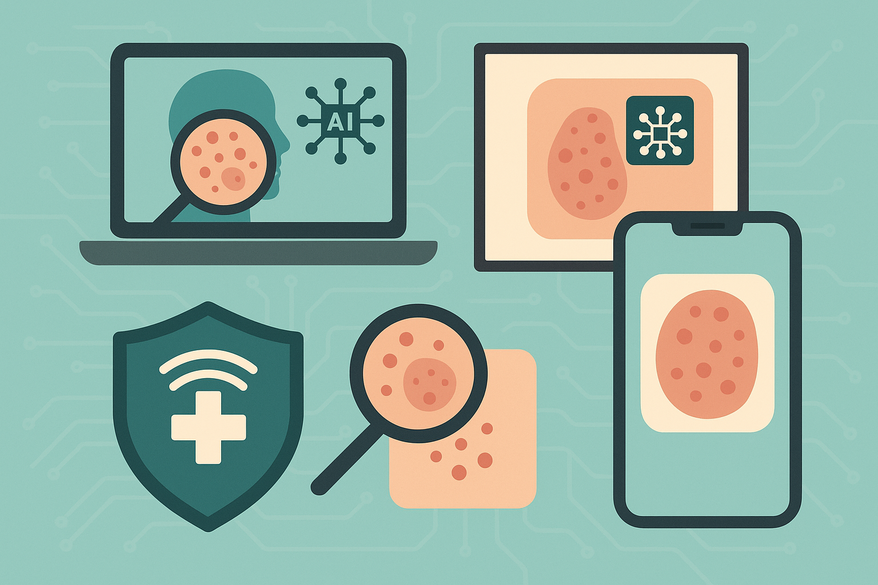
AI rash case studies analyze real-world implementations where artificial intelligence systems detect, classify, and manage skin rashes in clinical settings. These studies are essential to understand how machine learning and deep learning tools improve dermatological diagnostics, especially in resource-limited environments. Advances in computer vision, neural networks, and teledermatology platforms are driving rapid change. This post provides an informational overview of evidence and clinical outcomes from AI-driven rash detection trials, highlighting methodologies, results, and patient impacts.
Source: Frontiers in Big Data article
Background on AI in Dermatology
From expert systems to deep learning: Early AI relied on rule-based if-then logic to mimic clinician reasoning. By the 2000s, machine learning introduced pattern recognition to medical images. The last decade has seen convolutional neural networks (CNNs) surge to the forefront, automatically extracting features like color, shape, and texture. Teledermatology and smartphone dermatoscopes now extend specialist reach into resource-limited areas, driving the evolution of AI rash detection.
Overview of AI Rash Detection Technologies
Machine Learning Algorithms
Algorithms such as support vector machines and random forests classify images based on engineered features (color histograms, shape descriptors).
Deep Learning & Image Recognition
CNNs automatically learn hierarchical visual patterns. Transfer learning—fine-tuning DenseNet121, EfficientNetB0, etc.—speeds development and boosts accuracy. Read more about machine learning in skin analysis at machine learning in skin analysis.
Model Training Process
Dermatologists annotate thousands of images. Augmentation (rotation, scaling, color jitter) improves robustness; prospective testing validates performance. Metadata—patient history, genetic markers, UV exposure—enriches risk scoring. For a deep dive into technical workflows, see technical workflows.
Real-World Platform: Rash Detector
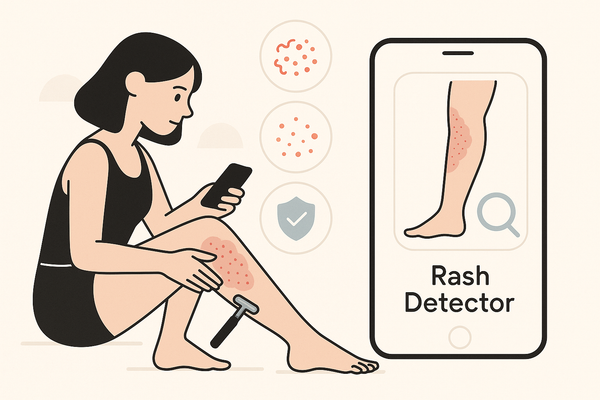
Clinicians and patients upload rash images and receive AI-driven analysis in seconds via Rash Detector. 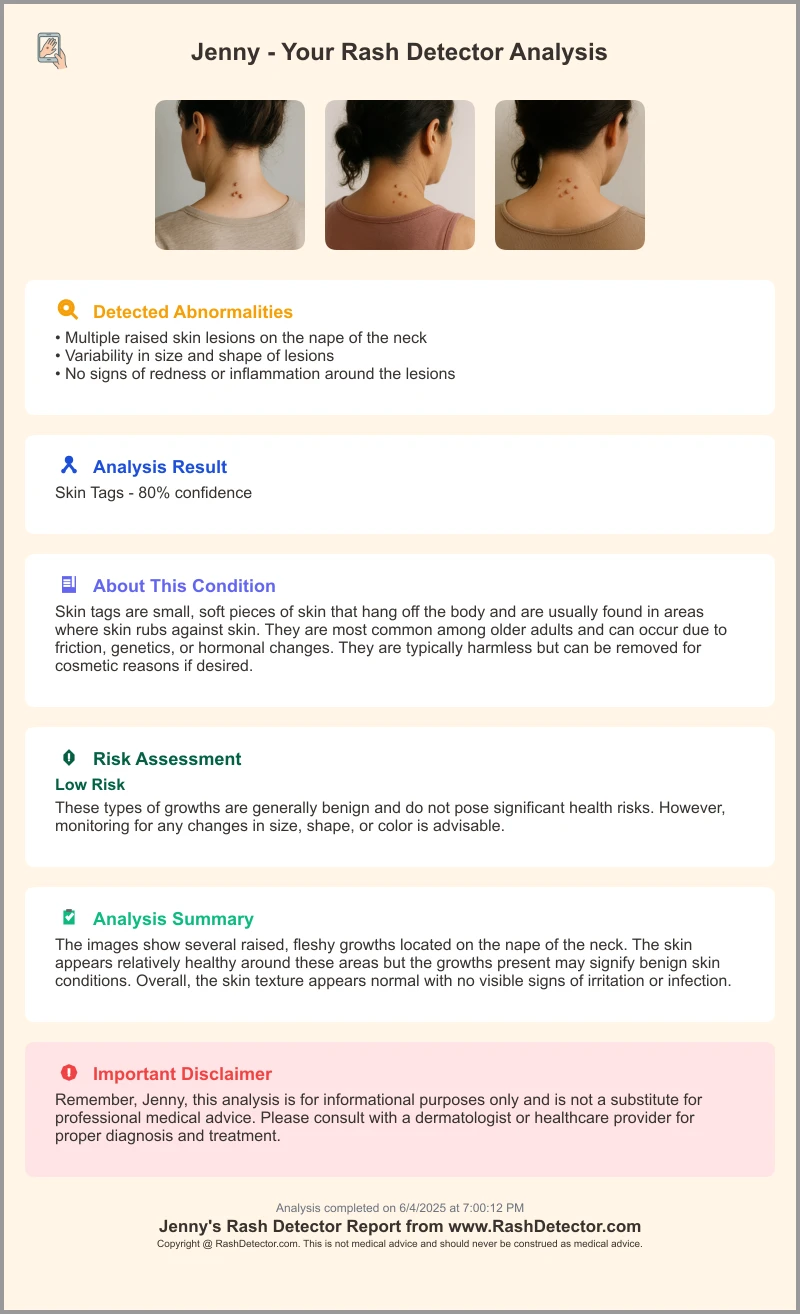
Detailed Discussion of AI Rash Case Studies
Case Study 1 – Mobile Phone-Powered AI for Pigmented Lesions
- Setting: Triage in primary care and teledermatology clinics.
- Methodology: Smartphone app captures lesion images; CNN yields malignancy risk scores.
- Outcome: AI accuracy 78.4% vs. specialist 90.0%; results in <10 seconds.
- Impact: Instant feedback reduces wait times in underserved areas.
- Deployment: Clinics in rural India and sub-Saharan Africa improved throughput.
Source: Dermsquared report
Case Study 2 – Machine Learning Model across 44 Skin Conditions
- Dataset: 40,000+ annotated images of benign tumors, inflammatory rashes, malignant lesions.
- Performance: Top-3 accuracy 75% (AI) vs. 76% (general practitioners). AI sensitivity for benign tumors surpassed GPs.
- Clinician feedback: 92% of GPs valued it as decision-support.
- Limitation: Overall AI still trails dermatologists in broad diagnostics.
Source: Nature article
Case Study 3 – 2025 Multi-Centre Melanoma Triage Trials
- Integration: Fused CNN outputs with patient history and UV-exposure data across UK GP practices.
- Findings: AI outperformed dermatologist panels in early melanoma triage.
- Benefit: Reduced unnecessary referrals by 30%, easing specialist workloads.
Source: London Dermatology Centre blog
Clinical Outcomes and Evidence Analysis
Comparative Insights
AI delivers rapid results vs. traditional appointment waits; matches clinician accuracy in focused areas; excels in accessibility and cost efficiency; enhances patient satisfaction with faster guidance.
Challenges & Considerations
Data bias on diverse skin tones; algorithmic transparency and accountability; regulatory approvals (FDA, EMA); EHR integration; ongoing physician oversight remains critical.
Lessons Learned and Future Directions
Key Takeaways
AI shines as a diagnostic support tool, not a replacement; must be validated across populations; multi-modal fusion of images, history, and genetics boosts performance.
Future Trends in AI Dermatology
Teledermatology will expand primary-care reach; explainable AI (XAI) will build trust; standardized data-sharing will reduce bias; stronger regulations will guide safe deployment.
Conclusion
AI rash case studies illustrate how AI accelerates triage, supports clinicians, and democratizes skin-disease screening. Ongoing, evidence-based evaluation—ensuring transparency, accountability, and equity—is essential as these tools move into routine care. Explore the full Frontiers in Big Data article and see top dermatology technology trends for deeper insights.
FAQ
- What is AI rash detection and how does it work?
- AI rash detection uses machine learning, especially convolutional neural networks, to analyze images of skin rashes and provide diagnostic probabilities based on learned visual patterns.
- How accurate are these AI systems compared to clinicians?
- In focused tasks, AI accuracy approaches that of general practitioners but may lag behind dermatologists, particularly for rare or ambiguous conditions.
- Are AI dermatology tools regulated and safe for clinical use?
- Many AI tools are undergoing or have received FDA and EMA approvals. Ongoing oversight, real-world validation, and clinician supervision ensure safety and efficacy.