
AI for Folliculitis Diagnosis and Treatment: Fast, Accurate Skin Help
AI for folliculitis diagnosis and treatment offers quick, accurate analysis from photos to guide care. Check your rash now with Rash Detector’s expert AI tool.


Estimated reading time: 15 min
Key Takeaways
- AI for folliculitis diagnosis offers rapid, non-invasive skin condition analysis from photos, potentially enabling earlier detection and intervention.
- Folliculitis diagnosis traditionally relies on clinical examination but sometimes requires laboratory tests for confirmation and tailored treatment.
- AI may help differentiate folliculitis from acne, rosacea, fungal infections, and other skin disorders by analyzing lesion characteristics and patterns.
- Effective folliculitis treatment depends on the underlying cause and severity, ranging from self-care routines to topical or systemic antibiotics and antifungal therapies.
- Prevention focuses on maintaining hygiene, adopting proper shaving practices, and avoiding irritants; AI tools may support early detection to reduce recurrence and complications.
Table of Contents
- Section 1: Understanding Folliculitis and AI Diagnosis
- Section 2: Clinical Diagnosis vs Laboratory Testing
- Section 3: AI Dermatology Image Analysis for Folliculitis
- Section 4: Differentiating Folliculitis from Similar Skin Conditions
- Section 5: Treatment Options Based on Folliculitis Causes
- Section 6: Risk Factors, Triggers, and When to Test
- Section 7: Limitations and Benefits of AI in Dermatology
- Section 8: Prevention and Recurrence Reduction Strategies
- Conclusion
- FAQ
Section 1: Understanding Folliculitis and AI Diagnosis
What is Folliculitis?
Folliculitis is an inflammatory condition involving hair follicles, characterized by the appearance of small, red, tender bumps or pustules centered around hair shafts. It can manifest on any part of the body where hair grows, commonly affecting the scalp, face, neck, chest, back, and limbs. The condition arises from various causes including bacterial infections—most commonly by Staphylococcus aureus—fungal organisms like Malassezia species, viral agents such as herpes simplex, mechanical irritation or occlusion due to sweat, oils, or friction. Occasionally, folliculitis may be sterile or immune-mediated, triggered by underlying systemic diseases or medications.
Folliculitis can present in acute or chronic forms. Acute folliculitis tends to be self-limiting when mild, but chronic or deep folliculitis may lead to scarring, permanent hair loss, or secondary infections. It is important to recognize the clinical features early to prevent complications.
Why Use AI for Folliculitis Diagnosis?
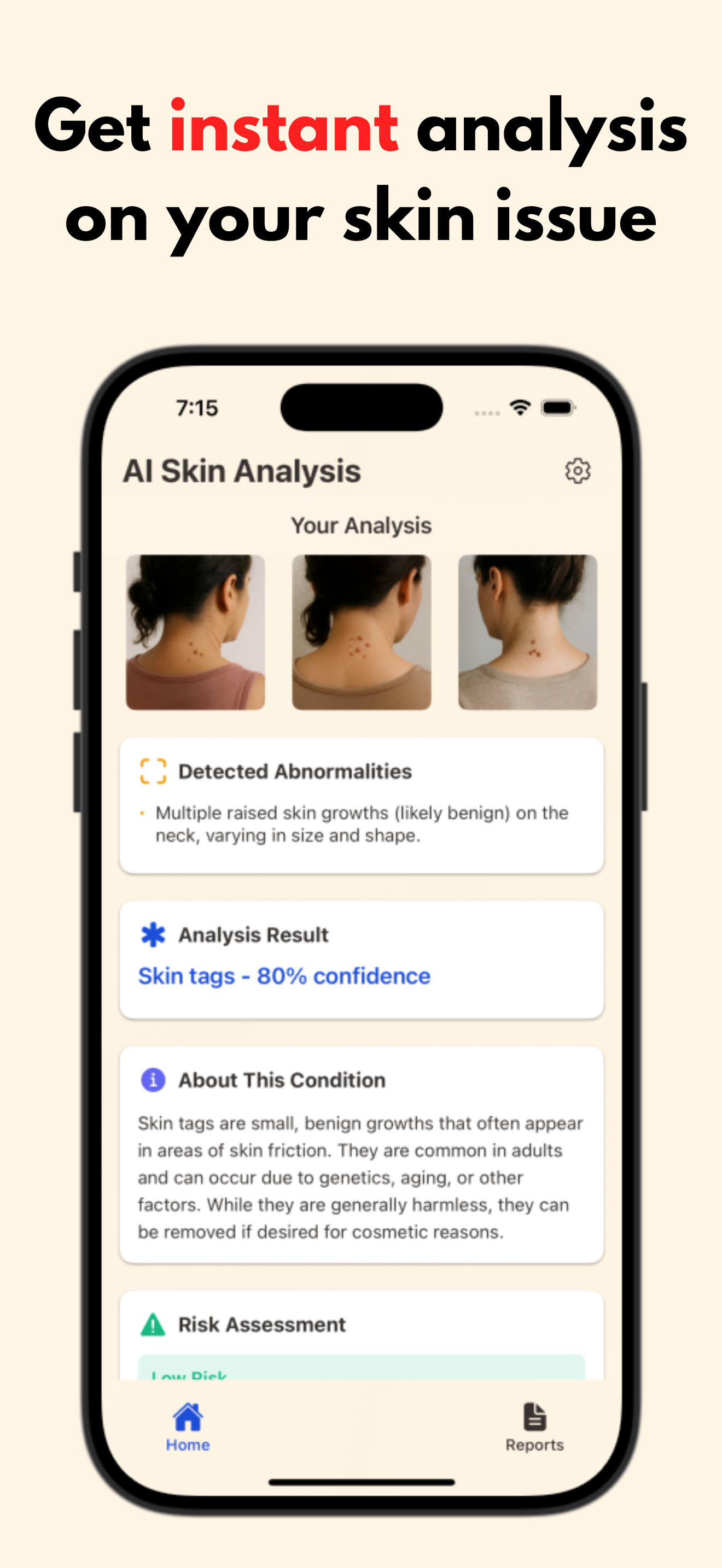
Artificial Intelligence (AI) technology, such as the tool offered by Rash Detector, uses machine learning algorithms to analyze photographs of skin lesions. This technology aims to provide rapid, non-invasive evaluation of skin conditions by detecting patterns, colors, shapes, and textures associated with folliculitis.
AI-powered diagnosis may offer immediate insights into potential causes and appropriate treatment pathways, which can be valuable in settings with limited access to dermatologists or healthcare facilities. By enabling users to upload images taken via smartphones, AI tools can facilitate early detection and timely management, potentially reducing the risk of worsening or spreading infections.
Moreover, AI can support clinicians by providing a second opinion, assisting in diagnostic confirmation, and helping differentiate folliculitis from other dermatological conditions with similar clinical presentations.
Benefits of AI Diagnosis for Folliculitis
- Instant analysis from smartphone photos: Users may receive rapid feedback without the need for in-person visits.
- Potential accuracy in identification: AI models trained on annotated images can assist in distinguishing folliculitis from other skin disorders.
- Privacy and convenience: Home-based assessments reduce exposure to healthcare environments and maintain patient confidentiality.
- Supports timely treatment decisions: Early detection may help initiate appropriate therapy, potentially avoiding complications and unnecessary antibiotic use.
- Educational value: Users can gain better awareness of their skin condition and learn about risk factors and preventive measures.
Section 2: Clinical Diagnosis vs Laboratory Testing
How Folliculitis is Diagnosed Clinically
Clinical diagnosis of folliculitis primarily depends on a thorough physical examination by a healthcare professional. Key diagnostic clues include the presence of groups of erythematous papules or pustules centered on hair follicles, often accompanied by symptoms such as itching, tenderness, burning sensation, or mild pain. The lesions may be superficial or deep, and distribution patterns—such as involvement of shaved areas or occluded skin—provide important context.
History taking is critical to identify precipitating factors including recent shaving, use of hot tubs or swimming pools, exposure to chemicals or irritants, and any underlying immunosuppression or chronic illnesses. The temporal course—whether acute or chronic—also guides clinical judgment.
In many straightforward cases, clinical evaluation suffices to initiate treatment without further testing. However, the clinician must remain vigilant for atypical presentations or signs suggesting alternative diagnoses.
When Are Tests Needed?
Laboratory investigations may be warranted in specific scenarios such as:
- Severe or extensive folliculitis: When lesions cover large body areas or are associated with systemic symptoms.
- Recurrent or persistent folliculitis: Cases that do not respond to standard therapies may require further evaluation.
- Suspected atypical infections: Including fungal, viral, or non-tuberculous mycobacterial folliculitis.
- Immunocompromised patients: Where infections may be more aggressive or unusual organisms involved.
- Unclear diagnosis: To rule out other inflammatory or neoplastic conditions that mimic folliculitis.
The Role of Lab Tests in Confirming Diagnosis
Laboratory tests can help identify the specific causative agent and guide targeted treatment:
- Swabs and cultures: Sampling pustular material or crusts for bacterial and fungal cultures allows identification of pathogens and antibiotic susceptibility testing. For instance, culture can reveal methicillin-resistant Staphylococcus aureus (MRSA), which necessitates alternative antibiotics.
- Skin scraping: Used to detect fungal elements or parasites such as Demodex mites, through microscopic examination with potassium hydroxide (KOH) preparations.
- Biopsy: In rare cases, a punch biopsy may be performed to exclude other dermatoses like psoriasis, eczema, or malignancies, especially if lesions are atypical, chronic, or unresponsive to treatment.
- Polymerase chain reaction (PCR) and other molecular tests: These advanced methods help detect viral DNA or difficult-to-culture organisms.
Thus, lab investigations complement clinical findings, enabling more precise diagnosis and optimized management plans.
Section 3: AI Dermatology Image Analysis for Folliculitis
How AI Analyzes Skin Lesions
AI dermatology image analysis involves convolutional neural networks (CNNs) and other machine learning techniques trained on datasets of clinical images. The models extract features such as lesion shape, size, color gradients, border regularity, distribution patterns, and surface texture. These features are compared against known patterns characteristic of folliculitis and other dermatoses.
For folliculitis, key visual indicators include localized clusters of small, circular pustules or papules centered around hair follicles, often with a reddish base. AI algorithms also evaluate the surrounding skin for signs of inflammation, scaling, or secondary infection.
Advanced AI systems may integrate contextual data such as patient age, lesion location, and symptom duration to refine diagnostic probabilities.
Recognizing Pustules and Scalp Conditions
Folliculitis lesions commonly manifest as pustules—small, pus-filled elevations that indicate follicular infection and inflammation. The scalp presents unique challenges due to hair density and lighting variability. AI algorithms are trained to detect pustular lesions beneath hair shafts by enhancing image contrast and isolating follicular units.
Additionally, AI can assist in differentiating scalp folliculitis from other scalp conditions like seborrheic dermatitis, characterized by greasy scales and erythema, or psoriasis, noted for well-demarcated plaques with silvery scales. This differentiation is important as treatments vary substantially.
Example Screenshot from Rash Detector
Advantages of AI Image Analysis
- Non-invasive and quick data collection: Users can upload photos anytime without discomfort or need for specialized equipment.
- Consistent and objective lesion evaluation: AI may reduce human error and inter-observer variability inherent in clinical assessments.
- Early identification of subtle or atypical presentations: AI can detect minimal or early folliculitis lesions not easily visible to the naked eye.
- Empowers patients through instant feedback and guidance: Users receive actionable recommendations, promoting timely care and reducing anxiety.
- Supports teledermatology: AI complements remote consultations by providing pre-assessment data for clinicians.
Section 4: Differentiating Folliculitis from Similar Skin Conditions
Common Conditions Confused with Folliculitis
- Acne: Characterized by a combination of comedones (blackheads and whiteheads), inflammatory papules, pustules, and cysts. Unlike folliculitis, acne lesions often involve sebaceous gland obstruction and inflammation, with comedones absent in folliculitis.
- Rosacea: Presents primarily with facial flushing, persistent erythema, telangiectasia, and sometimes papules or pustules, but without central follicular involvement. Rosacea lesions are often accompanied by ocular symptoms and worsened by triggers like heat or alcohol.
- Pseudofolliculitis Barbae: Commonly known as razor bumps, caused by ingrown hairs particularly in the beard area. Lesions appear as papules or pustules with hair trapped inside, often with post-inflammatory hyperpigmentation.
- Hidradenitis Suppurativa: A chronic inflammatory disorder affecting apocrine gland-bearing areas such as axillae and groin, with painful nodules, abscesses, and sinus tracts. Lesions are typically deeper and more nodular than folliculitis.
- Keratosis Pilaris: Presents as rough, small follicular plugs without active inflammation. The skin feels bumpy but lacks pustules or erythema.
- Fungal or Yeast Infections: May produce folliculitis-like pustules, commonly caused by Malassezia or dermatophytes. These require antifungal rather than antibacterial treatment.
How AI Helps Differentiate These Conditions
AI algorithms analyze subtle morphological and contextual differences to suggest the most probable diagnosis. For example, AI distinguishes acne by identifying comedones and deeper cystic lesions, features absent in folliculitis. In rosacea, AI detects diffuse erythema and telangiectasia patterns rather than follicular pustules.
Pseudofolliculitis barbae is differentiated by recognizing ingrown hairs within lesions and their typical distribution in the beard area. For fungal folliculitis, AI may identify scaling and lesion distribution patterns consistent with fungal growth.
This diagnostic support may reduce unnecessary antibiotic use and guide appropriate therapeutic strategies.
Clinical Importance of Accurate Differentiation
Accurate differentiation among these skin conditions is important because treatments vary widely. For instance, acne management includes retinoids and hormonal therapies, which are ineffective for folliculitis. Misdiagnosing fungal folliculitis as bacterial can lead to treatment failure and prolonged symptoms. AI-supported analysis can enhance diagnostic confidence, potentially improving patient outcomes and reducing healthcare costs.
Section 5: Treatment Options Based on Folliculitis Causes
Self-Care and Hygiene
Mild or superficial folliculitis often resolves with conservative management focusing on skin hygiene and reducing irritants. Recommended self-care measures include:
- Gentle cleansing: Use antiseptic washes containing chlorhexidine or benzoyl peroxide to reduce microbial load without excessive skin irritation.
- Avoid tight clothing and friction: Wear loose-fitting, breathable fabrics to minimize mechanical irritation.
- Keep affected areas dry: Moisture promotes microbial growth; drying powders or absorbent materials may be helpful.
- Modify shaving practices: Temporarily cease shaving to allow follicle healing or adopt techniques reducing trauma, such as using single-blade razors and shaving with the grain.
- Warm compresses: Applying warm, moist compresses several times daily can help drain pustules and relieve discomfort.
Topical and Oral Antibiotics
When bacterial folliculitis is diagnosed or strongly suspected, pharmacological treatment may be necessary:
- Topical antibiotics: Mupirocin 2% ointment or clindamycin 1% gel applied twice daily for 7-14 days can effectively reduce localized bacterial colonization.
- Oral antibiotics: Indicated for widespread, recurrent, or deep folliculitis. Commonly prescribed agents include doxycycline (100 mg twice daily) or cephalexin (500 mg four times daily) for 7-14 days, adjusted based on culture results and clinical response.
- Antiseptic washes: Benzoyl peroxide washes may be used adjunctively to reduce bacterial load and resistance risk.
Treating Non-Bacterial Causes
For folliculitis caused by fungal organisms, antifungal agents such as topical ketoconazole cream or oral terbinafine may be prescribed. Viral folliculitis, such as herpes simplex involvement, requires antiviral medications like acyclovir.
AI-assisted diagnosis can help guide patients and clinicians toward the correct category of treatment by suggesting probable causes based on lesion characteristics and distribution patterns.
For a broader overview of skin rash treatments, see our detailed guide on Skin Rash Treatment.
Section 6: Risk Factors, Triggers, and When to Test
Common Triggers and Risk Factors
- Sweating and heat: Prolonged exposure to warm, moist environments such as gyms or tropical climates may increase follicular occlusion and bacterial proliferation.
- Friction and tight clothing: Consistent rubbing or pressure can damage follicular epithelium, facilitating infection.
- Hot tubs and pools: Use of inadequately chlorinated water can introduce Pseudomonas aeruginosa, causing "hot tub folliculitis" which may require specific antibiotic therapy.
- Shaving habits: Frequent or improper shaving can cause microtrauma, leading to follicular inflammation or pseudofolliculitis barbae.
- Topical steroids: Prolonged use may mask symptoms, promote fungal overgrowth, or worsen infections.
- Immunosuppression: Conditions such as diabetes, HIV, or immunosuppressive medications increase vulnerability to infections and atypical pathogens.
- Prior antibiotic use: Alters the skin microbiome, potentially promoting resistant strains or fungal superinfections.
- Personal hygiene: Poor hygiene can increase colonization by pathogenic organisms.
When to Use Swabs, Cultures, or Biopsy
Laboratory testing is advisable under the following circumstances:
- Folliculitis is severe, extensive, or spreading despite initial treatment.
- Lesions recur frequently or persist longer than 2-4 weeks.
- Suspicion of fungal, viral, or atypical bacterial infections based on clinical features or history.
- Presence of systemic symptoms such as fever, malaise, or lymphadenopathy suggesting systemic involvement.
- Unclear diagnosis where alternative dermatoses must be excluded.
- Immunocompromised patients with unusual or aggressive presentations.
How AI Supports Testing Decisions
AI applications may flag cases with morphological features suggestive of non-bacterial causes or resistant organisms, prompting users to seek timely lab investigations. For example, AI might identify scaling or lesion patterns consistent with fungal folliculitis, encouraging fungal cultures or skin scrapings. This targeted approach can help optimize resource use and ensure patients receive appropriate diagnostics and therapy.
Section 7: Limitations and Benefits of AI in Dermatology
What AI Can Do
- Provide rapid screening support from user-uploaded photographs, enhancing accessibility to dermatologic assessment.
- Enhance diagnostic accuracy by learning from extensive image datasets encompassing diverse skin tones and lesion types.
- Assist patients and non-specialist healthcare providers in early detection and differentiation of common skin conditions.
- Suggest possible causes and evidence-based treatment guidance, improving patient education and adherence.
- Support teledermatology workflows by pre-analyzing images and prioritizing cases requiring urgent attention.
Real-World Limitations
Despite significant advances, AI tools have inherent limitations:
- Image quality dependency: Variations in lighting, focus, resolution, and angles can reduce diagnostic accuracy.
- Limited detection of rare or complex conditions: AI models trained primarily on common presentations may not recognize uncommon variants.
- Lack of physical examination: AI cannot perform palpation, assess lesion tenderness, or evaluate systemic signs.
- Potential for false positives/negatives: Users must interpret AI outputs cautiously and in context.
- Privacy and ethical considerations: Handling of sensitive patient images requires strict data security and informed consent.
- Not a substitute for professional care: AI should complement, not replace, clinical judgment and diagnostic procedures.
Integrating AI with Clinical Care
AI is most effective when integrated as a decision-support tool alongside dermatologists’ expertise. It enhances triage, patient engagement, and monitoring but cannot replace in-person evaluations, especially for severe, spreading, painful, or persistent folliculitis. Patients should always consult healthcare professionals for definitive diagnosis and treatment plans.
Section 8: Prevention and Recurrence Reduction Strategies
Good Hygiene and Clothing Choices
- Regular cleansing: Employ antiseptic or antibacterial washes to maintain skin flora balance and reduce pathogen colonization.
- Breathable clothing: Wear loose, natural-fiber garments that wick moisture away and minimize friction.
- Personal items: Avoid sharing razors, towels, or clothing to prevent cross-contamination of bacteria or fungi.
- Post-exercise care: Shower promptly after sweating to remove microbes and sweat from skin.
Shaving Techniques to Reduce Folliculitis
- Use clean, sharp blades: Replace razors frequently to prevent bacterial colonization and minimize trauma.
- Shave in the direction of hair growth: Reduces irritation and risk of ingrown hairs.
- Consider alternative hair removal: Electric razors, depilatory creams, or trimming may lower folliculitis risk compared to close shaving.
- Apply soothing aftershave or emollients: Products containing aloe vera or hydrocortisone can reduce inflammation.
- Pre-shave preparation: Warm water and moisturizing shaving gels soften hair and improve glide.
Monitoring and Early Detection with AI
Regular monitoring of skin health using AI-powered tools like Rash Detector can empower users to detect early signs of folliculitis and other skin disorders. By uploading periodic photos, users may track lesion evolution, receive alerts about worsening or new lesions, and get timely advice for seeking medical care.
Early detection can help prevent progression to severe or scarring forms of folliculitis and reduce recurrence by enabling prompt management of triggers.
For more comprehensive tips on preventing related skin issues, explore our post on How to Prevent Heat Rash, which shares practical advice applicable to folliculitis prevention as well.
Conclusion
AI for folliculitis diagnosis and treatment represents a promising advancement that provides rapid analysis of skin lesions through photographs. This technology can support clinical decision-making by enhancing diagnostic accuracy, differentiating folliculitis from similar conditions, and guiding appropriate treatment choices.
While AI cannot replace a dermatologist’s physical examination or laboratory investigations, it offers convenient, privacy-conscious early assessment and ongoing monitoring. When combined with sound hygiene practices, proper shaving techniques, and awareness of individual risk factors and triggers, AI tools like Rash Detector may contribute to better management outcomes and reduced recurrences of folliculitis.
It is important to emphasize that any severe, spreading, painful, or persistent symptoms warrant consultation with a healthcare professional for definitive diagnosis and tailored treatment. Integrating AI with professional care ensures optimal patient safety and wellbeing.
FAQ
Q: Can AI diagnose folliculitis from a photo?
A: AI tools like Rash Detector analyze photos of skin lesions to provide possible folliculitis diagnoses and guidance based on lesion characteristics. However, AI does not replace professional medical evaluation and should be used as a supplementary tool.
Q: How do doctors diagnose folliculitis?
A: Doctors usually diagnose folliculitis by physical examination of the skin and thorough patient history. Laboratory tests such as swabs, cultures, skin scrapings, or biopsies may be employed if the diagnosis is uncertain, the infection is severe, or if the condition is recurrent.
Q: What is the best treatment for folliculitis?
A: Treatment depends on the cause and severity. Mild cases often improve with hygiene measures and antiseptic washes. Bacterial folliculitis may require topical or oral antibiotics, while fungal or viral causes need specific antifungal or antiviral medications respectively. Consulting a healthcare provider ensures appropriate therapy.
Q: When should folliculitis be cultured or biopsied?
A: Cultures or biopsies are recommended for severe, persistent, or recurrent cases, or when initial treatments fail or the diagnosis is unclear. These tests help identify the infectious agent and guide targeted therapy.
Q: How can you tell folliculitis from acne or rosacea?
A: Folliculitis presents as pustules centered on hair follicles, whereas acne often includes comedones (blackheads and whiteheads) and cystic lesions. Rosacea typically shows persistent facial redness and flushing without follicular pustules. AI tools assist in differentiating these conditions by analyzing lesion morphology and distribution.
Q: What causes folliculitis on the scalp or after shaving?
A: Scalp folliculitis may result from bacterial or fungal infections, mechanical irritation, or occlusion by sweat and oils. Post-shaving folliculitis can be caused by razor trauma, ingrown hairs, or introduction of bacteria through microabrasions. Proper hygiene and shaving techniques help reduce risk.