Rash Detection Wearable Integration: Revolutionizing Skin Health Monitoring
Discover how rash detection wearable integration offers real-time skin health monitoring, enabling early intervention and improved patient outcomes.
Estimated reading time: 8 minutes
Key Takeaways
- Continuous, real-time monitoring of skin anomalies via integrated sensors in wearable devices is becoming increasingly practical and accessible.
- Combines imaging, optical, mechanical, and chemical sensors for comprehensive detection, with ongoing improvements in accuracy across diverse skin tones.
- AI-driven analytics can enable early warnings, personalized thresholds, and integration with telemedicine platforms.
- Potential benefits include more prompt care, improved patient outcomes, and enhanced virtual dermatology consultations.
- Challenges include sensor calibration, data security, regulatory approval, and user comfort, though recent advances have addressed some barriers.
- Future directions may include advanced AI models (transformers, federated learning), next-generation biocompatible sensors, and direct EHR integration.
Table of Contents
- Introduction
- Background on Rash Detection
- Overview of Wearable Health Technology
- Integrating Rash Detection with Wearable Technology
- Benefits of Rash Detection Wearable Integration
- Challenges and Considerations
- Future Directions and Innovations
- Conclusion
- FAQ
Introduction
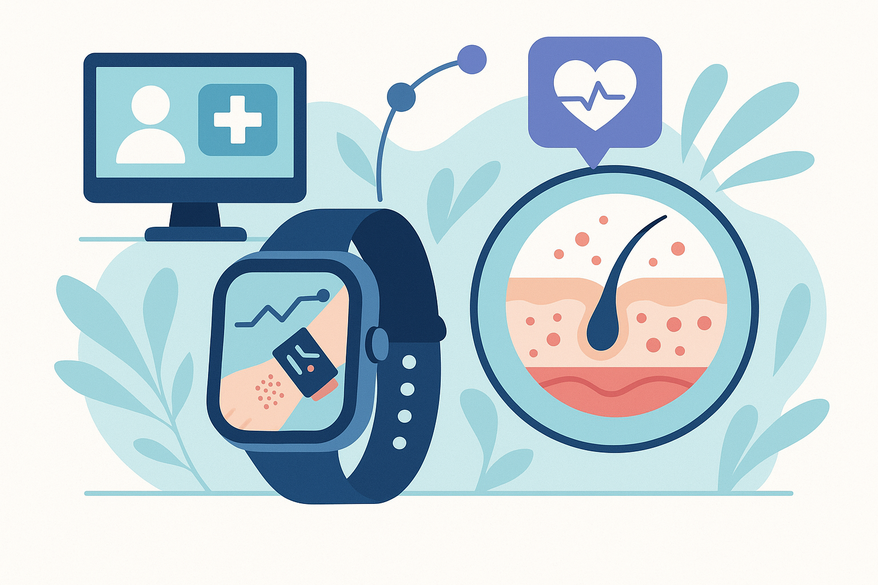
Rash detection wearable integration refers to equipping wearable health devices with the ability to spot and track skin rashes using specialized sensors and AI-powered analytics. This combination of hardware and software aims to enable continuous, real-time skin monitoring, potentially allowing for earlier intervention when a device raises an alert at the first sign of redness, swelling, or other anomalies. For example, recent advances have made it possible for smartwatches and skin patches to detect subtle changes that may precede more serious skin conditions (Lyme Disease Testing and Wearable Technology).
Wearable health technology has evolved rapidly. What began as basic step counters and heart rate monitors has expanded into devices that can track heart rate, skin temperature, blood oxygen, and more. These devices are now being explored for use in chronic disease management, early warning systems, and non-invasive health checks (Lyme Disease Testing and Wearable Technology).
In this post, we will:
- Explain what rash detection wearable integration involves.
- Show how sensors and machine learning work together.
- Highlight key benefits and real-world use cases.
- Look at challenges, from data security to device design.
- Explore future directions in AI/ML and sensor innovation.
Our goal is to give you a clear, detailed guide on integrating rash detection into modern wearables.
Background on Rash Detection
Rash detection starts with understanding what a rash is and why early identification matters.
What Is a Rash?
- An irritated or swollen skin area, often accompanied by redness, itching, bumps, or blistering.
- Can be localized (small spots) or widespread (large patches).
Common Causes of Rashes
- Allergic reactions (foods, medications, plants, or insect bites).
- Infections (fungal, bacterial, viral).
- Autoimmune disorders (psoriasis, eczema, lupus).
- Environmental factors (sun, heat, humidity, cold exposure).
- Irritants (chemicals, soaps, detergents, certain fabrics).
Why Early Detection Matters
- Some rashes can signal serious diseases (e.g., measles, Lyme disease, meningitis).
- Early care may reduce complications and speed up recovery.
- Quick intervention may help prevent spread and discomfort.
Traditional Rash Detection Methods
- Visual self-check (subjective and sometimes unreliable).
- In-person clinical exam by a healthcare provider.
- Lab tests (blood work, skin scraping, biopsy) to determine underlying causes.
Limitations of Traditional Detection
- Relies on patient noticing and reporting changes.
- Delays due to clinic appointment wait times.
- Variability in clinician expertise and experience.
- Missed or late diagnoses can lead to complications.
For insights on how AI tools are transforming traditional approaches, see How AI Diagnoses Rashes: Transforming Dermatological Care with Machine Learning.
Keywords: rash detection, early detection, skin anomalies, traditional rash detection
Overview of Wearable Health Technology
Wearable health technology encompasses small electronic devices worn on or near the body that collect health data non-invasively.
What Are Wearable Devices?
- Devices worn on the wrist, chest, as patches, or embedded in clothing.
- Measure vital signs, movement, and in some cases, skin changes 24/7.
Common Features of Modern Wearables
- Heart rate monitoring (optical sensors).
- Step counting, activity, and sleep tracking.
- Skin temperature sensors (for fever or inflammation).
- Blood oxygen (SpO2) and CO2 monitoring.
- Electrodermal activity (EDA), ECG, and hydration sensors in some advanced models.
- Integrated cameras and multispectral imaging for skin assessment in select devices.
Learn more about this integration in Lyme Disease Testing and Wearable Technology.
Evolution to Medical-Grade Wearables
- Early devices focused on fitness tracking.
- Advances in sensor miniaturization and battery life have enabled more continuous monitoring.
- Some wearables now meet stricter medical device standards (such as ISO 13485, FDA Class II/III for certain devices).
- Used for chronic disease monitoring (e.g., arrhythmia, diabetes, hypertension, and increasingly in dermatology).
For details, see PubMed study on medical-grade wearables.
Key Drivers of Wearable Innovation
- Sensor technology: miniaturized, accurate, and more affordable chips.
- Data analytics: real-time processing and actionable health insights.
- AI integration: on-device and cloud-based analysis, with improved privacy features.
Keywords: wearable health technology, wearable devices, sensor technology, medical-grade wearables
Integrating Rash Detection with Wearable Technology
This section outlines how hardware, software, and data flow work together in a rash-detecting wearable.
1. Hardware Augmentation
- Embedding sensors into cases, straps, patches, or smart fabrics for optimal skin contact.
- Flexible, hypoallergenic materials improve comfort and reduce irritation, crucial for long-term wear.
2. Sensor Technologies
- Imaging Sensors
– Miniature RGB cameras and multispectral sensors can capture high-resolution skin images.
– Hyperspectral imaging records light reflectance at multiple wavelengths, which may improve detection of subtle rash changes. See Spectral Imaging in Rash Detection. - Optical Sensors (Photoplethysmography Variants)
– Detect microvascular changes and subtle color shifts associated with inflammation. - Mechanical Sensors
– Measure skin swelling, elasticity, and pressure changes, which may alert to edema or urticaria. - Chemical/Thermal Sensors
– Track local skin pH, moisture, and temperature changes linked to irritation or infection.
3. Data Acquisition & Transmission
- On-device processing can minimize data transmission for privacy and battery life.
- Secure cloud upload via Bluetooth LE, Wi-Fi, or NB-IoT for remote clinician review.
- All health data should be encrypted in transit and at rest, with user-controlled sharing options.
4. Power and Ergonomics
- Improved battery technology (such as solid-state or graphene-based batteries) allows for longer use per charge in some devices.
- Low-power processors and adaptive sampling rates balance accuracy and longevity.
- Ergonomic, flexible designs for all-day or multi-day continuous wear.
Software & Analytics Pipeline
- Preprocessing
• Advanced noise reduction, image calibration, and color normalization for different skin tones and lighting conditions. - Feature Extraction
• Texture analysis, color histograms, border irregularity, and lesion shape metrics. - Machine Learning & AI
• Deep learning models (CNNs, transformers) analyze images and sensor data for rash patterns.
• Ensemble models may combine imaging, optical, and mechanical data for improved accuracy.
• Personalized thresholds can adjust to each user’s baseline skin characteristics, reducing false alarms.
For technical workflow and model design details, see Technical Process of Rash Detection Using AI and Machine Learning.
Benefits of Rash Detection Wearable Integration
- Real-Time Monitoring & Immediate Alerts
• Continuous skin checks with push notifications for sudden or concerning changes. (Lyme Disease Testing and Wearable Technology) - Early Warning Enables Prompt Care
• May detect mild redness or swelling before it spreads, enabling users to seek help sooner. (PubMed study on early detection benefits) - Improved Patient Outcomes
• May reduce need for invasive biopsies in some cases.
• Can enable more targeted, timely treatments and potentially shorter recovery periods. - Remote Monitoring & Telemedicine
• Securely share rash images and sensor data with clinicians for virtual consultations.
• Supports ongoing monitoring and follow-up without frequent office visits.
Note: Rash detection wearables and apps provide general information and alerts only. They do not replace a professional medical diagnosis. If you develop a severe, spreading, painful, or persistent rash, or if you have any concerns about your skin, see a doctor or dermatologist for diagnosis and treatment.
Challenges and Considerations
Building rash-aware wearables involves overcoming hurdles in technology, design, privacy, and regulation.
Technical Hurdles
- Sensor Accuracy & Calibration
• Variations in skin tone, sweat, oils, and ambient lighting can impact readings. Ongoing advances in sensor calibration and AI skin tone correction are helping address these challenges (PMC article on sensor calibration). - Device Durability
• Balancing waterproofing with sensor exposure for reliable readings. - Battery Life vs. Sampling Rate
• Higher sample rates consume more power, requiring optimization. - Data Standardization
• Ensuring consistent, comparable measurements across devices and users is important for clinical adoption.
Privacy & Data Security
- Personal skin images and health data are highly sensitive.
- Devices must comply with HIPAA, GDPR, and other applicable privacy regulations. (data security guidelines)
- Users should have clear controls over data sharing and deletion.
Regulatory Approval
- FDA clearance in the U.S., CE marking in Europe, and other regional digital health standards may apply.
- Clinical validation trials are required to demonstrate safety and effectiveness before market launch.
User Acceptance & Workflow Integration
- Comfort, discreetness, and ease of use are key for daily wear.
- Intuitive user interfaces for alerts, reports, and data review.
- Interoperability with hospital EHRs and telehealth platforms is increasingly expected. (Biocompatibility & Chemical Safety in Wearables)
Future Directions and Innovations
- Advanced AI/ML Models
– Transformer networks and federated learning for potentially more accurate, private, and context-aware skin analysis. - Next-Generation Biocompatible Sensors
– Flexible, stretchable electronics that conform to the skin.
– Hydrophobic coatings and self-cleaning surfaces for enhanced durability and comfort. (PMC article on hydrophobic sensor coatings) - EHR Integration and Clinical Decision Support
– Direct, secure integration with electronic health records and automated alerts for clinicians when risk thresholds are met. - Cross-Sector Partnerships
– Tech companies, hospitals, and research institutions collaborating on clinical validation and real-world pilot programs.
For a broader look at emerging technologies in dermatology, see Revolutionizing Dermatology: Emerging Tech in Skin Diagnosis.
Conclusion
Integrating rash detection into wearable health technology represents a significant advance in digital health. Non-invasive sensors, AI analytics, and secure cloud connectivity are enabling more continuous skin anomaly surveillance. Early detection may lead to faster treatment, fewer complications, and more accessible telemedicine care.
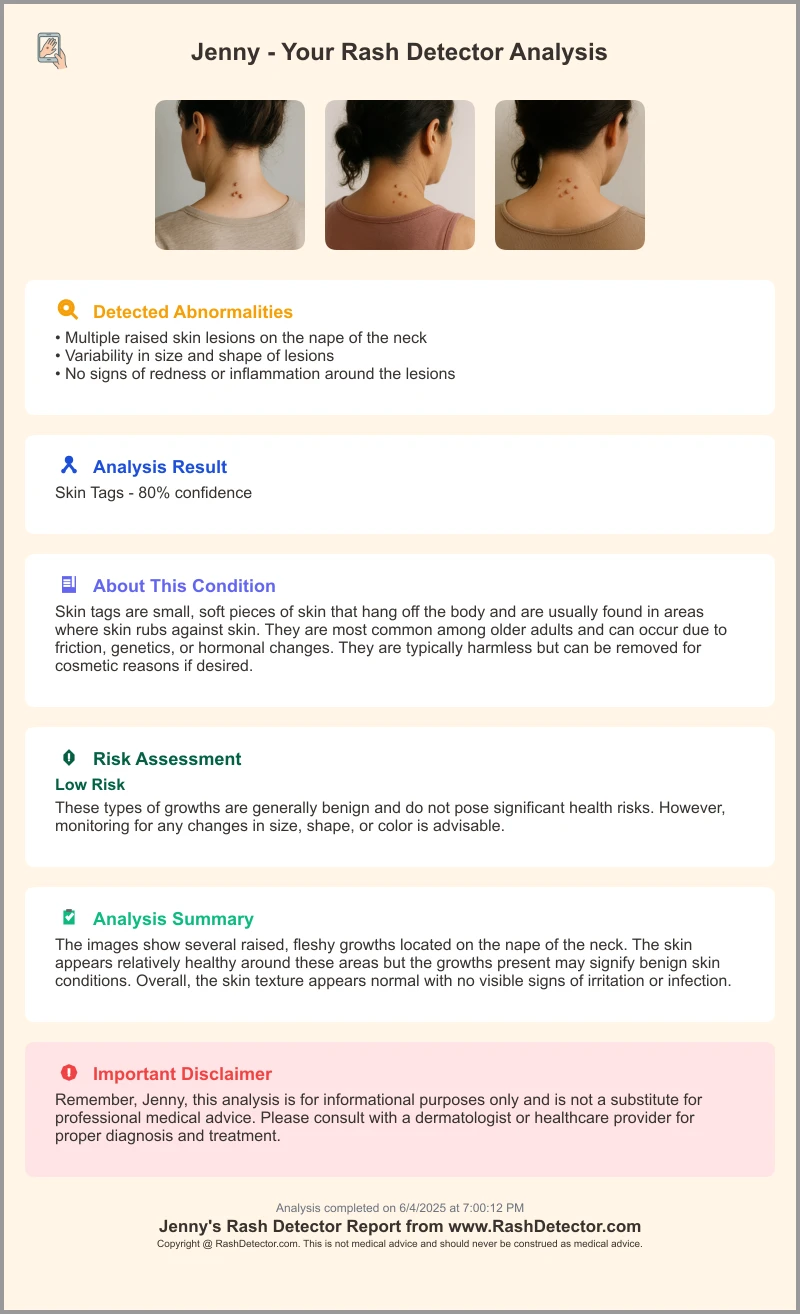
As of now, users can also leverage AI-powered apps like Rash Detector to upload rash images and receive instant analysis, as shown in the sample report below. These tools are intended for general information and screening only. Always consult a doctor or dermatologist for a definitive diagnosis or treatment, especially for severe, spreading, painful, or persistent symptoms.
To move this field forward, researchers, clinicians, and device makers must continue collaborating on clinical trials, open datasets, and user-centered design. Stay informed, join pilot programs, or partner with innovators to help bring rash detection wearables into mainstream care. Together, we can reshape skin health monitoring and make early intervention more accessible.
FAQ
- What exactly is a rash detection wearable?
A wearable device equipped with specialized sensors and AI algorithms that can monitor the skin for signs of irritation, redness, swelling, or other abnormalities, alerting users and clinicians to potential issues. - How do AI and machine learning improve rash detection?
AI models (deep learning, transformers, ensemble algorithms) analyze images and sensor data to identify subtle patterns, adjust to individual baselines, and deliver faster, potentially more accurate alerts. - What are the main challenges in developing these devices?
Challenges include sensor accuracy across diverse skin tones, balancing battery life with data quality, ensuring data security (HIPAA/GDPR/regional laws), and obtaining regulatory approvals (FDA, CE, Asia-Pacific). - How can users integrate these wearables into their healthcare routine?
Users wear the device continuously, set up personalized alerts via a companion app, and can securely share data with clinicians for virtual consultations and tailored treatment plans.