Medication Rash Treatment: How to Identify and Manage Drug-Induced Rashes
Learn medication rash treatment strategies to identify and manage drug-induced rashes, ensuring safe usage and prompt handling of symptoms for best outcomes.
Estimated reading time: 7 minutes
Key Takeaways
- Early recognition of drug-related rashes prevents complications and improves outcomes.
- Common rash types include morbilliform eruptions, urticaria, and fixed drug eruptions.
- Home care with antihistamines, hydrocortisone cream, and cool compresses can ease mild symptoms.
- Urgent signs such as breathing difficulty, facial swelling, or widespread blisters require immediate medical attention.
- Maintain detailed records of drug reactions and avoid re-exposure to the offending medication.
Table of Contents
- Introduction to Medication Rash Treatment
- Understanding Medication-Induced Rash
- Identifying a Medication-Induced Rash
- Immediate Steps and Home Care
- When to Seek Professional Medical Advice
- Medical Treatment Options
- Prevention and Future Considerations
- Conclusion
Introduction to Medication Rash Treatment
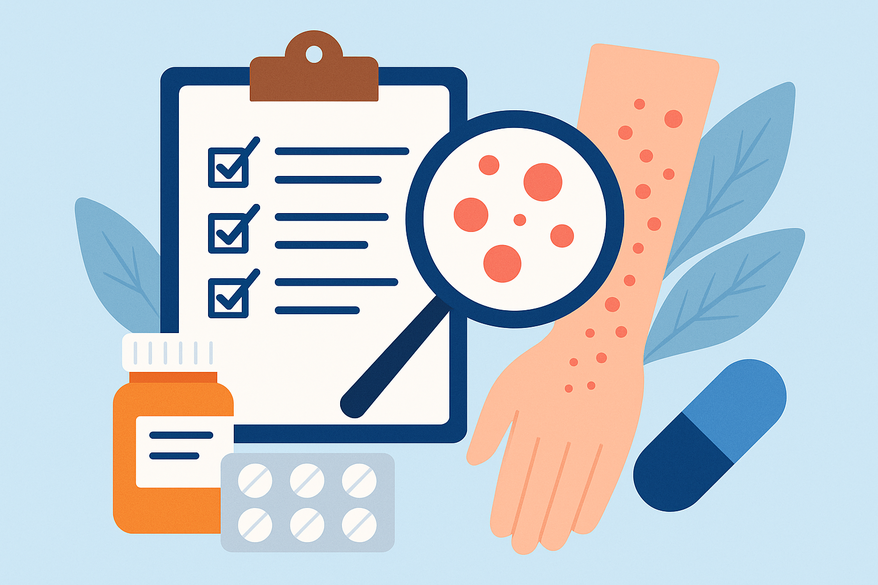
A medication-induced rash is a skin reaction triggered by prescription or over-the-counter drugs. Prompt treatment involves identifying the rash, managing symptoms safely, and collaborating with a healthcare professional to adjust or discontinue the culprit medication. Early intervention not only reduces discomfort but also guards against serious complications and informs future drug safety decisions.
Understanding Medication-Induced Rash
These rashes can be classified as:
- Hypersensitivity reactions (allergic, immune-mediated)
- Non-allergic side effects (direct irritant response)
- Systemic reactions (involving internal organs along with the skin)
Onset may be immediate (minutes to hours) or delayed (days to weeks), with severe forms like Stevens–Johnson syndrome requiring urgent care.
Identifying a Medication-Induced Rash
Key signs to watch for:
- Pink or red spots that may merge into larger patches
- Intense itching or burning sensations
- Raised hives that migrate across the body
- Swelling of lips, face, or extremities
- Blisters or peeling skin
Timing (appearance after starting or changing a drug), distribution, and recurrence patterns help distinguish drug reactions from other skin conditions. For a detailed approach, visit Identifying and Managing Drug-Induced Rash Symptoms.
Immediate Steps and Home Care
At the first sign of a mild reaction:
- Contact your healthcare provider before altering any essential medications.
- Record the rash onset, medications taken, and accompanying symptoms.
- Use oral antihistamines (e.g., loratadine) and apply 1% hydrocortisone cream twice daily.
- Apply cool compresses, take lukewarm baths, and moisturize with fragrance-free lotions.
- Wear soft, breathable fabrics and resist scratching to prevent infection.
For long-term strategies after a drug reaction, see Managing Drug Allergy Rash.
When to Seek Professional Medical Advice
Seek urgent care if you experience:
- Difficulty breathing or throat tightness
- Rapidly spreading rash with blisters or peeling
- Swelling of the face, lips, or tongue
- Mucosal sores, high fever, or organ dysfunction
At your appointment, expect a thorough medication history, physical examination, and possibly blood tests, skin biopsy, or allergy testing.
Medical Treatment Options
Under medical supervision, treatment may include:
- Discontinuation of the offending drug
- Oral antihistamines and topical or systemic corticosteroids
- Emergency epinephrine for anaphylaxis
- Hospital-based care (IVIG, fluid management, wound dressings) for severe cutaneous adverse reactions
Most mild rashes resolve within 1–2 weeks; follow-up is essential to document allergies and monitor recovery.
Prevention and Future Considerations
To reduce risk with new medications:
- Monitor your skin daily for early signs of reaction
- Avoid starting multiple new drugs at once
- Maintain detailed records of drug names, reaction types, and timing
- Share allergy information with all healthcare providers
- Discuss alternative drug classes or desensitization protocols if needed
Conclusion
Recognizing the difference between mild red patches and life-threatening blistering or breathing issues is crucial. Effective medication rash treatment combines stopping the culprit drug under medical guidance, symptom relief with antihistamines or corticosteroids, and diligent follow-up. Preventive measures—vigilant monitoring, thorough record-keeping, and safe alternative choices—ensure better outcomes and future drug safety.
FAQ
- What is a medication-induced rash?
A skin eruption that appears after starting or changing a medication, ranging from mild spots to severe blistering. - How can I tell if a rash is drug-related?
Look for timing (post-medication), recurrence in the same location, and associated symptoms like itching or swelling. - What should I do at home for a drug rash?
Contact your provider, record details, use oral antihistamines, apply hydrocortisone, and keep the skin cool and moisturized. - When is medical attention necessary?
If you have breathing difficulties, facial swelling, rapid spread, blisters, or systemic symptoms like fever. - How are severe drug rashes treated?
By discontinuing the drug, administering corticosteroids or epinephrine, and providing hospital-based wound care or IVIG for severe reactions.