Follow-Up Care Tips After Rash Detection: How to Prepare for Your Dermatologist Visit
Discover follow-up care tips after rash detection and learn how to prepare for your dermatologist visit effectively. Enhance recovery with AI-based insights.
Estimated reading time: 8 minutes
Key Takeaways
- AI screening speeds up rash detection but relies on dermatologist confirmation to avoid misdiagnosis.
- Detailed documentation—location, size, color, symptoms, timeline, and photos—streamlines your appointment.
- Targeted questions and understanding AI vs. clinical findings improve communication during your visit.
- Structured post-visit care: follow prescribed skincare routines, manage discomfort, and track triggers.
- Regular follow-ups and second opinions ensure optimal healing and prevent recurrence.
Table of Contents
- Understanding AI-Based Rash Detection
- Preparing for the Dermatologist Visit
- During the Dermatologist Visit
- Post-Visit Follow-Up Care Tips After Rash Detection
- Additional Considerations
- Conclusion
- FAQ
Understanding AI-Based Rash Detection
AI-based skin rash detection uses convolutional neural networks (CNNs) to extract visual features—color, texture, shape—and classify images against disease datasets. Here’s how it works:
- Detection Process
– CNNs scan each pixel for redness, scaling, or irregular borders.
– Algorithms compare features to known rash patterns.
– The system assigns a probability score for conditions like eczema, psoriasis, or infection. - Accuracy and Limitations
– In controlled studies, AI reaches about 97% accuracy overall. However, rare rashes or those that look alike can confuse the model. (Source: JMIR Dermatology)
– False positives and false negatives still occur; verifying AI findings is key. (Source: PMC Article) - Common Scenarios Prompting Evaluation
– Ambiguous color patches that don’t match healthy skin.
– Rapidly evolving lesions—growing, changing shape, or darkening.
– Any pattern raising concern for malignancy or serious infection. (Source: Frontiers in Big Data) - Importance of Dermatologist Verification
A board-certified dermatologist confirms or refutes AI findings using clinical exams, dermoscopy, or lab tests to reduce misdiagnosis and guide treatment.
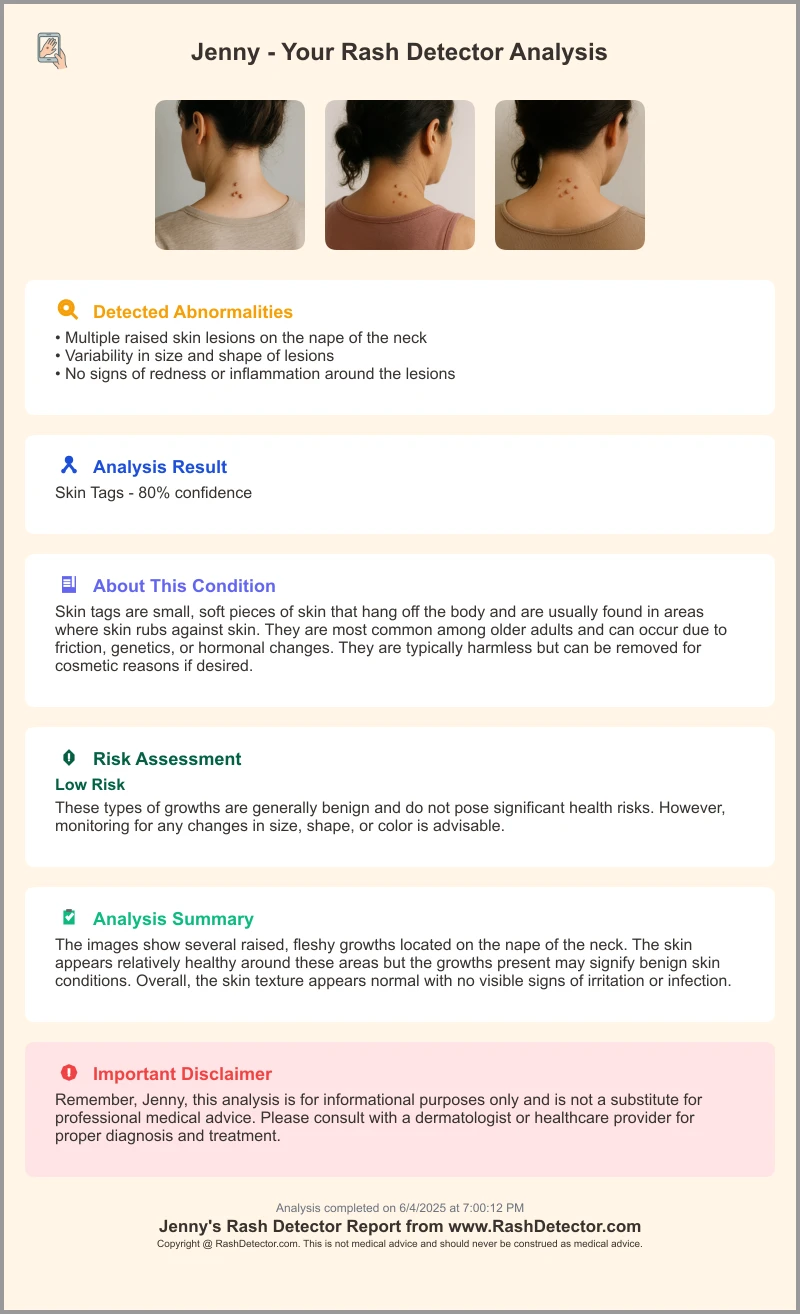
For users of Rash Detector, reviewing the AI-generated sample report before your visit can streamline communication and ensure you cover all flagged concerns. Below is an example of what such a report might look like:
Preparing for the Dermatologist Visit
Effective preparation empowers both you and your doctor. Use the following steps:
- Symptom Documentation
– What to Record: location, size (cm or inches), color changes, itching/pain severity (1–10), and any systemic signs like fever.
– Timeline: note date of first appearance and daily changes in growth or spread. - Medical History Preparation
– List current medications with doses and start dates.
– Include recent additions or changes (OTC drugs, supplements).
– Known allergies and chronic skin conditions (eczema, psoriasis).
– Record new soaps, lotions, travel history, pet or plant exposures. - Photo Documentation
– Use natural, even lighting—avoid shadows. Learn more in our guide.
– Place a ruler or coin for scale and label each image with date/time.
– Frequency: daily photos for changing rashes; weekly for stable ones. For step-by-step tracking, see rash progress guide.
During the Dermatologist Visit
Your visit is a two-way conversation. Be ready to ask and answer key points:
- Key Questions to Ask
“What are the most likely causes of my rash?”
“Could it be another condition with a similar appearance?”
“Do you recommend diagnostic tests (biopsy, blood work)?”
“What is the proposed treatment plan and timeline?” - Discussion Points on Follow-Up Care
Improvement milestones and warning signs requiring urgent re-evaluation.
Compare AI vs. clinical assessment: “How did my AI report align with your findings?” - Confirmation Process
Dermoscopy, biopsy, and lab tests to rule out infections or immune causes.
Post-Visit Follow-Up Care Tips After Rash Detection
Follow your dermatologist’s instructions precisely. These steps support healing:
- Skincare Routines
Use a gentle, pH-balanced cleanser; apply prescribed topicals (e.g., hydrocortisone 1%, calcineurin inhibitors) BID/TID as directed. - Managing Discomfort
Cool compresses (10–15 minutes, 2–3 times daily) and colloidal oatmeal baths (15–20 minutes), plus no scratching or picking to prevent infection. - Lifestyle Adjustments
Maintain a rash diary logging food, stress, environmental exposures, and note any flare-ups to identify triggers.
Avoid irritants like wool, fragranced products, or known food allergens. - Monitoring and Scheduling
Schedule acute-rash follow-up in 2 weeks; chronic conditions in 4–6 weeks. Contact your dermatologist immediately if symptoms worsen.
Additional Considerations
- Role of Second Opinions
Seek another dermatologist if the cause is unclear, no improvement after two visits, or before long-term therapy. - Treatment Options
Emerging therapies like biologics for psoriasis and phototherapy for eczema; home care adjuncts such as emollients and allergen-free detergents. - Tracking Progress
Keep detailed logs of symptom severity, medication times, and side effects. Use structured tracking apps—check out the best skin tracking app guide—and share data with your dermatologist.
Conclusion
From AI-based skin rash detection to dermatology confirmation and ongoing care, this guide lays out each step. Following these follow-up care tips after rash detection helps you stay organized, communicate clearly with your doctor, and support skin healing.
Final Proactive Advice:
• Maintain regular skin checks and photo records.
• Update your rash diary for food, stress, and environmental links.
• Consult professionals promptly at any sign of worsening.
By pairing advanced AI screening with diligent follow-up, you can optimize recovery, prevent recurrence, and protect your skin health.
FAQ
- How accurate is AI-based rash detection?
AI can achieve around 97% accuracy in controlled settings but may still produce false positives or false negatives. Always seek dermatologist verification. - What should I document before my dermatologist visit?
Record the rash’s location, size, color, symptom severity, timeline, medical history, and clear photos with scale and timestamps. - Which questions should I ask during my visit?
Ask about likely causes, differential diagnoses, recommended tests, treatment plans, and how AI findings compare with clinical assessment. - How do I care for my rash after the visit?
Follow the prescribed skincare routine, manage discomfort with cool compresses and oatmeal baths, track triggers, and schedule follow-ups as advised.