Tips for Seamless Use of Rash Detection App: A Guide to Daily AI-Driven Skin Monitoring
Learn tips for seamless use of rash detection app to enhance your daily skin monitoring routine with AI-driven insights and maintain proactive skin health.
Estimated reading time: 6 minutes
Key Takeaways
- Integrate AI rash detection into your routine with consistent reminders and habit pairing.
- Capture clear, well-lit images to help improve AI analysis.
- Maintain camera and notification permissions, keep the app updated, and practice digital hygiene.
- Sync with health platforms and know when to seek professional medical advice.
- Stay informed on future AI advancements to maximize app benefits.
Table of Contents
- How AI Rash Detection Apps Work
- Why Seamless Integration Matters
- Daily Routine Strategies
- Optimizing Performance & Accuracy
- When to Consult a Professional
- Real-World Success Stories
- What’s Next in AI Rash Detection
- Conclusion: Empower Your Skin Health
- FAQ
How AI Rash Detection Apps Work
AI rash detection apps in 2026 use advanced imaging and deep learning to help classify skin conditions:
- Image-based analysis:
– User takes a clear photo of the affected area.
– Preprocessing may include adaptive lighting correction, background removal, and segmentation of the skin region.
– A convolutional neural network (CNN) analyzes texture, color, and shape to suggest possible conditions, factoring in user-provided context like age and symptom duration (if available). - Underlying technologies:
– Deep learning architectures (e.g., ResNet, EfficientNet, and MobileNetV4) fine-tuned on dermatology datasets.
– Transfer learning and federated learning can accelerate model updates and improve privacy.
– Computer vision techniques (such as edge detection and color normalization) may enhance clarity and accuracy. - Accuracy and validation:
– Some independent evaluations suggest that leading apps can reach high diagnostic accuracy rates for common rashes on diverse skin tones, but accuracy varies by app, condition, and image quality.
– Ongoing validation efforts aim to improve reliability for a wider range of ages and skin types.
Core benefits:
- Immediate, personalized feedback on skin symptoms
- Increased accessibility, especially where specialists are scarce
- Empowerment for self-monitoring and informed care decisions
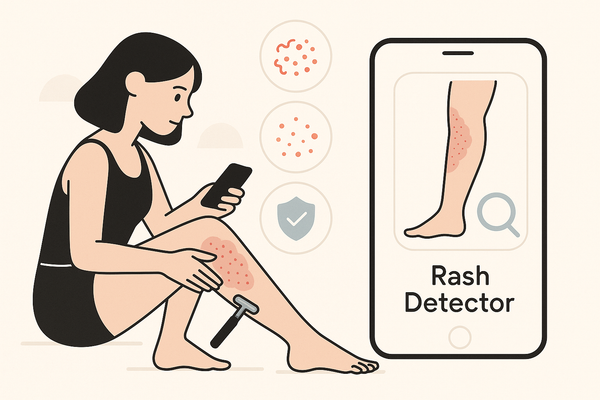
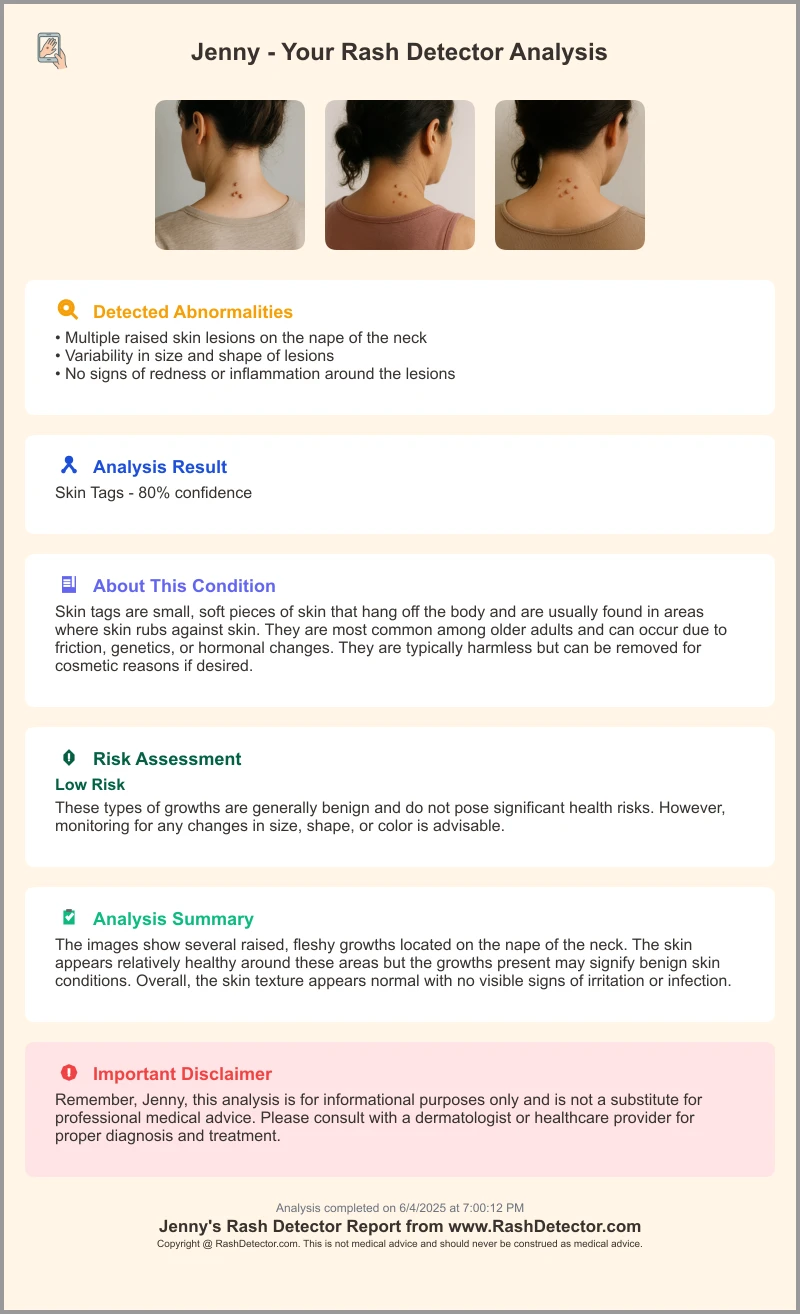
For example, Rash Detector provides instant, AI-driven analysis of your uploaded rash images in a few taps, helping you track changes over time without added complexity.
Why Seamless Integration Matters
Introducing a new app can disrupt habits—but when skin monitoring becomes effortless, you won’t miss early warning signs. Consider these challenges:
- Workflow disruptions: New tools often clash with established routines.
- Notification fatigue: Too many alerts lead to dismissal of critical reminders.
- Privacy concerns: Users worry about sharing sensitive health data.
When integration fails:
- Missed detections reduce the app’s value for early intervention.
- Irregular use erodes trust, delaying necessary care.
Goal: Establish trust, reliability, and ease of use so that scanning your skin becomes as natural as brushing your teeth.
Daily Routine Strategies
Adopt these tips to weave rash detection into your day. For a deeper guide on embedding skin checks into your day, see rash monitoring daily routine.
- Set consistent reminders:
• Use the app’s built-in scheduler or your calendar alarms at fixed times.
• Tie reminders to existing habits (e.g., scan after brushing your teeth or before changing clothes). - Utilize app notifications:
• Enable: Settings → Notifications → [App Name] → Allow.
• Customize “follow-up” and “recheck” alerts to avoid overload. Many apps offer notification batching to reduce fatigue. - Keep the app updated:
• Turn on auto-updates in the App Store or Google Play.
• Access the latest AI models, security patches, and new features (like voice-guided scans or AR overlays, which are becoming more common). - Sync with health devices:
• Link data to Apple Health, Google Fit, or Samsung Health via the app’s API settings.
• Export logs to digital diaries or fitness apps for trend analysis and sharing with your healthcare provider. - Weave into daily environments:
• Morning: quick scan in natural window light before dressing.
• Pre-work: selfie-style scan at the bathroom mirror after brushing.
• Bedtime: final check under consistent artificial light for chronic tracking.
Optimizing Performance & Accuracy
Fine-tune settings and habits to help get more reliable results.
Permission settings
- Grant camera and notification access for seamless operation.
- Review location and health data permissions annually for privacy.
Capture clear images
- Maintain a 10–15 cm (4–6 inch) distance from the skin.
- Avoid shadows—use flash or a well-lit environment. See tips on clear rash photos.
- Place a solid, contrasting background behind the skin area. Visit optimal lighting rash photo capture for more advice.
- Clean your camera lens before each use for maximum clarity.
Maintain digital hygiene
- Clear the app cache monthly to help prevent slowdowns.
- Revoke unused third-party connectors to protect privacy.
- Review and update the app’s data policy and privacy settings regularly.
- Back up your image logs to a secure cloud service if supported.
Troubleshooting common issues
- Blurry image errors → retake with a stable hand, use a small tripod, or enable the app’s stabilization mode if available.
- App crashes → clear cache, update the app, or reinstall.
- Permission errors → check device settings and re-enable required permissions.
When to Consult a Professional
- If the app result is “inconclusive” or indicates a potentially severe condition.
- If symptoms worsen, spread, become painful, or new lesions appear.
- If a rash is persistent (lasting more than a few days) or accompanied by fever or other systemic symptoms.
Important: AI rash detection apps are for general information and self-monitoring only. They cannot provide a definitive diagnosis. Always consult a doctor or dermatologist for diagnosis and treatment, especially for severe, spreading, painful, or persistent symptoms.
Real-World Success Stories
These case studies illustrate how AI rash detection can support confidence and help users seek care:
Case Study 1 – Parent & Child
Scenario: A parent notices a red rash on their toddler late at night.
Action: They use Rash Detector to assess risk, document images, and receive general guidance on next steps.
Outcome: Peace of mind overnight and a detailed report for the pediatrician the next day.
Case Study 2 – Remote Worker
Scenario: A rural user struggles to tell acne from eczema.
Action: With Rash Detector, they receive general condition guidance and access teledermatology resources.
Outcome: Faster dermatologist referral, reduced wait time, and a targeted treatment plan.
What’s Next in AI Rash Detection
- Accuracy across diverse skin tones: Developers are working to use datasets intentionally balanced for a range of skin types, aiming to reduce bias and improve equity.
- Expanded condition library: Apps are being updated to cover more skin conditions, including less common diseases and pigmented lesions.
- Enhanced user experience: Voice-guided scans, AR overlays for optimal framing, and integration with wearable sensors for context (e.g., temperature, sweating) are becoming more common.
- Privacy-first design: Federated learning and on-device analysis are being used to help minimize cloud uploads and protect sensitive health data.
Recommendation: Opt in to beta features and newsletters to stay ahead of updates and benefit from the latest advancements.
Conclusion: Empower Your Skin Health
By following these strategies, you can:
- Build consistent reminders linked to daily routines.
- Capture clear, well-lit images for improved analysis.
- Grant necessary permissions and practice digital hygiene.
- Know when to seek professional medical advice.
Seamless integration of an AI rash detection app may support proactive skin health management. Download or update your app today to take control of your skin health with AI-powered insights.
FAQ
- What is an AI rash detection app?
An app that uses machine learning and computer vision to analyze user-submitted skin images and suggest possible conditions. In 2026, these tools often include features like trend tracking and integration with health platforms. - How accurate are these apps?
Some leading apps report high accuracy rates for common conditions, with ongoing improvements for performance across all skin tones. However, accuracy varies by condition and image quality, and these tools are not a substitute for professional evaluation. - Can an app replace a dermatologist?
No. These tools offer preliminary insights and encourage timely consultations but do not replace professional diagnosis. Always consult a healthcare provider for any concerning or persistent symptoms. - Is my data secure?
Many reputable apps use encryption and aim to comply with privacy regulations (such as GDPR and HIPAA). Always review the app’s data policy and revoke unused permissions regularly. - How often should I use the app?
Establish a daily or weekly routine based on your risk level; tie scans to existing habits for consistency. More frequent checks may be helpful if you have a history of skin conditions.