How to Incorporate Rash Monitoring in Daily Routine with AI Tools
Learn how to incorporate rash monitoring in daily routine using AI tools for early detection and better skin health. Discover step-by-step strategies today.
Estimated reading time: 7 minutes
Key Takeaways
- AI-driven tools are being developed to help detect subtle rashes and may offer improved support for skin monitoring.
- Consistency in daily monitoring can help with early identification of skin changes.
- Personalized insights and teledermatology may improve access to care for some users.
- Best practices—like consistent photos and privacy compliance—can help maximize reliability.
- Collaborating with professionals is important for safe skin health management.
Table of Contents
- Introduction
- Understanding Rash Monitoring
- AI-Powered Rash Detection
- Daily Routine Integration Strategies
- Tips for Effective Monitoring
- Healthcare Collaboration
- Future Trends
- Conclusion
Introduction
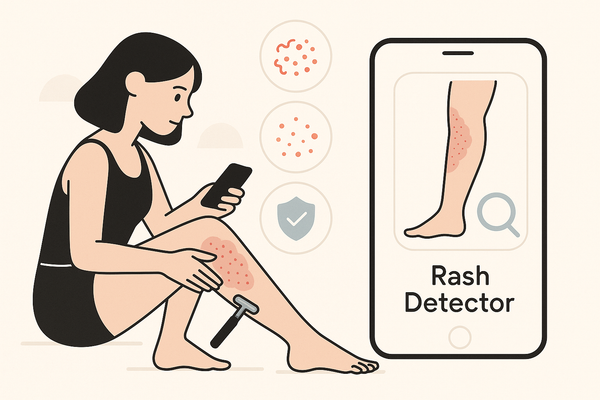
Early skin care is more than vanity—it’s health protection. Learning how to incorporate rash monitoring in your daily routine can help you spot skin changes early. AI technology in dermatology has advanced in recent years, and as of 2026, it’s becoming more accessible. AI-driven apps like Rash Detector offer tools for early detection, and teledermatology is increasingly common, making expert advice easier to access.
This post explains how to incorporate rash monitoring in your daily routine using up-to-date AI tools for early detection and improved awareness. You’ll learn:
- How automated tools may help identify subtle rashes
- How 24/7 accessibility via your smartphone or tablet can empower you
- How personalized insights based on your skin history may guide you
By the end, you’ll have a general, step-by-step path to integrate AI-driven rash checks into your day-to-day life.
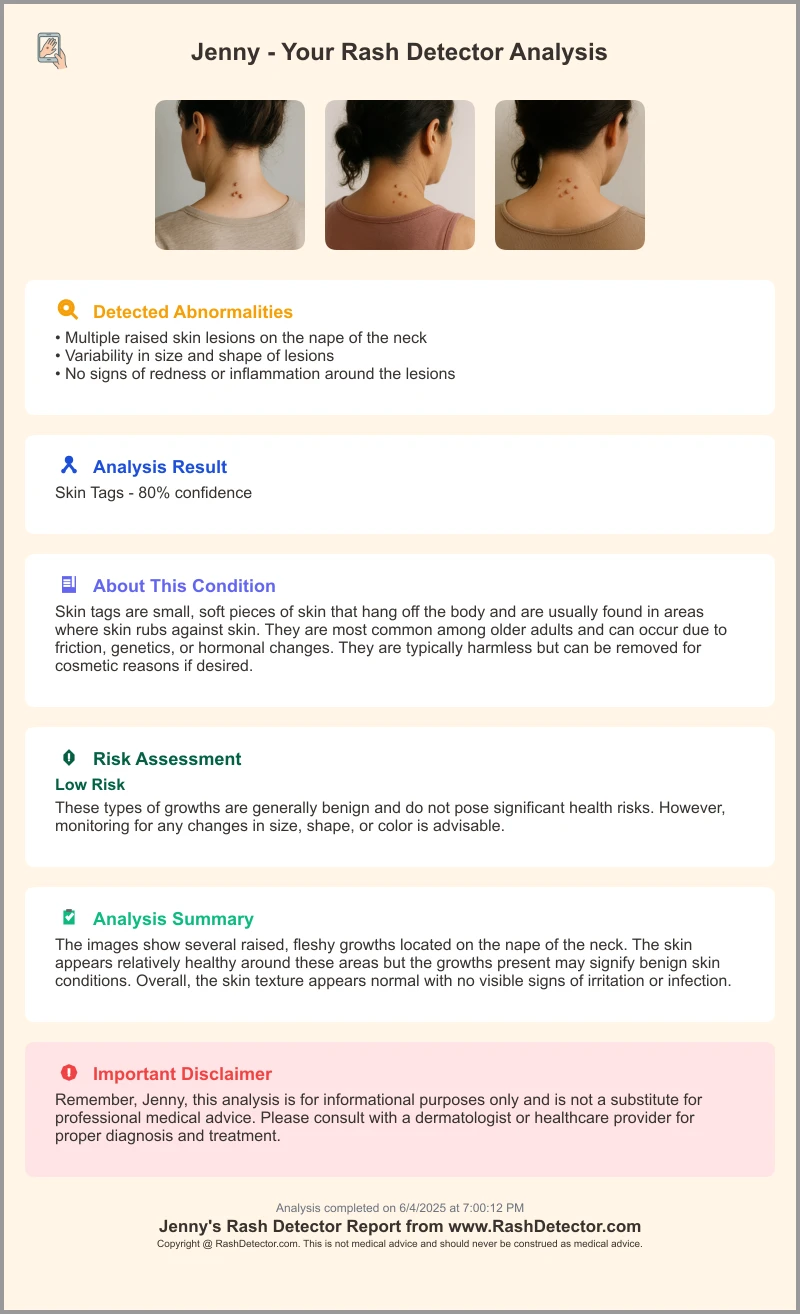
AI-powered apps like Rash Detector make it simple to capture, analyze, and archive your rash images directly from your phone. Below is a sample of the kind of report you can get in seconds:
Understanding Rash Monitoring
When learning how to incorporate rash monitoring in your daily routine, it’s important to understand what rash monitoring means. It’s the ongoing observation, documentation, and analysis of new or changing skin rashes to enable early awareness and potentially prevent complications—now supported by advanced AI solutions like Doctronic AI and others.
Why It Matters
- Untreated rashes can sometimes signal allergies, infections, or autoimmune disorders.
- Early detection may help you avoid severe symptoms or permanent skin damage.
- Routine checks can foster better skin health and peace of mind.
Common Challenges
- Difficulty distinguishing harmless rashes from serious ones
- Inconsistent photo documentation over time
- Lack of dermatology know-how at home
- Tendency to wait too long before seeing a doctor
AI-Powered Rash Detection
Traditional self-checks rely on memory and guesswork. Clinic visits are accurate but can be sporadic, time-consuming, and expensive. AI is being developed to support these efforts in 2026.
Core AI Technologies
- Convolutional neural networks (CNNs) can classify lesions by analyzing pixel patterns.
- Machine-learning models are being trained on large dermatology image datasets, including a range of skin tones and conditions.
- Telehealth integration lets experts review your data remotely, sometimes within hours.
AI Benefits
- Potential for early spotting of subtle skin changes
- Personalized tips based on your history and recent photos
- Broader access to specialist care, even in rural or underserved areas
- Teledermatology consults directly from your device
Note: AI apps are for general educational purposes and support—not a replacement for professional medical advice. Always consult a doctor or dermatologist for diagnosis and treatment, especially if a rash is severe, spreading, painful, or persistent.
Daily Routine Integration Strategies
Here are general strategies on how to incorporate rash monitoring in your daily routine using AI rash detection apps in 2026:
- Choose and install a reputable app (see best skin-tracking app guide for current recommendations).
- Set a fixed check-in time, such as after your morning shower or before bed.
- Photograph target areas: use the same lighting, background, and camera angles each time.
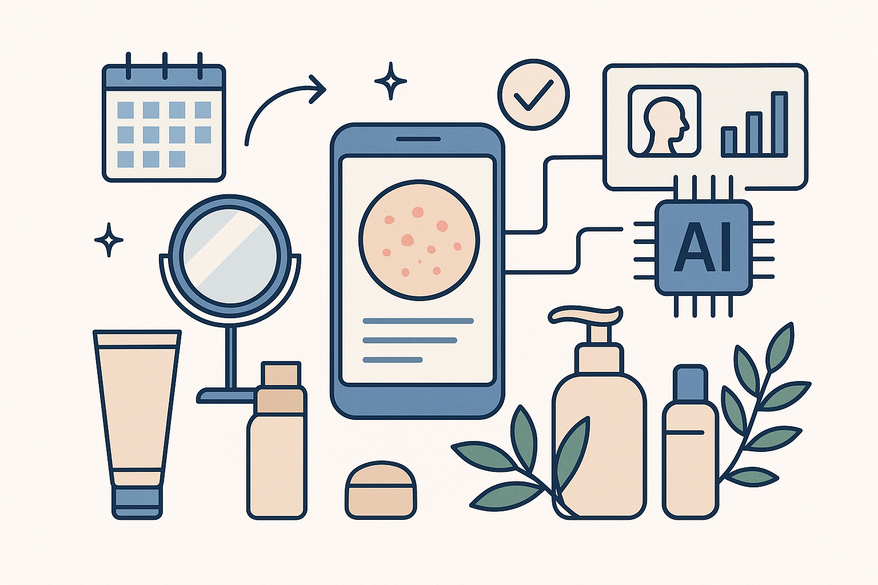
- Enable in-app reminders—modern apps allow customizable push notifications and calendar syncing.
- Log symptoms and context: note itching, new skincare products, sun exposure, or recent illnesses.
- Review and save AI feedback: archive time-stamped reports for tracking changes and sharing with your doctor.
Tips for Effective Monitoring
Follow this guide for more precise, reliable AI-based skin checks:
Step-by-Step Setup
- Download and securely register in your chosen app.
- Read and accept the privacy policy (look for GDPR/HIPAA compliance—standard for reputable apps in 2026).
- Capture baseline full-body images (see tips for clear rash photos).
- Use consistent lighting, resolution, and distance for each shot. Many apps now offer built-in guides and AR overlays for consistency.
- Enable reminders and sync with your digital calendar for automated prompts.
- Review AI feedback weekly and adjust your care routine as needed.
Best Practices for Accuracy
- Keep images sharp: avoid shadows, glare, and blur. Use your phone’s rear camera for higher resolution.
- Document context: note any new medications, sunburns, product changes, or travel.
- Cross-check AI findings with trusted medical sources and never rely solely on app results.
Privacy & Reliability
- Verify data encryption and compliance credentials—look for up-to-date certifications in the app settings.
- Treat AI suggestions as educational guidance, not a final diagnosis.
- Always consult a healthcare professional for atypical, worsening, or persistent rashes.
Healthcare Collaboration
- Share AI-generated reports (time-stamped images, summary charts) at your next dermatologist visit. Many apps offer direct export to PDF or secure sharing with your provider.
- Combine AI’s early warnings with hands-on clinical exams for a more comprehensive view.
- For unusual, persistent, or worsening rashes, always seek professional evaluation—especially for children, elderly, or immunocompromised individuals.
By learning how to incorporate rash monitoring in your daily routine alongside medical consultations, you can help maximize your skin health routine.
Future Trends
Looking ahead to 2026 and beyond, understanding how to incorporate rash monitoring in your daily routine may be shaped by new AI health monitoring trends.
Emerging Innovations
- Wearable sensors that track skin temperature, hydration, and pH in real time are being developed and may be available in select smartwatches and patches.
- Broader AI datasets may help improve results across all skin tones, thanks to global data-sharing initiatives.
- Predictive analytics that could forecast rash onset before visible symptoms, based on your personal health data and environment, are under research.
Upcoming App Features
- Instant alerts for sudden skin-change anomalies, powered by real-time image analysis, are being explored.
- Seamless data sharing with electronic health records (EHRs) for integrated care is a developing feature.
- Hyper-personalization using genetics, lifestyle, and environmental factors—some apps may offer integration with wearable health trackers and genetic screening results.
Conclusion
To recap how to incorporate rash monitoring in your daily routine:
- Proactive daily skin imaging
- AI-driven tools to help track subtle changes
- Seamless integration into your schedule
- Collaboration with dermatology professionals
Understanding how to incorporate rash monitoring in your daily routine may help you spot problems early and act fast for healthier skin.
Important: This information is for general, educational purposes only. For diagnosis and treatment—especially for severe, spreading, painful, or persistent rashes—always consult a doctor or dermatologist.
Call-to-Action
Download an AI rash monitoring app today, book a demo with your dermatologist, and consider starting a daily rash-monitoring habit—because every check can make a difference.
FAQ
- What is AI-based rash monitoring?
AI-based rash monitoring uses machine learning and image analysis to help detect skin changes and flag potential issues early. In 2026, these systems are becoming more user-friendly, but should be used as a supplement to—not a replacement for—professional care. - How often should I check my skin?
Aim for regular checks—morning or evening—to establish a consistent routine and spot changes quickly. - Are these apps accurate?
While AI may improve detection support, use it as a guide and consult professionals for definitive diagnoses and treatment. - How do I ensure privacy?
Choose apps with GDPR/HIPAA compliance, read privacy policies, and verify data encryption measures. Many leading apps in 2026 offer secure cloud storage and two-factor authentication. - Can I share reports with doctors?
Yes. AI-generated, time-stamped images and summary charts may help dermatologists track your progress remotely and can often be securely shared from most apps.