Medication Rash Treatment: A Comprehensive Guide to Identifying and Managing Drug-Induced Rashes
Explore medication rash treatment to identify and manage drug-induced rashes, from mild redness to severe reactions like Stevens-Johnson syndrome. Early action is key.

Estimated reading time: 8 minutes
Key Takeaways
- Early recognition of drug-induced rashes is crucial to prevent serious complications.
- Immediate steps include discontinuing the offending medication and seeking medical advice.
- Treatment options range from antihistamines and topical steroids for mild cases to hospital-based care for severe reactions like SJS/TEN.
- Prevention involves documenting prior reactions, close monitoring when starting new drugs, and discussing alternatives with your healthcare team.
- Expert insights underline the importance of multidisciplinary care in life-threatening eruptions.
Table of Contents
- Introduction
- Section 1: Understanding Medication Rashes
- Section 2: Identifying Medication-Induced Rashes
- Section 3: Steps in Medication Rash Treatment
- Section 4: Prevention and Management Tips
- Section 5: Case Studies & Expert Opinions
- Conclusion
- Additional Resources
- FAQ
Introduction
Drug-induced rashes range from mild redness and itching to severe blistering and systemic illness. Early medication rash treatment is vital to halt the offending agent and relieve symptoms before they escalate.
While most rashes resolve once the culprit drug is stopped, severe reactions such as Stevens–Johnson syndrome (SJS) or toxic epidermal necrolysis (TEN) demand immediate medical intervention to prevent long-term harm. This guide covers the mechanisms behind drug eruptions, clinical patterns, diagnostic approaches, treatment steps for both mild and severe cases, preventive strategies, and real-world examples.
Section 1: Understanding Medication Rashes and Drug-Induced Rash Mechanisms
Drug eruptions arise through three main processes:
- Allergic (immune-mediated) reactions
– Antibodies or T cells target skin after recognizing a drug as harmful; presents with widespread redness, itching, and hives. - Non-allergic side effects
– Direct skin irritation or photosensitivity from certain medications like antibiotics and diuretics. - Severe cutaneous adverse reactions (SCARs)
– Rare but life-threatening syndromes including SJS, TEN, DRESS, and AGEP featuring blistering, peeling, fever, and organ involvement.
Common clinical patterns include:
- Morbilliform rash – Small red spots/patches starting on the trunk.
- Urticaria (hives) – Raised, itchy welts that may herald anaphylaxis.
- Fixed drug eruption – Recurrent dark red or purple patch at the same site.
- Photosensitive rash – Sun-exposed areas reacting to medications.
- SCARs – Blisters, extensive skin shedding, and mucosal ulcers.
High-risk drug classes include antibiotics, anticonvulsants, NSAIDs, allopurinol, antiretrovirals, and chemotherapy agents.
Section 2: Identifying Medication-Induced Rashes and Drug Rash Identification
Early Symptoms
- Timing: Days to weeks after starting or adjusting a drug dose.
- Red or pink spots, patches, itching, burning, or hives.
- Red flags: Blistering, peeling, painful rash, mucosal sores, fever, facial swelling, breathing difficulty.
Differentiation from Other Skin Conditions
- Onset vs. viruses/contact dermatitis: Correlates with medication history.
- Distribution: Often symmetrical and trunk-first.
- Systemic signs: Fever, lymphadenopathy, organ dysfunction suggest a drug reaction.
Diagnostic Approach
- Detailed drug history: new medications, dose changes, past reactions.
- Skin examination: photograph lesions for tracking (How to Track Rash Progress Pictures).
- Blood tests: CBC with eosinophils, liver and kidney function.
- Skin biopsy when the cause is unclear.
Clinician evaluation is essential to confirm a drug eruption and guide safe treatment. For more, see Identifying and Managing Drug-Induced Rash Symptoms.
Section 3: Steps in Medication Rash Treatment and Drug Rash Management
Immediate Actions
- Contact your prescribing clinician before stopping essential medications.
- Seek emergency care for breathing difficulty, facial swelling, rapid blistering, high fever, or organ failure.
Symptomatic Treatment for Mild–Moderate Reactions
- Discontinue the offending drug
Rash often resolves in days to weeks once the medication is stopped. - Oral antihistamines
Diphenhydramine or cetirizine to reduce itching. - Topical corticosteroids
Hydrocortisone or stronger creams to ease inflammation (Best Anti-Itch Cream). - Short-course systemic corticosteroids
Under medical supervision for select reactions. - Supportive skin care
Cool wet compresses, colloidal oatmeal baths (Oatmeal Bath), emollients, and sun avoidance.
Management of Severe/Life-Threatening Reactions
- Immediate withdrawal and hospital admission.
- Burn unit–level care for SJS/TEN: IV fluids, wound care, infection prevention, pain control.
- Specialist consultations: dermatology, ophthalmology, critical care.
- Systemic therapies: high-dose corticosteroids, immunosuppressants or immunomodulators.
- Anaphylaxis protocol: epinephrine, antihistamines, corticosteroids, airway support.
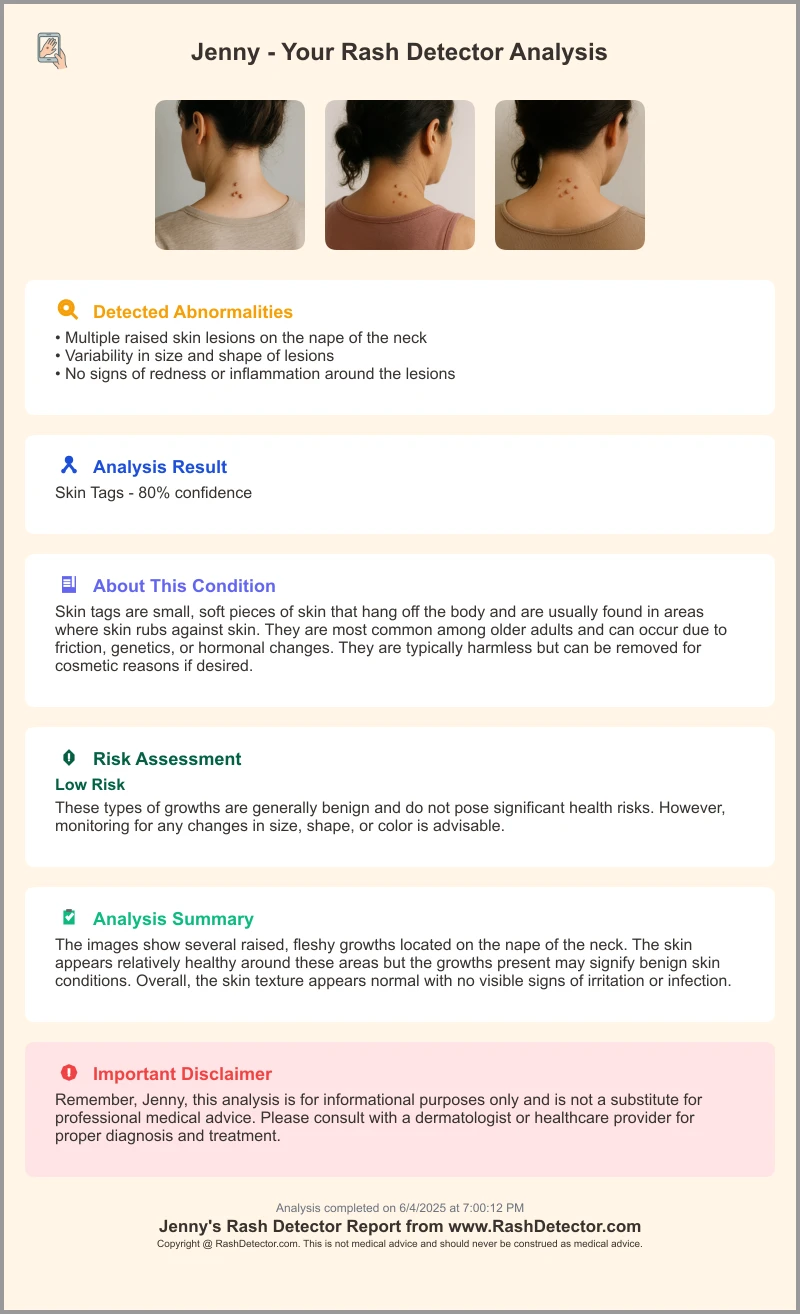
For a sample report from our AI-assisted analyzer:
Section 4: Prevention and Management Tips for Rash Prevention
Risk-Reduction Strategies
- Document and share any past drug reactions with your healthcare providers.
- Wear a medical alert ID for severe reactions (e.g., SJS/TEN).
- Discuss alternatives before starting high-risk medications.
- Consider genetic testing (HLA typing) when advised by a specialist.
Monitoring When Starting New Medicines
- Inspect skin daily, focusing on trunk, limbs, and mucosa.
- Note new spots, hives, sun sensitivity, fever, or swollen glands.
- Contact your prescriber promptly if any rash appears.
Preventive Discussions with Healthcare Team
- Review all medications and supplements for interactions and cumulative risk.
- Ask about expected rash onset, warning signs, and an action plan.
- Explore desensitization protocols or alternative agents under expert supervision.
Section 5: Case Studies & Expert Opinions – Case Study Insights
Case Example 1: Mild Morbilliform Rash
- An antibiotic causes an itchy, measles-like rash on the trunk after one week.
- No systemic symptoms; drug stopped and treated with antihistamines and topical steroids.
- Rash resolved in 1–2 weeks, illustrating typical treatment for non-severe eruptions.
Case Example 2: Severe SCAR (SJS/TEN)
- A new anticonvulsant triggers fever, painful blistering, and mucosal ulcers.
- Immediate drug withdrawal and burn unit admission; multidisciplinary care ensues.
- Highlights the critical need for early recognition and intensive hospital management.
Expert Perspectives
- Cleveland Clinic: Early withdrawal and supportive measures are vital in severe drug rashes.
- Harvard Dermatology: Monitor for blisters, mucosal involvement, and systemic symptoms; seek urgent care.
- Johns Hopkins: Most rashes clear after stopping the drug but can be fatal; prompt provider contact is essential.
Conclusion
Effective medication rash treatment begins with prompt recognition, safe discontinuation of the culprit drug under medical guidance, and targeted symptom relief. Mild reactions respond to antihistamines, topical or short-course systemic steroids, and supportive skin care. Severe eruptions like SJS/TEN require immediate hospital admission, IV fluids, wound management, and specialist input. Prevention relies on detailed documentation of prior reactions, vigilant monitoring of new medications, and clear communication with your healthcare team. Always seek professional evaluation for personalized and safe treatment decisions.
Additional Resources
- Merck Manual Consumer – Drug Rashes
- Johns Hopkins Medicine – Drug Rashes
- Harvard Health – When Is a Drug Rash More Than Just a Rash?
- NYU Langone – Medication for Drug Reactions/Hives
- Mayo Clinic – Contact Dermatitis Treatments
- Cleveland Clinic/CCJM Review on SCARs
FAQ
- What should I do if I notice a rash after starting a new medication?
Contact your healthcare provider immediately to assess the severity and determine whether to stop the medication. - How long does a drug-induced rash typically last?
Mild rashes often clear within days to weeks after discontinuation; severe reactions can require weeks of hospital-based care. - Can I prevent drug rashes?
Yes—document all previous reactions, discuss high-risk drugs with your provider, and monitor your skin closely when starting new treatments. - Are over-the-counter creams effective?
Topical corticosteroids can relieve itching and inflammation in mild cases but consult a clinician before self-treatment. - When is a rash considered life-threatening?
Signs like blistering, mucosal ulcers, systemic symptoms (fever, organ involvement), or breathing difficulties require emergency care.